
What hidden business opportunities does the 2026 World Cup bring to retail stores?

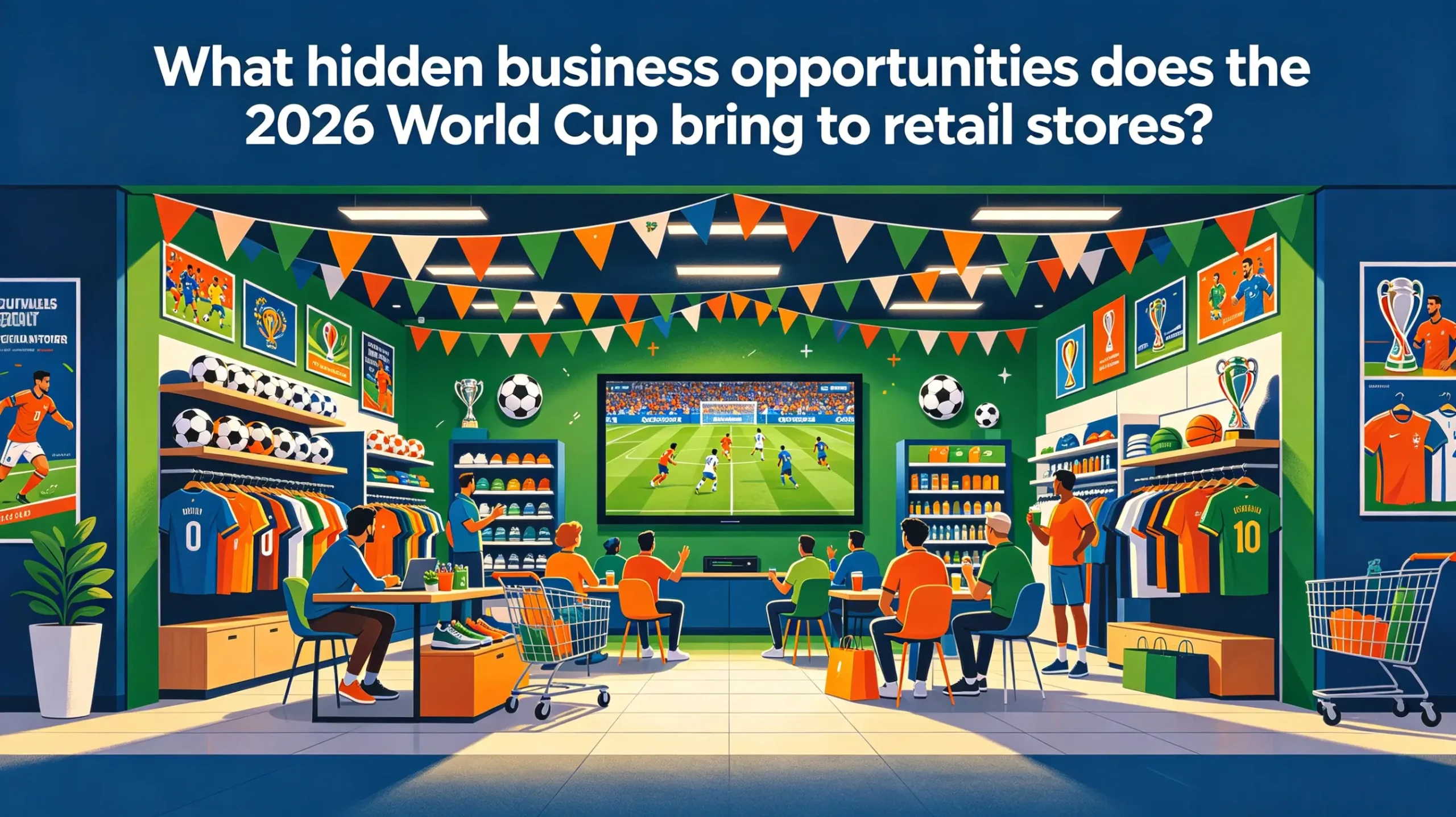
The 2026 FIFA World Cup in the United States, Canada and Mexico will bring three definite hidden business opportunities to ordinary retail stores – first, selling “emotional products” is more profitable than selling jerseys; second, transforming the store into a “second living room” for watching the game and providing an experience is five times more effective than simply offering discounts to attract customers; third, using pop-up stores and flexible supply chains to follow trends can enable you to achieve the same revenue as in three to four months within just 39 days.
1.Community convenience stores and small supermarkets: Don’t stock up on jerseys, stock up on “late-night game bags” instead.
The greatest advantage of community stores is their proximity and long operating hours. During the World Cup, more than 70% of the matches took place in the early morning and morning hours of Beijing time. Fans who watched the games at night were not lacking in jerseys; what they lacked was late-night supplies.
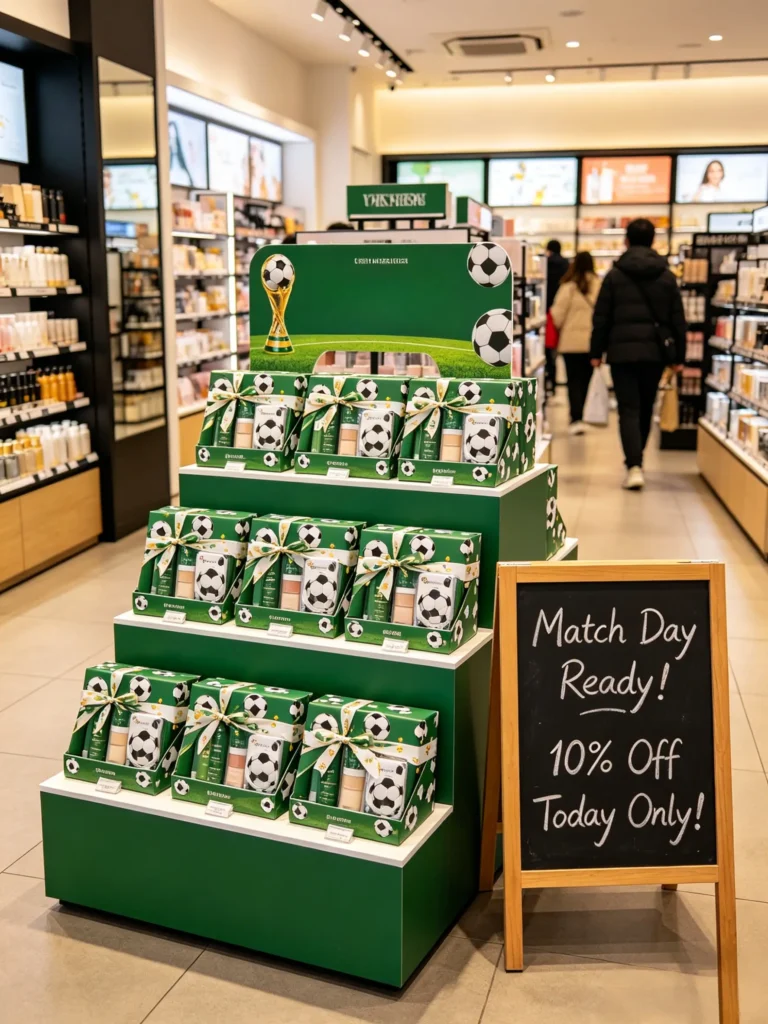
You can place a row of “World Cup Late-night Packs” beside the cash register: two cans of craft beer + one bag of marinated duck necks + a small bag of nuts, tied up in a transparent bag and labeled “Group Stage Energy Pack”. The cost is less than 20 yuan, and they can be sold for 35-40 yuan, which is much more profitable than buying them separately. There are factories in Yiwu that specialize in making such combined packaging bags, with the flags of 32 countries printed on them. The cost of each bag is only a few cents.
Also remember one detail: From 2 a.m. to 5 a.m., the energy drinks in the freezer need to be replenished, and the crayfish tails, sausages, and Jinguu stew in the hot food cabinet should be prepared in advance. Many convenience stores saw their night shift sales double during the World Cup, and this was the key to their success.
2.Trendy toy stores and boutiques in shopping malls: Betting on the blind box economy of “fake football fans”
True football fans only make up a small percentage of the total population, but during the World Cup, “spectator consumers” can account for 70-80%. What do these people want to buy? Inexpensive, attractive items that they can post on Facebook and Instagram.
Trendy blind boxes are this year’s hottest item. The Pop Mart FIFA collaboration series mentioned earlier sold over 20,000 units of a 59 RMB figurine blind box. This isn’t because there are many football fans, but because non-fans feel they’re “out of the loop if they don’t buy something during the World Cup.” Even if you don’t stock official collaboration items, stocking team-themed figurines, football-themed keychains, and World Cup-themed phone cases, placing them prominently near the entrance, and priced between 50-150 RMB, will sell quickly.
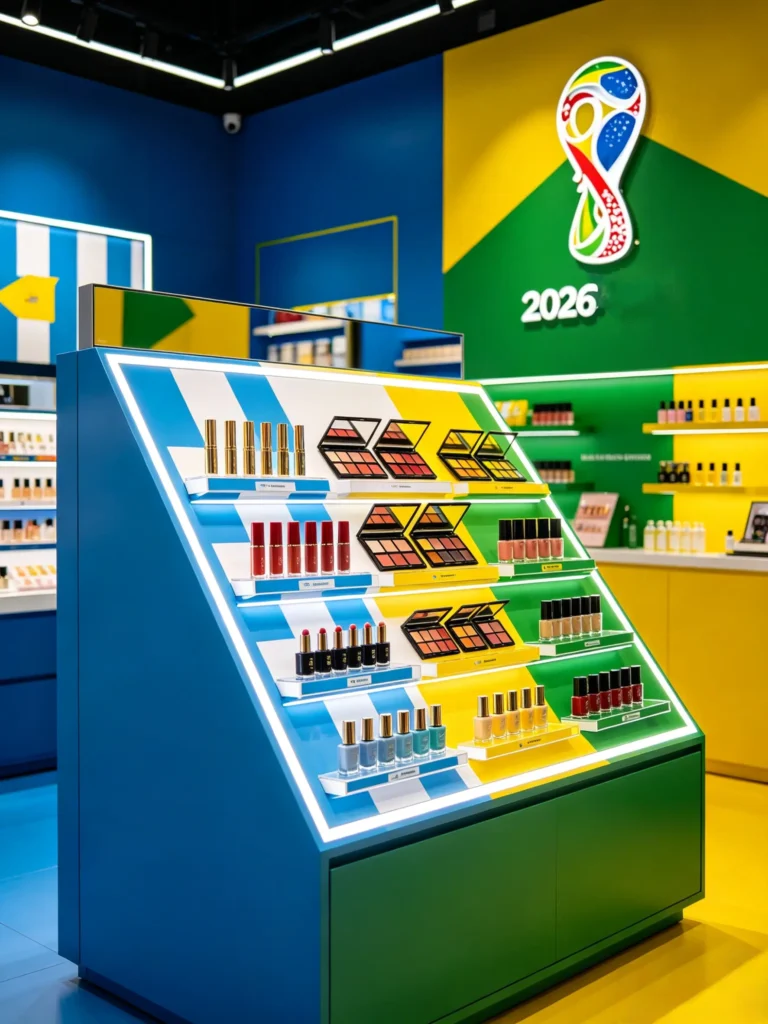
The key is to create photogenic displays. Create a “World Cup-themed wall,” pile up several footballs, and display a replica of the World Cup trophy. Customers can take photos and post them on social media after buying, generating free local traffic for you.
3.Restaurants, bars, and cafes: Turn “viewing seats” into a paid resource.
For retail stores in the catering sector (including bars and craft beer bars that serve food), the biggest opportunity during the World Cup is not to sell more drinks, but to turn prime locations into premium products.
Some bars have already been doing this: they pre-sell “spectator seats” two weeks in advance, offering three different tiers – the regular area charges the normal price, the premium area charges 200 yuan per person for the minimum fee, and the VIP seats charge 500 yuan per person with a complimentary fruit platter and a team cap. They still sold out. Because fans are willing to spend more money to be able to see the screen clearly and sit together with friends.
Additionally, the menu needs to be temporarily modified. During the competition, the regular menu should be put away and replaced with the “World Cup Special Menu”: Argentine grilled dumplings, German sausage platter, Brazilian grilled meat skewers, British fried fish and chips… It doesn’t have to be extremely authentic; just having a name related to the World Cup is enough. The unit prices can be 30% higher than usual because consumers’ sensitivity to prices drops significantly during this period. What they are buying is an “atmosphere experience”.
4.Campus stores and office building stores: Conduct “lunchtime pop-up” events and small peak sales before the end of the workday.
This World Cup has a unique schedule – approximately 70% of the matches are held in the evening of the North American time, corresponding to the morning of the world time. What does the morning matches mean for the store locations in campuses and office buildings? Secret watching of the game in the office and collective discussions during lunch breaks.
You can do two things:
First, between 11 a.m. and 1 p.m., set up a small stall at the entrance of the store and sell “prediction scratch cards for the game results” – not real gambling, but scratch cards with content like “Messi hat-trick” or “Cristiano Ronaldo scores with a penalty kick”. If you scratch it, you’ll get a can of cola or a coupon. The cost is extremely low, but young people rush to scratch them, and in the process, they also enter the store to buy lunch and drinks.
Second, from 4 p.m. to 6 p.m., prepare the “After Work Sports Viewing Kit”: a bag of potato chips, a bottle of iced tea, and a pack of tissues (for crying when excited), with the label reading “Who will you support tonight”. The items are available on the delivery platform and can be ordered on the phone before leaving work at the office complex, and you will receive them right when you get home.
5.Stores in tourist areas and transportation hubs: Capitalize on the fleeting impulses of “passing-by customers”.
At airports, train stations, and in shops in scenic areas, the customers have short stays and clear goals – most of them just pick up something with sentimental value but not too expensive. During the World Cup, the most suitable products for such stores are small-sized team souvenirs: keychains, fridge magnets, phone stands, and badge sets.
You can see that the fastest-selling products from the manufacturers in Yiwu, China this year are these small items. A set of 32 mini fridge magnets costs less than 5 yuan and is sold for 19.9 yuan; a silicone phone holder with a team logo costs 1.5 yuan and is sold for 9.9 yuan. When tourists see the words “2026 World Cup”, they just can’t keep walking. The unit price is so low that there’s no need to hesitate. At checkout, they are also likely to pick up a team scarf as well.
The purchasing strategy is also quite simple: Instead of stocking up on all the teams, the focus is on importing from the three host countries – Canada, the United States, and Mexico, along with the traditional strong teams such as Brazil, Argentina, Germany, France, and England. The rest depends on the outcome of the matches, and the supplier will expedite the delivery of goods to those teams that have won.
Three key takeaways:
1.Stop focusing solely on jerseys and commemorative coins. Selling emotion, convenience, and atmosphere is the retail secret to this World Cup.
2.Community stores should focus on late-night supplies, shopping malls on photo opportunities, restaurants on premium seating, campus stores on midday activities, and hub stores on small, fast-moving consumer goods.
3.With a 39-day window of opportunity, quick-acting stores can capture over 15% of the annual profit. Hesitation will only leave you watching others rake in the money.