Store Fixtures: The Ultimate B2B Guide for Retailers & Mall Owners in 2026

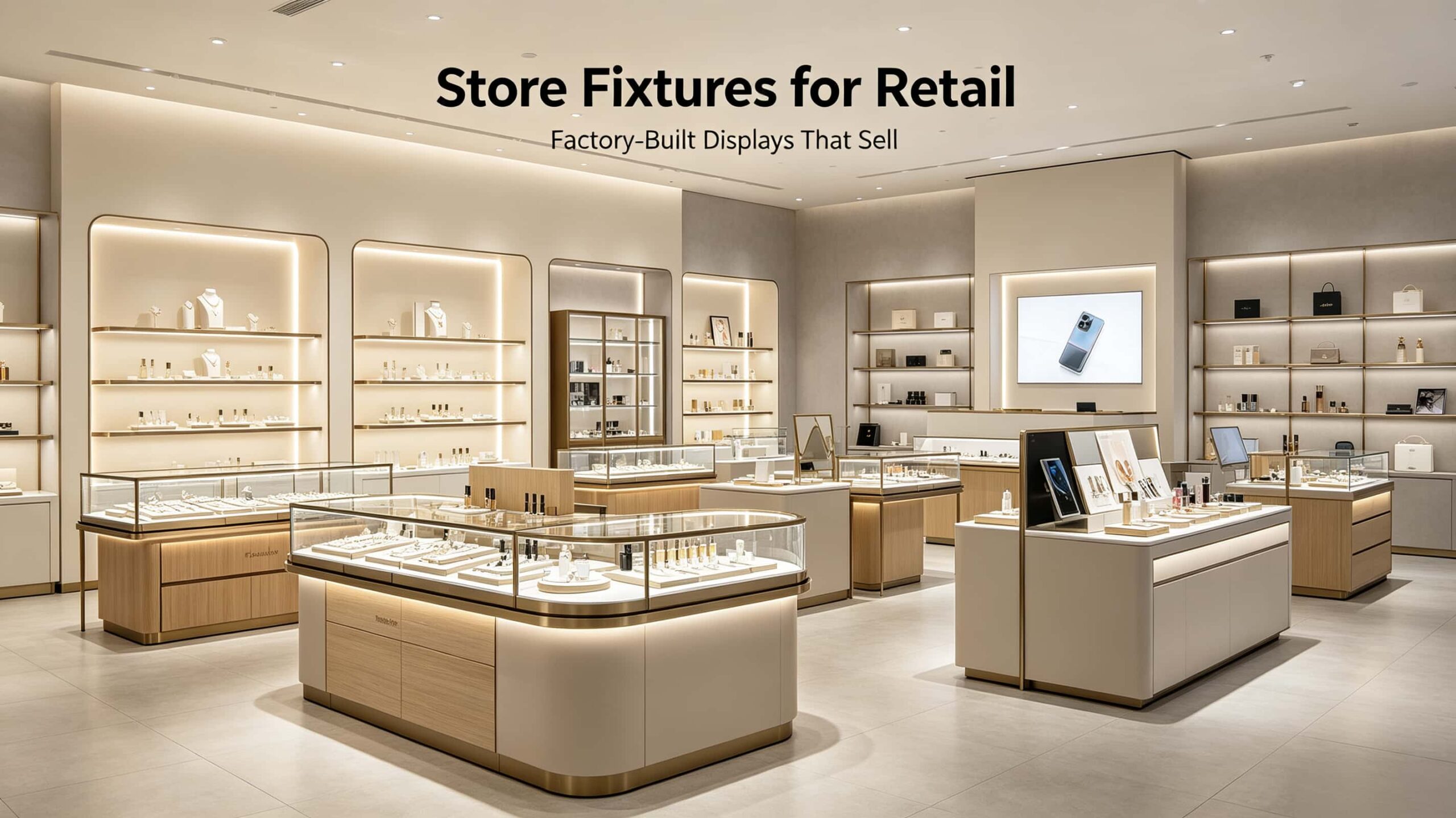
If you run a retail store or manage a mall property, you already know that store fixtures are not just shelves. They are the silent sales team that holds your product, sets your price perception, and guides foot traffic. I have spent 18 years on the factory floor, and I will tell you what actually matters when you source fixtures in 2026. No fluff, no agency speak — just the details that save you money and prevent costly rebuilds.
What are store fixtures?
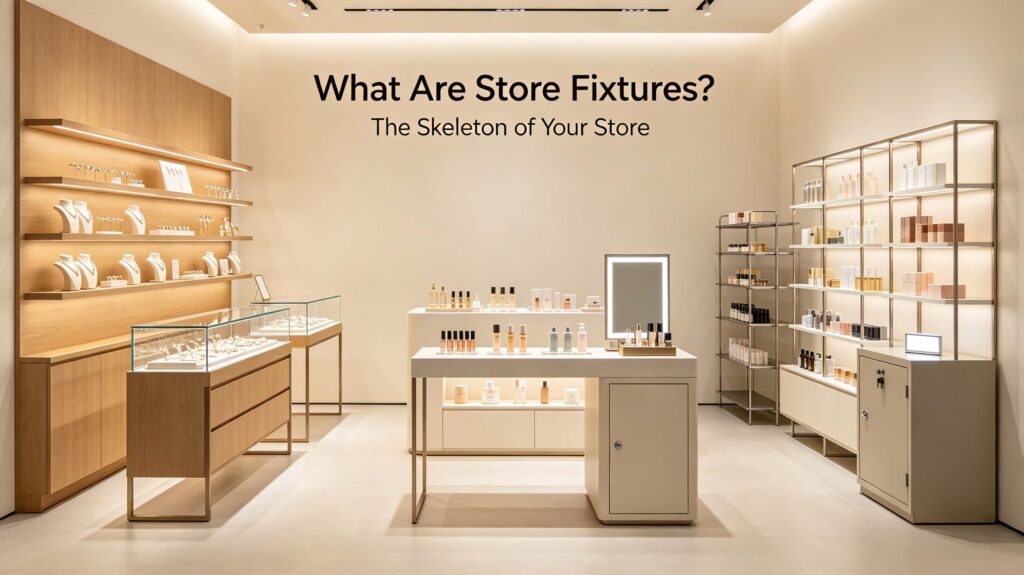
Store fixtures are any physical structures used to display, organize, or secure merchandise inside a retail space. They range from simple wall shelves to fully integrated Retail island counter units with built-in lighting. I call them the skeleton of your store—without them, product sits on the floor and no one buys.
Most retailers don’t realize that fixtures affect conversion more than wall color or background music. A professional store fixtures manufacturer designs these units to handle specific weight loads, traffic patterns, and visual merchandising needs. For example, a boutique selling jewelry needs custom store fixtures for boutique layouts that lock and light each piece, while a grocery store needs heavy-duty shelving that can survive daily restocking. The material matters: powder-coated steel lasts a decade; MDF with laminate works for lighter retail; solid wood gives warmth but needs sealing. If you skip this step, you end up re-buying in two years.
Where do stores get their fixtures?
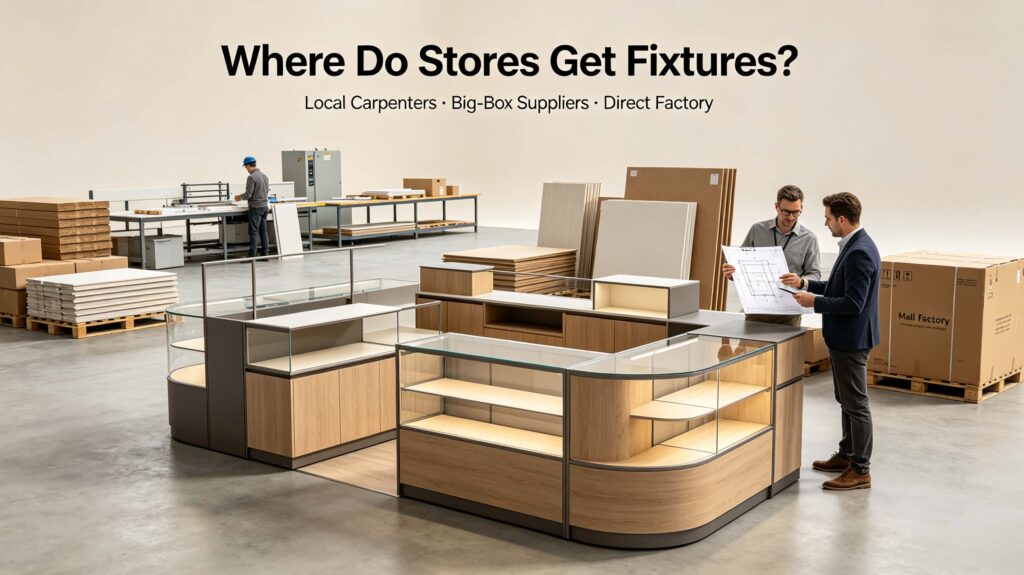
Most store owners buy from three sources: local carpenters, big-box suppliers, or direct from a retail display counters factory. Local work is fast but inconsistent; big-box is cheap but generic. I always tell buyers to find a factory that offers mall kiosk fixtures wholesale pricing and custom modifications.
When you work directly with a factory, you cut out two or three middlemen. That means you can ask for specific dimensions, brand colors, or locking mechanisms without paying a design agency. Many of my clients run mall kiosks and need compact, lockable units that assemble in under an hour. A retail display counters factory that also handles export packaging will save you from freight damage. For independent retailers, buying from a factory might feel intimidating, but most will sell one or two units if you ask. Just send a rough sketch and your opening date.
What’s the average cost of store fixtures?
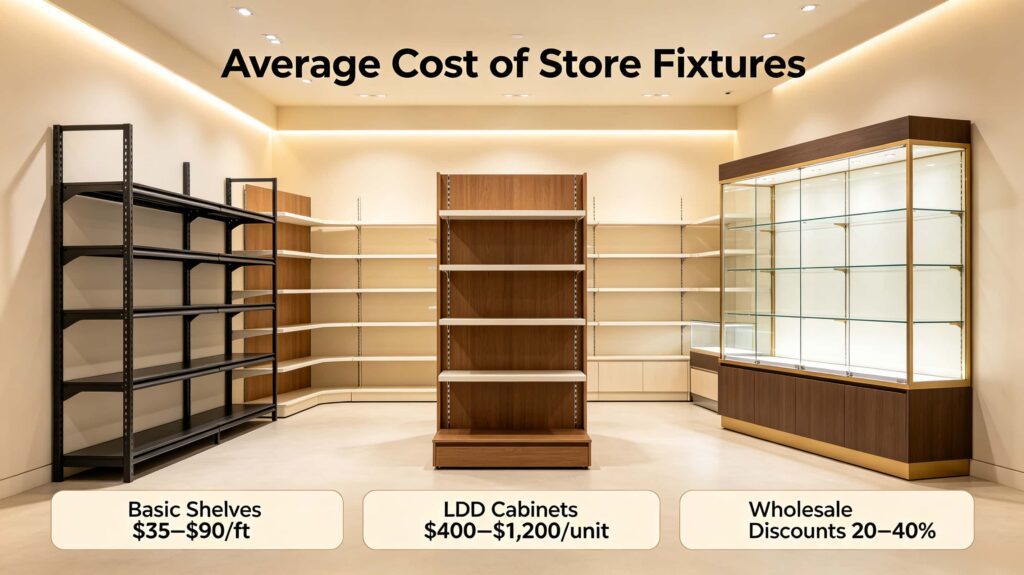
Basic powder-coated steel shelves run $35 to $90 per linear foot. A high-end LED cabinet with tempered glass and integrated lighting can run $400 to $1,200 per unit. Your store fixtures wholesale prices drop 20–40% when you order at least five units or a full container.
Let me be blunt: cost depends on material, lighting, and finish, not brand name. A basic four-foot wall shelf with adjustable brackets might cost $60 from a factory. Add a locking sliding glass door and LED strip, and that same footprint becomes a **luxury retail display unit** priced at $800. For a boutique, custom store fixtures for boutique work often starts around $150 per unit for simple MDF displays and climbs fast if you want solid oak or brass trim. If you are buying store fixtures wholesale prices are negotiable. Ask for a line-item quote so you can see where the money goes: steel, glass, LED driver, packaging, freight.
What are the different types of displays used in retail stores?
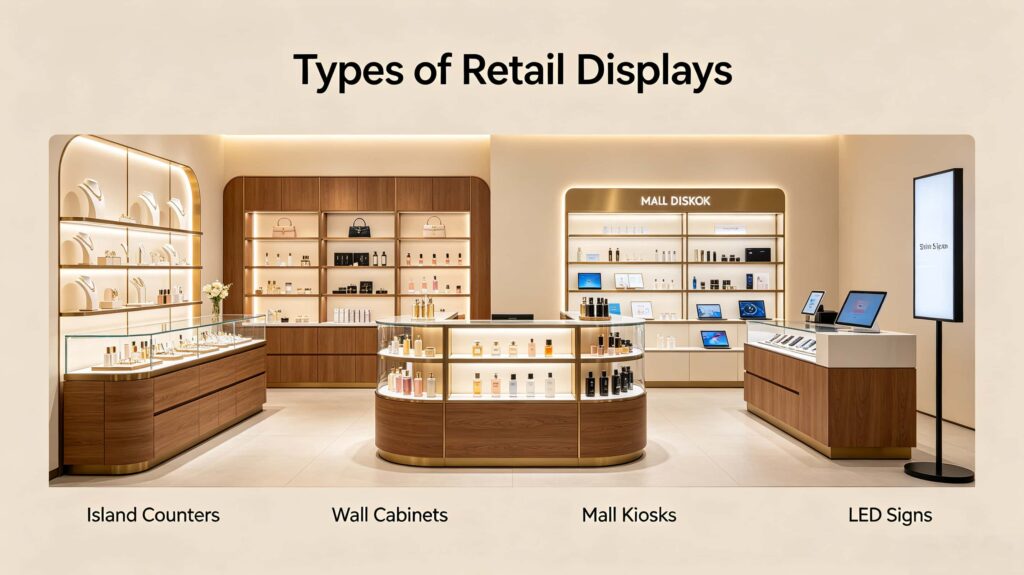
Retail displays fall into four main groups: Retail island counter units for center-floor merchandising, wall cabinets and shelving for perimeter storage, mall kiosks for high-traffic concessions, and LED signs for directional or promotional messaging. Each serves a different traffic-flow purpose.
Retail island counters
The Retail island counter is my most requested product for cosmetics, electronics, and jewelry. It sits in the middle of the aisle, allowing customers to walk around all four sides. Make sure the top surface is scratch-resistant and the base has hidden cable management. A poorly designed island counter becomes a dead zone; a well-designed one lifts impulse buys by double digits.
Wall cabinets and commercial shelving
Wall units maximize vertical space. I recommend commercial display shelving solutions with adjustable uprights so you can change shelf pitch without drilling new holes. Glass-front wall cabinets lock high-value items but keep them visible. For a pharmacy or liquor store, this is non-negotiable.
Mall kiosks and LED signs
For mall owners, mall kiosk fixtures wholesale orders need to be lightweight, modular, and durable enough for daily assembly. Pair them with slim LED light boxes that use under 60 watts. That keeps mall energy fees low and visibility high. LED signs are not fixtures in the traditional sense, but they integrate with the same mounting systems and often share the same power source.
What are the latest trends in store fixtures?
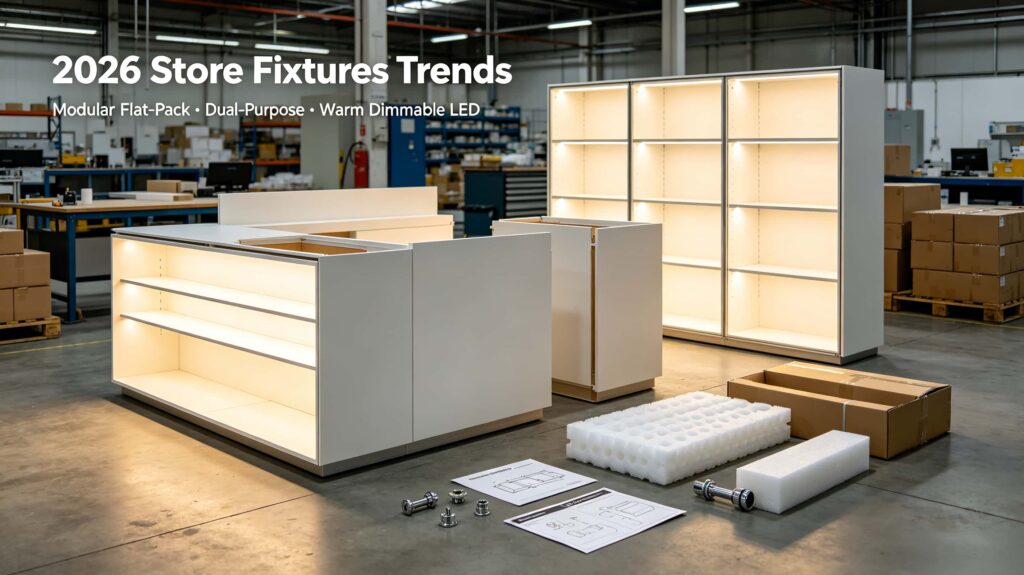
The biggest shift in 2026 is modular flat-pack shipping. Factories now design fixtures that knock down into one flat crate, cutting freight volume by 60–70%. Lower shipping cost means you can spend more on the fixture itself.
I used to ship assembled glass counters and half arrived cracked. Now we engineer every Retail island counter and wall unit to break into panels with reusable cam locks. This flat-pack approach also helps with display and packaging for retail because the same protective foam can be designed to hold product during retail display. Another trend is dual-purpose fixtures: a cash wrap with built-in product bins, or a fitting room mirror that doubles as an LED ad screen. For luxury retail display units, the trend is toward warm, dimmable LED temperature (2700K) and matte finishes instead of glossy chrome. Buyers looking to buy store fixtures for retail should ask for modular designs, even if they never plan to move. It protects resale value.
What are the essential store fixture requirements?
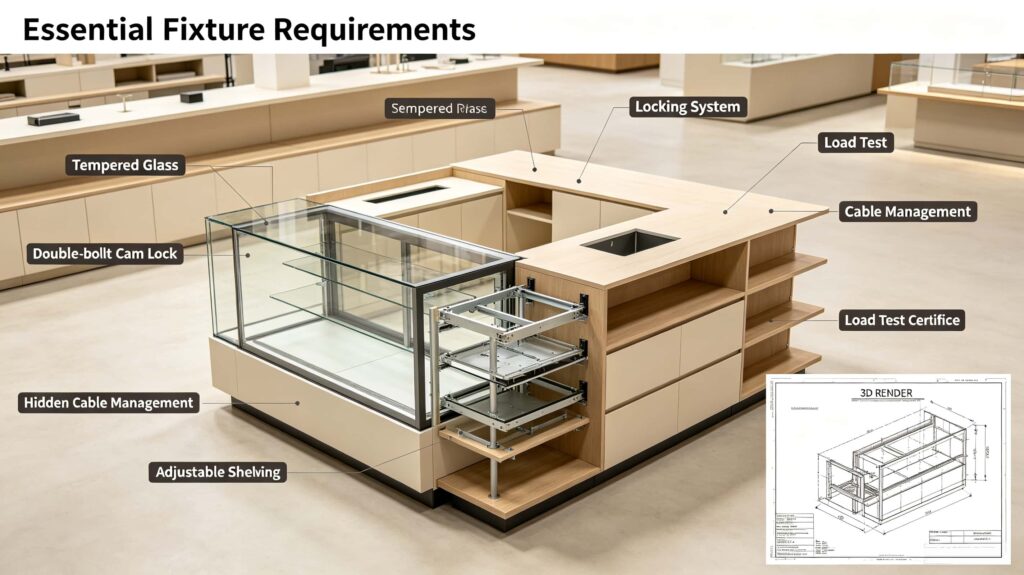
Every retail fixture must have tempered glass on any accessible panel, a locking system if it holds inventory, and a footprint that optimizes floor space. I reject any design that wastes more than 15% of the display volume on dead structure.
Here is what I check on every order. Tempered glass—not annealed—because it shatters into small cubes instead of sharp shards. Locking systems: for high-theft items, use double-bolt cam locks, not magnetic catches. Space optimization means a four-foot Retail island counter should store at least 40 SKUs without looking cluttered. If you plan to buy store fixtures for retail, ask the factory for a load test certificate and a 3D render before production. And do not overlook display and packaging for retail integration: the shelf edge, the hook, and the product tray are all part of the same customer decision. Get that wrong, and you lose the sale before the customer reads a price tag.
If you are planning a new store or remodeling a mall space, send me your floor plan and product list. I will have my engineering team create a 3D layout and a line-item factory quote—no middleman, no pressure. Whether you need one custom store fixtures for boutique order or a full mall kiosk fixtures wholesale shipment, we build to your opening date. Contact a professional store fixtures manufacturer today and get the exact units your merchandise deserves.