Optical Display Cabinets: A Complete Buying Guide for Your Eyewear Store

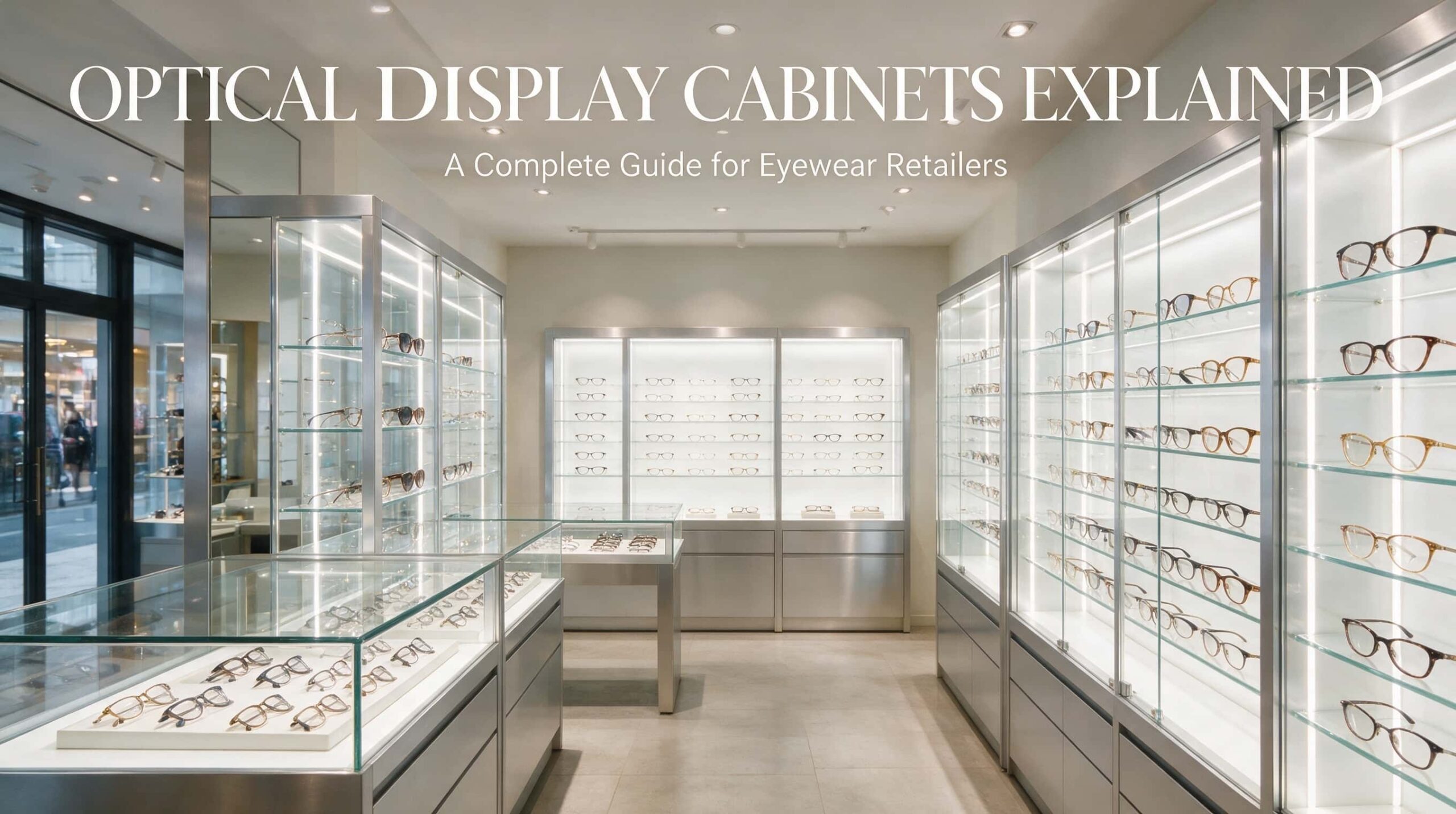
When a customer walks into your eyewear store, the first thing they notice is not only the frames but the way those frames are presented. Optical display cabinets shape first impressions, protect inventory, and guide shoppers through your space. This guide explains what these cabinets are called, whether they still matter, how they differ from home curio cabinets, and how to buy factory-direct with confidence.
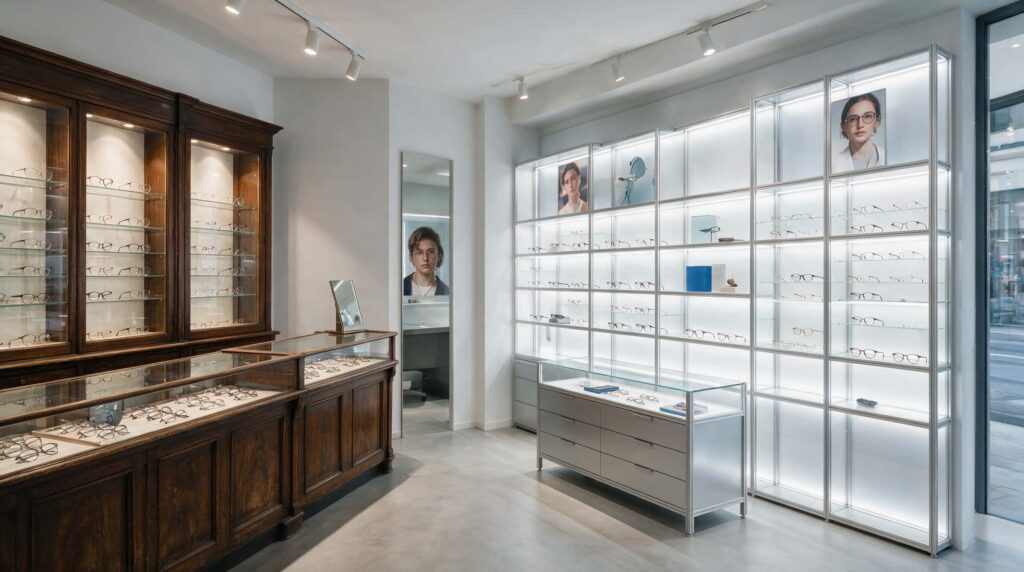
What are those glass cabinets called?
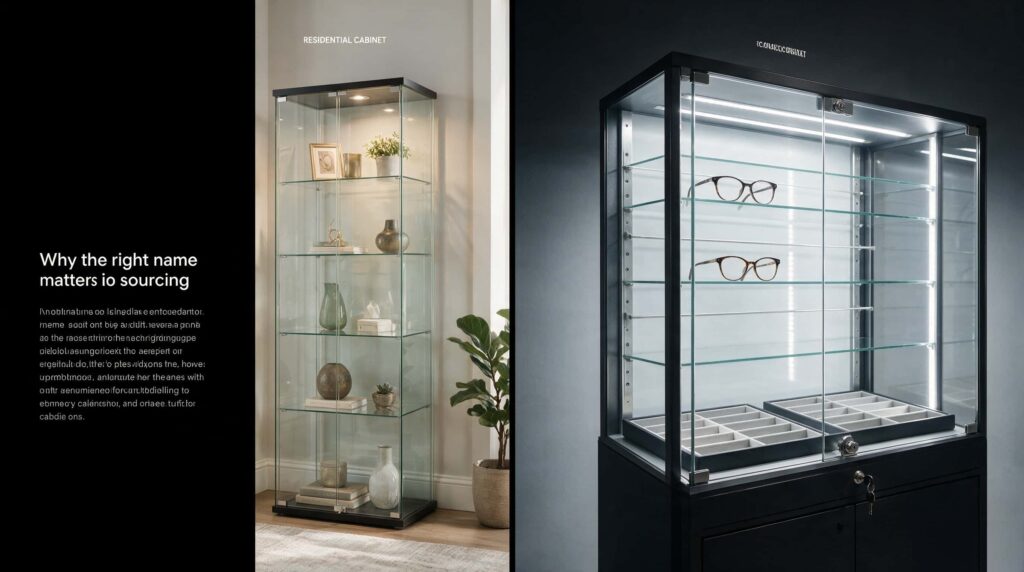
In retail eyewear stores, these glass display units are commonly called “Optical Display Cabinets” or “Eyewear Showcases.” In high-end boutiques, they may also be referred to as “vitrines.” They typically feature tempered anti-glare glass, adjustable shelves, and high-CRI lighting to showcase frame details accurately.
While the name may vary by region, the purpose stays the same: to create a secure, visually clear stage for your products. Many store owners searching for “eyewear retail display cases” are really looking for a combination of display and storage. At factory level, we separate front-display cabinets, back-wall shelving, and countertop showcases because each solves a different merchandising problem.
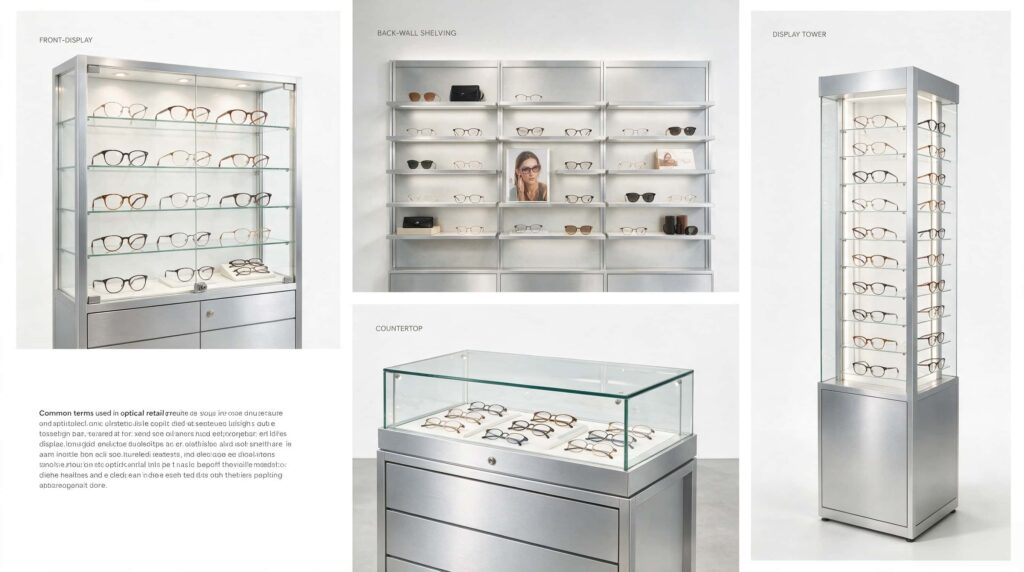
Common terms used in optical retail
In the industry, you will hear names like optical display cabinets, display showcases, glass counters, and eyewear display towers. Some buyers use “custom optical shop fixtures” when they need dimensions or finishes adapted to a specific store layout. Understanding these terms helps you communicate with suppliers and avoid ordering the wrong product type.
Why the right name matters for sourcing
Searching online with the right term saves time and reduces costly mistakes. If you type only “glass cabinet,” you may receive residential furniture results. Using “commercial optical cabinets with LED” or “eyewear retail display cases” leads you to manufacturers who understand retail durability, security, and lighting requirements.
Are display cabinets outdated?
Absolutely not. Far from being outdated, display cabinets are evolving. Modern optical display cabinets are the core of retail merchandising, now equipped with hidden LED lighting, anti-theft security locks, and ergonomic designs that help guide customer flow through your eyewear store. They are more essential than ever.
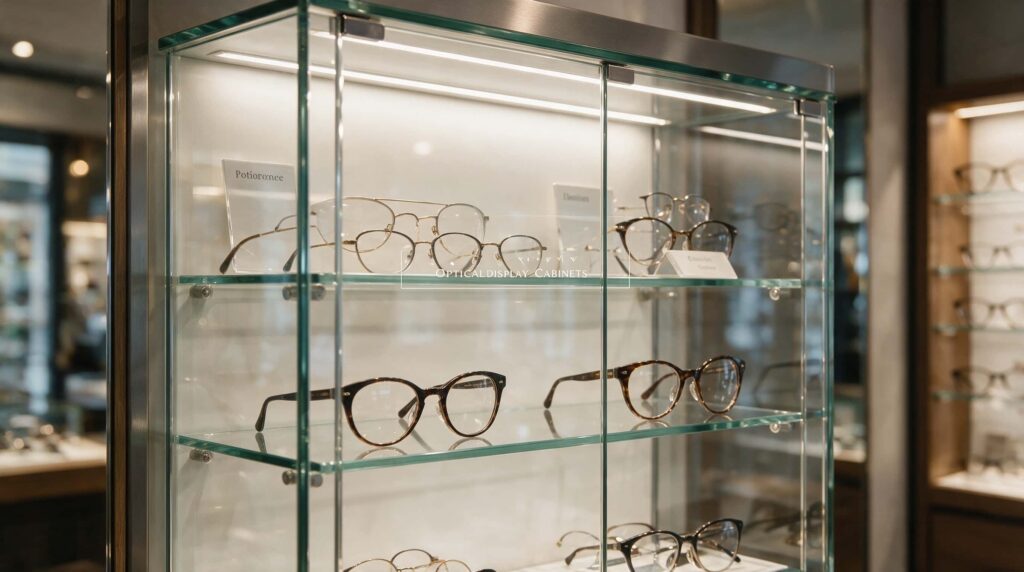
The idea that cabinets are outdated usually comes from seeing old, yellowed display units in struggling stores. Those failures were caused by poor lighting, cluttered shelves, or cheap materials—not by the cabinet concept itself. Today’s commercial optical cabinets with LED lighting can make a budget frame look premium and a luxury frame look exceptional.
The shift from wooden counters to modular systems
Older stores relied on heavy wooden counters that were expensive to move and difficult to reconfigure. Modern optical store furniture manufacturer solutions focus on modular aluminum and steel frames with glass panels. These systems are lighter, easier to clean, and can be rearranged when you change your store layout.
Why lighting and security keep cabinets relevant
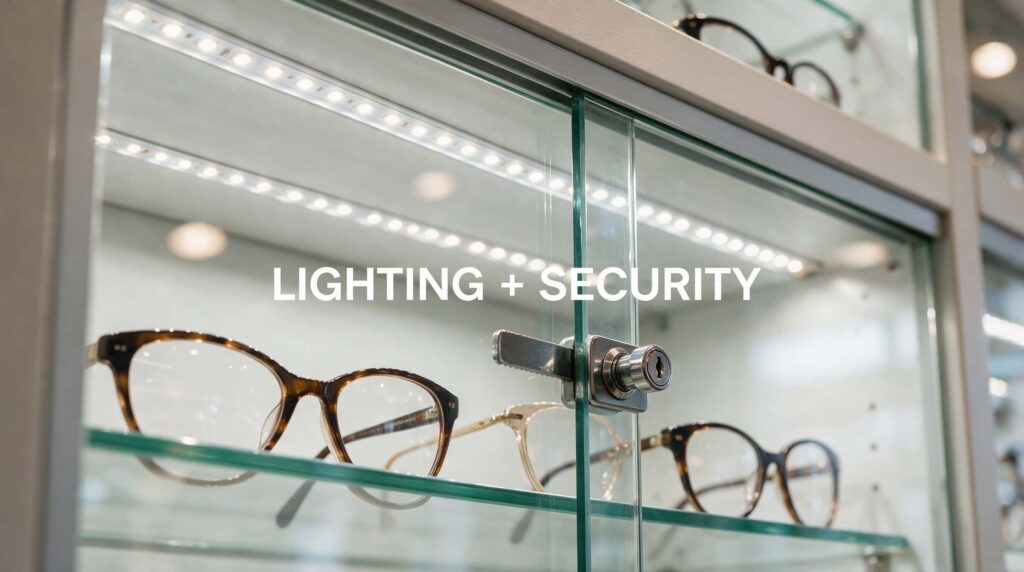
Closed cabinets still matter because they protect inventory and reduce shrinkage. When you combine lockable sliding doors with high-CRI LED strips, you get both security and visual appeal. Customers can view frames closely without constant handling, which reduces scratches and fingerprint cleaning.
What are the key differences between a display cabinet and a curio cabinet?
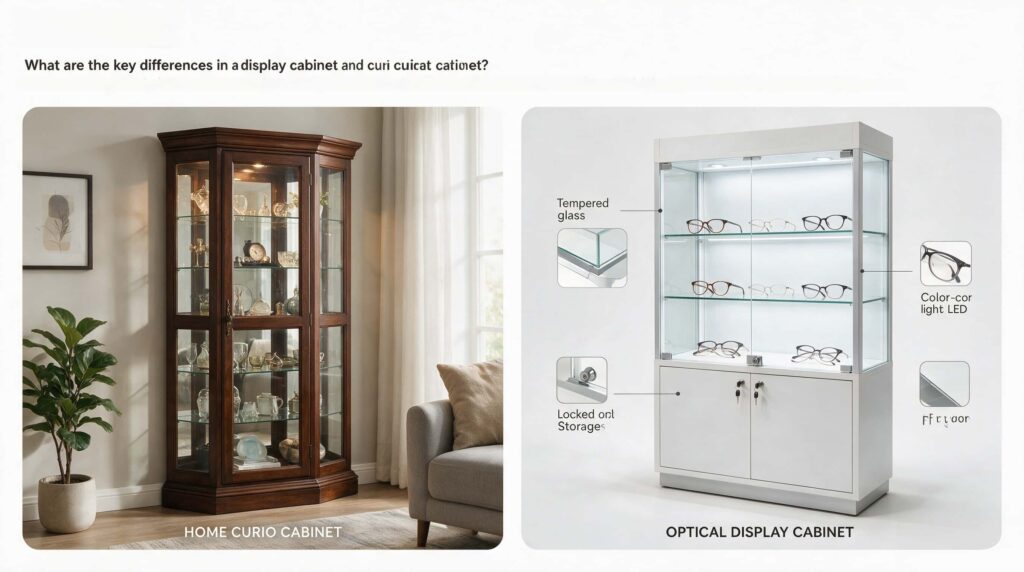
A curio cabinet is primarily used in homes to display decorative collectibles and lacks specialized commercial features. In contrast, a commercial optical display cabinet is built for heavy daily use in stores. They feature scratch-resistant tempered glass, lockable storage for expensive eyeglass frames, and color-accurate LED lighting.
Buyers often confuse residential furniture with commercial fixtures because they look similar in photos. However, a curio cabinet is not designed for hundreds of door openings per day. Its hinges, glass edges, and finish will fail quickly in a retail environment. Optical display cabinets must withstand constant cleaning, sliding doors, and the weight of trays full of eyewear.
Build quality and durability
Commercial units use thicker aluminum extrusions, reinforced joints, and tempered glass that meets safety standards. The base is usually raised or sealed to prevent dust and water damage during floor cleaning. If you are investing in custom optical shop fixtures, ask about material thickness and load rating per shelf.
Security and storage features
Unlike curio cabinets, optical display cabinets include lockable compartments, hidden drawers for stock, and sometimes RFID or magnetic locks. This reduces theft and keeps backup inventory close to the sales floor. A good cabinet design separates display stock from sellable stock so staff can serve customers faster.
Lighting and visual presentation
Residential cabinets rarely include color-accurate lighting. In eyewear retail, color rendering matters because customers need to see true frame colors. High-CRI LED bars inside commercial optical cabinets with LED prevent color distortion, especially for tortoiseshell, transparent acetate, and metal finishes.
How to choose the best optical display cabinets for your store?
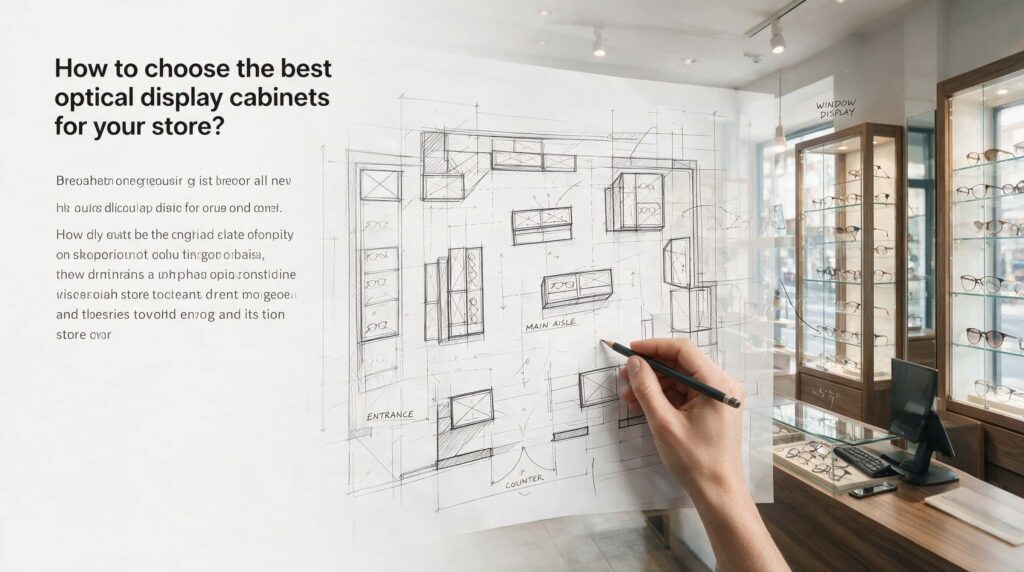
Choosing the best optical display cabinets starts with space planning, viewing-height ergonomics, and functionality. Reserve space for an illuminated logo, hide wiring channels, and specify high-CRI LED lighting so frame colors stay true. These details separate a working retail fixture from a generic glass box.
Many store owners focus only on appearance, but the best cabinet layout improves both sales and staff efficiency. Think like a store designer: first map the customer journey, then place cabinets where the eye naturally lands. The goal is to make browsing feel effortless and guided.
Start with store layout and customer flow
Before ordering any eyewear retail display cases, measure your floor plan and mark the entrance, main aisle, cash counter, and window areas. Place low-profile optical display cabinets near the entrance to avoid blocking sightlines. Use taller back-wall units deeper inside the store to pull customers through the space.
Get the viewing height right
The most profitable display zone is between 90 cm and 150 cm from the floor—roughly eye level to chest height. Frames placed below knee level or above eye level are often ignored. Adjustable shelves help, but the cabinet itself should be designed so the primary display shelf sits in this comfort zone without forcing customers to bend or stretch.
Choose functional features that reduce daily friction
Look for cabinets with hidden cable channels, easy-access rear doors, and replaceable LED strips. If you want your logo illuminated, confirm the factory can embed an LED light panel behind the front sign. These small features make daily merchandising faster and keep your store looking clean.
Lighting quality: CRI and color accuracy
High-CRI LED lighting is not a luxury; it is a sales tool. A CRI above 90 renders frame colors more faithfully than standard LEDs. When buying commercial optical cabinets with LED, ask for the CRI rating, color temperature, and whether the light bars are positioned to avoid glare on glass.
Modularity and future expansion
Your store may change, so avoid fully welded units if you want flexibility. Modular custom optical shop fixtures allow you to add sections, change shelf heights, or reposition islands later. This protects your investment and reduces the cost of future renovations.
How to buy custom optical display cabinets directly from a factory?
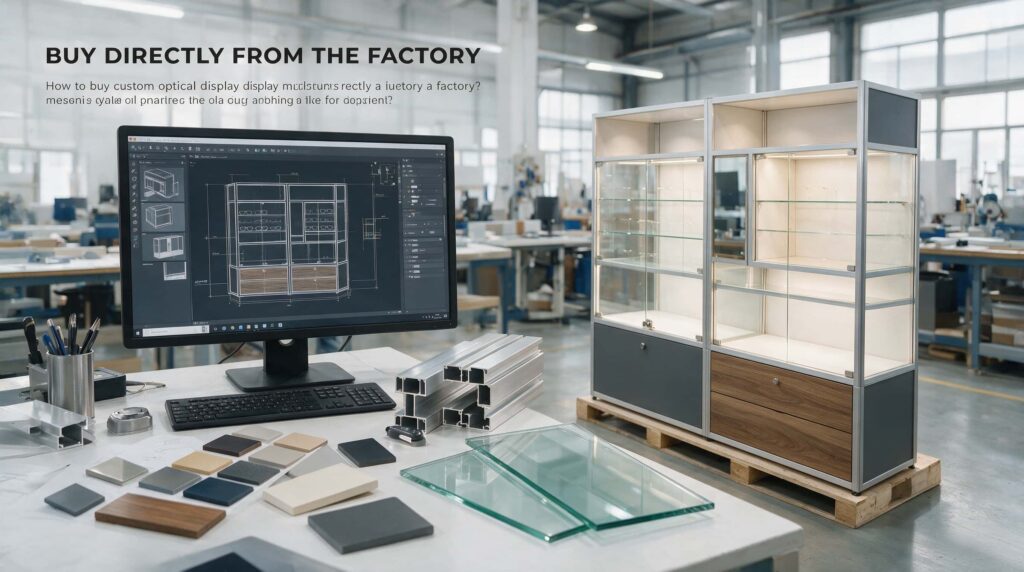
Buying factory-direct saves money and gives you full control. Share your floor plan, storefront dimensions, and preferred finishes. The factory prepares a 3D design and a direct factory quote without middleman markups. You then confirm materials, lighting, and shipping before production begins.
As an optical store furniture manufacturer, I always tell customers that customization does not have to be complicated. The biggest mistake buyers make is sending only a photo and asking for a price. Photos cannot communicate exact dimensions, wall conditions, or electrical access. A clear floor plan is far more valuable.
Step 1: Send your floor plan and storefront dimensions
Start by sending a simple floor plan with measurements. Mark the location of doors, windows, power outlets, and any existing counters. If you want a branded cabinet near the entrance, include the storefront opening size. This allows the factory team to design cabinets that actually fit your space instead of forcing standard sizes into the wrong layout.
Step 2: Review your 3D design and material samples
Once the factory receives your plan, they should provide a 3D rendering showing how the optical display cabinets will look inside your store. Review the layout from the customer’s viewpoint. Confirm shelf counts, logo positions, drawer locations, and LED placement. Request material samples for laminate colors, metal finishes, and glass types before production.
Step 3: Confirm production and shipping details
After you approve the design, the factory will issue a detailed quotation covering cabinets, lighting, packaging, and shipping. For custom optical shop fixtures, production usually takes two to five weeks depending on quantity. Confirm whether shipping is by sea or land, and ask about assembly instructions or on-site support if needed.
Why factory-direct beats middlemen
When you buy through a distributor, you pay extra for their margin, storage, and sales commission. Buying commercial optical cabinets with LED directly from an optical store furniture manufacturer removes those layers. You also gain better control over materials, dimensions, and warranty support because you communicate directly with the people who build the product.
Ready to plan your store? Send us your floor plan and storefront dimensions today. Our factory team will prepare a 3D layout and a direct factory quote for your custom optical display cabinets—no middlemen, no retail markup. Get the right cabinets built for your eyewear store, delivered on time, and designed to sell.