What Storage and Organization Products Are Trending Right Now for Boutiques?

Every boutique owner knows the same truth: a beautiful product can only sell if customers can see it, reach it, and feel drawn to it. Storage is not just about hiding extra stock; it is about creating a visual rhythm that guides shoppers through your space. After years on the factory floor, I have seen too many boutique owners invest in pretty but impractical fixtures. The real trend is not just about looks—it is about flexible systems that save money over time and make a small space work harder.
What are the best storage solutions for clothing?
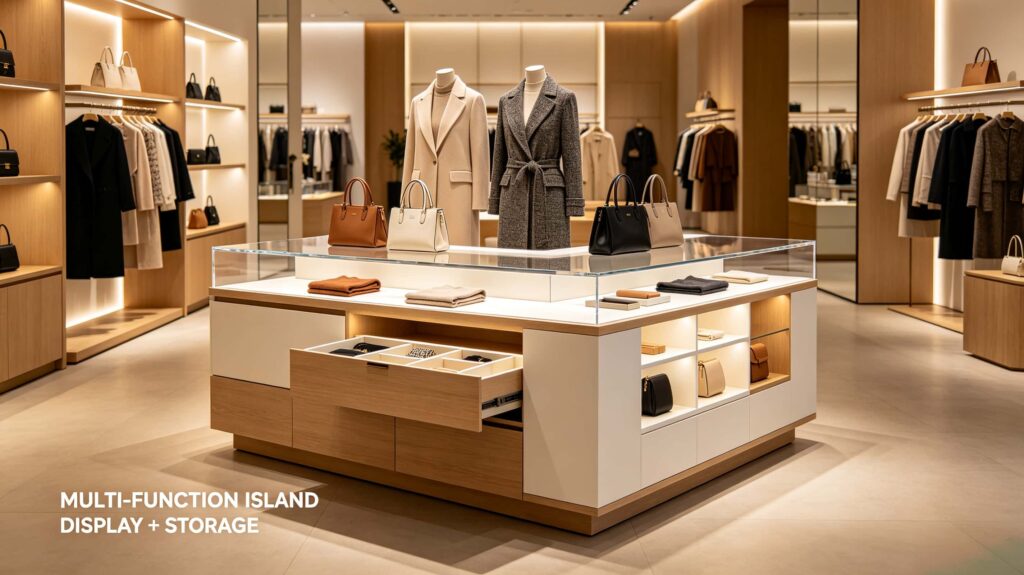
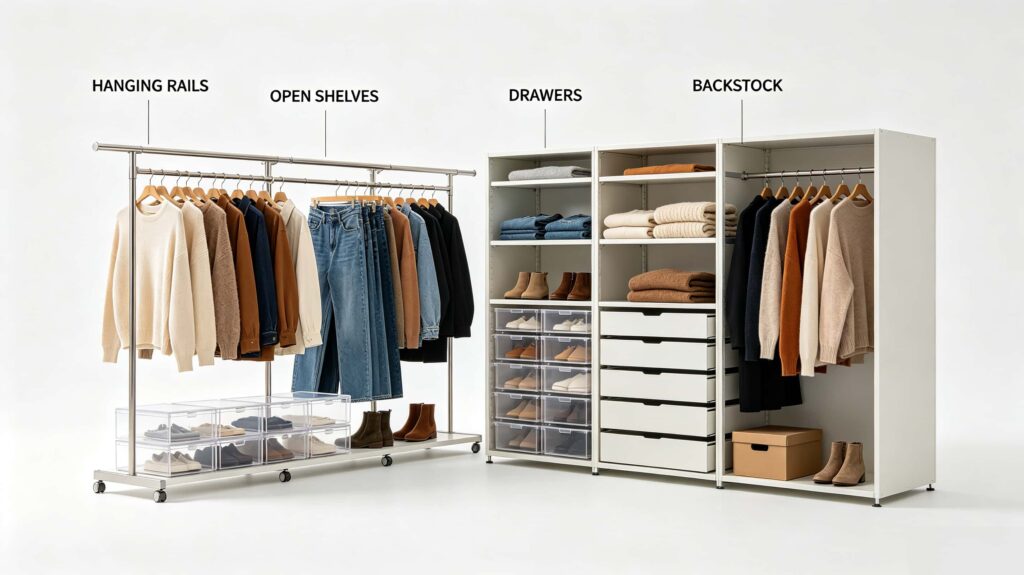
The best clothing storage combines hanging rails, open shelving, drawers, and modular components. Double hanging rods maximize vertical space, while clear acrylic drawers work well for folded knits. The key is separating visible display from hidden backstock so your sales floor stays clean and your inventory remains organized.
Clothing storage depends on the type of garments you sell. For dresses and coats, sturdy garment racks with adjustable heights are essential. For denim and folded sweaters, open shelves with shelf dividers prevent piles from toppling. For accessories like scarves or belts, clear acrylic bins or pull-out trays keep items visible without looking cluttered. The real secret is to use storage units that can be reconfigured as your seasonal collection changes.
Combining visible display with hidden storage
In a boutique, every square foot must serve two purposes: show product and hold inventory. A display table with deep drawers gives you a surface for folded items and hidden space for extra sizes. Wall-mounted shelving with closed cabinets below does the same. When customers see only neatly organized items, they perceive higher value. Your boutique storage and organization products should hide the mess while putting the best pieces in the spotlight.
Why flexible clothing storage matters
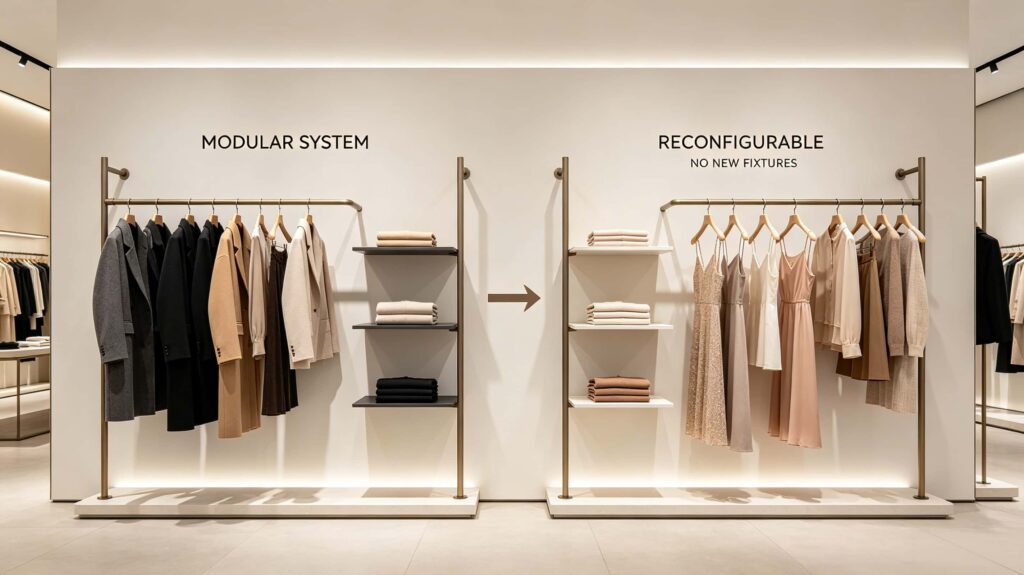
Fashion changes quickly. A rack that works for winter coats may be useless for summer dresses. Modular clothing systems let you move shelves, add hanging bars, or switch drawers without buying new furniture. This flexibility is why many boutique owners now choose modular display systems for retail instead of fixed, custom-built wooden units that lock you into one layout.
What storage and organization products are trending right now for boutiques?
The top trends include modular display systems, clear acrylic shelving, shelving units with built-in LED illumination, and multi-functional island counters with integrated storage. These solutions maximize small floor spaces while creating a premium, Instagram-worthy shopping experience.
Each of these trends solves a real problem. Modular systems keep you adaptable. Clear acrylic shelves keep products visible without heavy visual weight. LED illumination draws the eye and makes textiles or cosmetics look more expensive. Multi-functional island counters turn dead center floor space into both a display and a storage hub. Together, they create a boutique that feels open, organized, and expensive without requiring a massive build-out.
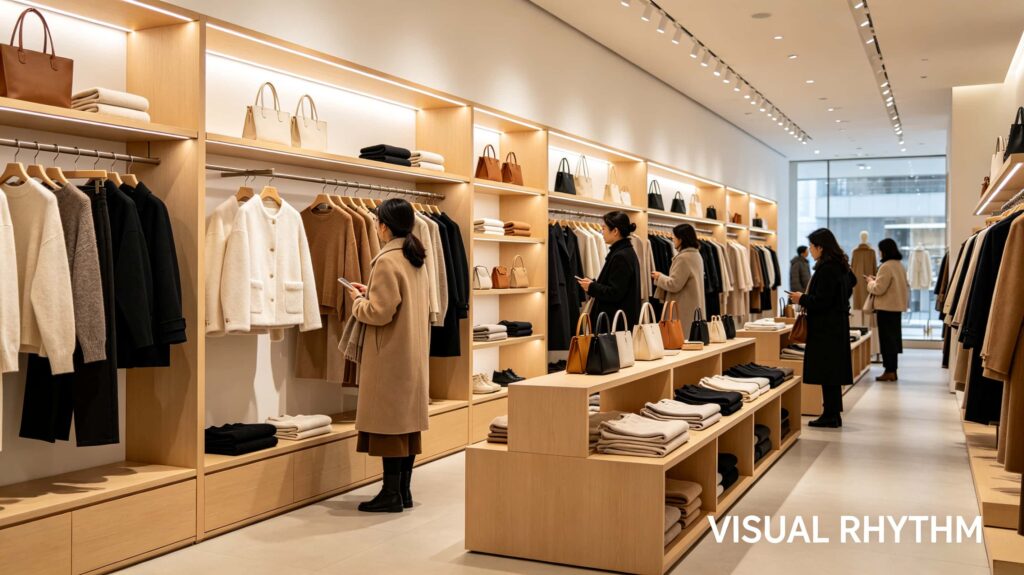
Clear acrylic shelving: light, bright, and always in style
Clear acrylic shelving units are having a major moment because they almost disappear. In a small boutique, heavy wooden shelves can make the space feel cramped. Acrylic, especially when paired with LED edge lighting, creates the illusion of floating product. A customer sees the item, not the shelf. This works particularly well for handbags, shoes, folded apparel, and cosmetics. And because acrylic is easy to clean and resists scratches, it stays looking new longer.
Illuminated shelving units: turning storage into a spotlight
Illuminated acrylic shelving units are one of the fastest-growing requests in boutique fixture production. The light is built into the shelf edge or underside, creating a soft glow that highlights the product. From a factory perspective, this requires precise LED channel routing and a high-CRI light source. In clothing boutiques, warm white LEDs around 3000K to 3500K work best because they make fabrics look rich and natural. Cool white can make garments look washed out and sterile.
Multi-functional island counters
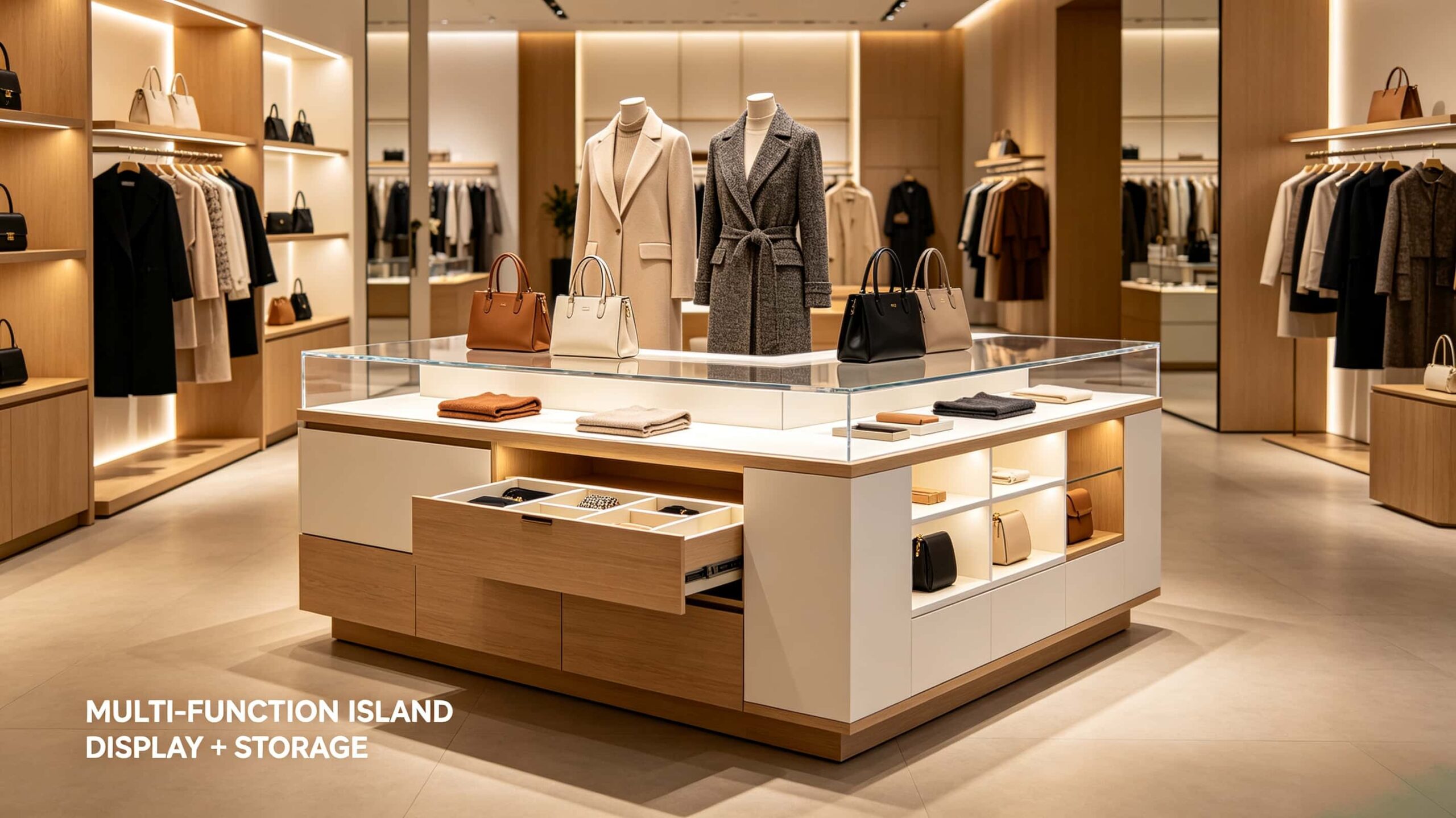
An island counter is no longer just a checkout station. Modern boutique store fixtures now include island units with hidden drawers, lockable compartments, and open display cubbies. This gives you a place to showcase new arrivals on top while storing bags, tissue paper, and extra stock below. For small stores, this one piece of furniture can replace three or four separate units.
Why are modular display systems dominating boutique retail?
Modular systems dominate boutique retail because they allow you to reconfigure shelf heights, hanging bars, and dividers as your merchandise changes. You do not need to buy new fixtures every season. This flexibility dramatically lowers long-term store update costs and helps small spaces adapt quickly.
Traditional custom millwork is beautiful but static. Once built, it stays the way it is. If you change your product mix from folded denim to hanging dresses, a fixed shelf wall becomes a problem. Modular display systems for retail solve this by using slotted standards, adjustable brackets, and interchangeable components. You can change a wall from shelving to hanging in minutes, without calling a contractor.
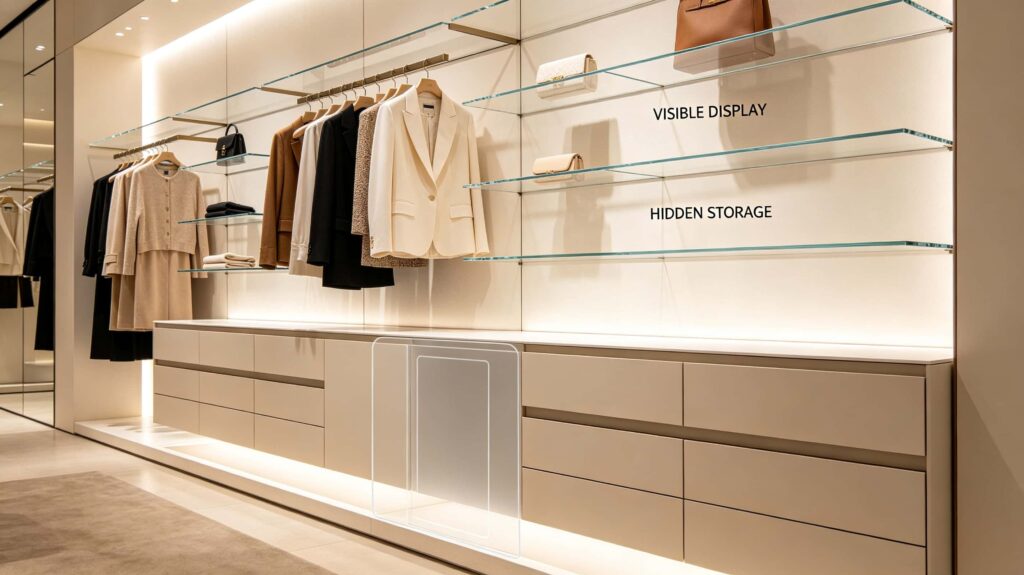
Lower lifetime cost, not just upfront price
Some boutique owners hesitate because modular systems can cost more initially than cheap fixed units. But the math changes when you consider the alternative: buying new furniture every time your display needs change. A quality modular system lasts ten years or more and can be reused in different configurations, different store locations, or even sold when you close. Cheap fixtures end up in the landfill within two years.
Easier to move and expand
If you sign a lease on a new space, modular systems move with you. They are designed to be disassembled and reassembled without losing structural integrity. Many boutique storage and organization products now use tool-free assembly or simple cam locks, so your team can handle a weekend re-layout without professional help. This also reduces downtime when you refresh the store.
How do illuminated LED shelves boost boutique sales?
Illuminated LED shelves boost boutique sales by creating a strong visual focus. Light directed from inside the shelf makes product textures and colors pop, captures attention from across the room, and encourages impulse purchases. Good lighting is like a silent salesperson that never takes a day off.
When a customer walks past your store, their eye is drawn to contrast and brightness. A dark corner with unlit shelves becomes invisible. An illuminated acrylic shelving unit becomes a beacon. The light makes every product on that shelf look intentional and premium. In clothing boutiques, this means higher perceived value and fewer price objections.
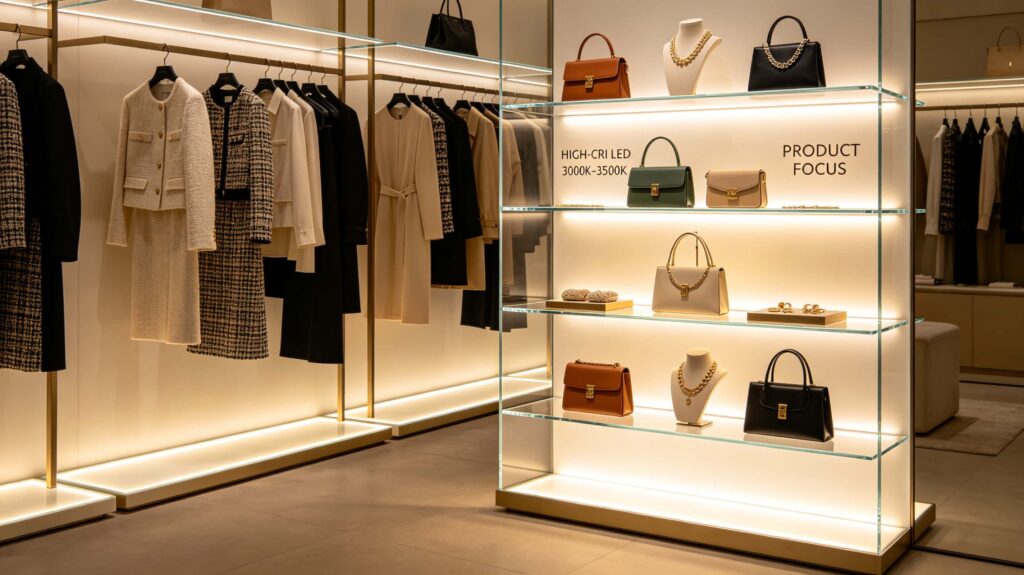
The role of color rendering in fashion retail
Not all LED lighting is equal. In a boutique, color accuracy is everything. A low-CRI LED can make a blush pink dress look beige or a navy blazer look black. That leads to returns and unhappy customers. When you order illuminated shelving, ask for LED strips with a CRI of 90 or above. At factory level, we always specify high-CRI diodes for retail because the small cost difference is nothing compared to the sales lost from poor color rendering.
Placement and light temperature
The best results come from placing illuminated shelves at eye level, roughly 120 cm to 150 cm from the floor. Too high and customers ignore it; too low and the light hits the floor instead of the product. For fashion, warm white light around 3000K is flattering. For jewelry or cosmetics, a neutral white around 4000K gives a cleaner, more clinical look. A good factory will ask what you are selling before recommending the LED color temperature.
How to customize trending display products for your boutique?
Customizing these trending products is simple. You provide your store floor plan, brand colors, and product types. The factory then adjusts the dimensions, finishes, shelf materials, and LED color temperature of modular systems, acrylic shelving, and island counters to match your boutique perfectly.
Customization does not mean starting from scratch and paying a fortune. It means taking proven modular components and adapting them to your space. You might need a shelf depth of 35 cm instead of 30 cm for handbags, or a hanging rail height of 160 cm for maxi dresses. These small changes make the fixtures feel built for your store, not just bought from a catalog.
What to prepare before contacting a factory
Before you reach out, measure your store walls, ceiling height, and window positions. Take note of where your power outlets are, because illuminated shelving needs wiring access. Write down the types of products you sell most and their average dimensions. This information allows the factory to produce a 3D layout that actually fits your boutique, avoiding costly mistakes.
3D rendering: see before you buy
A serious factory will offer a 3D rendering based on your floor plan. This lets you see exactly how the modular display systems, acrylic shelving, and LED fixtures will look in your store before you spend a dollar. You can request changes—move a shelf higher, add a drawer, change a finish—until the design feels right. This is the big advantage of working directly with a manufacturer rather than buying off-the-shelf.
How to buy custom boutique fixtures from a factory direct?
Buying custom boutique fixtures directly from a factory saves middleman costs and ensures a perfect fit. Send your floor plan and product list, and the factory will provide a 3D layout and direct quote. After you confirm materials and lighting, production begins and shipping is arranged to your store.
When you buy through a distributor or retail fixture supplier, you pay extra for their overhead, storage, and sales commission. Going factory-direct removes those layers. You communicate directly with the engineers who will build your boutique storage and organization products. That direct line means fewer misunderstandings and faster revisions.
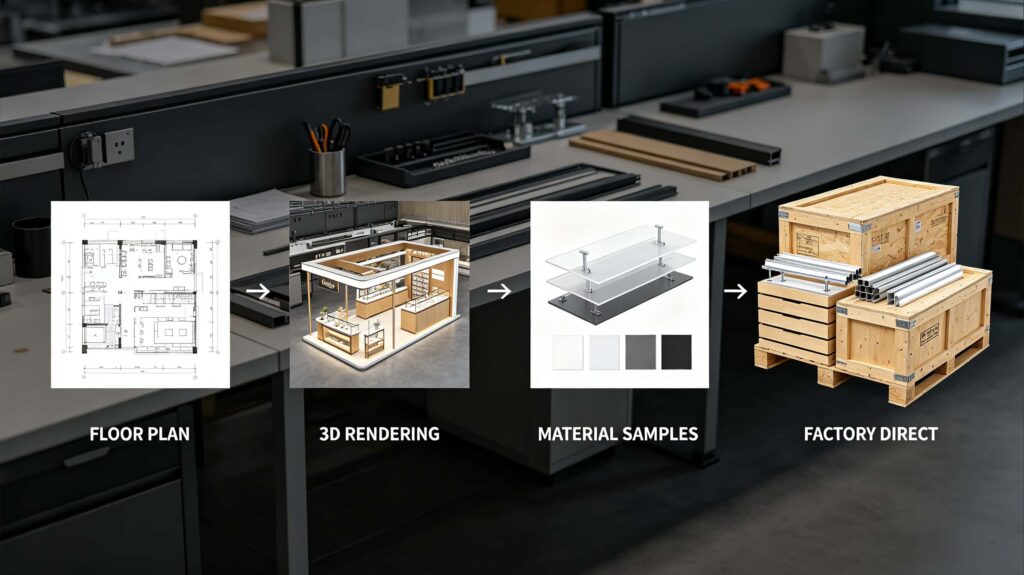
Step 1: Send your floor plan and product list
Start with a simple sketch or CAD file of your store. Mark the location of doors, windows, power outlets, and existing counters. List the types of products you want to display: hanging garments, folded items, shoes, handbags, accessories. The more detail you provide, the more accurate the 3D design will be. Do not worry if your sketch is rough—factory teams work with hand drawings all the time.
Step 2: Review your 3D layout and material samples
Once the factory receives your information, they should send a 3D rendering showing the recommended modular fixtures in your space. Look at the layout from the customer’s viewpoint. Is the lighting positioned to flatter the product? Are the shelves deep enough? Are the drawers accessible for staff? Request physical material samples for metal finishes, acrylic thickness, and laminate colors before you approve production.
Step 3: Confirm production and shipping
After approval, you will receive a final quotation covering all units, lighting, packaging, and freight. Production for custom boutique fixtures typically takes two to four weeks depending on order size. Ask about packaging: modular components should be wrapped in foam and packed in reinforced cartons or wooden crates. Confirm the delivery address and whether you need assembly instructions or on-site installation support.
Why factory-direct is the smartest choice
A factory that specializes in modern boutique store fixtures understands retail durability, freight logistics, and international safety standards. You are not just buying shelves; you are buying a system that will support your business for years. When issues arise, you speak directly to the people who made the product, not a call center.
Ready to plan your boutique? Send us your floor plan and product dimensions today. Our factory team will prepare a 3D layout and a direct factory quote for your custom boutique storage and organization products—no middlemen, no retail markup. Get modular display systems, illuminated acrylic shelving units, and island counters built for your store, delivered on time, and designed to sell.