Fiberglass Display Props: A Complete B2B Guide to Cost, Durability & Sourcing

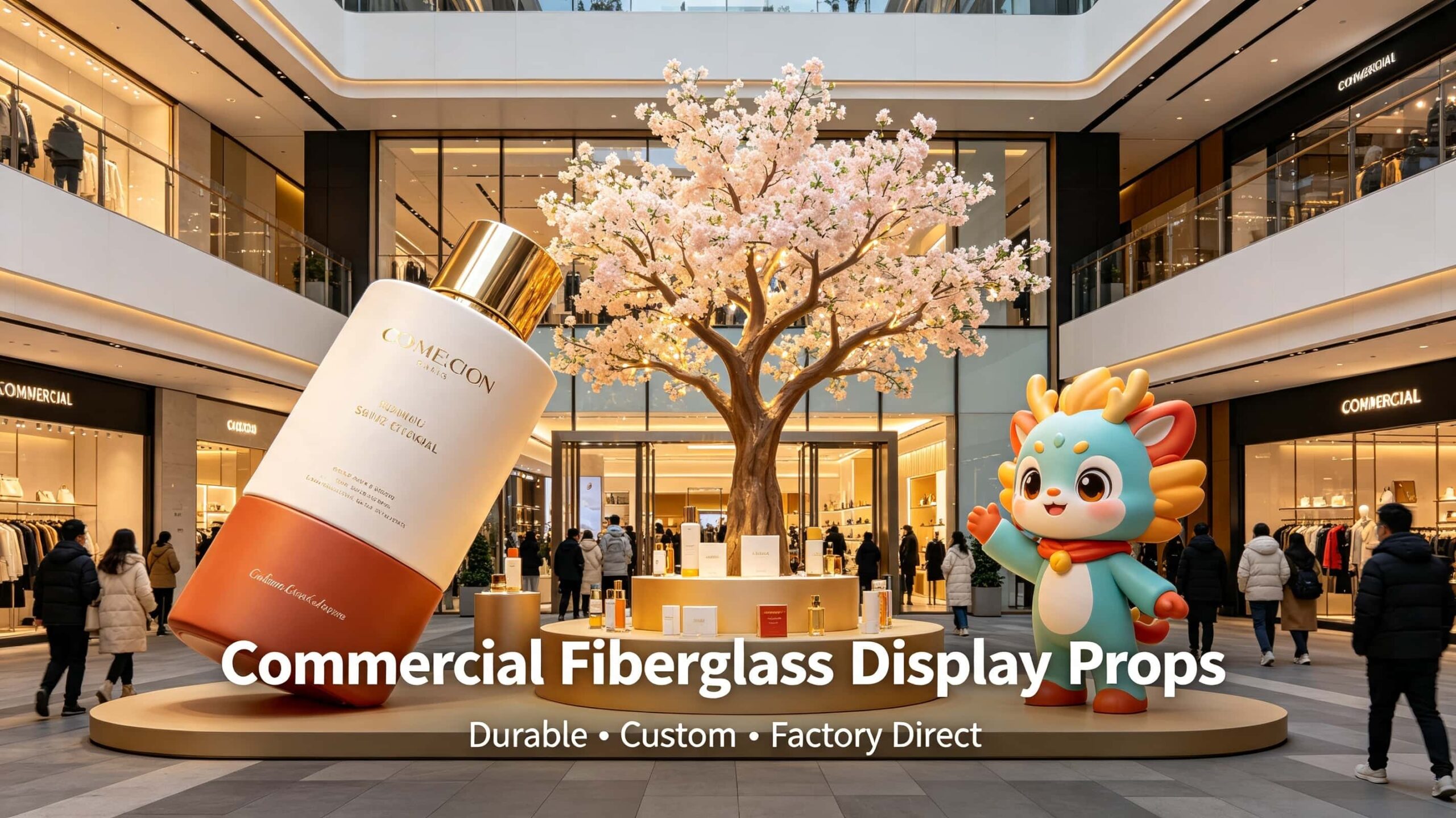
If you manage a retail space or handle store fixtures, you already know that the right display prop can increase dwell time and product visibility. Commercial fiberglass display props have become the go-to solution for retailers who need sculptural, durable, and custom-shaped displays that wood, acrylic, or metal simply cannot deliver. In this guide, I’ll share the real factory perspective on cost, longevity, common drawbacks, and how to source without overpaying middlemen.
Is Fiberglass Basically Plastic?
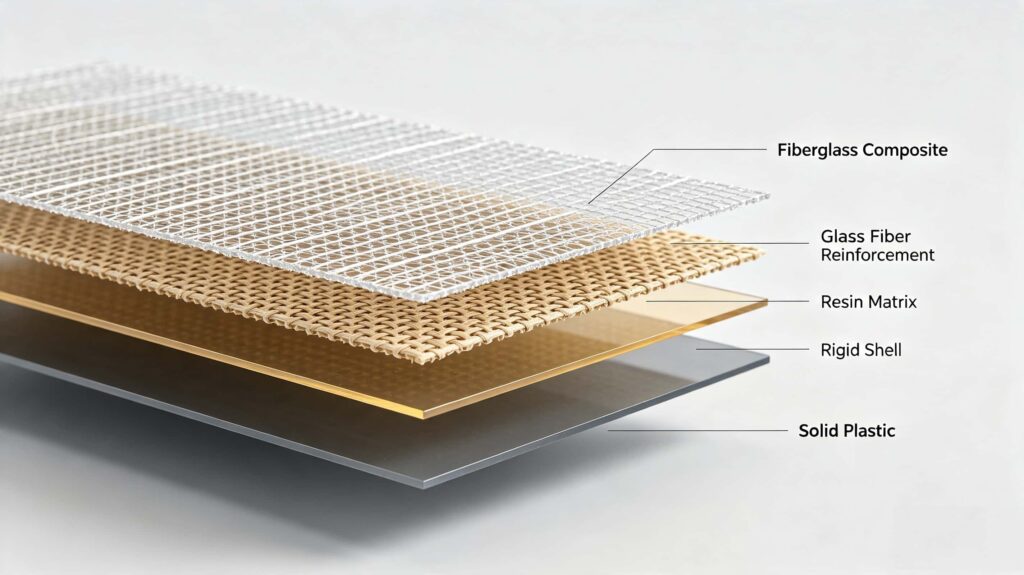
No. While both are polymers, commercial fiberglass is significantly stronger. It is a composite material made of a plastic resin reinforced with fine glass fibers. This makes it lightweight, exceptionally durable, and shapeable into intricate 3D designs, which is why it’s the top choice for large-scale commercial retail props.
A lot of retail buyers assume fiberglass is just a fancy plastic. That misunderstanding leads to poor sourcing decisions. The glass fiber reinforcement gives the material a tensile strength that solid plastics like acrylic or polycarbonate cannot match at the same weight. When our factory lays up a display prop, we use several layers of chopped strand mat and woven roving. The resin soaks into the fibers and cures into a rigid shell. This shell holds crisp details on the outside while resisting stress cracks on the inside, even when shoppers lean on it.
Why Composite Beats Solid Plastic in Retail
Solid plastic sheets need thick cross-sections to support weight, which adds cost and visual bulk. Composite fiberglass can be thin yet strong. That allows us to create hollow, lightweight forms like giant product replicas, tree displays, or cartoon characters without making them too heavy for floor staff to reposition. For a mall kiosk, every kilogram matters because you may need to move the prop overnight.
How Much Does a Fiberglass Sculpture Cost?
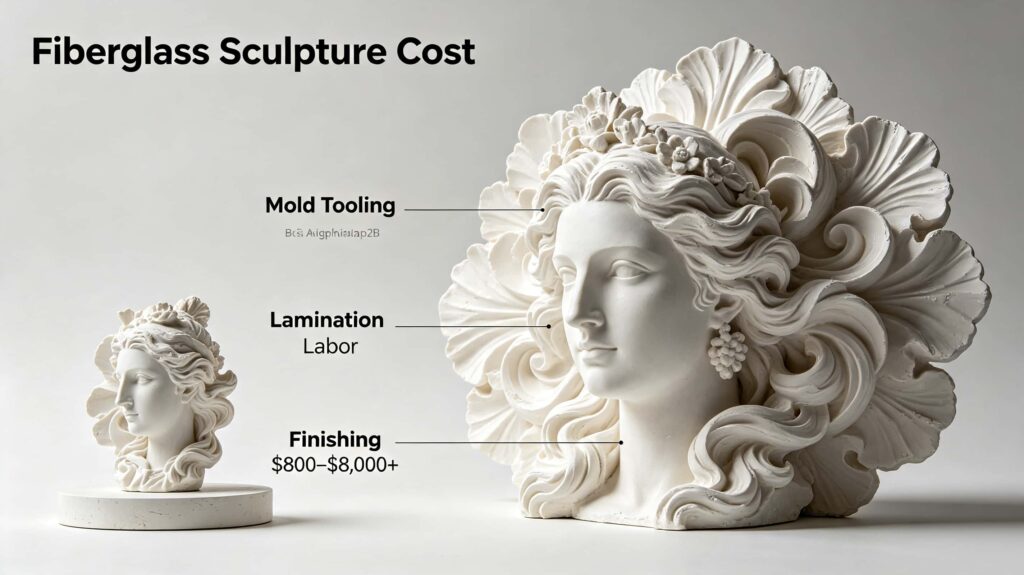
The cost of a commercial fiberglass sculpture ranges widely based on size, complexity, and finish. A small 2-meter prop might start around $800, while a massive 5-meter intricate structure with custom painting and integrated LED lighting can cost upwards of $8,000+. Factory direct often saves 30-50% vs local distributors.
When I quote a fiberglass sculpture cost for malls, I break the price into three parts: mold tooling, lamination labor, and finishing. A simple cylinder or sphere needs a basic mold, so the tooling fee is low. A complex organic shape with undercuts, like a mascot or a dragon, requires a multi-piece mold and more hand finishing. For a one-off custom piece, the mold cost is included in the unit price. For a run of ten or twenty identical props, the mold cost is spread across the units, which drops the per-unit price significantly.
Cost Variables Retail Buyers Miss
Finish level drives price more than size in many cases. A matte single-color paint job is inexpensive. A high-gloss automotive finish with airbrushed shading, metallic flakes, or clear-coated graphics can double the labor cost. Integrated lighting, embedded signage, or rotating bases also add electrical work and structural changes. When you request a quote, specify the exact finish you want. That prevents a lowball offer that later balloons with change orders.
What Are the Disadvantages of Fiberglass?
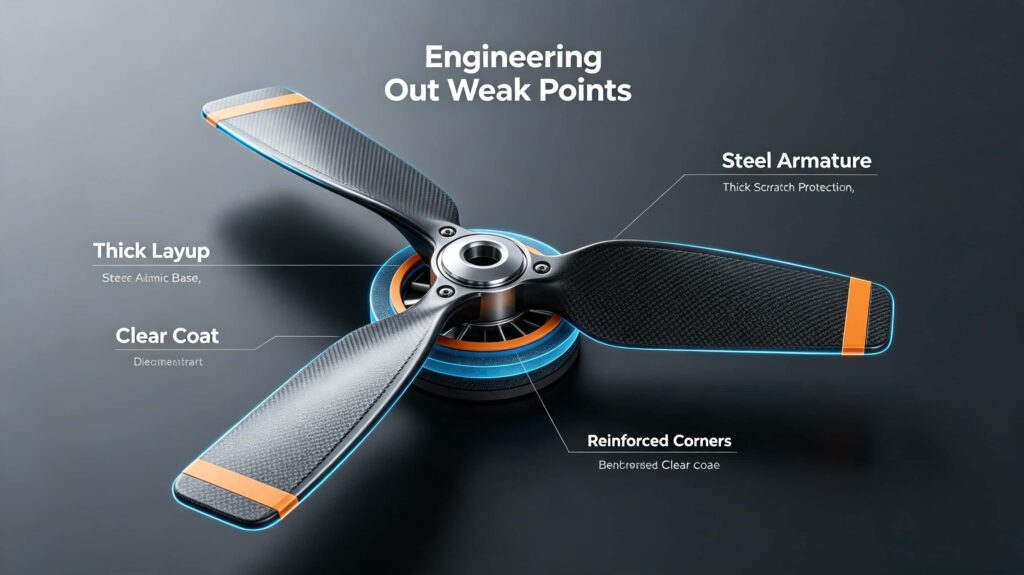
The primary concerns are initial cost and vulnerability to strong impacts. However, in commercial manufacturing, we overcome this by using thick-walled layups, UV-inhibited automotive-grade gel coats, and internal steel reinforcing frames. This ensures our props withstand mall foot traffic and outdoor elements safely.
I will be honest with you: fiberglass is not indestructible. A sharp impact from a pallet jack or a deliberate kick can crack the surface. Repair is possible but requires sanding, patching with new glass, and repainting the affected area. For this reason, we recommend internal steel armatures for any prop taller than three meters or placed in high-traffic areas. The steel frame absorbs lateral forces and prevents the shell from flexing too far. For custom fiberglass retail props, we also increase the laminate thickness on the base and corners, where most damage occurs.
Engineering Out the Weak Points
Another weakness is surface scratching. Over time, a poorly finished prop can look dull. We solve this by applying a sacrificial clear coat. If the prop gets scuffed, you can lightly sand and re-clear the area without repainting the base color. This is standard for mall displays that get touched daily.
How Long Do Fiberglass Statues Last?
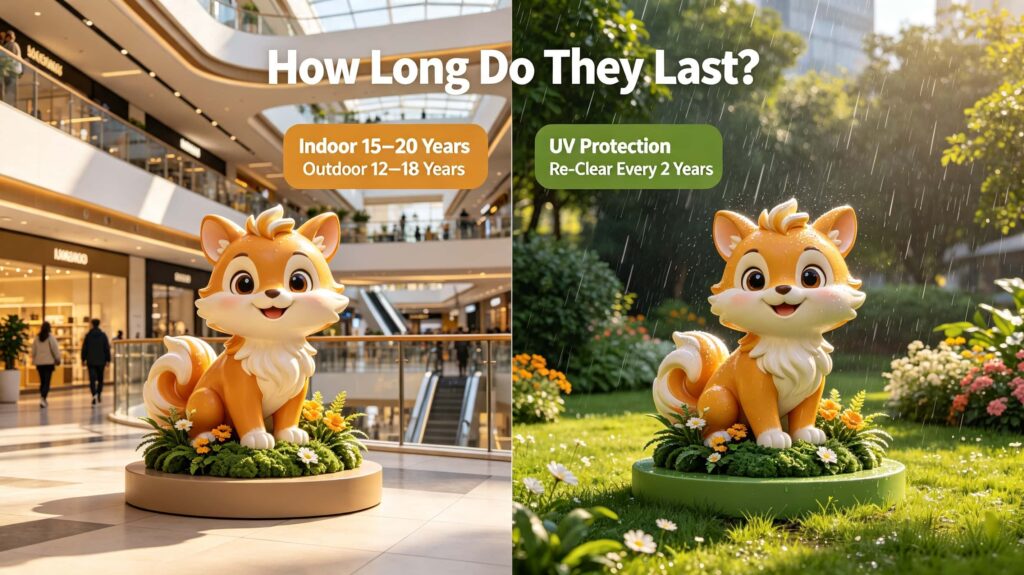
With proper manufacturing, a commercial fiberglass statue can easily last 15 to 25 years in an outdoor or mall environment. Durability heavily depends on the thickness of the fiberglass layup and the quality of the exterior UV and weather-resistant clear coat applied by the factory.
I have seen budget imports fail in three to five years because the factory skipped the gel coat or used a cheap polyester resin without UV stabilizers. The surface turns chalky, micro-cracks appear, and moisture seeps into the laminate. Once water enters the fiber matrix, freeze-thaw cycles can delaminate the layers. That is why we use marine-grade resin and a two-stage automotive clear coat for any piece that will see sunlight or humidity. Indoor props can use a lighter finish, but outdoor fiberglass display statues require the extra protection.
Indoor vs Outdoor Lifespan
A well-built indoor prop can last 20 years with only dusting and occasional touch-ups. Outdoor pieces face UV exposure, rain, and temperature swings, so their realistic service life is closer to 12-18 years before they need a full repaint. The clear coat does not fail all at once; it gradually wears thin. Inspect your outdoor pieces every two years and schedule a re-clear before the base color fades.
Who Makes Fiberglass Statues?
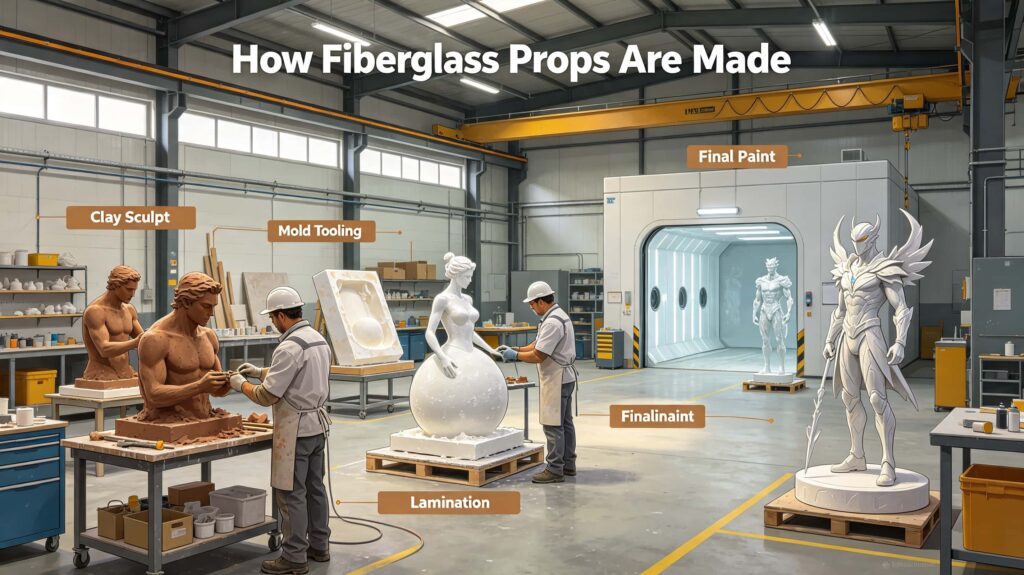
In the B2B retail industry, fiberglass statues and display props are made by professional commercial display manufacturers and mold-making factories. They handle the full process from clay sculpting, mold tooling, fiberglass layup, and final painting. As a direct manufacturer, we offer flexible custom sourcing.
Not all suppliers are equal. Many importers and trading companies pose as factories, but they outsource production to small workshops with inconsistent quality. A genuine bulk fiberglass props manufacturer will have an in-house sculpting team, mold-making department, lamination room, and paint booth. When you evaluate a supplier, ask for a live video tour of the production floor. If they hesitate, that is a red flag. For custom fiberglass retail props, you want a factory that can take your 2D drawing, 3D file, or even a rough sketch and produce a clay maquette for your approval before committing to the final mold.
Avoiding Trading Company Markups
Working directly with a manufacturer cuts out the distributor margin. A trading company typically adds 30-70% on top of the factory price and may not even understand the technical details. Direct sourcing also speeds up communication. If you need a design change, you talk to the sculptor or the production manager, not a sales agent who has to relay messages.
Can a Fiberglass Statue Be Outside?
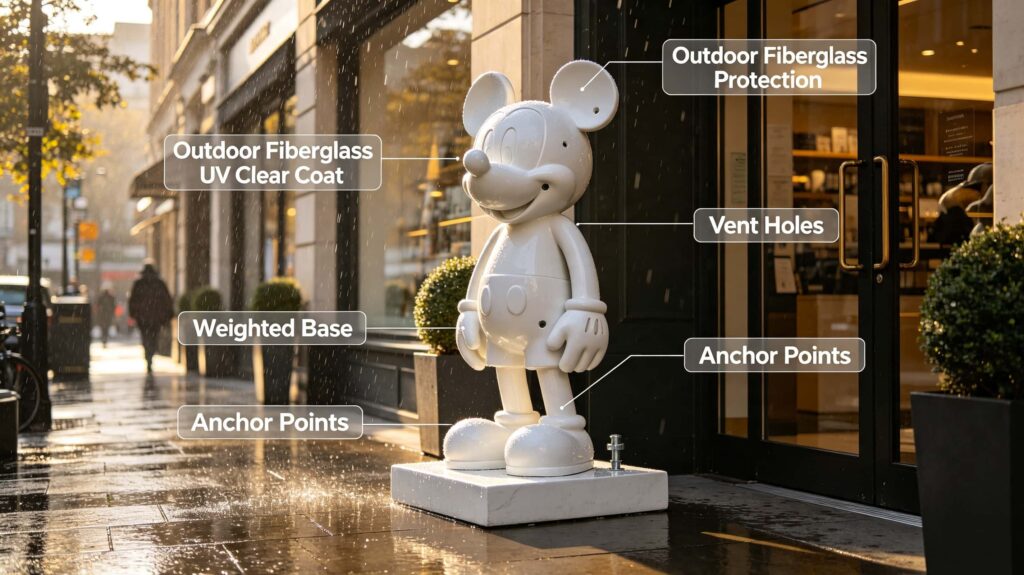
Absolutely. Professional-grade commercial fiberglass statues are treated specifically for outdoor use. We apply a heavy-duty, UV-resistant automotive-grade clear coat to the finished product. This prevents fading from sunlight and protects against moisture and mild temperature fluctuations, ensuring it remains vibrant for years.
Outdoor fiberglass display statues face two main threats: ultraviolet radiation and trapped moisture. UV breaks down the resin over time, causing yellowing and surface chalking. Moisture inside a hollow statue can condense and delaminate the laminate from the inside out. That is why our factory installs small ventilation holes in the base or hidden back side of outdoor pieces. The clear coat blocks UV, while the vents allow pressure and humidity to escape. For storefronts and mall entrances, we also add a weighted internal base or anchor bolt points. A tall statue with a broad sail area can tip in strong wind if it is hollow and not anchored.
Weatherproofing for Storefronts and Malls
If your outdoor prop is placed under an awning or partial shade, the UV exposure is lower, and a standard automotive clear coat may be enough. For full sun exposure, we recommend a high-solids urethane clear with added UV inhibitors. This upgrade costs about 8-12% more but extends the vibrant color life by several years.
Ready to source factory-direct without the middleman markup? Send us your store floor plan, the width and height of your entrance or display area, and the type of products you sell. Our in-house design team will create a 3D layout rendering of your custom commercial fiberglass display props, along with a transparent factory quote. You work directly with the mold-making team that builds the props—no distributor fees, no agent commissions, no hidden mold charges. Contact us today and get your design on the production schedule within 48 hours.