Commercial Display Cabinets: The Ultimate Guide to Store Fixtures and Buying

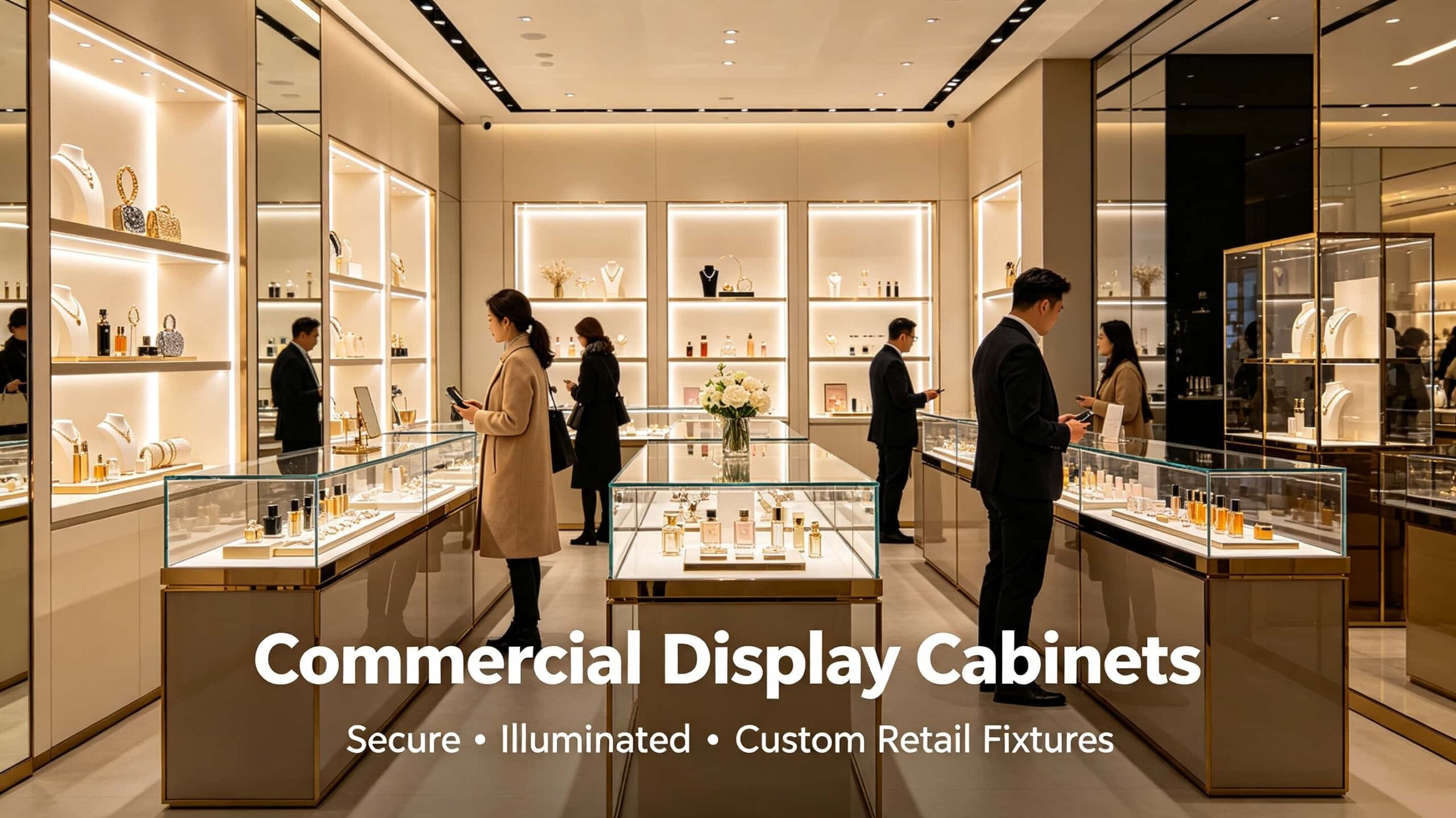
A store’s display furniture does more than hold products. It sets the tone for your brand, guides customer movement, and often determines whether someone stops to look or walks straight past. Commercial display cabinets are one of the most important investments a retail owner can make. They protect goods, improve visibility, and create a sense of value that open shelving simply cannot match.
Over the years, I have seen countless retailers waste money on flimsy cases that fog up, wobble, or fail within a season. The problem is rarely the idea; it is the sourcing. Many buyers choose mass-produced units that do not fit their space or product range. A custom retail display fixture built for your store is almost always a better long-term decision. This guide answers the most common questions about commercial glass display cabinets, display cases with LED lights, and how to work with a store display furniture manufacturer without paying inflated middleman prices.
What are commercial display cabinets?
Commercial display cabinets are retail fixtures with transparent panels, usually glass, built to showcase products while protecting them from dust, handling, and theft. They come as countertop units, floor cases, or full wall systems. A good unit balances visibility, security, and lighting, so customers see the product clearly without needing staff assistance.
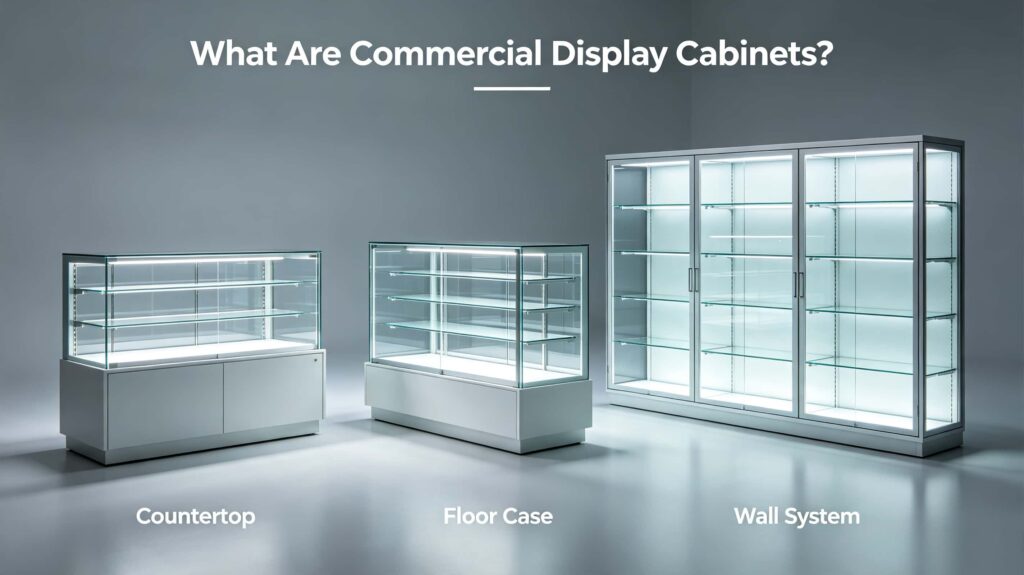
The term “commercial” matters because these are not residential curio cabinets. They must withstand daily use, constant opening and closing, and sometimes heavy loads. A standard home cabinet will not survive a busy retail environment. Commercial units are built with reinforced glass, locking doors, and frames that can handle frequent cleaning.
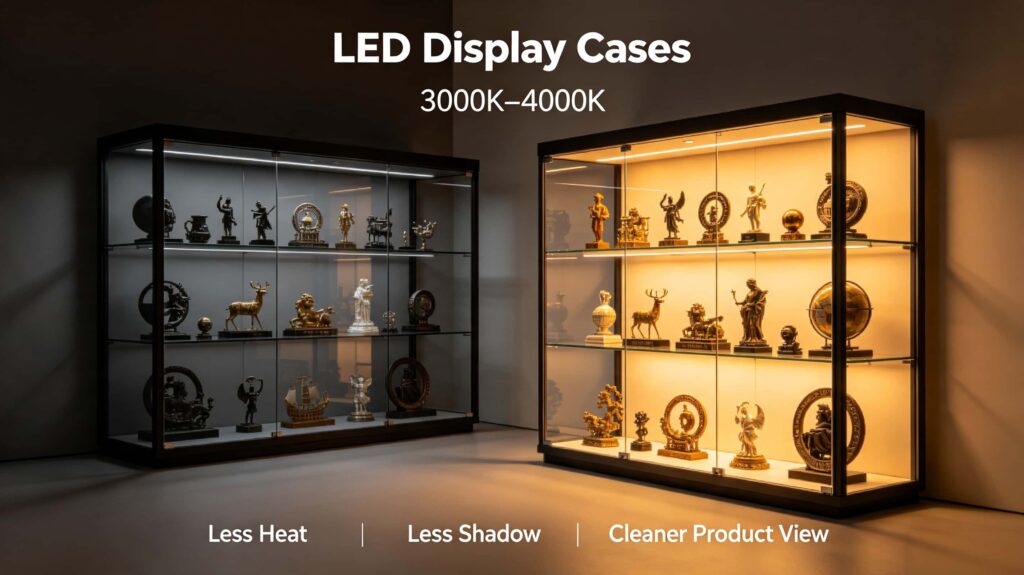
Most stores use commercial display cabinets for jewelry, electronics, collectibles, cosmetics, bakery items, or high-end accessories. The cases often include adjustable shelves so you can change the layout seasonally. Many also feature built-in LED lighting, which brings us to one of the most requested upgrades: display cases with LED lights. LED strips eliminate shadows and make products look sharper without adding heat, which is critical for food or heat-sensitive collectibles.
When planning a store, it helps to think about display furniture as part of a larger visual system. For example, a warm copper reception desk near the entrance can anchor the space and provide a natural transition into a row of glass display cabinets. The metal tone of the reception desk can echo the cabinet frames, creating a cohesive look without spending extra on custom finishes. A good factory will ask about these surrounding elements before quoting a project.
What is store display furniture called?
Store display furniture is often called retail fixtures, shop fittings, or display merchandising units. These include gondola shelving, slatwall panels, mannequins, and custom retail display fixtures. The term covers any furniture used to present products in a commercial space, from a simple shelf to an illuminated glass showcase.
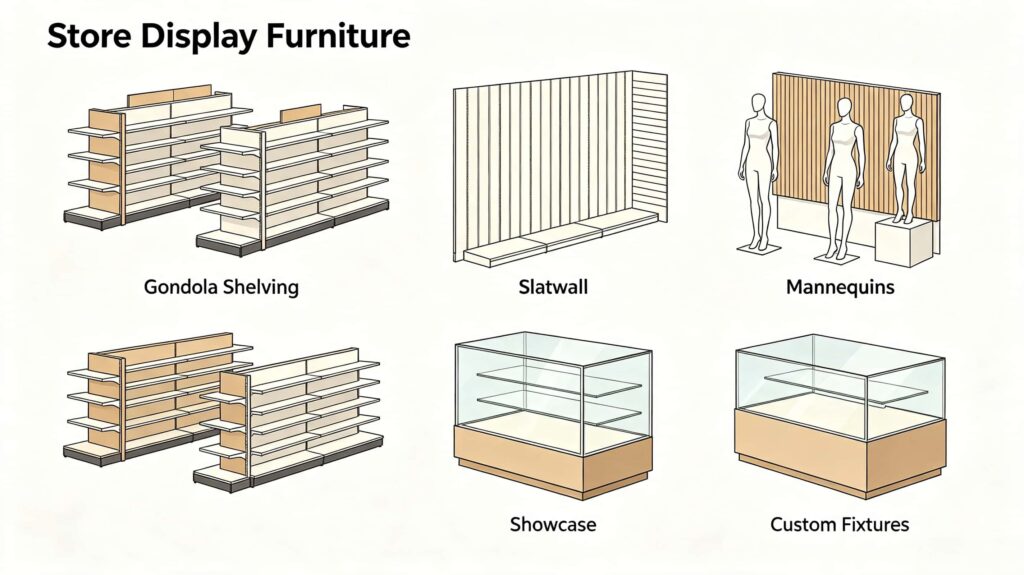
In the industry, “retail fixtures” is probably the broadest term. It includes anything bolted to the wall, freestanding on the floor, or sitting on a counter. “Shop fittings” is used more often in the UK and Australia, while “store fixtures” is common in North America. Buyers may also hear “display merchandising units” or simply “displays.”
A store display furniture manufacturer usually builds both standard and custom pieces. Standard items are mass-produced and available in a few standard sizes. Custom pieces are made to order based on your floor plan, product dimensions, and brand colors. The difference in cost is not always as large as people assume, especially when you factor in the cost of replacing a poorly fitting standard unit.
When choosing a supplier, ask whether they produce in-house or simply resell. A true factory can modify dimensions, change glass thickness, add locks, or integrate lighting without huge upcharges. A reseller often cannot. This is why buying directly from a factory is one of the simplest ways to save money on custom retail display fixtures without sacrificing quality.
What is another name for a display cabinet?
A display cabinet is also called a showcase, display case, curio cabinet, or vitrine. In retail, “showcase” is the most common alternative. These terms all refer to an enclosed unit with glass panels, used to highlight merchandise while keeping it secure and dust-free.
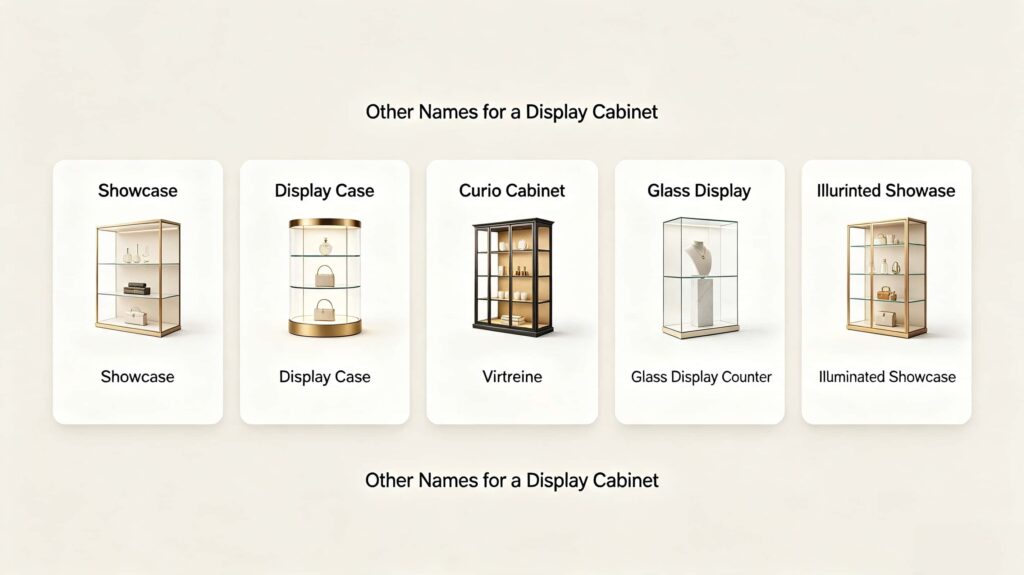
The word “vitrine” is more common in high-end or European-influenced retail. You might hear it used for designer boutiques or museum-style displays. “Curio cabinet” usually describes a smaller, more decorative piece, often with a wood frame and glass door. In commercial settings, “showcase” and “display case” are the safest choices.
Some buyers get confused when a supplier mentions a “glass display counter” or “illuminated showcase.” These are still display cabinets, just with specific features. A glass display counter sits low, often with a serving or transaction surface on top. An illuminated showcase includes internal lighting. Understanding these names helps you communicate more clearly with a store display furniture manufacturer.
A practical tip: when requesting a quote, describe the unit by function rather than a single name. For example, “I need a locking floor display case with tempered glass, LED strip lights, and adjustable shelves.” That removes ambiguity. It also signals to the factory that you know what you are looking for, which tends to result in more accurate pricing.
What is the best material for a commercial display case for collectibles?
For collectibles, the best commercial display case usually combines tempered glass, powder-coated steel or aluminum frames, and adjustable LED lighting. Glass provides clarity and UV protection options, while metal gives structural strength and security. Avoid raw wood or MDF in high-moisture areas—they warp and off-gas over time.
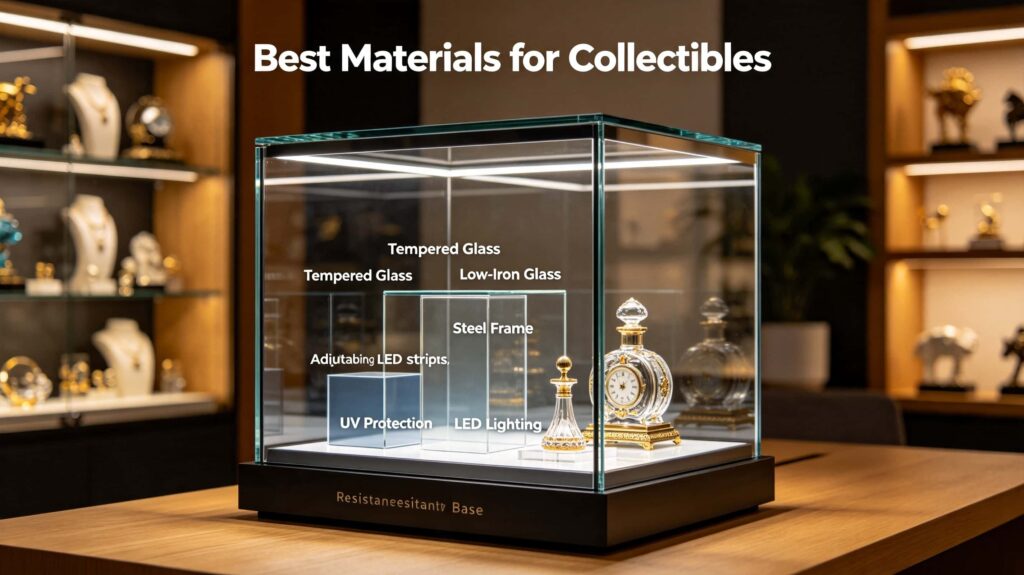
Let’s break that down. Tempered glass is safer than regular annealed glass because it shatters into small, dull pieces rather than sharp shards. For collectibles, you may also want low-iron glass, which removes the green tint seen in standard glass. This matters if you are displaying items with subtle colors or white surfaces. Some display cases with LED lights use low-iron glass to make the lighting look cleaner.
The frame material is just as important. Powder-coated steel is the workhorse of commercial glass display cabinets. It is strong, scratch-resistant, and available in many colors. Aluminum is lighter and resists corrosion, which makes it ideal for humid environments or food retail. Avoid exposed MDF or particleboard in areas with frequent spills or temperature swings, because the boards absorb moisture and begin to swell.
For collectibles, UV protection is another consideration. Standard glass blocks very little UV light, which can fade paper, fabric, and certain plastics over time. If your products are valuable or irreplaceable, ask the factory about UV-filtering glass or acrylic. Acrylic is lighter than glass and can be fabricated into curved shapes, but it scratches more easily. Many high-end collectible stores use glass for front panels and acrylic for interior shelves.
Finally, lighting. LED strips with a color temperature around 3000K to 4000K tend to flatter most collectibles. Avoid halogen lights, which generate heat and can damage sensitive items. A good store display furniture manufacturer will place LED channels so the light hits the product from above or behind, without creating glare on the glass front.
Are display cases worth it?
Yes, display cases are worth it for most retail stores. They protect high-value or fragile items, reduce theft, and make products look more premium. A well-designed case can increase perceived value and justify higher prices. The key is matching the case style and lighting to the product and store traffic.
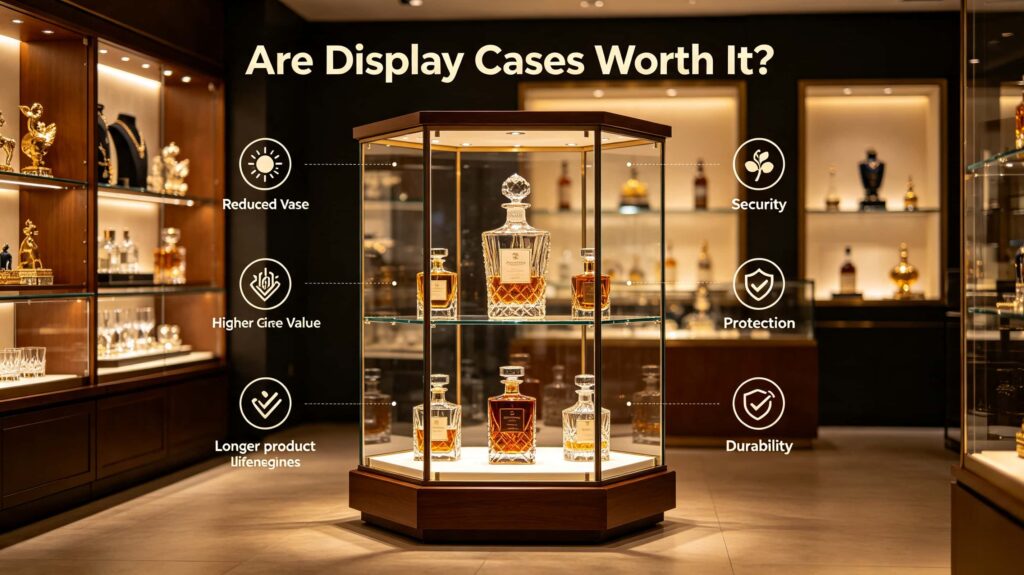
The return on investment comes from several directions. First, security. A locked display case deters casual theft and reduces the number of times staff must intervene. Second, product protection. Dust, fingerprints, and accidental knocks can ruin inventory. Third, perceived value. A collectible sitting in a clean, illuminated case appears more valuable than the same item on an open shelf. This allows you to price with confidence.
That said, not every product needs a display case. If you sell inexpensive, high-turnover items, open shelving may be more efficient. But for anything fragile, collectible, or priced above a certain threshold, a case is almost always justified. The mistake many store owners make is buying the cheapest possible case and then replacing it every two years. A well-built commercial display cabinet from a factory can last a decade or more with basic care.
When budgeting, do not forget to include freight, installation, and any electrical work for lighting. These costs can be significant for larger units. One way to control them is to order from a supplier that packages the case in sections and provides clear installation instructions. A custom unit built to your dimensions will also avoid the frustration of a standard case that leaves awkward gaps or blocks walkways.
How to work with a factory on custom commercial display cabinets
If you want a display system that truly fits your store, working directly with a factory is the smartest route. The process does not have to be complicated. In fact, a good supplier will walk you through it.
- Start with your floor plan. Even a rough sketch with dimensions works. Mark where you want the cabinets, how much walking space you need, and where electrical outlets are located. If you already have a 3D rendering or inspiration photos, send those too. The factory can then create a 3D effect drawing that places your commercial glass display cabinets in the actual space.
- Then be specific about materials, lighting, and finishes. If you want a copper reception desk nearby, mention that in the project brief. The factory can match metal finishes across your cabinet frames and reception desk so the whole store feels intentional. This is the kind of detail that separates a custom retail display fixture from a generic catalog order.
- Finally, ask for a factory-direct quote. This is the point where many retailers save the most money. There is no reason to pay a middleman markup when you can communicate directly with the production team. A reliable store display furniture manufacturer will give you a clear breakdown: materials, lighting, glass type, packaging, and shipping.
The strongest buying position is to have your floor plan and requirements ready before you contact a supplier. Send the floor plan and any reference images to a professional factory. Ask for a free 3D effect drawing and a factory-direct quote. This approach removes guesswork, reduces back-and-forth, and ensures the final product is built for your store, not for a generic warehouse shelf.
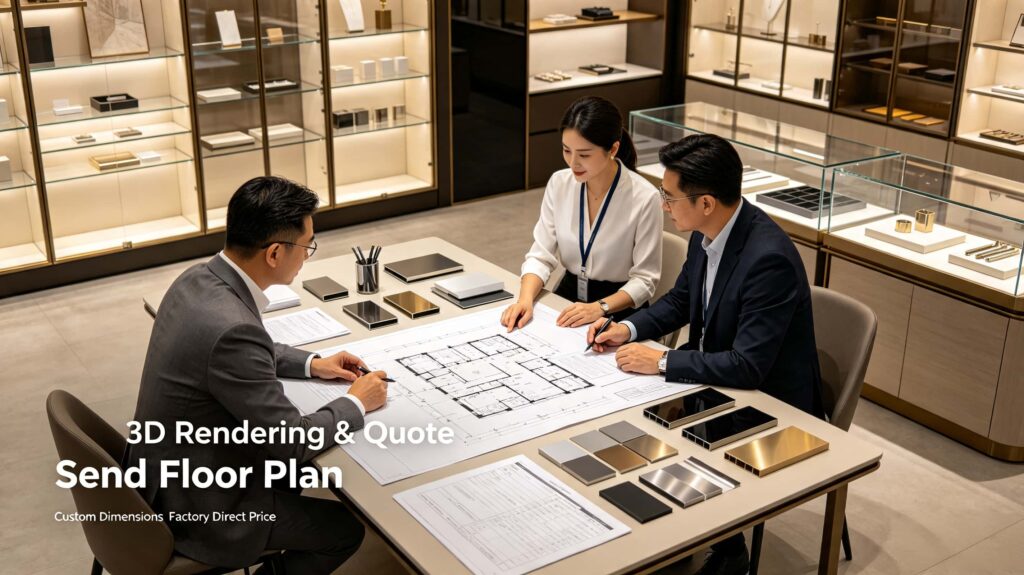
In retail, the details are the difference between a store people remember and one they walk past. Commercial display cabinets, display cases with LED lights, and custom retail display fixtures are not just furniture. They are part of your brand story. Whether you need a single locked showcase for collectibles or a full wall system with integrated lighting, buy from a factory that understands how stores actually operate. No middlemen. No inflated pricing. Just direct communication, custom design, and a product built to last. Send your floor plan today and get a 3D rendering plus a factory-direct quote.