
Exhibit Display Cases in Los Angeles: A Local Sourcing Guide for Museums & Retail

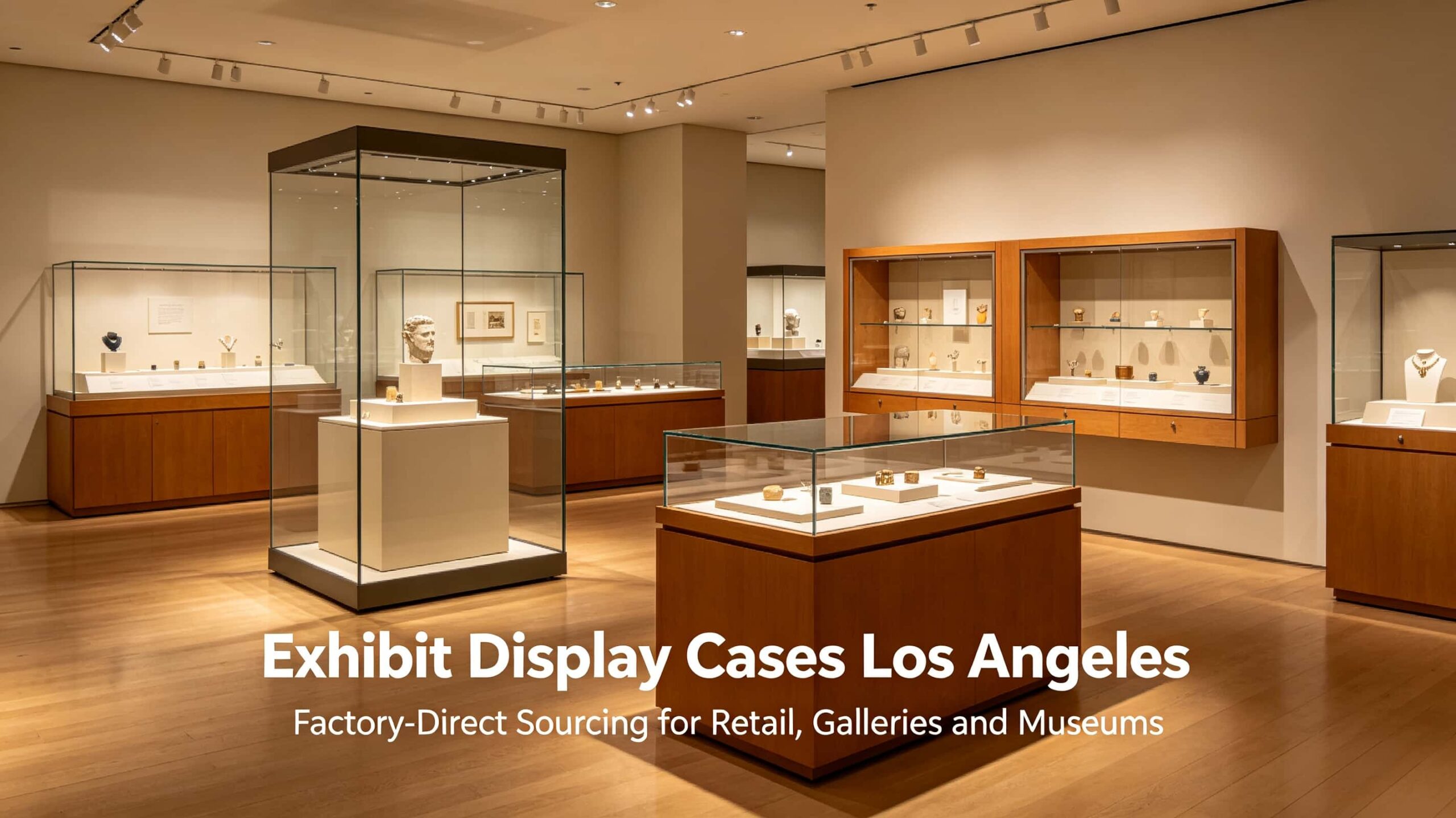
If you run a retail store, gallery, or museum in Southern California, finding the right exhibit display cases Los Angeles, CA is often more frustrating than it should be. You call a local distributor, get quoted a price that feels inflated, and wait weeks for something that still doesn’t match your floor plan. I’ve spent years on the manufacturing side of this industry, and I can tell you that most LA buyers overpay simply because they don’t know where the cases actually come from. This guide will show you how to source smarter.
Where can I purchase display cases in Los Angeles?
While there are local distributors in LA, purchasing directly from a professional B2B display manufacturer is the smarter choice. Factory-direct means you get fully customized sizes, premium materials, and significantly lower wholesale prices, even after accounting for international shipping to the Port of Los Angeles.
The Reality of Local Distributors
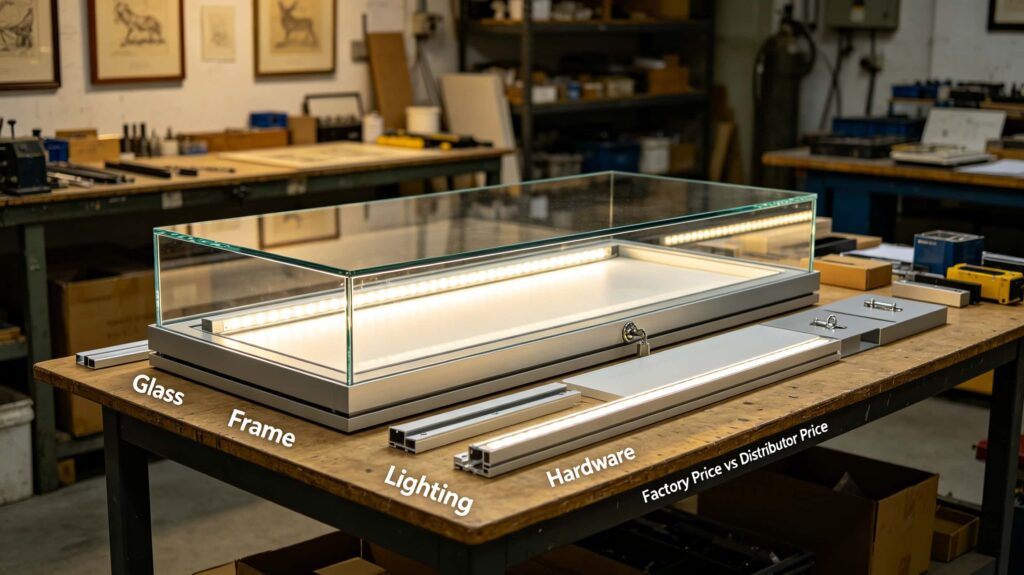
Most “local” suppliers in Los Angeles don’t build anything themselves. They import from the same factories you could contact directly, then mark up the price 40-70% to cover their showroom rent, sales commissions, and warehouse storage. I’ve seen identical aluminum extrusion frames sold in Vernon for triple what our factory charges. For commercial display cases for sale ca, the retail markup is the biggest hidden cost you face.
When you buy direct, you skip that layer. Yes, you need to handle logistics, but shipping a 20-foot container through Long Beach or LA port is a well-documented process. A competent factory will provide door-to-door quotes, customs paperwork, and even white-glove installation referrals in the LA area.
Why Factory-Direct Wins for LA Buyers
If you need custom display cases los angeles, factory-direct is not just cheaper—it’s faster in practice. Local shops often tell you a custom case takes 6-8 weeks because they’re waiting on the same overseas lead time plus their own internal queue. We can produce a fully custom modular case in 15-20 days and have it delivered to your LA loading dock within 30 days total. That’s often faster than the local “middleman” route.
I always tell buyers: get a factory quote first, then compare it to any LA distributor. Nine times out of ten, the factory quote beats the local price even after freight.
Where do museums get their display cases?
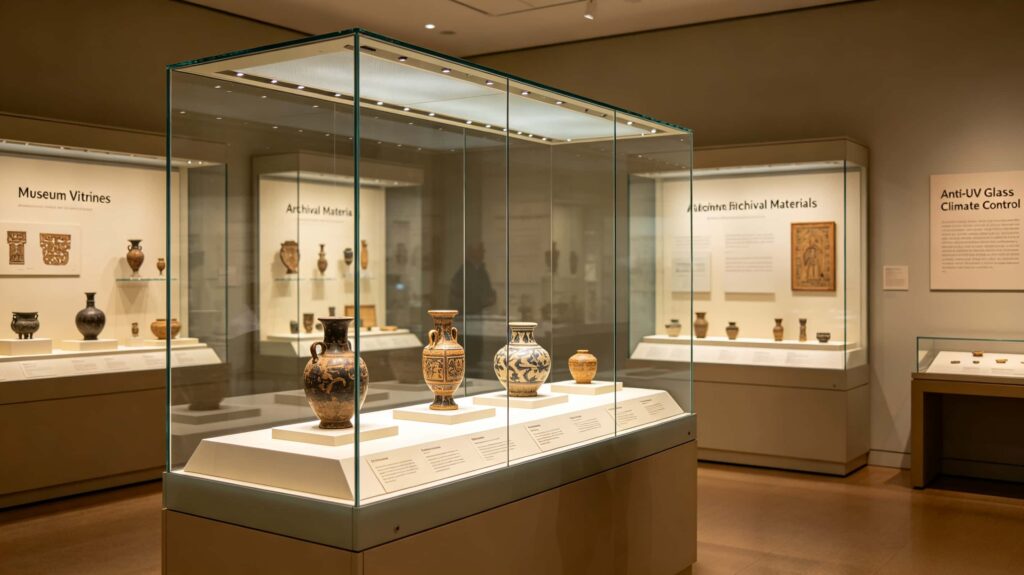
Professional museums typically source their display cases from specialized B2B commercial furniture factories. They require fully bespoke units with archival-grade materials, anti-UV glass, and precise climate control. Working directly with the manufacturer ensures the cases perfectly fit their exhibit spaces.
The Museum Procurement Path
Museums in California rarely walk into a retail showroom. They issue RFPs or work with exhibit design firms who already have factory relationships. For museum quality display cases california, the spec sheet matters more than the supplier’s location. You need low-iron laminated glass, powder-coated steel frames, and silicone gaskets that won’t off-gas and damage artifacts.
Our factory handles several museum projects each year, often building to exact architectural drawings. A recent client in Pasadena needed a 12-foot curved vitrine with internal humidity control. A local metal shop quoted them $28,000. We built it to the same spec for $14,500 including shipping. That’s the difference a dedicated display case factory makes.
What You Should Ask a Museum Case Supplier
Don’t just ask for a price. Ask for a materials breakdown. What type of glass? Is the frame welded steel or bolted aluminum? What’s the gasket material? These details determine whether your case protects artifacts for 20 years or fogs up in 18 months. A real factory will answer these questions in the first email. A reseller will dodge them.
What are museum display cases called?
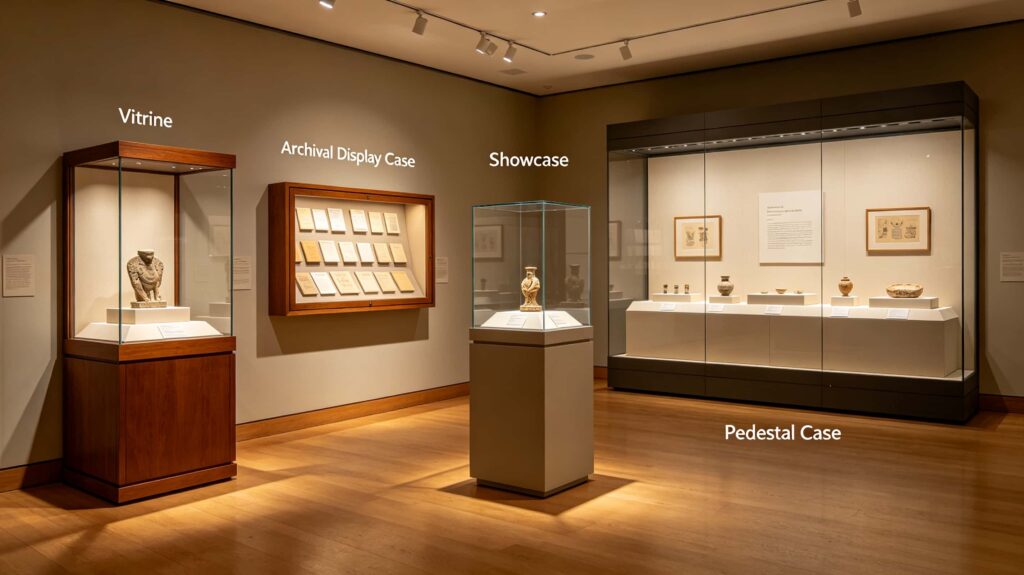
In the museum and exhibition industry, these enclosures are formally called “Vitrines,” “Archival Display Cases,” or simply “Museum Showcases.” They are designed to protect artifacts from dust, humidity, and light while offering 360-degree visibility for visitors.
The Terminology You’ll Encounter
If you’re sourcing exhibit display cases Los Angeles, CA, you’ll see several terms thrown around. A “vitrine” usually means a freestanding glass case, often with a top or side access door. An “archival case” implies conservation-grade materials like acid-free interiors and UV-filtering glass. “Showcase” is the broadest term, covering everything from jewelry counters to large exhibition enclosures.
Don’t get hung up on the label. Focus on the construction. A cheap “display cabinet” from a big-box store is not the same as a museum vitrine, even if both have glass fronts. The frame material, glass thickness, and locking mechanism are what separate professional cases from retail furniture.
What We Call Them in the Factory
On our production floor, we say “floor-standing showcase,” “wall-mounted vitrine,” or “pedestal case.” The name tells the crew the basic structure. For clients, we use whatever term they’re comfortable with, but we always clarify the load-bearing capacity and glass type. If a client asks for a “museum display case,” they’re telling us they need archival-grade protection, not just a glass box.
What are the different types of display cases available?
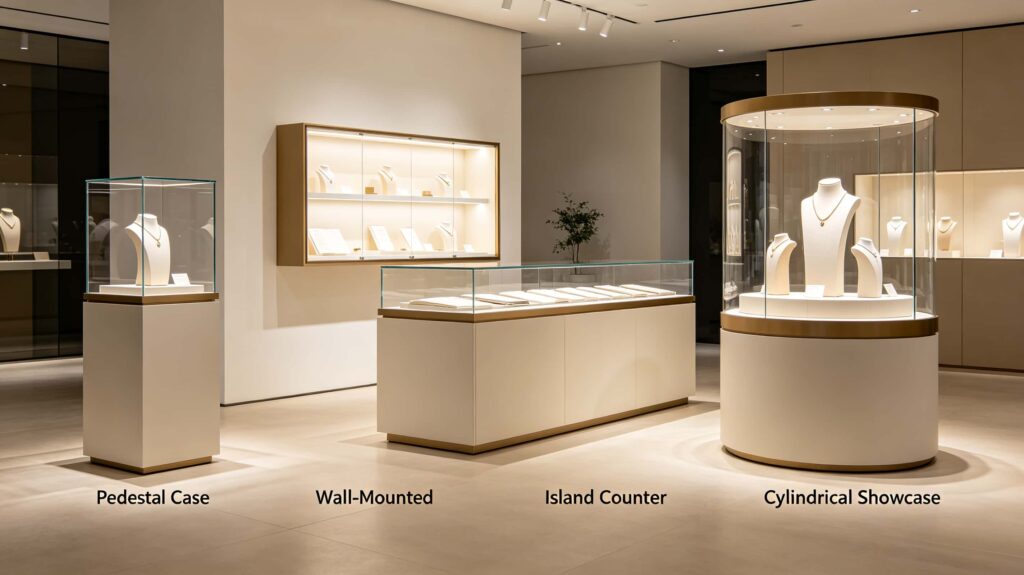
There are freestanding pedestal cases, wall-mounted cabinets, modular island counters, and rotating cylindrical showcases. For exhibitions and retail, we often recommend our modular floor-standing units, which offer high flexibility and unmatched durability for high-traffic areas.
A Breakdown of the Main Categories
Let me walk you through the types we manufacture most for LA clients. First, pedestal cases—those single-item display cubes or towers you see at trade show booths or jewelry stores. They’re compact, movable, and relatively inexpensive. Second, wall-mounted cabinets, which save floor space and work well for small retail stores or hallways. Third, island counters, which are long, low cases often used in museums to display documents or small artifacts under glass. Fourth, rotating cylindrical showcases, a premium option that creates visual drama but costs significantly more.
For exhibit cases for trade shows, modularity is key. You want cases that pack flat, assemble without tools, and survive repeated setup and teardown. Our aluminum modular line uses locking corner connectors and tempered glass panels—no exposed screws, no wobble, and quick assembly.
Which Type Fits Your Space?
A boutique clothing store on Melrose might want wall-mounted cases to keep the floor open. A gallery in Culver City showing sculptures will need heavy-duty pedestal cases with reinforced bases. A museum in Exposition Park needs climate-controlled vitrines with integrated LED lighting. The wrong type wastes money and annoys visitors. Send us your floor plan and we’ll tell you exactly what configuration makes sense.
How much does a museum display cost?
The cost for custom museum-grade display cases depends heavily on size, glass type, and lighting. Smaller wall units might start around $1,500, while large, climate-controlled freestanding vitrines with custom branding can easily exceed $10,000. Direct factory sourcing saves buyers an average of 30-50% compared to local distributors.
The Real Cost Drivers
Glass is the biggest variable. Standard tempered glass costs $8-12 per square foot. Low-iron laminated glass with UV coating costs three to four times that. A 6-foot vitrine can have $800 in glass alone if you go archival grade. The frame material matters too—steel is stronger but heavier and pricier than aluminum. And lighting? LED strips with dimmers and color-temperature control add $150-300 per case.
Then there’s labor. A welded steel case requires skilled metalworkers; a bolted aluminum case is less labor-intensive. That’s why modular cases from a factory often cost less than custom welded jobs from a local shop, even when shipped from overseas. For commercial display cases for sale ca, the price tag on a distributor’s floor includes all their overhead. The factory price doesn’t.
What You Should Budget
For a typical 4-foot freestanding vitrine with tempered glass, LED lighting, and a locking door, budget $1,800-2,500 factory-direct. The same case from an LA distributor will run $4,000-6,000. Large museum projects with multiple climate-controlled cases can run $50,000-100,000, but that’s still half what a US-based custom fabricator would charge.
Are display cases worth it?
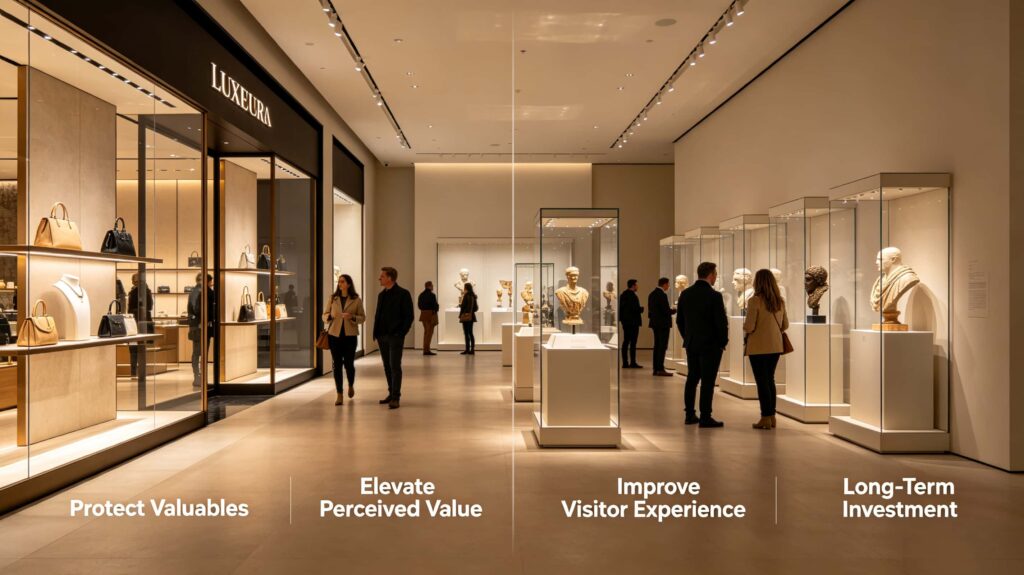
Absolutely. A well-designed exhibit display case is a long-term investment. It protects your valuable items, elevates the perceived value of your products or artifacts, and dramatically improves the customer experience, which ultimately drives higher sales or visitor engagement.
The ROI Nobody Talks About
In retail, a custom display case Los Angeles storefront does more than hold products. It signals quality. Customers associate a clean, well-lit glass case with higher-end merchandise, which lets you charge premium prices. I’ve had retail clients report a 15-20% lift in average transaction value after switching from open shelving to locked display cases. The cases paid for themselves in three months.
For museums, the ROI is even clearer. A proper archival vitrine prevents thousands of dollars in artifact damage from dust, humidity, and UV exposure. One cracked glass pane or one faded document costs more than a well-built case. And visitors spend more time at clean, well-lit exhibits, which improves your institution’s reputation and donor appeal.
The Hidden Cost of Cheap Cases
A cheap case is a liability. Poor seals let dust in. Weak hinges sag. Inferior glass fogs or scratches. Within two years, you’re replacing it, which costs more than buying a quality case once. I’ve seen this happen repeatedly in LA retail spaces where owners bought “bargain” cases from liquidation sales. You’re not saving money; you’re deferring the expense.
Get Your Factory Quote and 3D Layout
If you’re sourcing exhibit display cases Los Angeles, CA, don’t settle for whatever a local distributor has in stock. Get exactly what your space needs at a price that makes sense. Send us your floor plan and a list of the item types you need to display—jewelry, sculptures, documents, electronics, whatever it is. Our design team will create a 3D layout showing case placement, dimensions, and sightlines. Then we’ll give you a factory-direct quote with clear shipping costs to the Port of Los Angeles.
No middlemen. No inflated showroom pricing. Just honest manufacturing from a team that builds display cases every day. Reach out this week, and you’ll have a proposal in your inbox before the next trade show deadline hits.