Metal vs. Wood Display Carts – Which One is Better?

Metal display carts are welded steel or aluminum retail fixtures built for durability and high traffic; wood display carts are timber-based fixtures built for warmth, branding, and flexible finishes. Metal wins on longevity and load capacity, wood wins on aesthetics and customization, and the better choice depends on your store format, budget, and merchandising goals.
Metal vs. Wood Display Carts
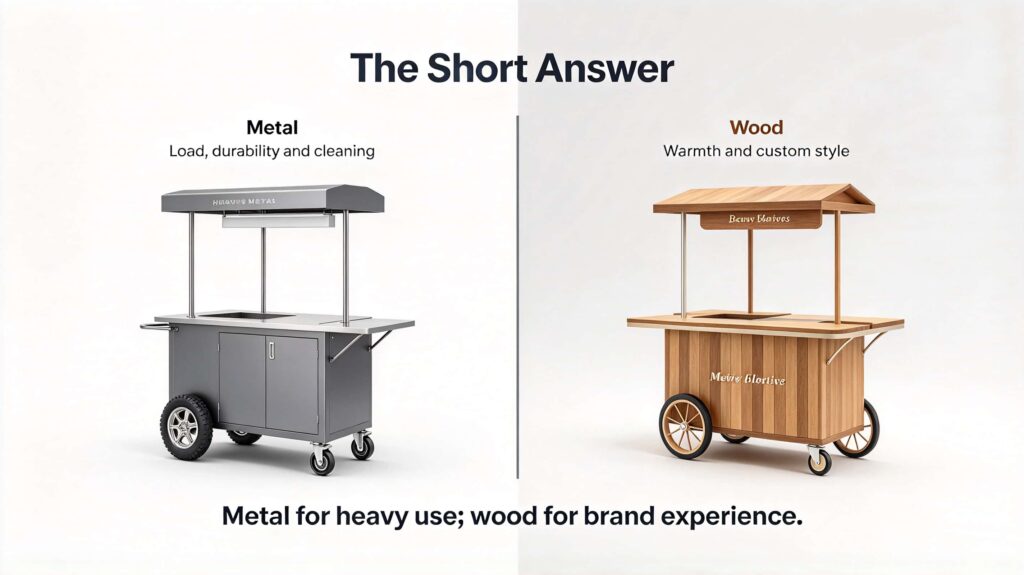
For most high-traffic retail, grocery, and hardware environments, metal display carts are the better long-term investment because they carry more weight and resist wear. Wood display carts are better for boutiques, pop-ups, and brand-led spaces where warmth and custom finishes matter more than maximum load capacity.
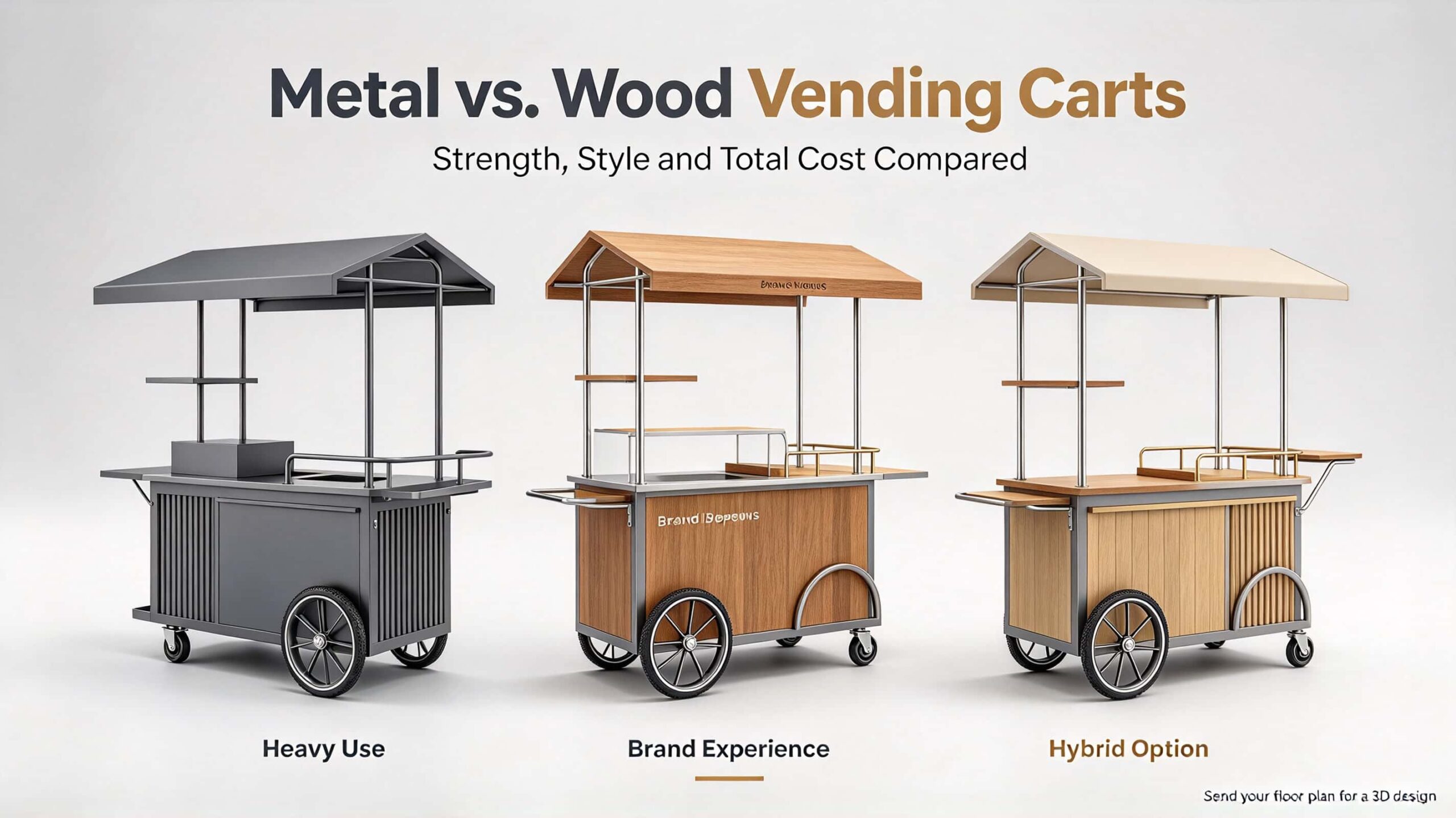
- Metal: best for heavy goods, daily cleaning, and 5–10+ year service life.
- Wood: best for visual merchandising, boutique styling, and warmer brand presentation.
- Hybrid: metal frame plus wood shelves often gives the best balance of strength and style.
- Quick rule: choose metal for load and cleaning; choose wood for atmosphere and storytelling.
What Is a Metal Display Cart?
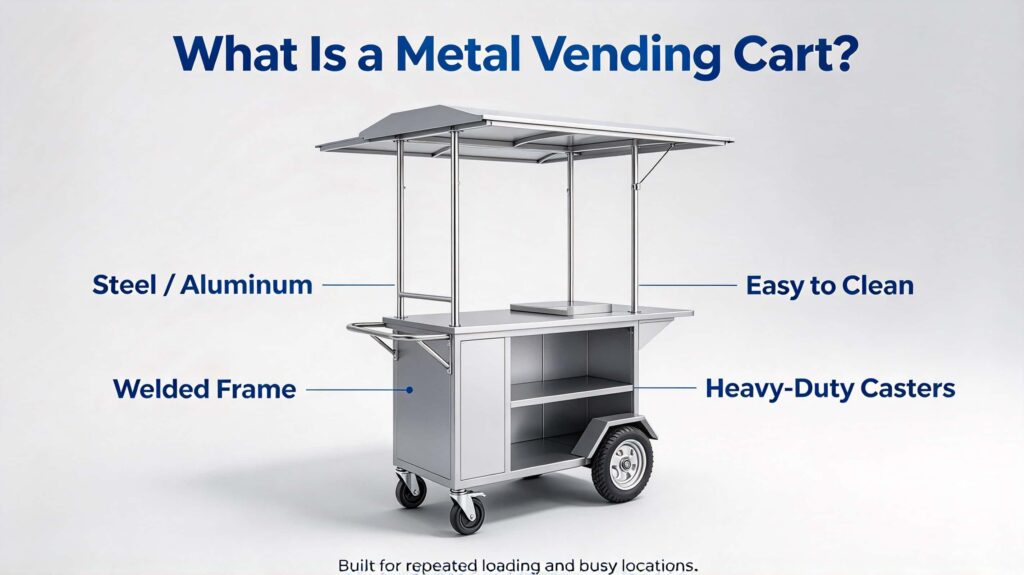
A metal display cart is a mobile retail fixture made from steel, aluminum, or wire with welded or bolted joints. It is built for repeated loading, easy cleaning, and long service in busy aisles. Choose metal when durability, security, and high load capacity are non-negotiable.
- Material: powder-coated steel, stainless steel, aluminum, wire mesh.
- Size: commonly 36–72 in wide, 18–30 in deep, 48–72 in high.
- Price: $250–$1,200 per standard unit; custom runs $800–$2,500.
- Best for: grocery, hardware, warehouse, convenience, outdoor events.
- Watch point: cheap powder coat chips; specify load-rated casters.
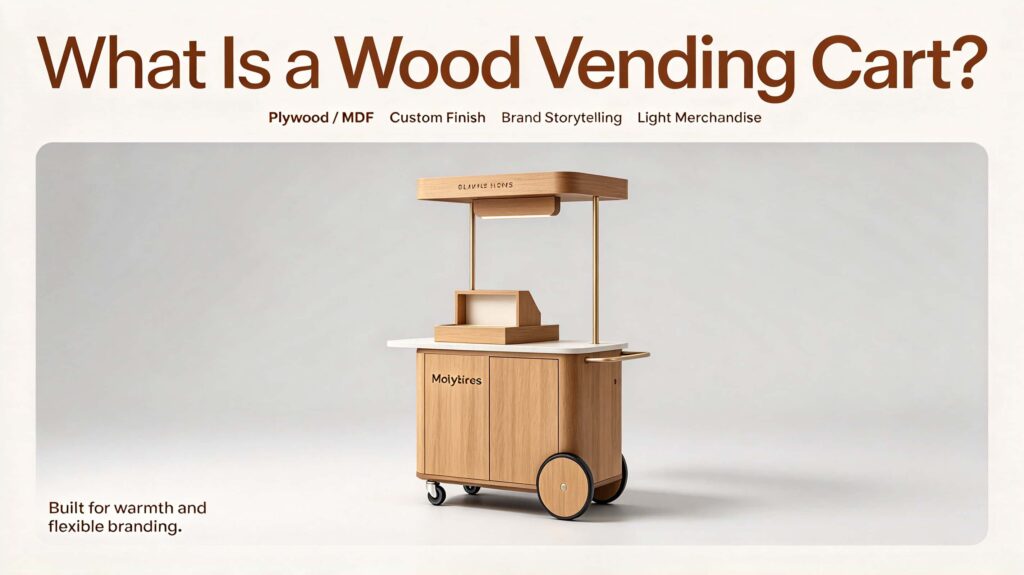
What Is a Wood Display Cart?
A wood display cart is a mobile fixture built from plywood, MDF, pine, oak, or reclaimed timber, often with casters and adjustable shelves. It delivers warmth, color control, and brand storytelling that metal struggles to match. Choose wood when atmosphere and custom design outrank extreme load capacity.
- Material: plywood, MDF, hardwood, reclaimed wood, bamboo.
- Size: commonly 30–60 in wide, 16–24 in deep, 48–72 in high.
- Price: $180–$900 per standard unit; custom runs $600–$2,200.
- Best for: boutiques, bakeries, pop-ups, gift shops, showrooms.
- Watch point: moisture and heavy loads shorten service life.
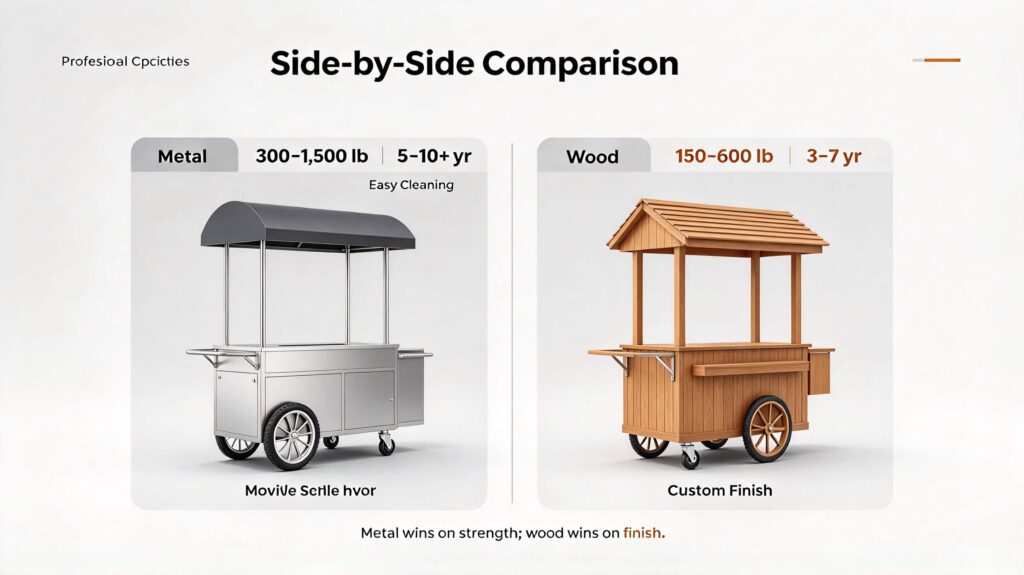
Metal vs. Wood Display Carts: Side-by-Side Comparison
Metal wins on strength, cleaning, and lifespan; wood wins on warmth, finish options, and brand fit. The table below compares the specs buyers ask about most: load capacity, cost, maintenance, mobility, customization, and lead time. Use it to shortlist the right cart before you request quotes.
| Factor | Metal display cart | Wood display cart |
|---|---|---|
| Load capacity | 300–1,500 lb | 150–600 lb |
| Durability | 5–10+ years | 3–7 years |
| Cleaning | Easy; damp cloth, degreaser | Careful; avoid soaking |
| Aesthetics | Industrial, modern, clean | Warm, natural, premium |
| Customization | Cutouts, colors, logos | Stains, laminates, engraving |
| Initial cost | Higher | Lower to mid |
| Maintenance | Low | Medium |
| Mobility | Heavy-duty casters | Standard casters |
| Lead time | 2–6 weeks standard | 3–8 weeks custom |
| Best use | High traffic, heavy goods | Brand-led, lighter goods |
Durability and Load Capacity
Metal carts usually hold two to four times more weight than wood carts of similar size. Steel frames resist racking and impact; wood joints loosen under heavy, repeated loads. If your cart carries cases, tools, or bulk goods, metal is the safer bet.
- Metal: 300–1,500 lb; welded steel; resists impact.
- Wood: 150–600 lb; screw or glue joints; avoid overload.
- Hybrid: metal frame with wood shelves; often 400–900 lb.
Cleaning and Maintenance
Metal carts clean faster and tolerate commercial degreasers, sanitizers, and wet environments. Wood carts need dry cleaning, mild soap, and prompt drying to prevent swelling, warping, and finish failure. In food service or outdoor use, metal is the lower-maintenance choice.
- Metal: wipe daily; check casters and powder coat.
- Wood: dust, damp wipe, dry immediately; re-seal annually.
- Avoid: soaking MDF or plywood edges.
Where Metal Display Carts Win
Metal display carts win in high-traffic, heavy-duty, and hygiene-sensitive settings. They hold more weight, clean faster, and survive bumps from carts, pallets, and customers. If your floor plan includes narrow aisles, outdoor events, or bulk merchandise, metal gives you predictable performance and fewer replacements.
- Grocery and convenience stores: cases, crates, drinks.
- Hardware and warehouse retail: tools, paint, heavy boxes.
- Outdoor markets: weather-resistant powder coat.
- Food service: stainless steel or easy-clean finishes.
- Long-term ROI: fewer repairs and replacements.
Where Wood Display Carts Win
Wood display carts win when the cart is part of the brand experience. Warm grain, custom stains, and engraved logos make wood feel intentional in boutiques, bakeries, and pop-ups. For lighter merchandise and shorter lease terms, wood often delivers more visual impact per dollar.
- Boutiques: apparel, accessories, candles.
- Bakeries and cafes: bread, pastries, retail bags.
- Pop-ups: fast setup, branded look.
- Gift shops: seasonal displays, signage.
- Showrooms: warm textures, residential feel.
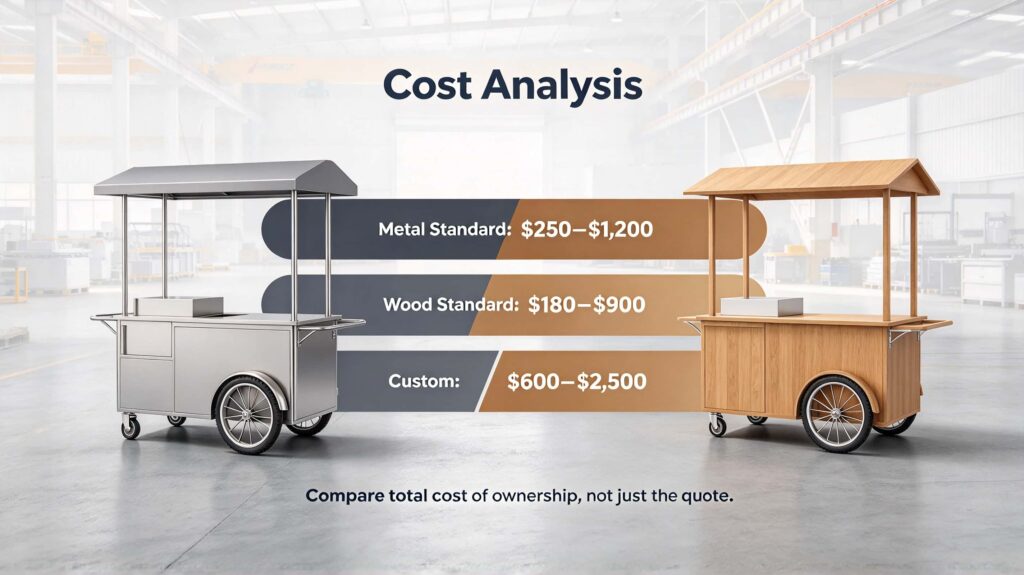
Cost Analysis: Metal vs. Wood Display Carts
Wood carts usually cost less upfront, but metal carts often cost less over five to ten years because they need fewer repairs and replacements. Custom design, casters, finish, and load rating drive price more than the base material. Compare total cost of ownership, not just the quote.
| Cost factor | Metal display cart | Wood display cart |
|---|---|---|
| Standard unit | $250–$1,200 | $180–$900 |
| Custom unit | $800–$2,500 | $600–$2,200 |
| Repairs per year | $20–$80 | $40–$150 |
| Lifespan | 5–10+ years | 3–7 years |
| Replacement risk | Low | Medium |
| Best budget fit | Long-term, heavy use | Short-term, brand-led |
- Metal: higher upfront, lower lifetime cost in heavy use.
- Wood: lower entry price, higher maintenance risk in wet areas.
- Hybrid: mid-price, strong visual appeal, good durability.
Aesthetics and Brand Fit
Metal reads industrial, clean, and modern; wood reads warm, natural, and premium. Neither is automatically better. Match the cart to your store’s lighting, floor, product palette, and brand voice. A powder-coated metal cart can look sleek, while a stained wood cart can look crafted.
- Metal: powder coat colors, perforated panels, logo cutouts.
- Wood: stains, laminates, engraved logos, routed handles.
- Test: view samples under store lighting before ordering.
- Avoid: choosing a finish from a screen photo alone.
Weight, Mobility, and Assembly
Metal carts are heavier but track better with heavy-duty casters; wood carts are lighter but can wobble if joints loosen. For daily moving over thresholds and tight aisles, specify locking casters, reinforced corners, and a frame that resists racking. Assembly should take minutes, not hours.
- Metal: 40–120 lb; specify 4–6 in casters; lock brakes.
- Wood: 25–80 lb; check corner blocks and shelf supports.
- Hybrid: metal base plus wood shell; balance weight and style.
- Measure: doorways, elevators, thresholds, and turning radius.
Sustainability and Environmental Impact
Wood can be renewable and repairable, but finishes, adhesives, and composite panels affect its footprint. Metal is highly recyclable, yet mining and coating carry environmental costs. The greener choice depends on sourcing, lifespan, and whether the cart can be repaired instead of replaced.
- Wood: certified timber, low-VOC finishes, repairable shelves.
- Metal: recycled steel content, durable powder coat, recyclable at end of life.
- Best practice: buy for lifespan, not trends; repair first.
- Ask suppliers: for material certificates and finish data.
Customization and Lead Times
Metal carts support precise cutouts, welded frames, and durable powder-coat colors. Wood carts support stains, laminates, engraving, and softer shapes. Lead times depend on complexity: standard metal runs 2–6 weeks, custom wood runs 3–8 weeks. Approve a sample or 3D render before production.
- Metal: CAD, laser cutting, welding, powder coat.
- Wood: CNC routing, veneer, stain, edge banding.
- Both: confirm caster type, shelf adjustability, branding method.
- Plan: add two weeks for approval and shipping.
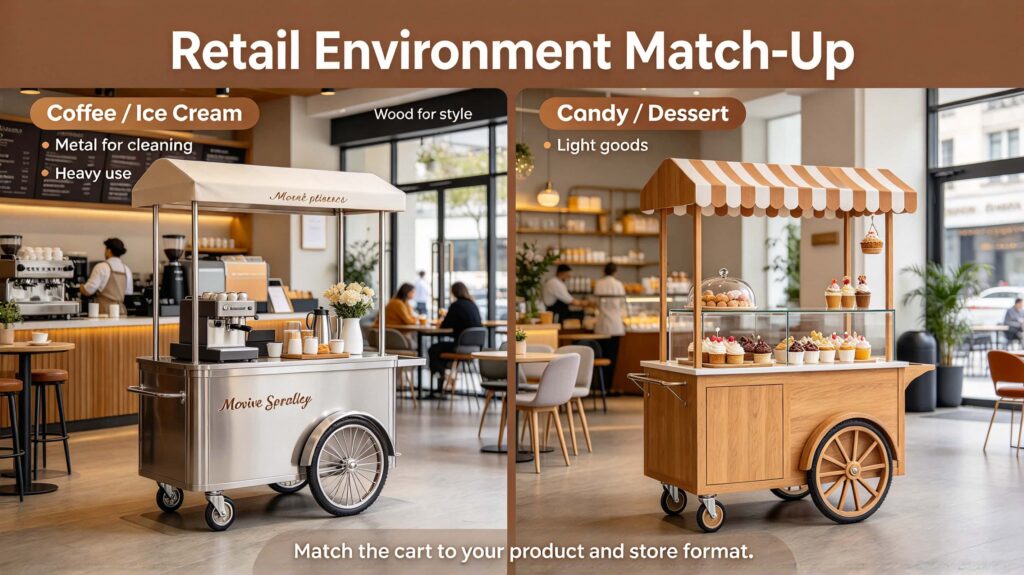
Retail Environment Match-Up
Match the cart to the floor, not the catalog. High traffic, heavy goods, and wet cleaning point to metal. Low traffic, light goods, and brand storytelling point to wood. The chart below gives a fast recommendation by retail environment. Use it as a starting point, then confirm load and finish.
| Environment | Better choice | Why |
|---|---|---|
| Grocery / convenience | Metal | Heavy cases, frequent cleaning |
| Boutique apparel | Wood | Warm brand feel, light goods |
| Bakery / cafe | Metal or hybrid | Hygiene plus warm display |
| Pop-up shop | Wood | Fast branding, lighter loads |
| Hardware store | Metal | Tools, paint, impact resistance |
| Garden center | Metal | Moisture, outdoor use |
| Gift shop | Wood | Seasonal storytelling |
| Showroom | Hybrid | Style plus durability |
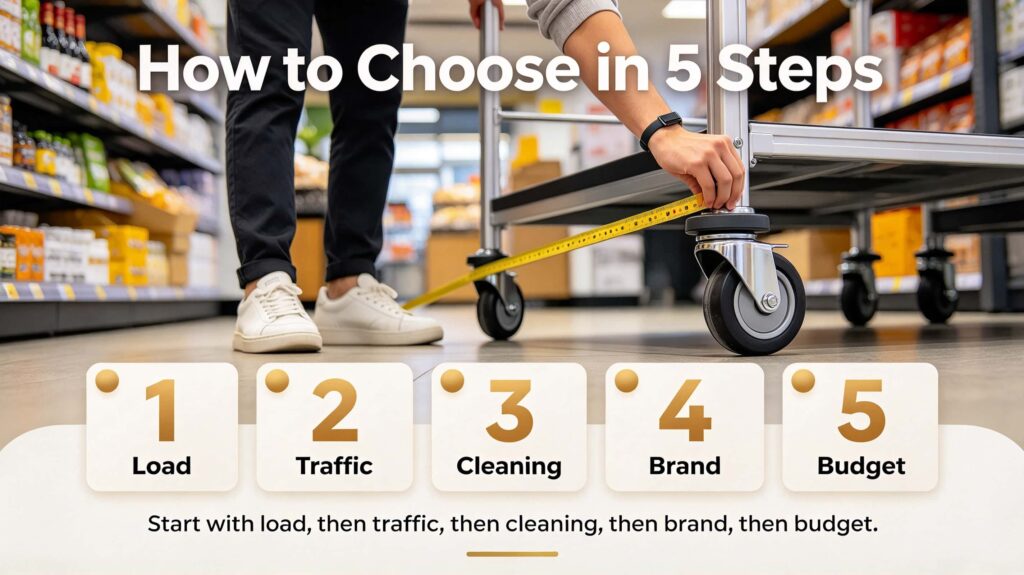
How to Choose in 5 Steps
Start with load, then traffic, then cleaning, then brand, then budget. That order prevents expensive mistakes. A beautiful wood cart that fails under heavy cases is not a bargain, and a metal cart that clashes with your boutique’s interior is not a win.
- List the heaviest items and total weight per shelf.
- Count daily traffic and cleaning routine.
- Measure aisle width, doorways, and turning radius.
- Choose finish and branding method.
- Compare total cost over five years.
Common Mistakes to Avoid
Buyers often choose by photo, ignore caster quality, and underestimate load. Others skip sample approval or forget doorway clearance. These mistakes cost more than the cart itself. Use the checklist below before you sign a purchase order. A five-minute check can save weeks of returns and floor-plan headaches.
- Choosing style before load capacity.
- Using light-duty casters on heavy carts.
- Skipping a 3D render or sample.
- Forgetting thresholds, elevators, and fire lanes.
- Ignoring cleaning chemicals and wet floors.
Do you know how to choose?
Metal is better for durability, load capacity, cleaning, and long-term ROI in high-traffic retail. Wood is better for warmth, brand expression, and lighter merchandising in boutiques and pop-ups. The smartest choice is often a hybrid: a metal frame with wood shelves or panels.
- Choose metal: heavy goods, daily cleaning, 5+ year use.
- Choose wood: brand-led spaces, light goods, shorter terms.
- Choose hybrid: visual warmth plus structural strength.
- Decide with a 3D layout, not a catalog photo.
FAQ: Metal vs. Wood Display Carts
These are the questions buyers ask most when comparing metal and wood display carts. The answers are short and practical so you can shortlist faster. If your project has unusual loads, tight aisles, or branding requirements, ask for a layout review before ordering.
Are metal display carts stronger than wood display carts?
Yes, in most standard builds. Metal carts typically hold 300–1,500 lb, while wood carts usually hold 150–600 lb. Welded steel resists racking better than screwed or glued wood joints.
Are wood display carts cheaper?
Usually, yes upfront. Standard wood carts often cost $180–$900, while metal carts run $250–$1,200. Over five years, metal can cost less in heavy-use settings because it needs fewer repairs.
Which is better for a boutique?
Wood is usually better for boutiques because it supports warmth, custom stains, and brand storytelling. Choose metal if the boutique sells heavy items or needs frequent sanitizing.
Can wood display carts be used outdoors?
Only with careful specification. Moisture, sun, and temperature swings damage standard wood finishes. Use marine-grade plywood, sealed edges, and covered placement, or choose powder-coated metal for outdoor markets.
What casters should I choose?
Use 4–6 inch casters for daily movement, locking brakes for safety, and soft treads for hard floors. Heavy metal carts need load-rated casters; wood carts need reinforced mounting plates.
Can I get a custom logo on both materials?
Yes. Metal supports powder-coat colors, cutouts, and durable printed panels. Wood supports engraving, staining, and printed graphics. Confirm the branding method before production because it affects lead time and cost.
Ready to See Your Display Cart in 3D?
Send us your floor plan and we will turn it into a practical 3D display cart design. You will see scale, sightlines, shelf heights, caster placement, and finish options before you commit. Contact our team today and send your floor plan to get a 3D design.
Send your floor plan now and let our team show you the right metal, wood, or hybrid cart in 3D before you spend a dollar on production.