
What Are the Different Types of Museum Display Cases?

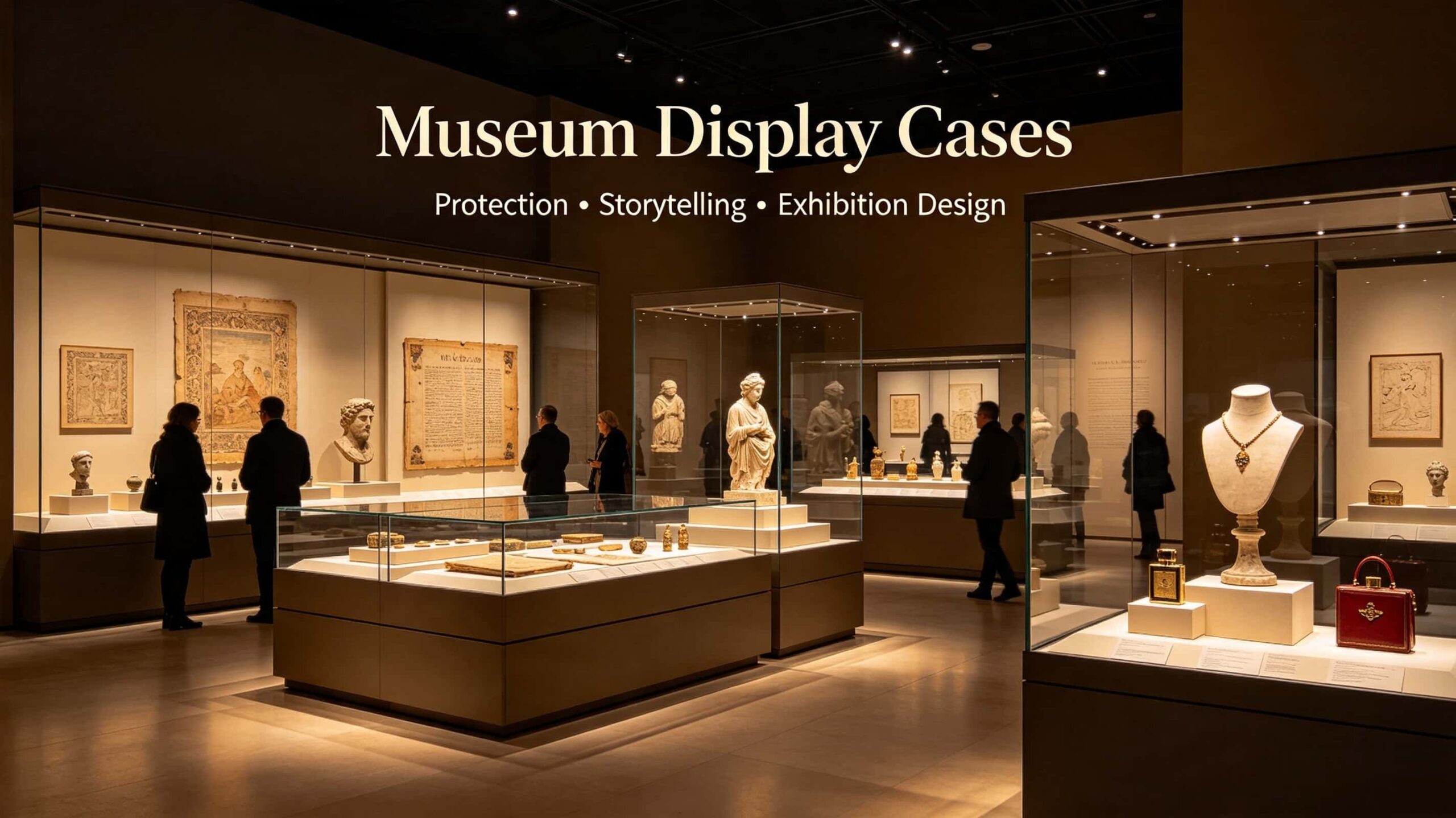
When planning a world-class museum exhibition, a brand flagship store, or a high-end trade show booth, the museum display cases you choose are far more than just storage containers—they are the very stage upon which your artifacts and products tell their stories. For B2B buyers, such as museum curators, exhibition organizers, and retail space designers, understanding the nuances of these professional showcases is critical to preserving artifacts, ensuring security, and engaging visitors.
This comprehensive guide will break down everything you need to know about museum display cases, from their basic definitions to the exact types used in modern exhibitions, and provide you with a step-by-step framework to select the perfect solution for your space.
What is a Museum Display Case?
Before diving into the different types, it is essential to define what a museum display case actually is in a professional context.
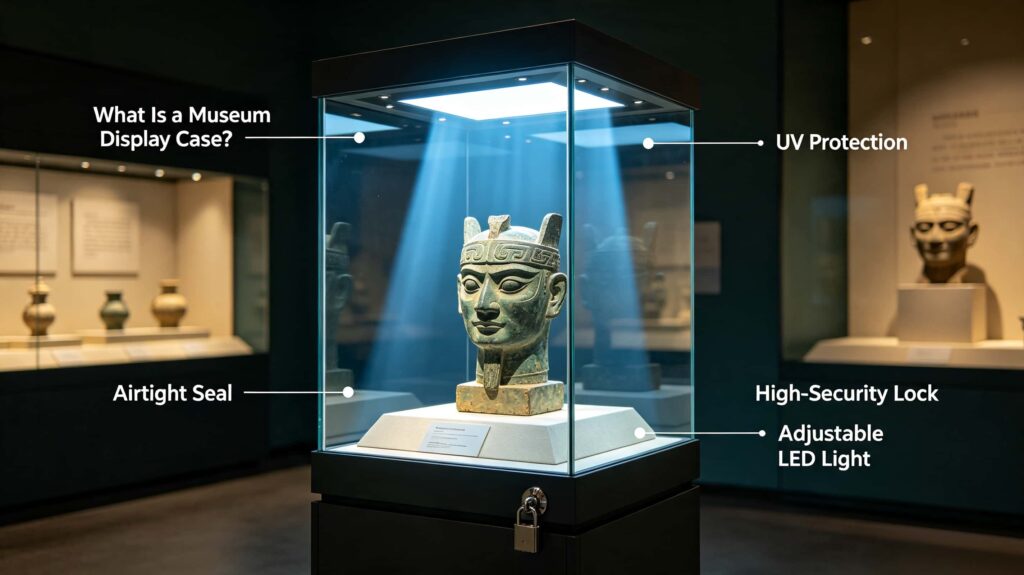
A museum display case is a specialized, protective enclosure designed to house, protect, and present artifacts, artworks, or commercial products. Unlike standard retail shelving, these cases are engineered with specific environmental controls. They feature high-grade, often UV-filtering glass to prevent light damage, airtight seals to control humidity and temperature, and high-security locking mechanisms to prevent theft or tampering.
In the B2B supply chain, sourcing high-quality museum display cases is a strategic investment. They act as the silent guardians of history and luxury, ensuring that the items inside maintain their integrity, while simultaneously maximizing the visual engagement of the audience through advanced architectural design and adjustable built-in LED lighting.
What Are the Different Types of Museum Display Cases Used in Exhibitions?
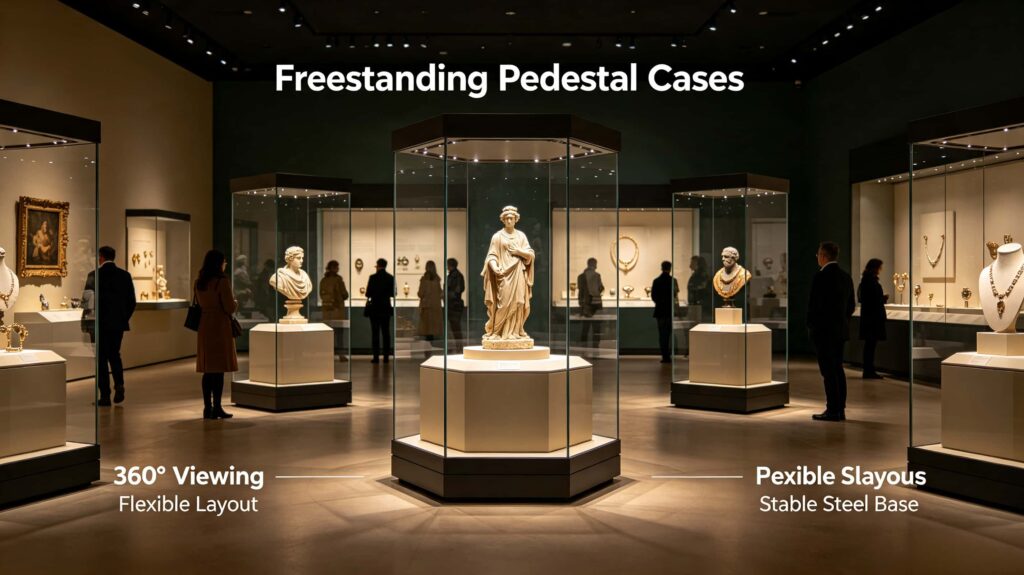
When planning an exhibition or retail layout, one size certainly does not fit all. Professional museum display cases come in various forms, each designed to address specific spatial constraints and exhibit requirements. Here is a breakdown of the most common types used in the industry today:
1. Freestanding Pedestal Cases
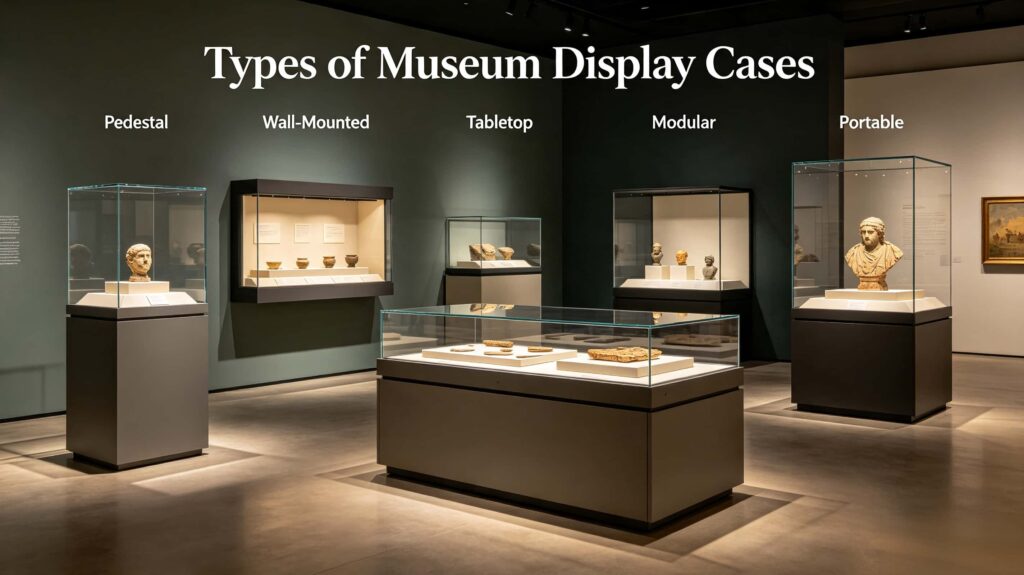
Freestanding pedestal cases are the classic choice for displaying 360-degree artifacts, such as sculptures, historical weapons, jewelry, or high-end fashion items. They are designed to stand independently in the middle of an exhibition hall, allowing visitors to view the item from all angles.
For B2B buyers, choosing pedestal cases offers tremendous flexibility in floor plan layout. You can easily reposition them to change the flow of visitor traffic. We offer these pedestal cases with high-transparency tempered glass and heavy-duty steel bases to ensure stability, even when holding heavy historical artifacts.
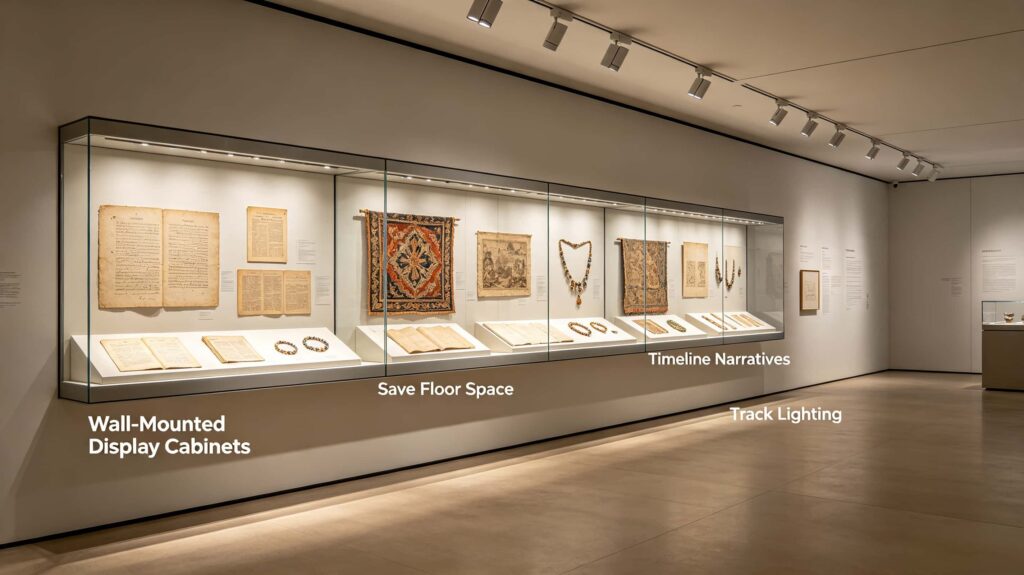
2. Wall-Mounted Display Cabinets
When space is at a premium, or when you need to create a specific timeline narrative along a wall, wall-mounted museum display cases are the optimal solution. These are attached directly to the vertical surface of the exhibition space, offering a sleek and unobtrusive way to display flat items like historical documents, manuscripts, paintings, delicate textiles, or high-value retail jewelry.
Wall-mounted cases are essential for maximizing the floor area for visitor circulation. Our custom wall-mounted showcases allow for built-in track lighting and a variety of internal shelf configurations, allowing you to alter the layout dynamically without having to drill new holes into your venue’s walls.
3. Tabletop Vitrines and Countertop Showcases
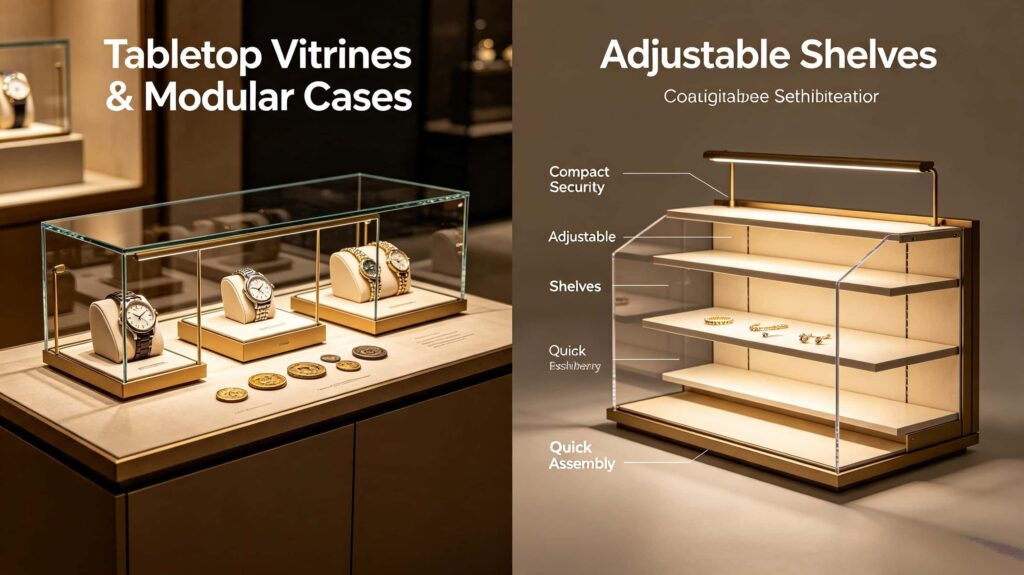
For displaying smaller, highly detailed, and high-value items such as watches, ancient coins, or fine jewelry, tabletop vitrines are the industry standard. These compact museum display cases are designed to sit securely on existing counters, desks, or pedestal bases.
While they are small in footprint, they can be heavily fortified. We craft these countertop cases with high-grade tamper-proof glass and precision-milled lock systems. For retail proprietors looking to create a high-end unboxing experience or museum curators needing an intimate artifact display, these cases offer the perfect balance of portability and security.
4. Modular & Adjustable Display Cases
Modern exhibition environments are dynamic. Often, an artifact arrives with unknown dimensions, or a retailer wants to change their visual merchandising seasonally. This is where modular museum display cases shine.
These cases are built using detachable, modular components—such as interchangeable shelf heights, adjustable light tracks, and configurable internal separators. They are particularly favored by B2B exhibition organizers who travel between trade shows, as these cases can be quickly assembled and disassembled for efficient shipping and storage without compromising on structural stability.
5. Mobile and Portable Exhibition Cases
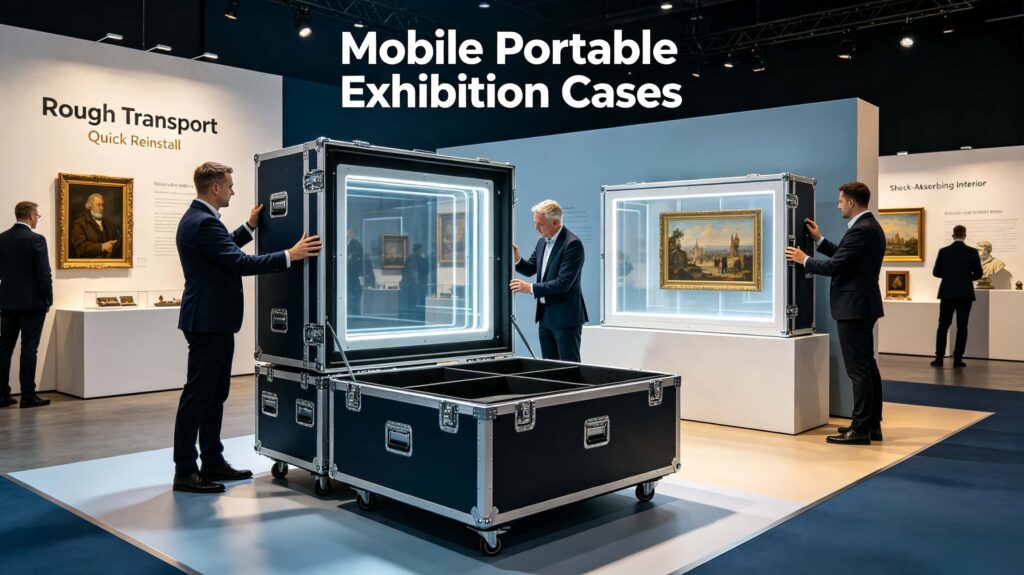
If you are an organizer hosting pop-up museum exhibits or retail trunk shows, portable exhibition cases are your best ally. These are essentially reinforced, secure travel trunks equipped with transparent viewing panels.
They are engineered for rough handling during transport, featuring heavy-duty shock-absorbing interiors, advanced moisture-proof seals, and durable exterior casing. Using these portable museum display cases allows you to curate and transport an entire exhibition securely and re-install it in a new venue within hours.
What Are Museum Display Cases Called?
In the global exhibition and architectural industry, there are several professional synonyms and technical terms you will frequently encounter for museum display cases. Knowing these terms is useful when communicating with designers and sourcing factories:
- Vitrines: This is the classic French-derived term, heavily used in high-end art galleries and luxury retail. A vitrine specifically emphasizes the glass-fronted, cabinet-style nature of the case.
- Archival Display Cabinets: A term used when the primary purpose of the case is conservation. Archival cabinets often emphasize acid-free materials, airtight seals to keep dust out, and specific humidity regulation.
- Exhibition Glass Showcases: A broadly used term in the commercial trade show sector. It refers to any glass-enclosed unit used to protect items during a public exhibition.
- Pedestal Showcases: Specifically refers to the floor-standing, island-style cases that typically feature an elevated base to bring the display item to eye level.
When you contract a professional display factory, you will often hear these terms used interchangeably. Understanding the specific requirements of each term can help you communicate your exact needs—whether you prioritize conservation (Archival), visual impact (Vitrine), or portability (Exhibition Glass Showcase).
How to Choose the Right Museum Display Cases for Your Space?
Selecting the correct museum display cases involves much more than just picking a size and a glass type. As a B2B buyer, you must treat this process as a holistic design and security project. Follow these five essential steps to ensure your investment perfectly fits your venue:
Step 1: Assess the Artifact’s Needs
Every artifact has physical and chemical requirements. First, categorize your items.
Are they light-sensitive (like antique paper or textiles)? You will need museum display cases with UV-filtering glass and dimmable, cool-temperature LED lighting. Are they heavy (like solid stone sculptures)? You will require case bases reinforced with industrial-grade steel. Always select a case based on what goes inside it, rather than just how it looks externally.
Step 2: Plan Your Spatial Layout
Measure the footprint of your exhibition hall meticulously. You must account for visitor traffic flow. A common mistake in museum setup is choosing museum display cases that are too bulky, creating traffic bottlenecks.
Are you placing them in the center (requiring freestanding pedestal cases) or against a curved wall (requiring bespoke arc-shaped wall cabinets)? Providing a 2D floor plan or 3D layout sketch to your case manufacturer allows them to recommend the exact dimensions and angles to fit your space flawlessly.
Step 3: Prioritize Security and Climate Control
For B2B buyers working with high-value items, security is non-negotiable. Always look for museum display cases equipped with sophisticated locking mechanisms—preferably integrated multi-point locking systems and independent drawer locks.
Furthermore, if you are displaying humidity-sensitive materials like ancient metal coins or fossils, ensure the case features an airtight seal, and design a slot or port that allows you to install dehumidifiers or climate control systems inside the case without breaking the enclosure’s integrity.
Step 4: Consider Environmental Sustainability
Modern architecture and museum boards increasingly prioritize sustainability. When sourcing, ask the manufacturer about their materials. Using eco-friendly, low-VOC (Volatile Organic Compound) paints and sustainably sourced wood for the cabinet bases is becoming a requirement for many green-building certification projects. Investing in durable, high-quality museum display cases also reduces long-term waste, as you will not need to replace them frequently.
Step 5: Go Custom for the Best Fit
Lastly, and most importantly: Do not settle for generic, standardized measurements. Every museum, luxury boutique, and exhibition space is unique. Standard off-the-shelf cases often leave awkward gaps, fail to align with architectural arches, or cannot fully protect unusually shaped artifacts.
This is where partnering directly with a flexible, professional manufacturing factory provides a massive advantage. By opting for fully bespoke museum display cases, you ensure 100% alignment with your venue’s geometry, your brand’s colors, and your specific functional requirements.
Ready to Bring Your Exhibition to Life?
Choosing the right museum display cases is the bridge between a dull exhibition and an immersive, unforgettable visitor experience. Whether you need standard-pedestal vitrines for a modern art gallery, modular wall-mounted cases for a traveling trade show, or highly secure archival cabinets for an ancient history museum, the key lies in precision engineering, premium materials, and total customization.
At our specialized display manufacturing facility, we do not just build glass boxes—we engineer world-class showcases that protect your priceless items and elevate your visual merchandising.
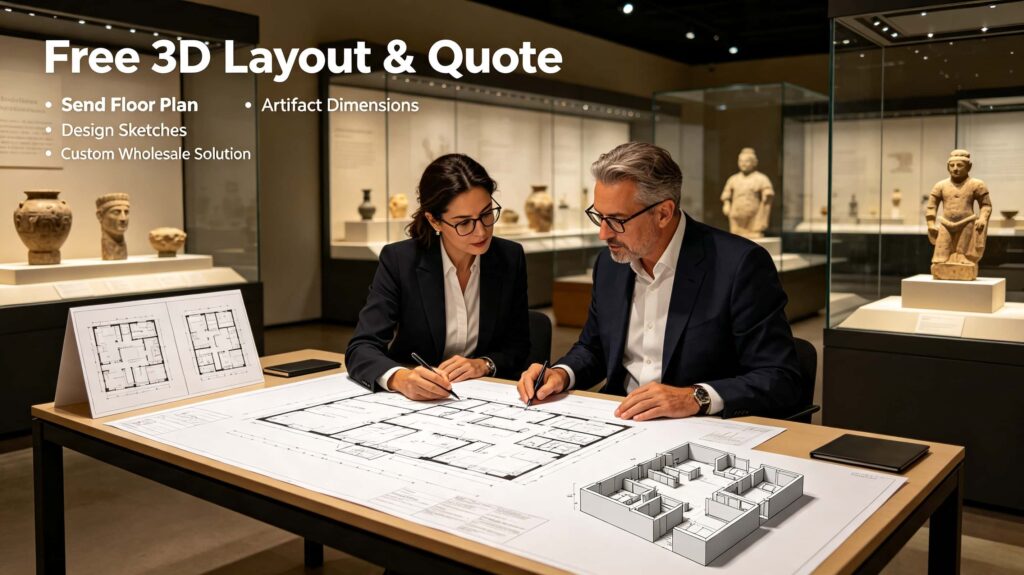
Are you planning an upcoming museum project, a luxury retail store opening, or a high-profile trade show booth? Let us turn your concepts into reality.
Send us your floor plan, artifact dimensions, or design sketches today, and we will provide you with a 3D layout design and an accurate, competitive factory wholesale quote!