
Glass Countertop Display Cases: A Commercial Buyer’s Guide to Durability & Cost

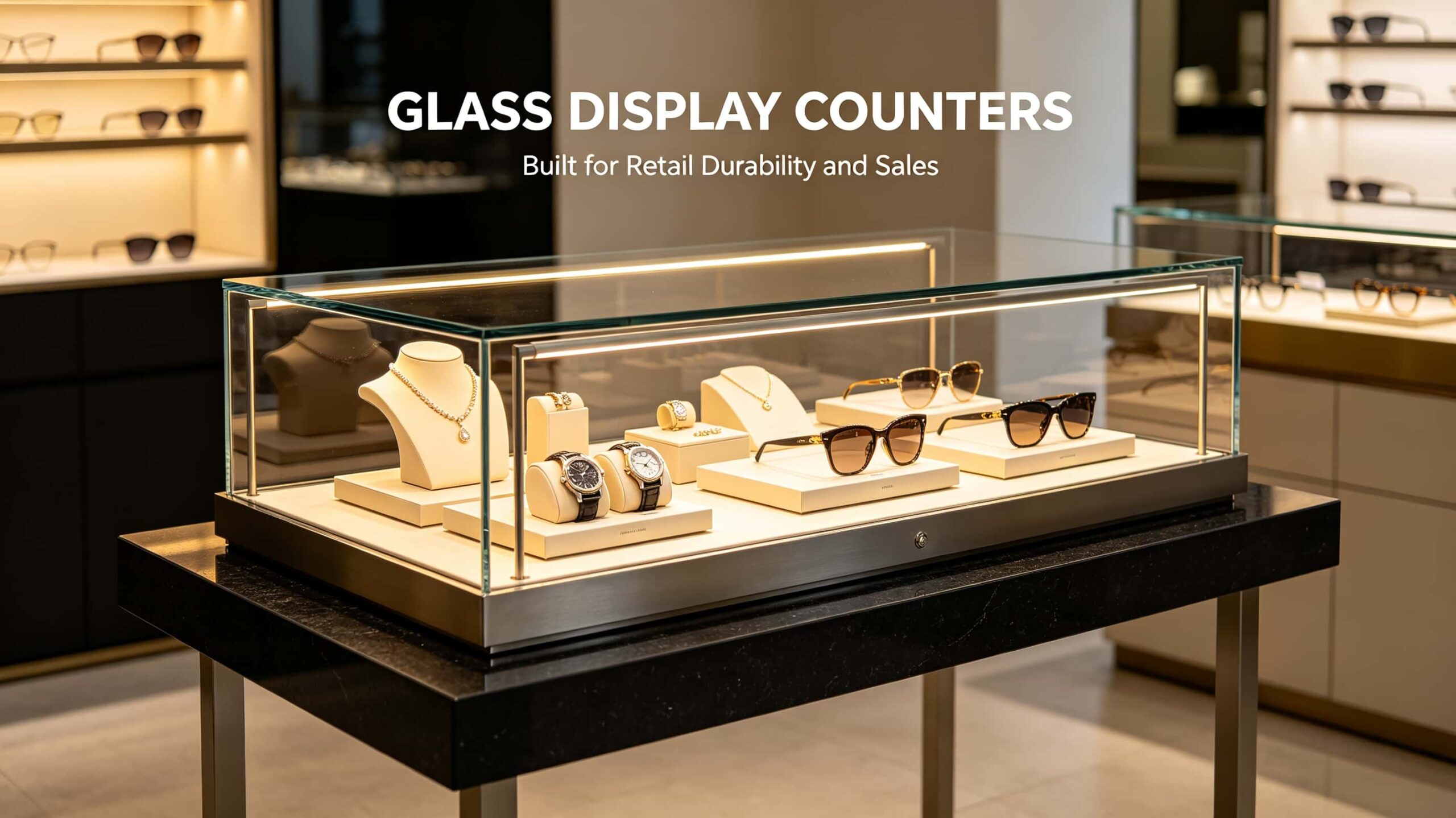
When you run a retail store, the counter is where many buying decisions happen. A well-built glass countertop display case puts your best products at eye level, protects them from handling, and signals quality to customers. Whether you sell jewelry, watches, cosmetics, or eyewear, the right countertop unit can lift sales. I have spent years on the factory floor, and I see too many buyers make expensive mistakes because they focus only on price instead of long-term durability and true cost.
What are glass display cases called?
In retail and jewelry industries, these units are known as display cases, showcases, vitrines, or glass merchandisers. They differ from household glass cabinets because they use high-strength commercial tempered glass built for high-frequency store display, security, and anti-theft protection.
The terminology varies by region and industry. In North America, “showcase” is common. In Europe, “vitrine” is widely used. In Asia, many buyers simply say “glass counter.” But do not let the names confuse you. What matters is whether the unit is built for commercial use or just for home decoration. A home glass cabinet will not survive the daily opening, closing, and cleaning of a busy store.
Why terminology matters for sourcing optical display cabinets
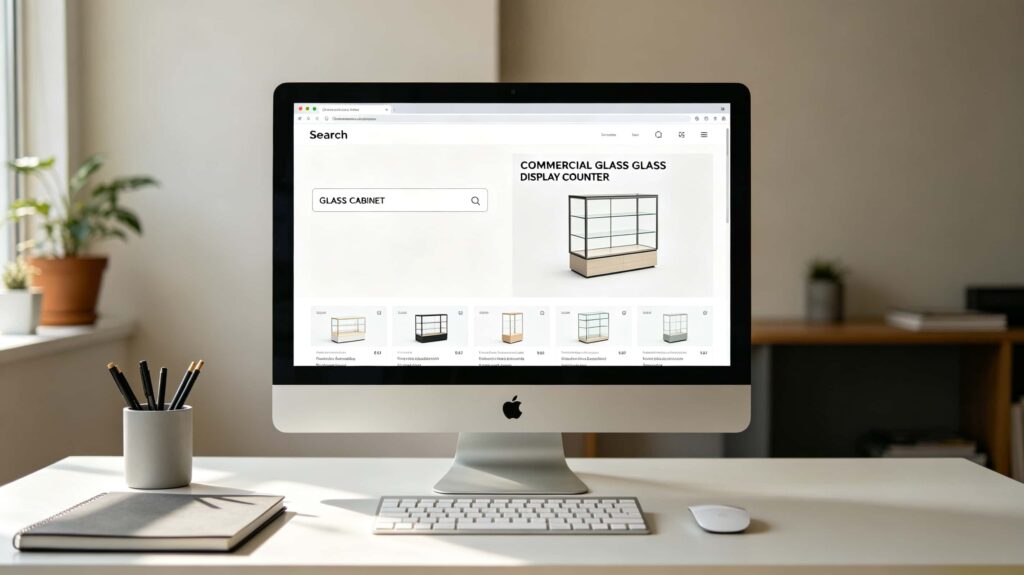
When you search for a “glass top retail display showcase,” you are more likely to find counter-specific results than if you search for “glass cabinet.” This matters because sourcing the wrong product wastes time and money. In eyewear retail, for example, many owners also search for “optical display cabinets” because they need units designed for frame display, high-CRI lighting, and lockable storage. But if you only need a countertop unit, be specific: a “commercial glass display counter” is a better search term.
What is a counter top display?
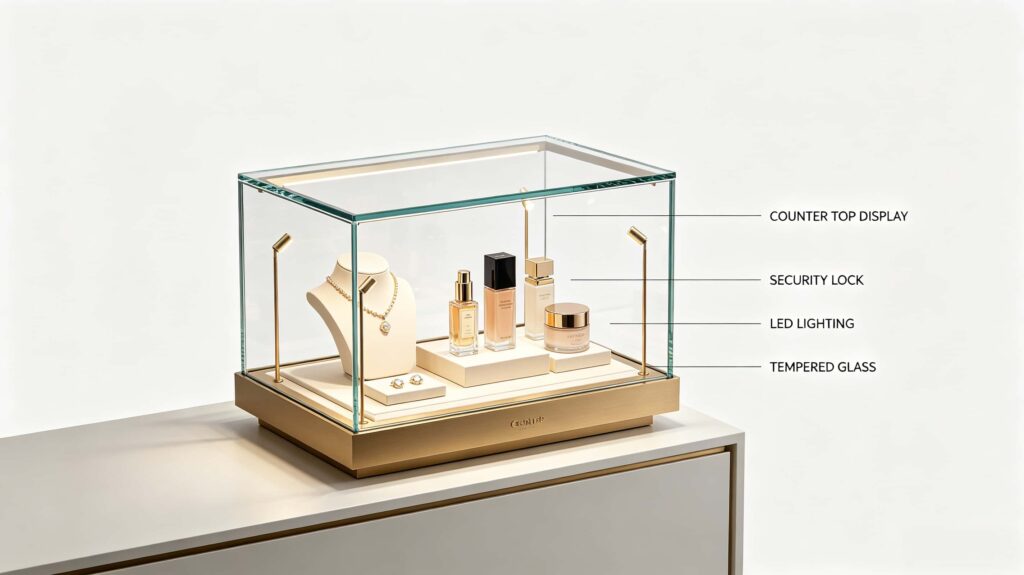
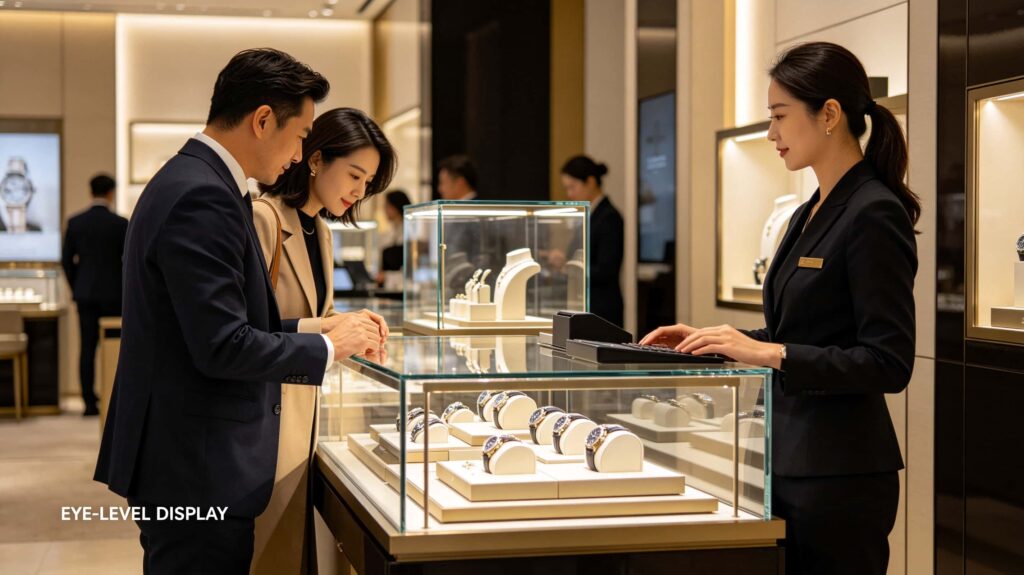
A counter top display is a glass display unit placed on a store counter or island, allowing customers a 360-degree view of high-value items like jewelry, watches, or cosmetics. It usually features security locks, bottom-lit LED lighting, and high-load-bearing glass.
Countertop displays are different from floor-standing showcases. They are smaller, lighter, and designed to sit on an existing surface. They let you put impulse-buy products right where customers are paying. A well-designed countertop unit also hides cables and locks so staff can open it quickly without fumbling.
Common materials and configurations
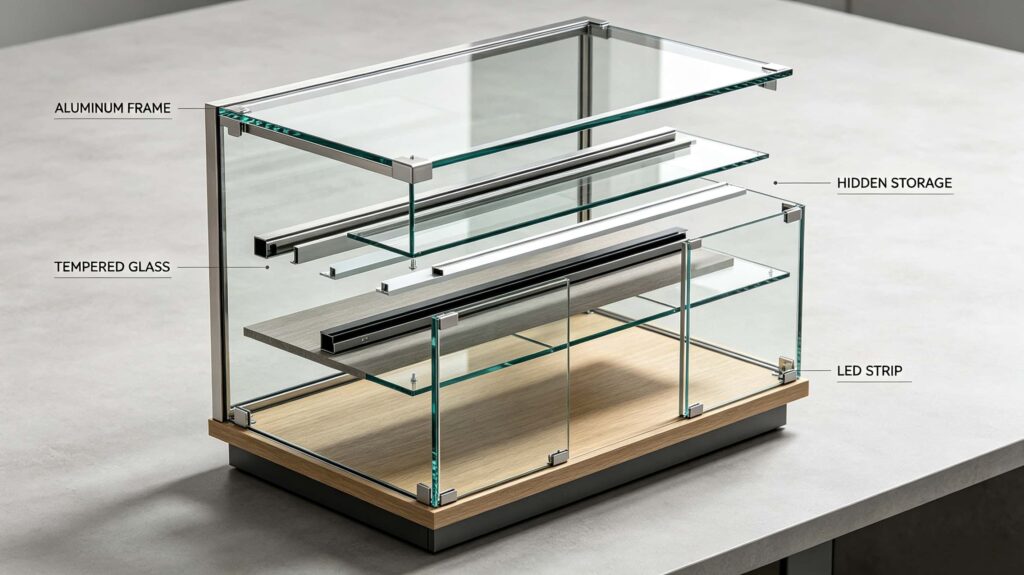
Most commercial countertop displays use an aluminum or stainless steel frame with tempered glass panels. The base is often laminated MDF or metal, with a hidden compartment for storage or wiring. Some units have sliding rear doors; others have lift-up front panels. When you order a custom retail glass counter, you can choose the number of shelves, the LED color temperature, and whether you want a mirrored back or a frosted base.
Where countertop displays fit in a store
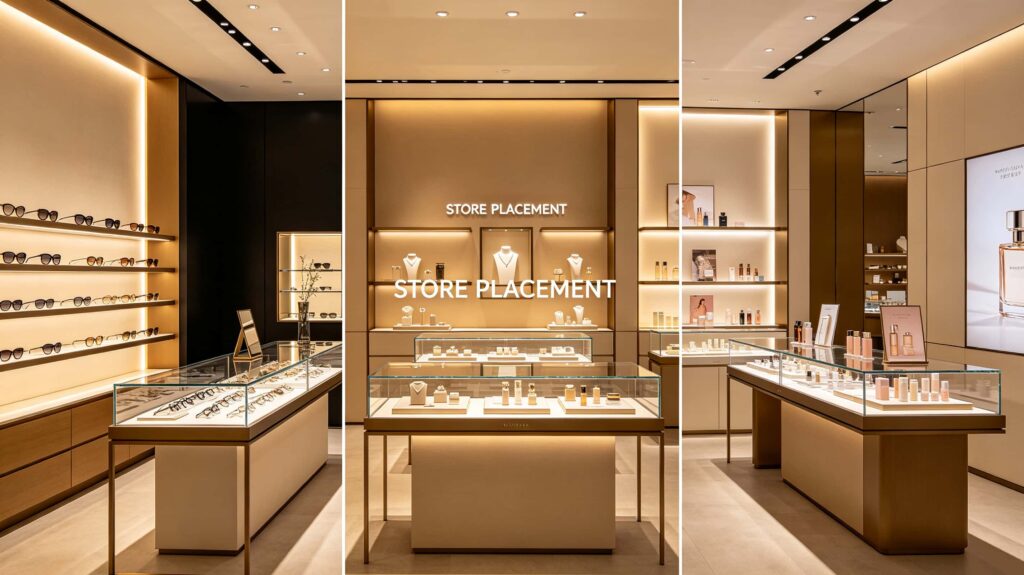
In a jewelry store, you might place a tempered glass display case for jewelry right next to the cash register. In an eyewear store, a small countertop unit can hold premium frames or accessories. In a cosmetics shop, it can show testers and new arrivals. The key is to keep the counter from looking cluttered. One or two focused countertop displays work better than five crowded units.
Why are glass display cabinets so expensive?
Commercial-grade units are expensive because they use reinforced tempered glass, high-CRI LED lighting systems, precision hardware, and security locks. In addition, custom dimensions and special anti-glare coatings significantly increase manufacturing costs, making them far pricier than ordinary household glass cabinets.
The price difference is not just markup. A commercial glass display counter must handle hundreds of door openings per week, constant cleaning, and heavy product weight. Cheap units use thin glass, weak hinges, and low-quality LED strips that fail within months. When you buy from a factory that builds for retail, you pay for engineering that prevents these failures.
Tempered glass is not all the same
All tempered glass is stronger than regular glass, but thickness and edge work matter. For a countertop, you should use at least 8mm or 10mm tempered glass. The edges must be polished and chamfered to prevent chipping. If the glass will bear weight—like a customer leaning on it—ask for a thicker top panel. This is exactly why a tempered glass display case for jewelry costs more than a simple photo frame.
LED lighting and color rendering
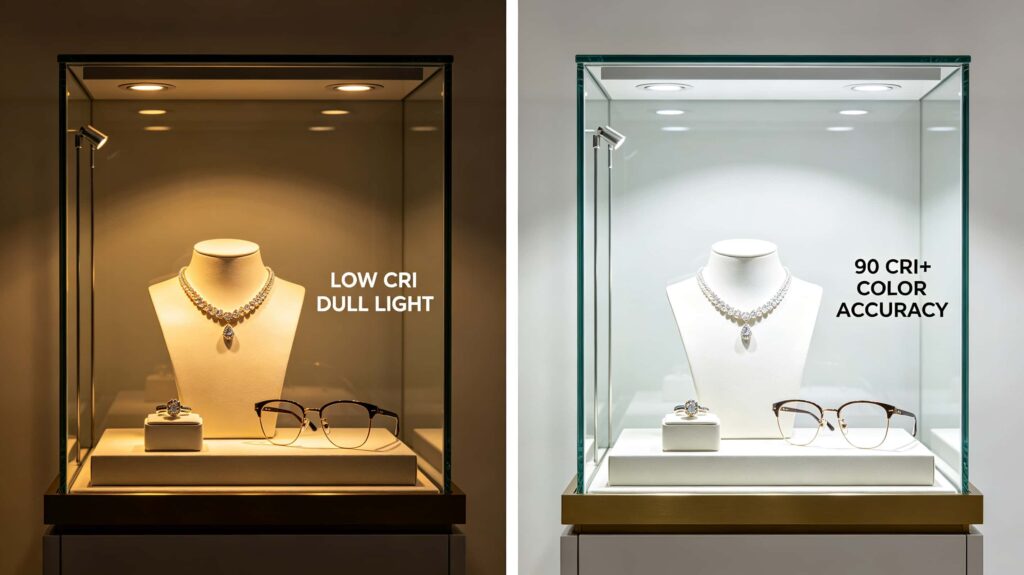
Cheap LED strips make products look dull or yellowish. Commercial units use high-CRI LED bars, often 90 CRI or above, to render colors accurately. The light bars are positioned to reduce glare on glass. In optical display cabinets, this color accuracy is critical because customers need to see the true frame color. Even in a jewelry counter, poor lighting can make gold look brass and diamonds look cloudy.
Hardware, locks, and hinges
Every hinge, lock, and sliding track in a commercial unit is rated for repeated use. Standard residential hinges fail after a few thousand cycles. Commercial hinges last for tens of thousands. Locking mechanisms must be smooth enough for staff to operate quickly but secure enough to deter theft. These small components add up to higher cost, but they are the difference between a cabinet that lasts five years and one that needs replacement in one.
How durable are glass countertops?
In commercial environments, glass countertops made from tempered glass are extremely durable. They are about five times stronger than regular glass, highly resistant to impact and scratches, and less likely to shatter. Even if breakage occurs, they crumble into small rounded granules, greatly reducing harm to people and products.
Durability also depends on installation and daily care. A tempered glass top can withstand a dropped key or a minor bump, but a sharp object dragged across the surface can still cause micro-scratches. Over time, those scratches dull the finish. That is why many factories apply an anti-scratch coating or recommend periodic polishing.
Tempered glass standards for commercial use
Always ask whether the glass meets international safety standards. For commercial countertops, the glass should be fully tempered, not heat-strengthened. Fully tempered glass fractures into small pieces, while heat-strengthened glass can break into larger, sharper shards. For a glass top retail display showcase, safety is non-negotiable because customers lean on the counter every day.
How to maintain glass countertops
Use a microfiber cloth and a non-ammonia glass cleaner. Avoid abrasive sponges. Clean the edges regularly because dust and debris collect there and can scratch the glass when you slide panels. If the unit has a sliding door, lubricate the track once a month with a dry silicone spray. These small habits extend the life of your commercial glass display counter far beyond the warranty period.
How to buy a custom glass display case from a factory?
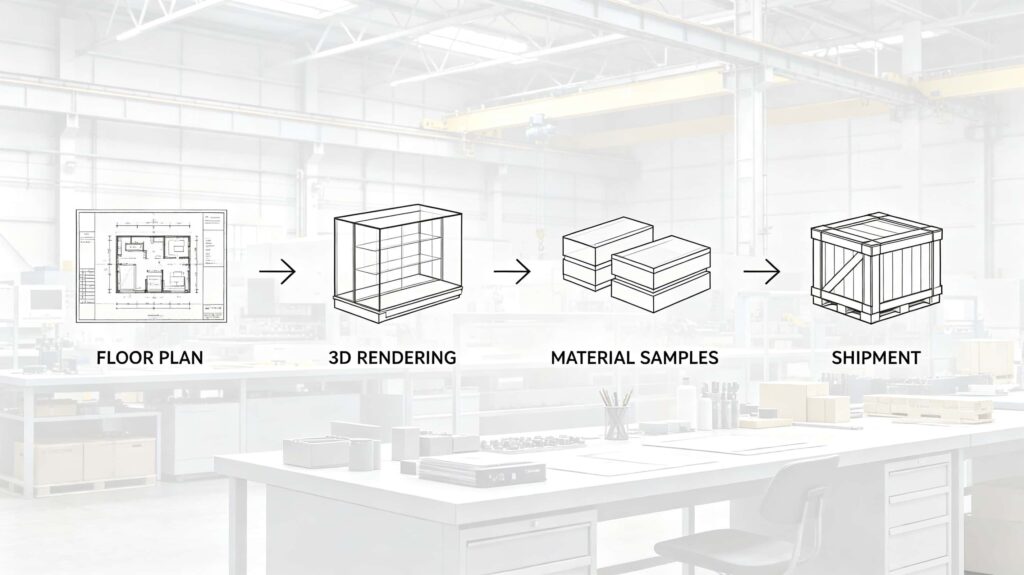
Buying custom glass display cases factory-direct saves money and gives you full design control. Send your store floor plan, product types, and dimensions. The factory prepares a 3D layout and a direct quote without middleman markups. You then confirm materials, lighting, and shipping before production starts.
As an optical store furniture manufacturer, I always tell buyers to skip the middleman. When you buy through a distributor, you pay extra for their storage, sales commission, and markup. Going direct means the factory engineers talk to you about real requirements: weight load, glass thickness, LED placement, and security. That conversation leads to a better product.
Step 1: Send your floor plan and product list
Start with a simple floor plan and a list of the products you want to display. If you need a custom retail glass counter for a specific corner of the store, mark the location and the available counter space. For eyewear stores, include the frame sizes and whether you need optical display cabinets integrated with the countertop unit. The more detail you provide, the more accurate the 3D design will be.
Step 2: Review your 3D rendering and material samples
Once the factory receives your information, they should send a 3D rendering showing the exact cabinet in your store context. Look at it from the customer’s angle. Is the top glass thick enough? Are the LED bars hidden from direct view? Is the lock accessible for staff? Request material samples for the metal finish and glass type before you approve production.
Step 3: Confirm production and shipping details
After you approve the design, the factory will send a final quotation covering the glass countertop display case, lighting, packaging, and freight. For custom orders, production typically takes two to five weeks. Ask about packaging: the unit should be shipped in a wooden crate or reinforced carton with foam protection. Confirm whether installation instructions or on-site support are included.
Why factory-direct is the smartest choice
When you buy a commercial glass display counter directly from the manufacturer, you remove layers of cost and miscommunication. You also gain access to customization options that distributors cannot offer, such as a specific logo engraving, a hidden cable channel, or a custom LED color temperature. For eyewear retailers, the same factory can often supply optical display cabinets as part of a complete store package, ensuring consistent materials and finishes across your entire shop.
Ready to plan your store? Send us your floor plan and product dimensions today. Our factory team will prepare a 3D layout and a direct factory quote for your custom glass countertop display cases—no middlemen, no retail markup. Get a durable, high-quality display unit built for your store, delivered on time, and designed to sell.