What to Sell at a Mall Kiosk?

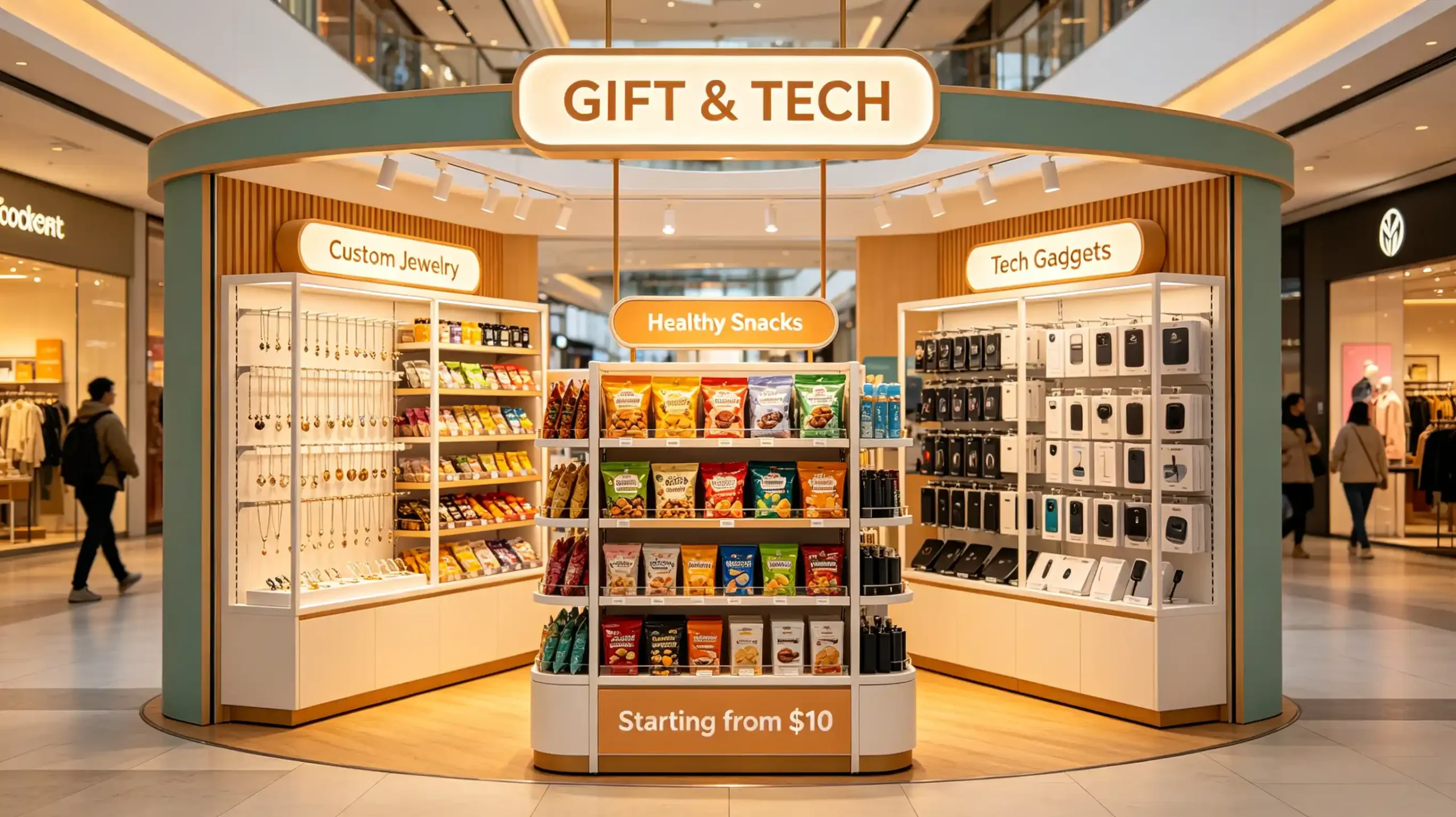
What’s the most profitable thing to sell at a mall kiosk? The core product selection logic for US mall kiosks in 2026 has completely shifted — it’s no longer about dirt-cheap flea market stuff that moves volume. Instead, the big four are: light inventory, fast turnover, strong experience, and customizable.
Think personalized merch, functional health and wellness quick-movers, little mood-boosters, and mini tech services. For American buyers, picking products was never really about the items themselves — it’s about locking down a full supply chain package that actually works on the ground, can restock smoothly, and checks all the mall compliance boxes.
The 4 most stable product selection directions for US shopping mall kiosks in 2026
On-site customization:
A top-tier product category with both high gross profit and high repeat purchase rate.
This is, without a doubt, the fastest-growing category in U.S. shopping mall kiosks over the past two years. Common items include on-site engraved jewelry, custom phone cases, AI-generated avatar-printed mugs, and small leather goods with initials. The key advantage is minimal inventory pressure—you only need to stock basic raw materials, and since items are made to order, there’s virtually no risk of unsold inventory.
A new trend for 2026 is incorporating light AI elements, such as taking a photo on-site to generate a cartoon avatar, which is then printed on T-shirts, keychains, and canvas bags—with pickup in 15 minutes. Young people are willing to wait in line to purchase these items. Unit prices generally range from $15 to $40, with gross margins exceeding 60%.
Buyers should pay close attention to three key details: whether the equipment’s dimensions fit into a standard kiosk space, whether its power consumption meets the mall’s requirements, and whether consumables can be quickly restocked locally. Many people focus solely on the low price of the equipment, only to discover after purchase that the mall won’t allow high-power electrical connections, leaving the equipment idle.
Energy-efficient health-related fast-moving consumer goods:
Essential items with the most stable repurchase rate
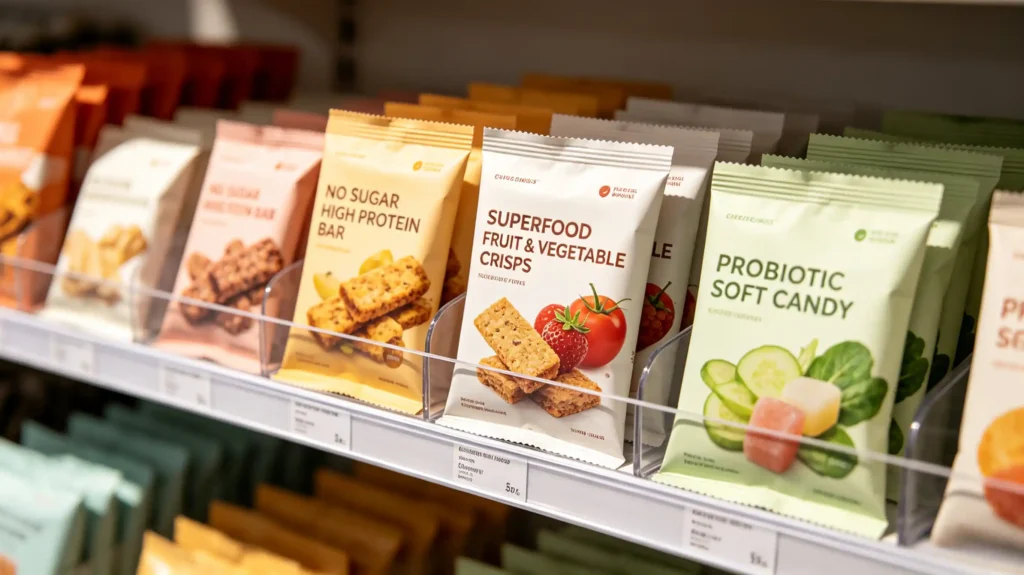
These aren’t your typical candy or potato chips—they’re health-focused foods like sugar-free, high-protein bars, superfood fruit and vegetable crisps, probiotic gummies, and portable electrolyte powders. In U.S. shopping malls, commuters, gym-goers, and parents with children make up a large portion of the foot traffic, so the likelihood of them grabbing one or two items on their way by is extremely high.
These products are highly standardized and easy to restock, making them particularly well-suited for mass deployment across a chain of kiosks. If done right, repeat purchases from regular customers can account for over 40% of revenue.
However, there are also many pitfalls. Food products must be FDA-certified, and nutritional labeling requirements vary by state. When sourcing, always insist that suppliers provide complete compliance documentation for the U.S. market—don’t rely on verbal promises. If the goods are held up at customs, fail a store audit, or turn out to be products nearing their expiration dates, you’ll lose the entire investment.
Emotionally valuable small commodities:
The king of impulse buying.
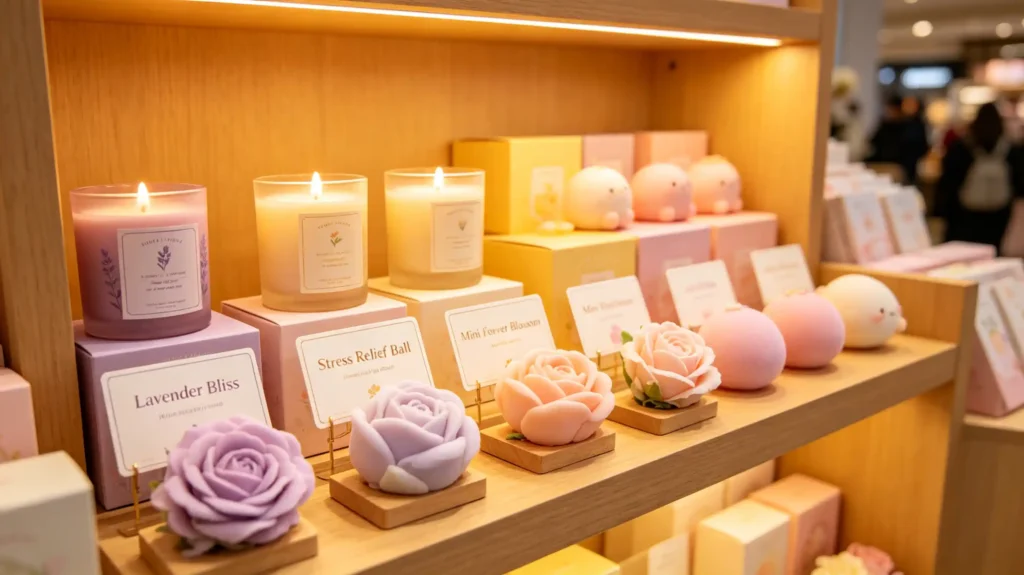
Scented candles, stress-relief squishy toys, mini preserved flowers, zodiac accessories, and portable crystals… These products aren’t expensive—typically ranging from $10 to $30—and sell well as long as they’re visually appealing and come in attractive packaging. They fall into the category of impulse purchases made while browsing or passing by.
The trends for 2026 are “healing” and “ritual,” with a strong emphasis on emotional value. For example, mini scented gift sets, customizable greeting cards, and limited-edition holiday figurines can see sales double on weekends and holidays.
When sourcing these products, the biggest mistake is ordering entire cases of the same item. The right approach is to mix and match different styles: start with 20 to 30 units of each style to test the market, and restock only if they sell well. Many newcomers order hundreds of the same item right off the bat, only to find that the designs go out of style and the inventory ends up sitting unsold in the warehouse.
Mini-tech services:
High average order value, no inventory pressure
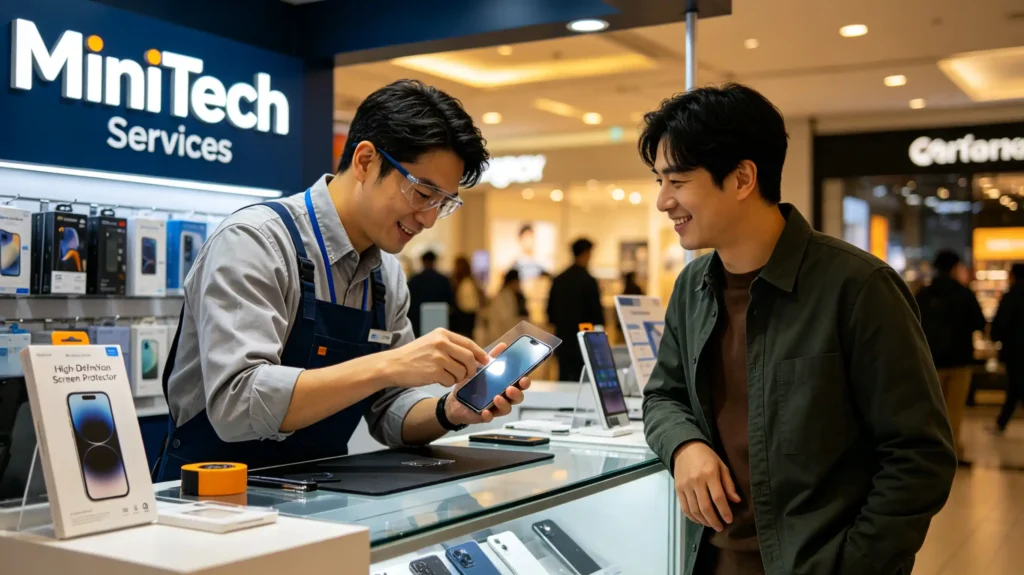
Phone screen protectors, fast-charging accessories, headphone cleaning, watch strap replacements, and even simple secondhand electronics buyback services. These are essential services in shopping malls, especially on weekends when foot traffic is heavy—there are often long lines at screen protector booths.
The advantage is that there’s virtually no finished-goods inventory; profits come from service fees and markups on consumables. The average transaction value is quite high—a screen protector costs $20–40—resulting in a very high gross margin.
What buyers need to factor in isn’t the product cost, but the cost of staff training. Whether the supplier can provide on-the-job training, ensure a steady and reliable supply of consumables, and quickly replace broken tools—these factors are far more important than whether the screen protector itself costs a few cents more.
The 5 Key Questions U.S. Buyers Ask When Selecting Kiosk Product Categories
1. Will this product category pass the target mall’s review?
This is the prerequisite for all other questions, yet 90% of newcomers overlook it.
Rules vary drastically among malls of different tiers in the U.S. High-end luxury malls do not allow the sale of low-priced plastic goods and have strict requirements for brands, packaging, and store design; Community shopping centers have lower brand requirements but strictly enforce fire safety, electrical, and health permits. Food products require additional health certificates, while electronics need electrical safety certifications.
The correct sequence is always: first secure a prospective location, clarify the mall’s entry rules and product category restrictions, and then work backward to select products. I’ve encountered far too many clients who stockpiled a pile of inventory before finding a location, only to be barred from entry due to incomplete certifications and end up stuck with unsold inventory.
2. What is the minimum order quantity? Is a trial sale possible?
This is the core issue that small and medium-sized buyers care about most.
The supply chain in 2026 is a far cry from the old days when minimum orders had to be in the hundreds or thousands. Many Chinese factories with deep roots in the U.S. market support small-batch mixed orders—you can get custom logos on orders as small as 50 pieces, and packaging and color customization on orders as small as 100 pieces.
Reliable suppliers will proactively offer trial sales packages: start with a small quantity to test sales for two weeks, and place a larger order only if sales are strong. Don’t waste your time negotiating with suppliers who demand minimum orders of several thousand dollars right off the bat and refuse to accept trial orders.
3. How long is the restocking cycle? What if you run out of stock during peak season?
The biggest fear for mall kiosks is running out of stock, especially during peak seasons like Black Friday, Christmas, and spring break—a single day out of stock means a day’s loss in rent and foot traffic.
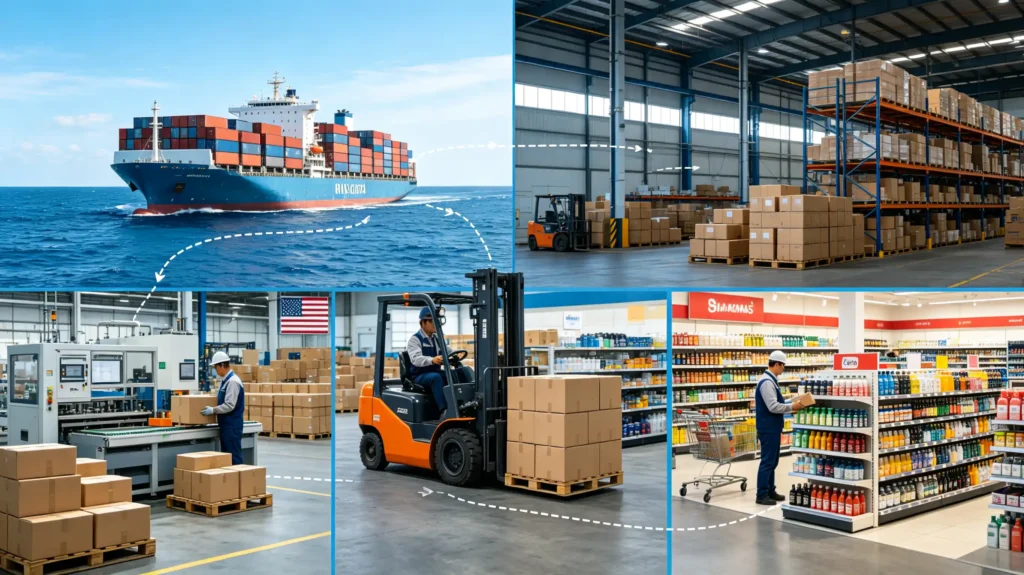
If shipping directly from a Chinese factory, sea freight typically takes 30–45 days, while air freight is faster but more expensive. A proven procurement strategy is to maintain a 30-day safety stock of best-selling items and lock in production capacity with suppliers well in advance. At the same time, confirm whether the supplier has a local U.S. fulfillment center—one that can restock small items within 3–5 days, which can be a lifesaver in emergencies.
By 2026, successful supply chains will almost universally have established fulfillment centers on the U.S. West Coast; this is no longer a bonus feature, but a standard requirement.
4. Is private-label customization possible?
Nearly 100% of buyers for chain kiosk operations will ask this question.
For the same product, applying your own brand can increase gross profit by over 30% and help build customer recognition, allowing you to avoid constant price wars. Customization today goes far beyond simply printing a logo; it includes packaging design, product color schemes, and even minor functional adjustments.
When sourcing, be sure to clarify three key points: the sample production lead time, how mold/plate setup fees are charged, and the minimum reorder volume required to receive a refund on those fees. Many people fail to ask these questions and later find themselves in a bind when faced with exorbitant prices for adding logos to existing stock.
5. How are slow-moving inventory and after-sales service handled?
No one can guarantee that every product will be a hit, especially with seasonal or holiday items—it’s perfectly normal for some to remain unsold.
A reliable supply chain will support exchanges for slow-moving inventory or buyback through end-of-season discounts. Especially with long-term partners, they won’t leave you to bear the full inventory risk alone. The same goes for after-sales service: discuss in advance the warranty period for electronic products, whether remote repair guidance is available if equipment breaks down, and whether there’s a local contact person.
Many small factories go off the grid after accepting an order, are unresponsive to restocking requests, and leave you to handle after-sales support entirely on your own. Avoid these suppliers at all costs, no matter how low their unit prices may be.
Procurement Decision Checklist: Ask Yourself These Five Questions Before Talking to Suppliers
- Can a customer understand this product in the three seconds it takes to walk by? If not, you’ll need staff to explain it, and labor costs at the kiosk will skyrocket.
- Can you keep the retail price within the $20–$50 range? If it’s below $20, your profit margin will be too thin; if it’s above $50, the barrier to impulse buying suddenly rises—unless your product offers an exceptionally strong experience.
- From the factory to the shelves in the U.S., can I keep my total costs within 25% of the retail price? If it exceeds that figure, your pricing flexibility will be very limited—not to mention running promotions or covering inventory write-offs.
- Do I have a way to clearly differentiate this product from others on the shelves within 90 days? Whether through custom packaging or on-site processing, you need something your competitors can’t immediately replicate.
- If this entire shipment fails, can I afford the loss? You must assume the worst-case scenario with every purchase. Keep your minimum order quantity within your risk tolerance limit; it’s better to opt for smaller batches and replenish more frequently.