
How Much Would it Cost to Start an Ice Cream Shop?

Let’s get straight to it: how much does it cost to start an ice cream shop? If you want a proper brick-and-mortar spot in a mid-sized U.S. or Canadian city—nothing fancy, but legit—you’re looking at $25,000 to $60,000 to open the doors. If you go with a cart or a small trailer, you can probably get rolling for around $10,000. Don’t believe the ads that say you can start for $5,000. That won’t even buy you a decent commercial soft-serve machine. Now I’m going to break down exactly where every dollar goes, so you don’t walk in blind.
How Is the Startup Cost Actually Broken Down? Piece by Piece
A lot of people think the biggest expense is the machines. It’s not. If you’ve done this before, you know that the rent deposit and renovation are the two sneaky money pits. I always split the startup costs into six big chunks, so you don’t miss anything.
- Rent deposit and first month’s rent
Most commercial leases ask for two or three months’ rent upfront as a deposit. Say you rent a 400–600 sq. ft. spot in a neighborhood strip mall, and the monthly rent is $2,000. Just to sign the lease, you could be coughing up **$6,000–$8,000** right there. - Renovation, plumbing, and electrical
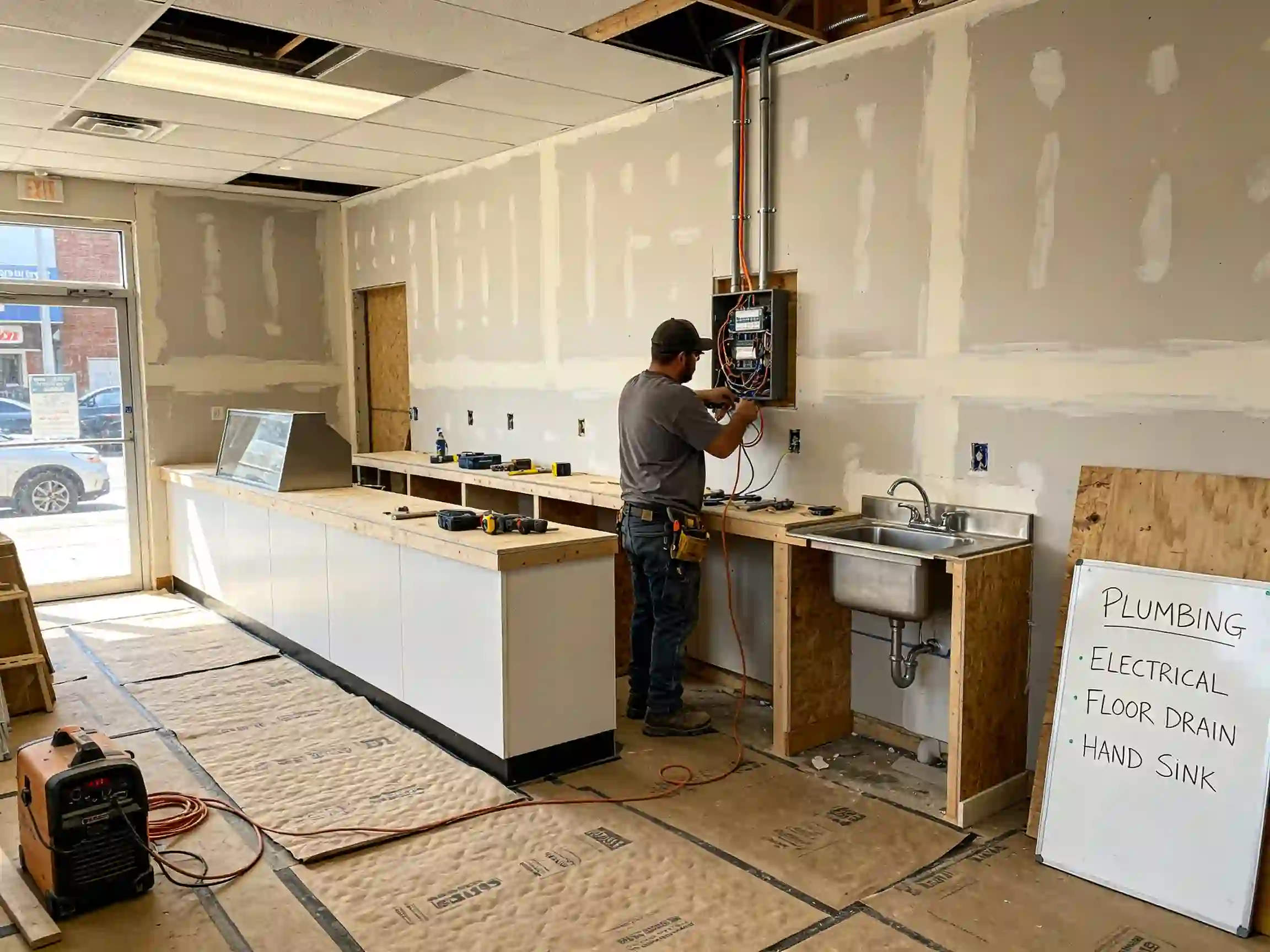
An ice cream shop needs three-phase power for the machines, floor drains, a hand sink, and sometimes a grease trap. Even if you take over a space that was already a food place, fixing these things up can easily eat $8,000–$15,000. - Core equipment
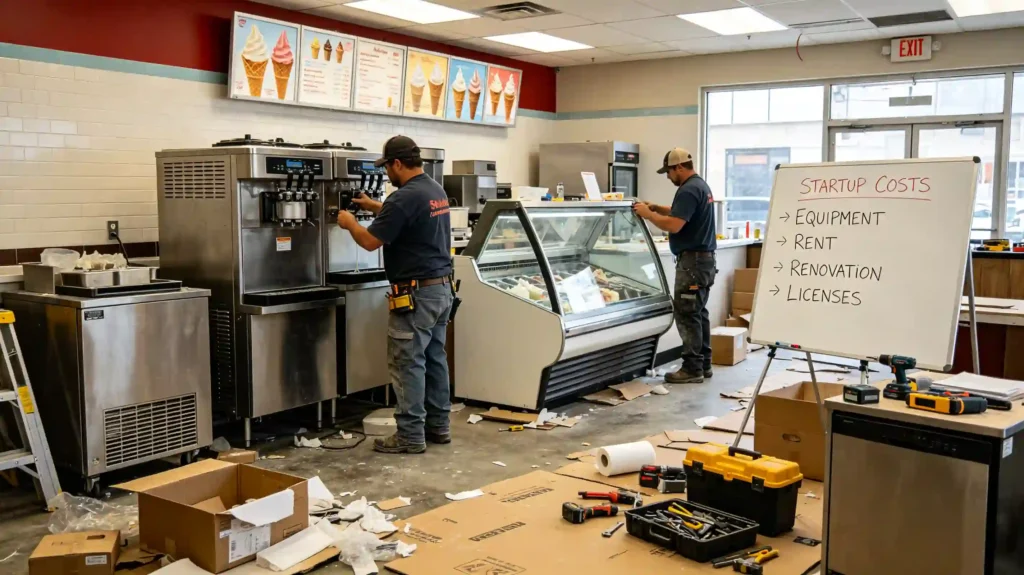
This is where the real hard cash goes. Even if you only sell scooped gelato, you still need a display case, a blast freezer, and an under-counter freezer. If you add a soft-serve machine, the number jumps fast. Here’s a realistic breakdown of what you’ll spend these days:
| Equipment | Budget Range (USD) | Money-Saving Tip |
|---|---|---|
| Hard ice cream display case (6–8 pans) | $2,500–$5,500 | Look for second-hand units from restaurants that closed. |
| Soft-serve machine (single or double head) | $6,000–$14,000 | Lease it short-term first, don’t buy outright. |
| Chest freezer / prep fridge | $1,200–$3,000 | Buy these new. Never mess with used refrigeration. |
| Blast freezer (optional) | $2,000–$4,000 | Skip it if you’re not making your own base from scratch. |
| POS system | $600–$1,500 | A Square terminal is usually more than enough. |
- Initial ingredients and packaging
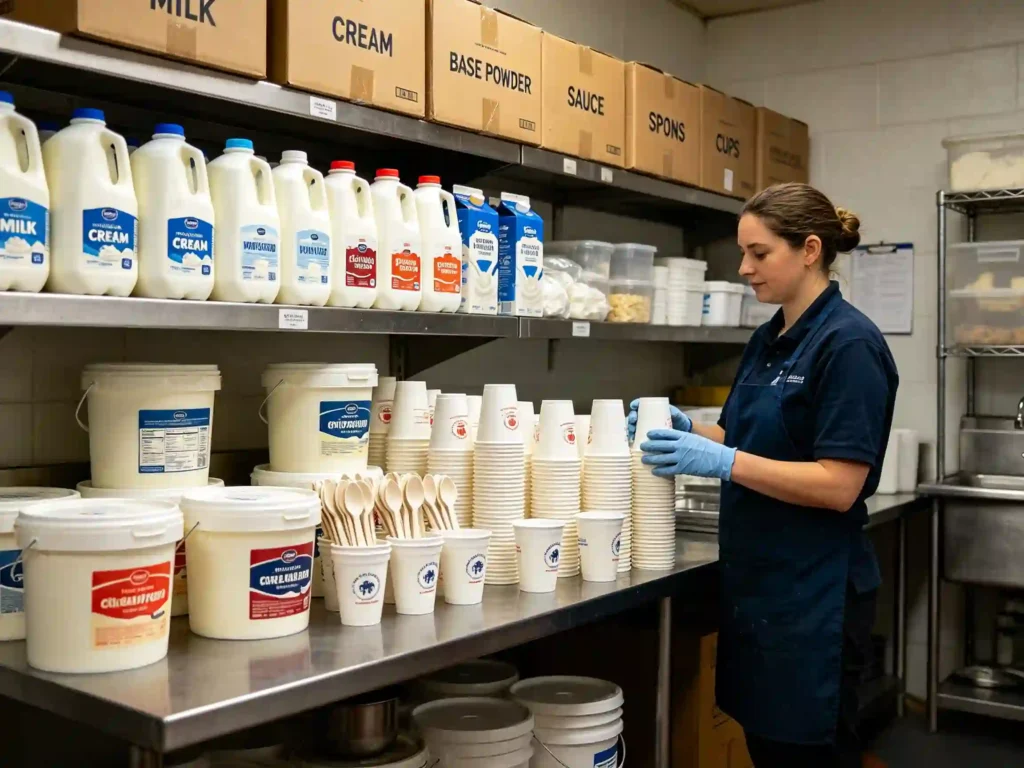
Base powder, milk, cream, cups, spoons, sample cups. You don’t need to sink a ton of money here. About $2,000–$4,000 will fill your freezers nicely. - Licenses, insurance, and legal fees
Health permits, business license, fire inspection, and basic commercial liability insurance. In North America, set aside a solid $3,000–$5,000 for all this. - Grand opening marketing and a cash cushion
Your store sign, flyers, a little Google Ads budget, plus enough cash to survive the first three months even if you barely break even. Budget at least $8,000 for this part.
Add all these up, and you can see why that $25,000–$60,000 range isn’t an exaggeration.
Cart, Kiosk, or Full Shop? The Cost Difference Is Huge
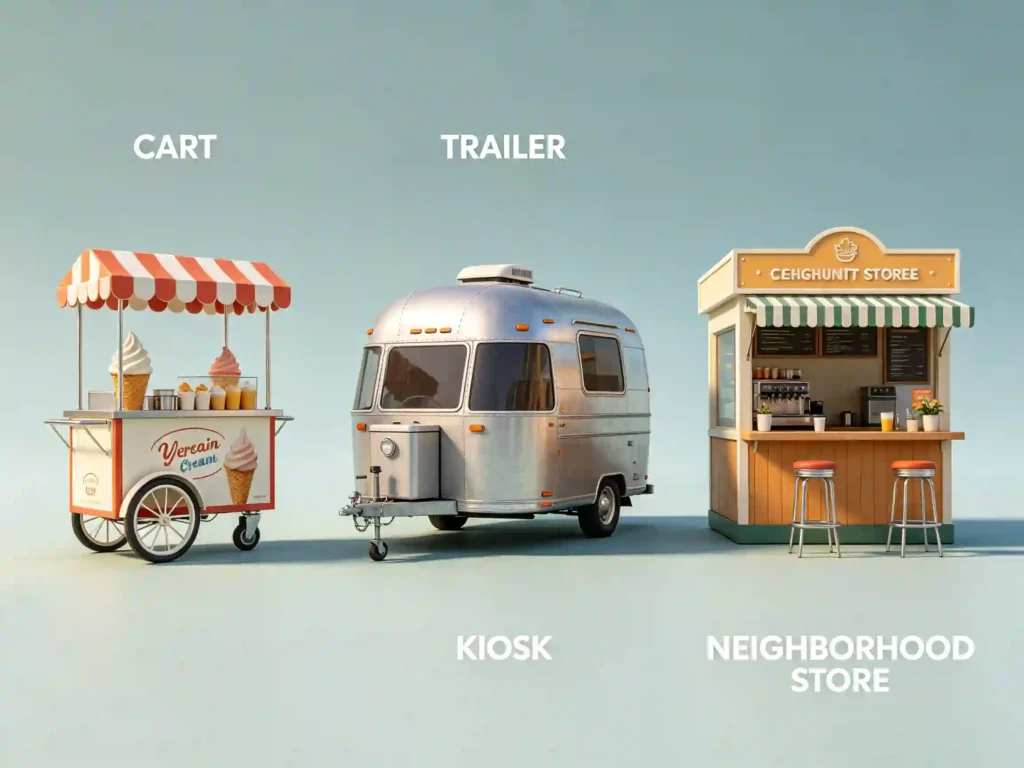
The type of shop you pick really decides whether your cash is enough. Don’t get it in your head that you need a 1,000 sq. ft. store right out of the gate. These are totally different levels of business.
| Shop Type | Startup Cost Range (USD) | The Real Deal |
|---|---|---|
| Ice cream bike / cart | $3,000–$8,000 | You can only sell pre-packaged treats or scoop from tubs. No on-site production, and the weather owns you. |
| Food truck / ice cream trailer | $15,000–$35,000 | Includes a used trailer, generator, and sink. Gives you the most freedom, but getting a good spot at markets is tough. |
| Mall kiosk | $20,000–$45,000 | Renovation is easier, but malls often take a 10%–15% cut of your sales. |
| Neighborhood storefront | $35,000–$70,000 | Good for eat-in traffic and repeat customers. You’ll need to cover the full cost of renovation and plumbing. |
| Flagship or tourist-spot store | $80,000–$150,000+ | This is all about the experience, Instagram moments, liquid nitrogen shows. You need deep pockets for this one. |
What If You Franchise a Big Name? How Much More Cash?
A lot of first-timers like the idea of franchising so they don’t have to figure everything out alone. That’s fair, but you need to know how the franchisor makes money off you.
Usually, a well-known U.S. ice cream franchise—think one starting with D or a certain cold-stone brand—has an initial franchise fee of $10,000–$30,000. But that’s just the ticket to enter. After that, they’ll make you buy their approved equipment package, which almost always costs 20% more than the open market. The bigger trap is the ongoing “lock-in.” You have to buy your core mixes and cones from them at a marked-up price, even if you find a local supplier with better taste and a 15% lower price.
If you build your own brand and deal directly with a local dairy and a commercial kitchen equipment distributor, you can cut your total startup cost by 30%. A lot of local dairies will even lend you a display freezer for free if you sign a one-year exclusive supply deal. For a new owner, this kind of B2B swap is way more practical than throwing money at a franchise brand.
Hidden Costs That 90% of New Owners Forget About
These are the lessons paid for in real cash. If you don’t plan for these hidden costs, your shop could easily be gone in six months.
- Trash and grease trap service fees: Unlike a clothing shop, an ice cream store has to deal with expired ingredients and wastewater. You might need a regular grease trap service contract, which can run a few hundred bucks a month.
- The slice your POS takes: Square terminals look cheap, but they take 2.6% + 10 cents per swipe. When sales volume picks up, that really starts to hurt.
- Repair parts that cost a fortune: If your soft-serve machine’s compressor burns out because you overloaded it, a replacement can cost more than a mid-range new freezer. Don’t gamble with used equipment that doesn’t have at least a one-year warranty.
- Seasonal drop-offs and keeping staff: In the off-season, sales can drop 70%, but if you want to keep your good staff, you can’t slash their hours too much. This “idling” payroll cost will drain your cash flow fast.
- Wasted product from testing flavors: You try a new recipe, it fails, and a whole batch of base goes down the drain. It’s totally normal to lose a few hundred dollars in ingredients during the R&D phase.
How to Slash Your Startup Costs by 20% — Real Talk on Dealing with Suppliers
People who’ve been around the block know how to control costs before opening day. Since you’re in a B2B chain, don’t let suppliers treat you like a walk-in customer.
- Ask for a “new store package” deal: Big equipment distributors often have package discounts. Give them your whole equipment list at once and let them throw you a bundled price. You can usually shave 10% off that way.
- Negotiate payment terms — don’t just pay cash upfront: With ingredient suppliers, always ask for Net-30 or Net-45 terms. That means you get the goods now and pay 30 days later. It’s a lifesaver for your cash flow in those first few months.
- Hit up trade shows for freebies: Go to pizza and ice cream expos. You can order equipment on the spot and get free accessories, and ingredient vendors will hand out sample cases. Use those freebies for a big opening-weekend tasting event and save yourself hundreds in marketing.
- Rent the gear first, buy it only when it proves itself: A lot of equipment vendors now do lease-to-own. If you aren’t sure how a certain soft-serve machine will hold up in winter, rent it for three months. If it works out, buy it. This keeps your capital from getting locked up too early.
A Real Budget from a Real Shop: Austin Neighborhood Store
Let me get specific. A friend of mine opened a 500 sq. ft. scoop shop in a suburb of Austin, Texas, in fall 2024—just takeout and a few seats. He was really careful with his spending, and his startup costs look like a solid reference point.
- Deposit + first month’s rent: $6,200
- Minor plumbing and electrical work, fresh paint, neon sign: $7,800
- Display case, under-counter hard ice cream freezer, milkshake machine, POS (bought outright): $17,500
- First batch of waffle cone mix, bases, sauces, cups and spoons: $2,800
- Business license, health permit, upfront insurance, fire inspection: $3,400
- Local Instagram ads and free sampling events for the first two weeks: $1,200
- Three months of operating cash kept in reserve: $10,000
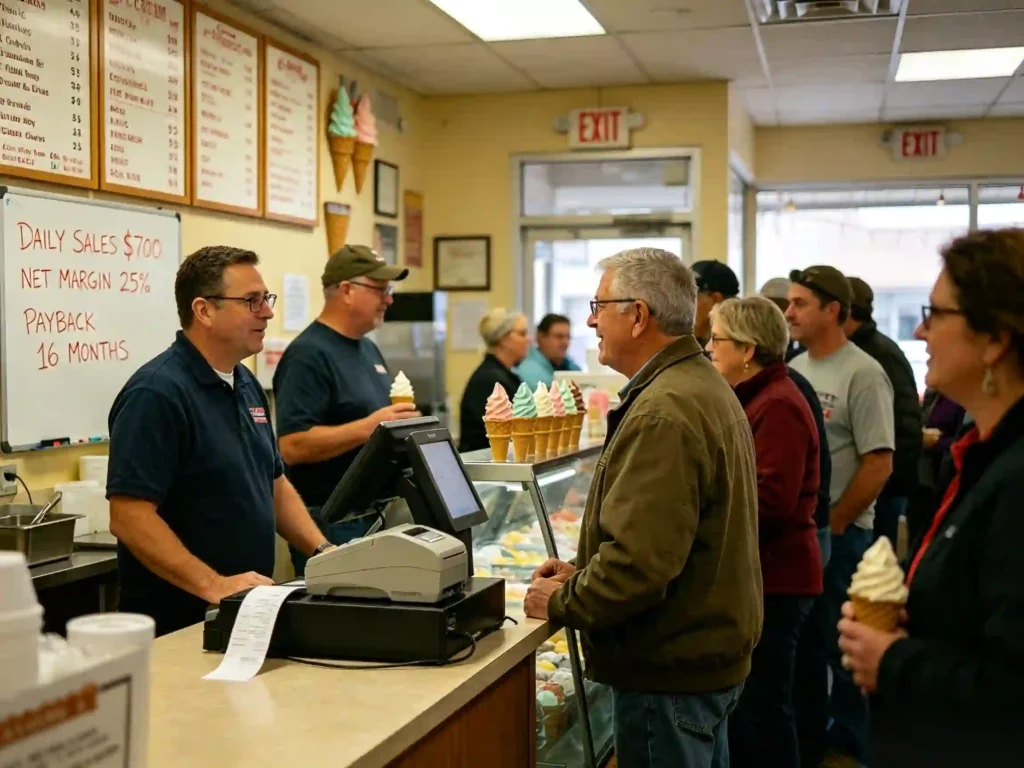
Total startup cash landed right around **$48,900**. He didn’t franchise. He drove to a wholesale warehouse in Houston to pick the equipment, and one of his display cases was nearly new but second-hand. The shop’s been running for over half a year now. In summer, his daily sales can hit $700. After ingredients and labor, his net margin is about 25%. By that math, he’s on track to get his entire investment back in about 16 months. That’s a solid pace.
So, Have You Got That Number Straight in Your Head Now?
Don’t kid yourself that opening an ice cream shop is just about buying tubs and putting them in a window. It’s really about managing cash flow, equipment, and location with a sharp pencil.
If you’ve got less than $20,000 ready to spend, your most realistic road right now is to start with a small cart or a weekend market booth. Build your customer base honestly, and don’t touch a storefront. If you can lay your hands on $40,000 or more in spare cash, and you can stomach breaking even—or even losing a little—for the first half-year, then find a neighborhood spot with fair rent and lots of kids walking by. Put in the effort to develop a handful of signature flavors that beat the chain stores, and this business can absolutely print money for you.
Every single dollar needs to go toward making sure that first bite makes someone want to come back. Fancy decor and huge machines you don’t really need? Save those for when you’re opening your second shop.