
Renovating Your Coffee Shop? Display Units Worth Investing In

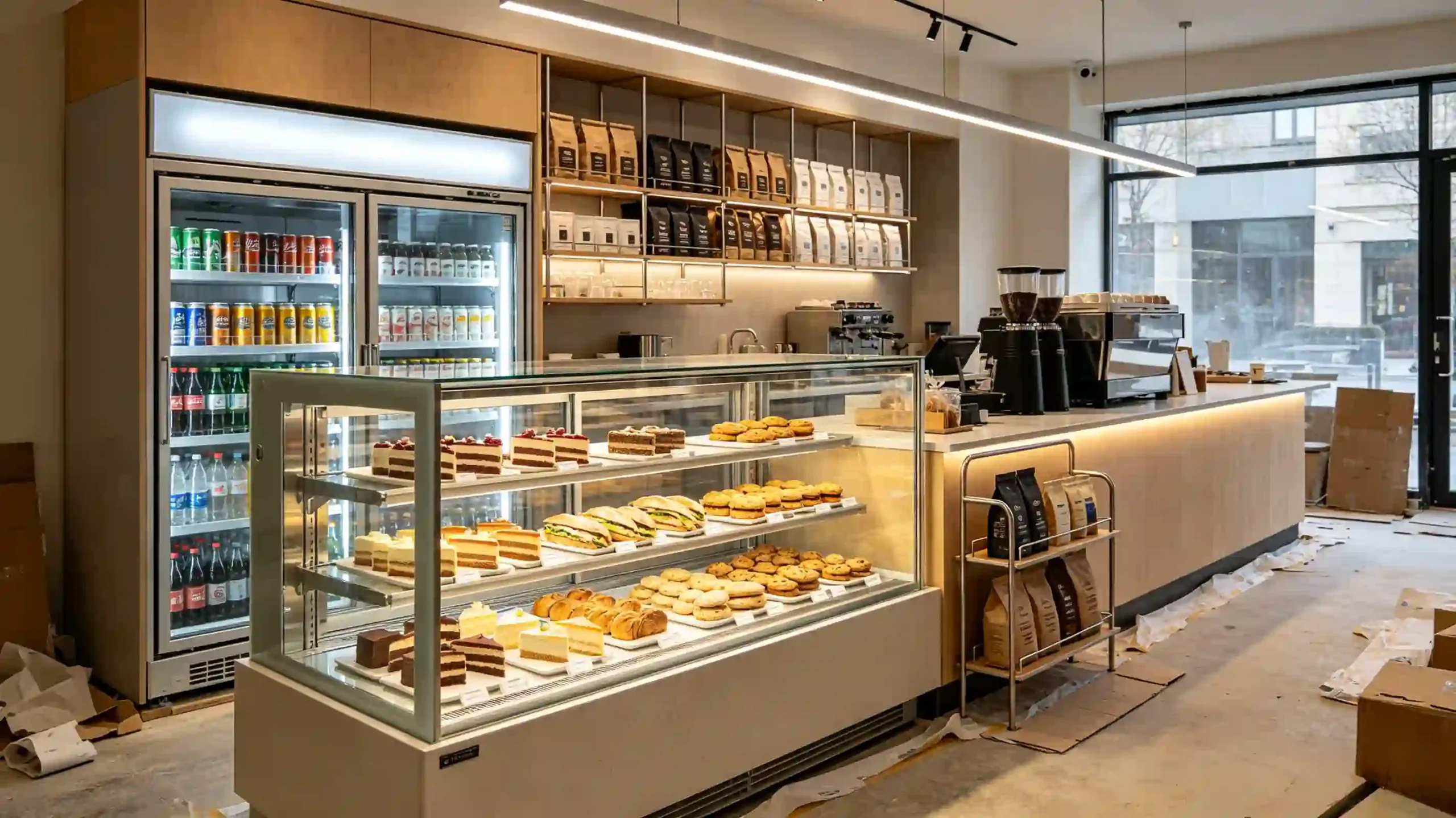
Here’s the straight answer: a high-clarity refrigerated pastry display, an open-front beverage cooler, and a modular shelving system you can reconfigure in minutes. Get these three right, and your renovation pays itself back way faster than you think. Whether you’re opening a third location in Melbourne or overhauling a tiny corner in LA, how you allocate that budget directly shapes your gross margin for the next three years.
Tight renovation budget? Why you should throw money at display units first
Honestly, a lot of shop owners want to dump cash into wallpaper, fancy chairs, or some Instagrammable neon light when they renovate. Last year we helped four independent coffee shops plan their remodel. Three of them moved nearly 40% of the budget into commercial display refrigerators and shelving. Within three months after the makeover, average ticket size jumped $2.30, and the sales share of pastries plus retail coffee beans shot from 11% to 26%.
A display unit is basically the silent salesperson in your store. Customers spend two to three minutes standing in front of the counter, and over 70% of that time their eyes are fixed on whatever is inside your display and the price tags. You can skip the accent wall art, no problem. But if your display area feels cramped, the lighting sucks, and it’s awkward to grab stuff, you lose way more money than the paint job ever cost you.
So our logic is pretty simple: pile your budget onto the gear that directly generates transactions, not onto the backdrop.
Forced air or cold wall? A table that makes refrigeration logic dead simple
When you’re shopping for a refrigerated pastry case, don’t let the sales guy just sell you on the looks. Go check where the compressor sits and ask about the cooling method first. This decision pretty much defines whether the next three years feel smooth or whether your staff wants to quit.
Cold Wall (static cooling) and Forced Air (fan-assisted) basically determine the personality of the unit. Let’s break it down in a table:
| Feature | Forced Air | Cold Wall |
|---|---|---|
| Cooling speed & evenness | Fast, small temp difference inside | Slower, colder near the back wall |
| Frost build-up | Auto defrost, no ice chunk headaches | Prone to frost on inner walls, manual defrost needed |
| Food moisture retention | Dries out easily, mousse slices need wrapping | Keeps humidity well, cake tops don’t crack |
| Maintenance frequency | Gotta brush condenser fins once a month | Less daily upkeep, but defrosting is a real pain |
| Best for | High-traffic shops with frequent door opening | Delicate French pastry, sliced cakes that need moisture |
| Approx. price gap | 20–30% more expensive | Lower entry price, but potentially sneaky electricity cost |
We saw a bakery-café in California follow the designer’s advice and grab a cold wall unit. By summer they were going crazy with manual defrosting, the compressor kept overworking, and the monthly electricity bill jumped nearly 200 bucks. Later they swapped to forced air. The purchase price was $900 higher, but once you factor in the power saving plus the labor hassle you avoid, the payback was just over two months.
One-liner advice: unless your hero product is a mousse that’s super sensitive to dry air, go forced air for daily operations. Long term, it’s just cheaper to live with.
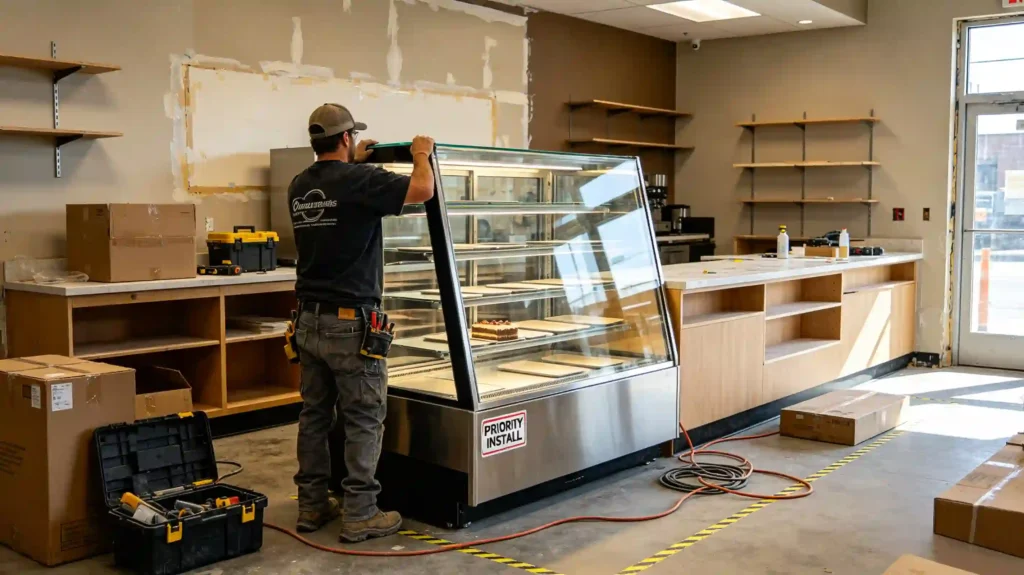
Open display vs. glass door cabinet – which actually triggers more orders?
We’ve been asked this a million times. Here’s a real A/B test: same batch of handmade cookies. Placed inside a glass door refrigerated cabinet, they sold about 12 pieces a day. Moved to a three-tier open shelf next to the front counter with a little chalkboard saying “Freshly baked today,” sales shot up to 31 pieces, and wastage only increased by 2.
Looks like open display wins hands down, right? But it’s not that straightforward.
We’ve lined up the real-world trade-offs:
| Comparison | Open display shelving | Glass door fridge/display cabinet |
|---|---|---|
| Impulse purchase trigger | Extremely high, grab and go | Medium, that door-opening action slows people |
| Product wastage | Prone to breaking, being touched, drying out | Low, good protection |
| Cleaning frequency | Wipe crumbs and fingerprints daily | Deep clean once a week is enough |
| Food safety compliance | Many areas require a sneeze guard add-on | Automatically compliant |
| Energy consumption | No extra power (ambient shelves) or high for open chillers | Sealed cabinet keeps energy under control |
How to pick? Based on what we’ve seen: high-margin, fast-moving stuff that’s okay at room temp – go wild with open shelving. Think bottled cold brew, bagged cookies, pre-packaged coffee beans. Sliced cakes, anything with cream, sandwiches – keep them inside a cabinet with a glass door. Pick Low-E anti-condensation glass. It saves power and saves you from constantly wiping fog.
One more thing: if you’re in a US state with super picky health inspections, open refrigerated cases usually need a glass splash guard installed. Check the local code before you renovate. Don’t wait for that violation notice and then rush to drill holes into a brand-new unit. Looks ugly and costs more.
Custom fixed shelving is quietly killing your future menu changes
One trap people fall into during renovations: hiring a carpenter to build a bunch of gorgeous but non-adjustable cabinets with shelf heights welded or glued in place. Looks beautiful for the first six months. A year later you want to display large retail coffee bags or introduce a tall kombucha bottle, and you realize there’s no way they fit.
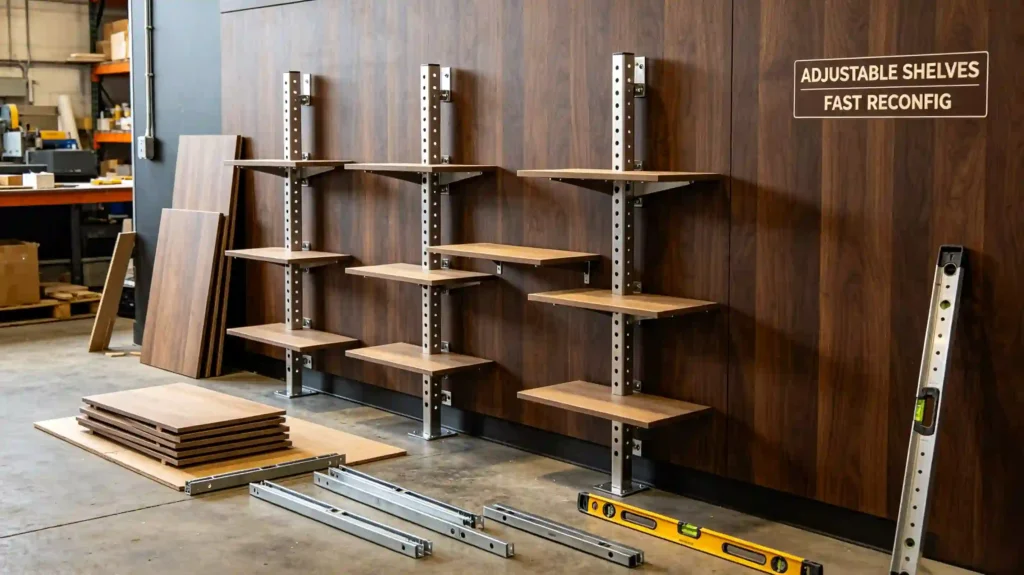
When we plan projects for clients now, unless it’s a signature architectural piece at the entrance, we push modular shelving for the entire display area. Uprights with multiple pre-cut slots, shelves you can adjust height and tilt in under five minutes. The extra upfront cost is only about 15–20% of the shelving budget, but it saves you over 40% on a future redo.
A shop in Toronto had custom curved stainless steel racks installed. Looked stunning, but later they wanted to showcase 1kg coffee bags and gift boxes. Couldn’t fit anything. Those racks ended up gathering dust in the storage room. The owner later told us, damn, should’ve just gone modular steel with swappable front panels from the start.
Let’s be real: a coffee shop menu changes a bit every six months, a lot every year. Your display system has to keep up with that rhythm.
Thinking of snagging a second-hand display fridge? Check these three hidden costs first
Bootstrapping owners on a tight budget easily fixate on the used market. I’m not totally against it, but bring a calculator when you go check the unit.
A five-year-old commercial fridge might look clean and decent after a wipe-down, but the door gasket could already be slightly deformed, the refrigerant lines might have tiny leaks, and the compressor has been running way past its comfortable service life. We’ve measured real cases where an old unit’s daily power consumption is over 50% higher than a comparable new model. Do the math: an extra 4 kWh a day, at a commercial rate of $0.18/kWh, that’s about $260 more in electricity per year. In two years you could’ve covered the price difference with an entry-level new machine, and that’s not even counting the repair bill when it suddenly quits.
When inspecting a used unit, you absolutely must check three things:
- Refrigerant type: If it’s still running on R-22, walk away. That refrigerant is phased out, you won’t even find it to top up later.
- Compressor warranty: Even for used gear, ask whether the compressor can still get an extended warranty. If not, one breakdown can cost half the unit’s price in repairs.
- Actual temperature recovery curve: Bring a data logger. After the door has been closed and stabilized, open it for 30 seconds then shut it. Time how long it takes to drop back to the set temperature. If it can’t recover within five minutes, don’t touch it.
If you really need to save money, grab a brand-new entry-level unit from a value brand like Atosa. That’s still a safer bet than gambling on an old machine that might crap out any day.
How to pick among major brands in the North American market? A quick spec reference sheet
So you don’t get dizzy flipping through catalogs, we pulled some numbers for three commercial display fridge brands with big shipment volumes in North America. Data is based on 2024 channel manuals and real-world installation feedback. Prices vary by dealer and region, so just use them as a reference.
| Brand | Popular model | Width | Daily energy use | Compressor warranty | Approx. price (USD) | One-liner |
|---|---|---|---|---|---|---|
| True | TCGDZ-72 | 72″ | 8.5 kWh | 5 yrs parts & labor | $4,200–4,800 | Full stainless, R290 eco refrigerant, rock-solid reliability |
| Turbo Air | TOM-72L | 72″ | 7.2 kWh | 5 yrs compressor | $3,800–4,200 | Self-cleaning condenser saves hassle, great energy control |
| Atosa | ATC-72 | 72″ | 9.0 kWh | 2 yrs compressor | $2,600–3,000 | Attractive price, works for shops where the door isn’t opened non-stop |
If your place has constant heavy traffic all year, something like True or Turbo Air that can take a beating makes sense. If it’s a neighborhood spot with moderate usage, Atosa is plenty, and you can throw the money you save into modular shelving.
Two small things people tend to overlook: lighting and price tags
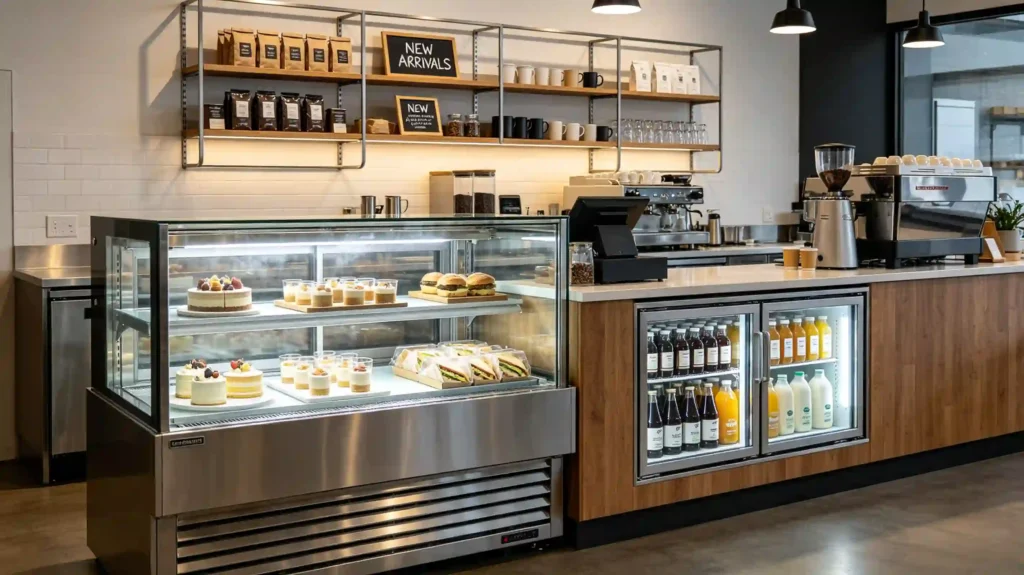
Picking the right display unit is only half the job. Tweak the lighting color temperature and your price tag strategy, and you can push turnover even higher.
The stock LED strips inside display fridges are often too cool-white, making cakes look slightly greenish. Swap them for 3000K warm-white strips, and suddenly baked goods look irresistibly warm. For salad or sandwich sections, use 4000K natural white, it makes things look cleaner and fresher. The light strip swap costs under 40 bucks and you can DIY it.
Also, stop handwriting price tags. Use rewritable LCD tags or electronic shelf labels (ESL) so you can adjust pricing dynamically. With two hours till close, punch in a 30% discount on sliced cakes with one click and watch your wastage rate drop. We saw one shop play this brilliantly: they used electronic tags paired with a “late afternoon dessert special” and squeezed the waste rate from 8% down to under 2%. That alone saved them nearly 900 dollars a month in product that used to get tossed.
How long until the display upgrade pays itself back? Real numbers
Let’s throw down some actual math. Say you spend $8,000 on a pastry display, open shelving, and a modular display system during your remodel. Originally your daily pastry and drink sales were $200. After the upgrade, because the display looks tempting and grabbing stuff is effortless, daily sales bump to $320, an extra $120. At around 70% gross margin, that’s an extra $84 in your pocket per day.
$8,000 ÷ $84 ≈ 95 days. That means a little over three months of operation and your equipment investment has paid for itself. Everything after that is pure profit. This hasn’t even counted the extra lift you get from retail coffee beans and merch being properly displayed.
When you’re renovating your coffee shop, seriously, don’t treat display units as a “we’ll figure it out later” item. Renovating Your Coffee Shop? Display units worth investing in. Put the money where your customers’ eyes and fingers linger the longest. That brings in way more than repainting a wall ever will. Before you swing the hammer, nail down the display game first.