
How to Design Your Ice Cream Shop Bar Counter | 10 Style Design Idea

Let’s cut straight to it: how to design your ice cream shop bar counter that actually works for your business, not just looks pretty? These 10 style design ideas cover every shop format, from small neighborhood spots to flagship stores, and they’re all proven, real-world layouts you can implement today. Built around North American food service codes and in-store operation habits, they range from $1,200 to $12,000 per unit, balancing service speed, product display and long-term durability. Follow these picks, and you’ll save yourself months of trial and error.
First Things First: What Actually Matters Most for an Ice Cream Bar Counter?
A lot of first-time owners pick colors and shapes first, and that’s totally backwards.
Your bar counter is the core of your shop. It runs 12+ hours a day, and how well it works directly impacts how much money you make.
Anyone who’s been in this business will tell you to focus on three things first.
Workflow efficiency
Ice cream shops only have 2-3 real peak hours a day. If customers wait more than 5 minutes, most will just walk away.
The ideal workflow goes in a straight line: grab cup → serve ice cream → add toppings → take payment. No backtracking, no extra steps for staff.
We pulled data from 300+ North American shops we’ve worked with. A well-planned counter cuts per-order time from 45 seconds down to 28 seconds, and you lose 27% fewer walk-in customers during rush hour.
Display and conversion
Your counter is your best ad space.
The display case should sit right at customer eye level, with a 15-degree inward tilt. That’s the sweet spot—people don’t have to bend over to see every flavor.
Display freezers with warm LED strips drive 22% more flavor and topping add-ons than plain unlit units. Hit the toppings station with good light too, and customers will almost always spring for an extra scoop or drizzle.
Durability and material quality
Ice cream shops are cold and humid all day. Pick the wrong materials, and they’ll fall apart in 6 months.
Stick to quartz or food-grade stainless steel for countertops. They resist condensation, don’t scratch easily, and meet North American health inspection standards.
Don’t cheap out on regular wood countertops. Once they swell from moisture, your display case won’t fit anymore. The rework will cost you way more than you saved upfront.
10 Ice Cream Bar Counter Styles: Which One Fits Your Shop?
All 10 of these designs are field-tested from real projects. They cover every setup from food trucks to flagship stores. I’ve included the best use case and real-world cost for each, so you can match it to your budget and concept right away.
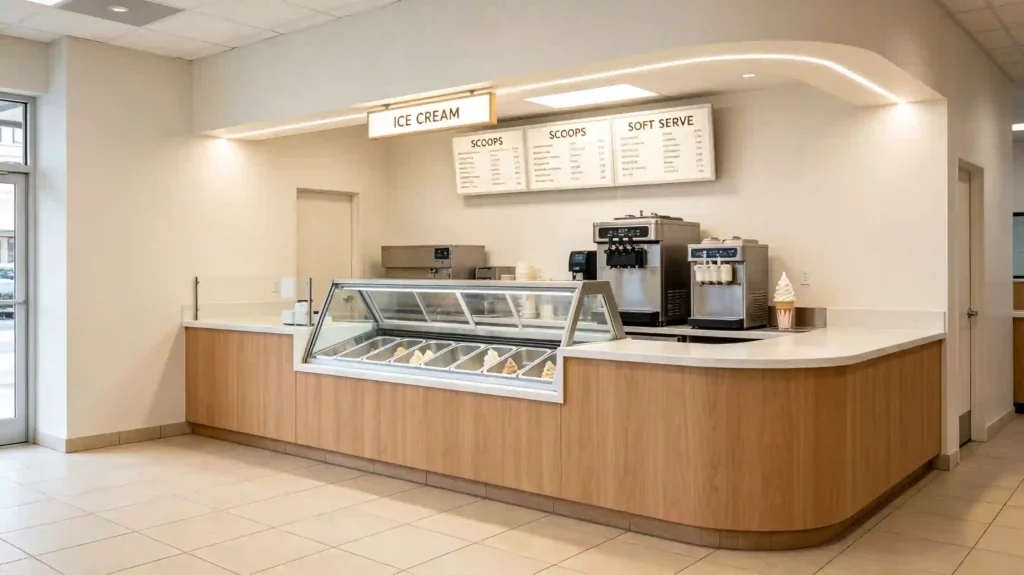
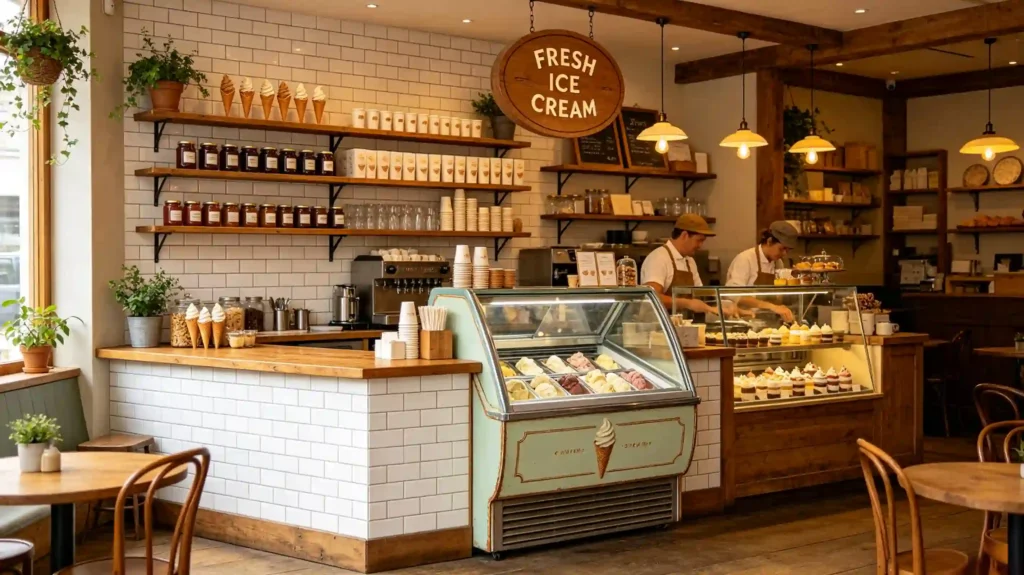
1. No-Frills Neighborhood Basic
Best for neighborhood shops under 1,000 sq ft, perfect for new owners on a tight budget.
It’s a 3-4 meter (10-13 ft) straight counter. Soft-serve machine on the left, built-in display case in the middle, checkout and packing area on the right.
Countertop is off-white quartz, cabinetry is moisture-resistant melamine. No fancy details, just plenty of work space.
Cost: $1,200 – $2,200. Great value, easy to clean, fully up to health code.
You don’t need flashy design for a local neighborhood spot. Practical always wins when you have regulars coming back every week.
2. Industrial Fast-Serve for High-Foot-Traffic Areas
Ideal for walk-up shops on pedestrian streets or busy commercial districts, built for fast turnover.
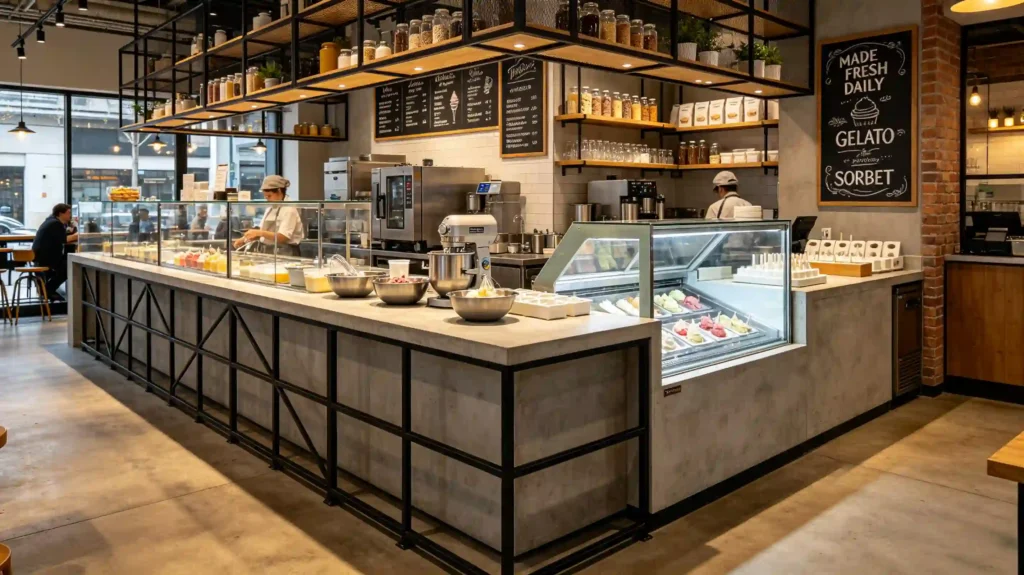
Black stainless steel frame, concrete-look countertop, exposed warm light strips and metal shelving. It has a distinct, recognizable look.
It uses a stepped design: 90cm high on the customer side, 110cm on the prep side. It hides messy prep tools from view, so customers only see finished products and the display case.
Cost: $2,500 – $4,000. Tough, scratch-resistant, and super shareable on social media.
Works best for soft-serve, sundaes and milkshakes—items you can turn out fast.
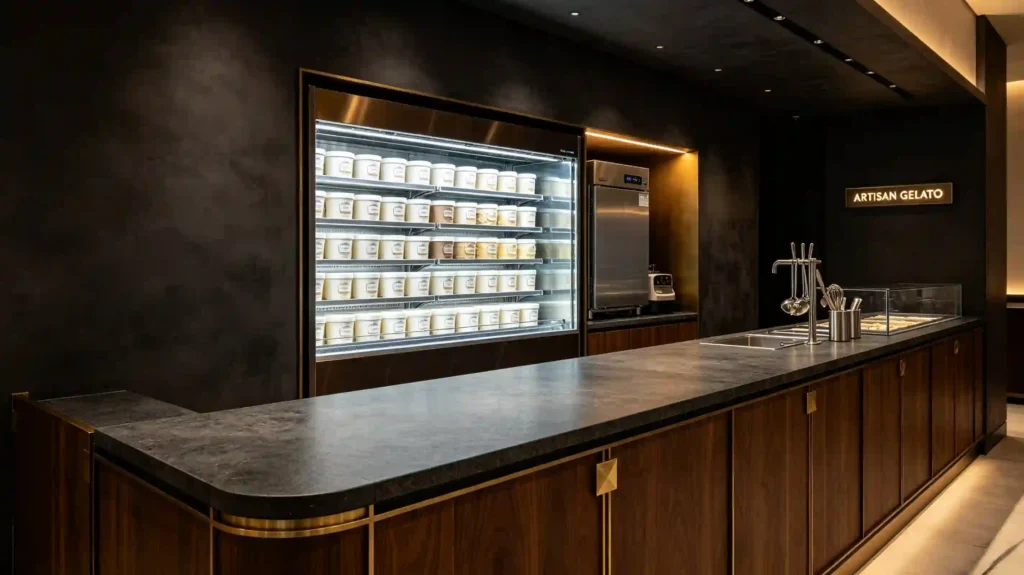
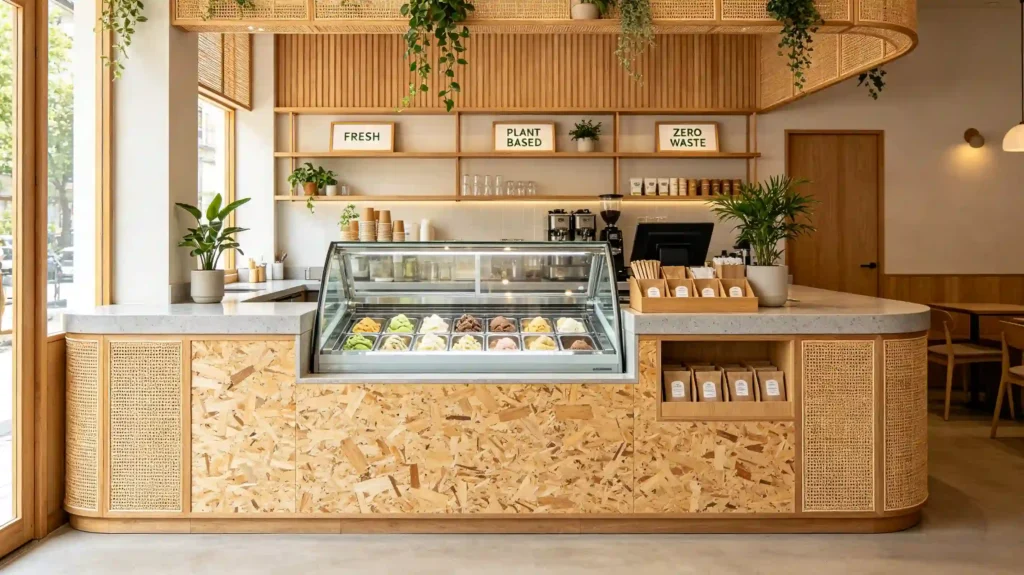
3. Premium Built-In for Artisanal Gelato Shops
Made for boutique hard ice cream and gelato shops focused on quality and premium experience.
It features a flush-mounted low-temperature display case, with the countertop level with the case surface. Most are curved or L-shaped, so customers can walk along and browse every flavor slowly.
Cabinetry uses wood veneer or matte lacquer, paired with 3000K warm LED strips. Each flavor pan gets its own accent light, so the creamy texture and fruit pieces really pop.
Cost: $6,000 – $9,000. Fully customizable to fit your shop’s interior perfectly.
Quick tip: Always confirm ventilation placement before building. Don’t seal off the heat vents, or your freezer will work harder and run up your electric bill.
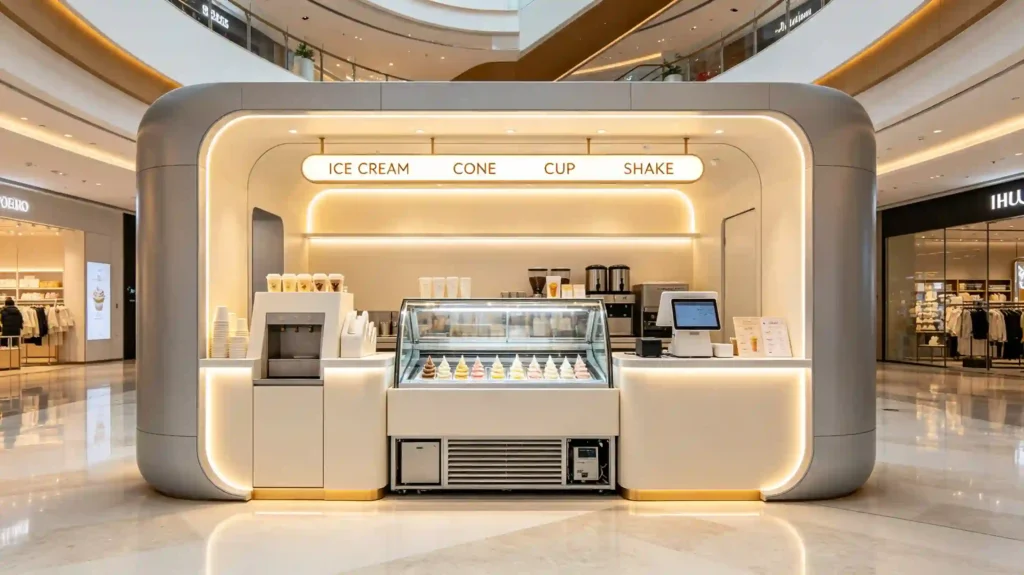
4. Modular Build for Mall Kiosks
Designed for small mall spots, usually 100-200 sq ft.
Every part is pre-fabricated in the factory and assembled on site. No on-site painting or cutting, so it meets mall fire and environmental requirements easily.
You can use all four sides of the counter: front for main service, side for pickup, back for storage freezers. It makes the most of limited space.
Cost: $3,000 – $5,500. You can take it apart and move it if you switch locations, no full rebuild needed.
A lot of North American chain brands use this for expansion. It’s fast to deploy, cheap to relocate, and easy to copy across locations.
5. Self-Serve Interactive Bar
Perfect for attractions, amusement parks and food courts with heavy foot traffic.
It’s an open layout where the display case faces the customer side. People grab their own cups and pick flavors, and staff only restock and handle payment.
The toppings station sits on a separate side counter. Customers add their own toppings, charged per item or by weight.
Cost: $4,500 – $7,000. It uses fewer staff, but you need display cases with self-closing doors and dust covers to meet health rules.
From our project data, this self-serve ice cream model usually has a 15% higher average order value than traditional counter service. People can’t help adding extra toppings.
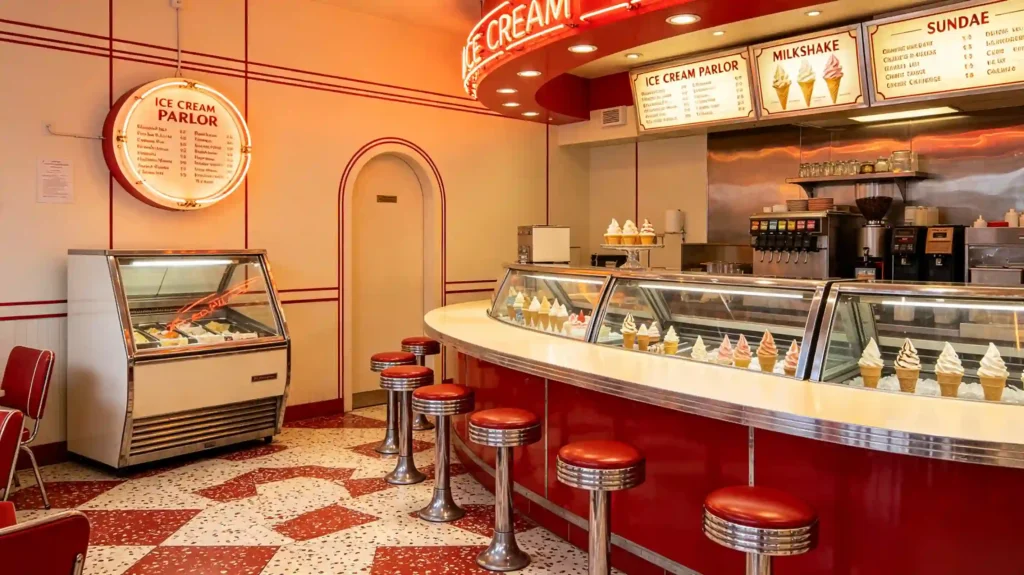
6. Retro American Diner Style
Built for nostalgia-focused shops in historic districts or tourist towns.
It uses red and white laminate countertops, chrome trim, and rounded curved corners. Add a few bar stools for small dine-in service.
You can mount a neon brand sign on the front. It’s super recognizable at night, and has that classic old-school soda shop vibe.
Cost: $3,500 – $5,500. It has strong personality and gets shared a lot on local social media.
Pairs really well with classic cones, milkshakes and soda floats. The nostalgia angle sells itself.
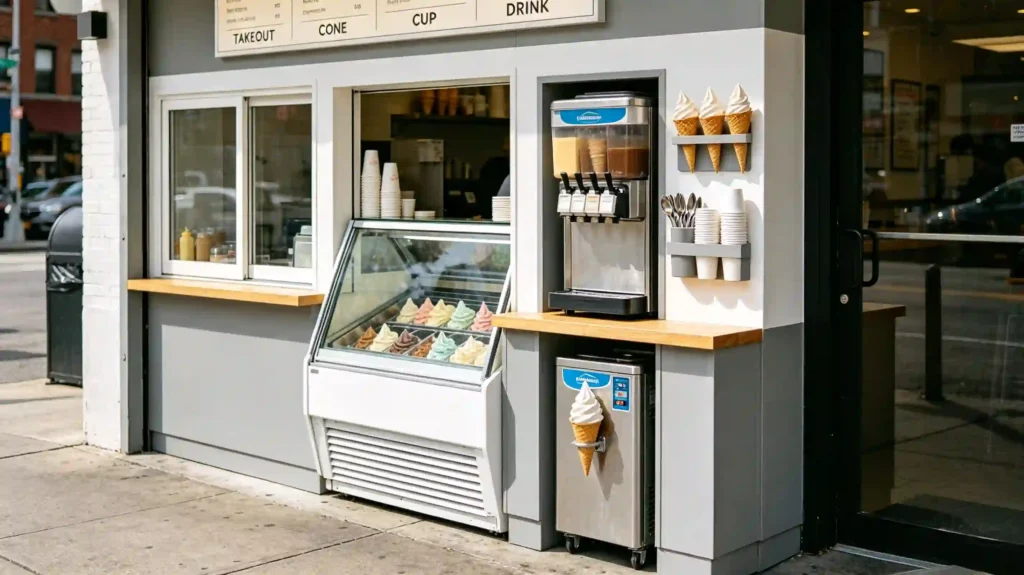
7. Custom Fit for Ice Cream Trucks & Trailers
Made specifically for ice cream trucks and trailers, no custom carpentry needed on your end.
The whole unit is made of lightweight food-grade stainless steel. It’s waterproof and sunproof, so it won’t rust or warp outside.
All equipment slots are pre-measured, with secure clips for ice cream machines, ice makers and topping containers. Nothing shifts around when you drive.
Cost: $1,800 – $3,200. Price includes all mounting hardware, and it’s built to fit your exact vehicle dimensions.
A lot of new owners test the business with a truck first. Ordering the counter and equipment together from one manufacturer saves you about 30% vs. sourcing separately, and it meets mobile food vendor health codes.
8. Minimalist Instagram-Worthy Design
For shops near college campuses or trendy neighborhoods, built for social media shares.
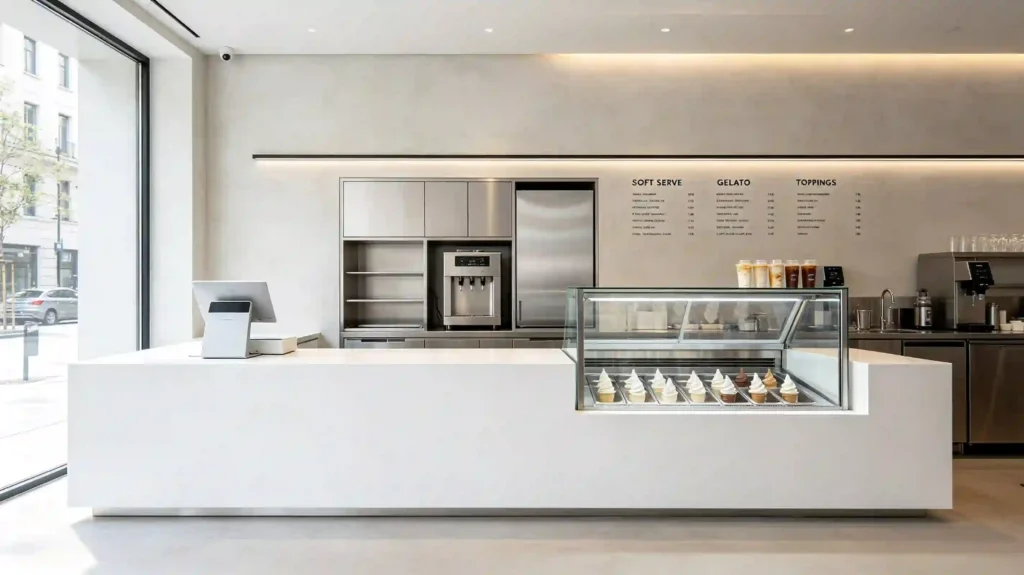
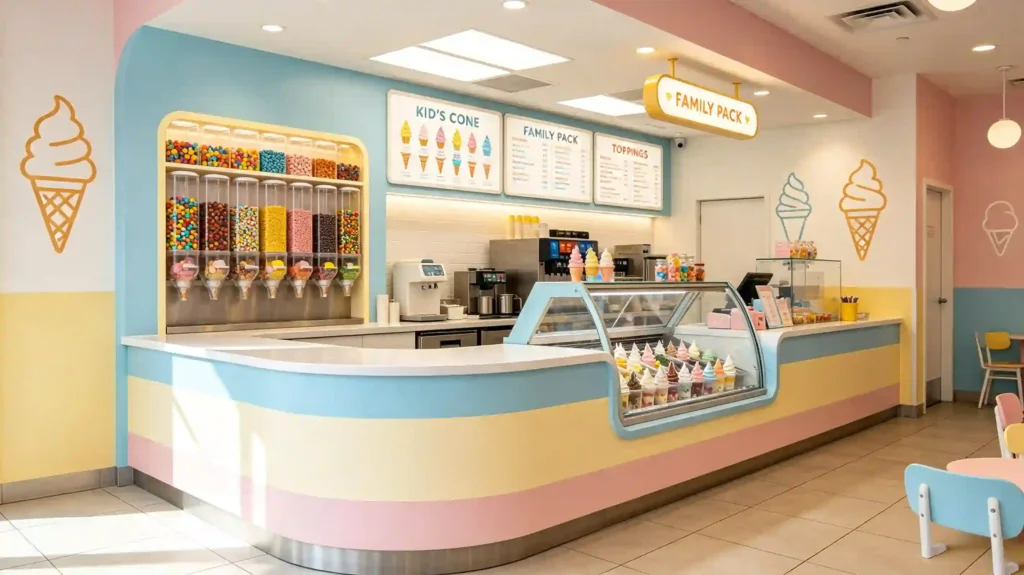
All-white or cream matte countertop, no extra lines or details. The display case is fully flush with the counter surface for a clean, seamless look.
Only a small metal brand logo on the front, no extra decor. It looks clean and polished in photos, super easy to style.
Cost: $4,000 – $6,500. It requires precise workmanship—gaps have to be perfectly even or it looks cheap.
Don’t clutter it with extra decor. The simpler it is, the better it looks in photos. Customers will post it on Instagram and TikTok, which is free marketing for you.
9. Dual-Concept Counter for Hybrid Shops
For shops that sell ice cream plus coffee, baked goods or other items. It keeps revenue steady during slow winter seasons.
The counter has clear separate zones: one side for ice cream service, one side for drink or pastry prep. They share a central under-counter fridge to save space.
The checkout sits in the middle, so customers can order from both sides and pick up in one spot.
Cost: $5,000 – $8,000. You can adjust the size of each zone based on which part of your business makes more money.
Hybrid shops handle off-seasons way better. When ice cream sales drop in winter, hot drinks carry the revenue. A well-designed counter lets you do both without extra floor space.
10. Immersive Flagship Experience Bar
Built for brand flagship stores in core commercial areas or top tourist spots, focused entirely on brand experience.
It uses an open-kitchen layout with ultra-clear glass partitions. Customers can watch the whole handmade ice cream churning and serving process, which feels premium and memorable.
There’s a built-in tasting counter in the middle, with a few seats nearby. Staff can walk customers through flavors and ingredient stories face to face.
Cost: $8,000 – $12,000+. Fully customizable, from materials to lighting, all matched to your brand identity.
This design isn’t about maximum speed—it’s about brand impact and customer experience. It’s perfect for premium brands planning to expand.
To make comparison easier, I’ve put all the key details in the table below. You can reference it directly for your project.
| Style Type | Best For | Cost Range (USD) | Key Benefit | Ideal Menu |
|---|---|---|---|---|
| No-Frills Neighborhood Basic | Neighborhood shops under 1,000 sq ft | $1,200 – $2,200 | Low cost, easy to clean | Regular soft-serve, hard ice cream |
| Industrial Fast-Serve | Pedestrian streets, commercial districts | $2,500 – $4,000 | High recognition, durable | Soft-serve, sundaes, milkshakes |
| Premium Artisanal Gelato | Boutique hard ice cream / gelato shops | $6,000 – $9,000 | Premium display, high-end feel | Handmade hard ice cream, gelato |
| Modular Mall Kiosk | Small mall spots, chain expansion | $3,000 – $5,500 | Fast setup, relocatable | All ice cream types |
| Self-Serve Interactive Bar | Attractions, malls, food courts | $4,500 – $7,000 | Lower labor, higher average order | Hard ice cream, self-serve toppings |
| Retro American Diner | Historic districts, tourist towns | $3,500 – $5,500 | Strong memorability, easy to share | Classic cones, milkshakes |
| Custom Truck/Trailer Fit | Ice cream trucks, mobile trailers | $1,800 – $3,200 | Lightweight, weatherproof | Soft-serve, pre-packaged items |
| Minimalist Instagram-Worthy | College towns, trendy districts | $4,000 – $6,500 | Highly shareable, free social traffic | Decorative cones, premium scoops |
| Dual-Concept Hybrid | Ice cream + coffee / bakery shops | $5,000 – $8,000 | High space efficiency, off-season revenue | Ice cream + drinks / baked goods |
| Immersive Flagship Experience | Flagship stores, tourist hotspots | $8,000 – $12,000+ | Strong brand identity, premium experience | Full menu + live preparation |
Mistakes That’ll Cost You Serious Money on Your Bar Counter
These are all real mistakes our clients have made, paid for with actual cash. Avoid them upfront, and you’ll save a ton of hassle and money.
No access panels for equipment repairs
A lot of people seal equipment tight into the counter with no way to get to it. When something breaks, you have to tear apart the whole counter to fix it.
No matter what style you pick, always leave access doors for refrigeration units and electrical parts, especially for the compressor.
One repair can cost you hundreds in teardown and rebuild fees, plus multiple days of lost sales.
Wrong height burns out your staff fast
Counter prep height should match the height of the people working there full time. The standard range is 100-110cm.
Too high, and your staff’s arms get sore. Too low, and they’re hunched over all day. No one can handle that through a full rush shift.
We’ve had clients build their counters too short, and staff quit after two months from back pain. It’s way harder to hire when word gets around.
Skipping moisture-proofing
The temperature difference between cold equipment and room air creates constant condensation.
If you use regular wood cabinets, they’ll get moldy and warp over time. You’ll fail health inspections for sure.
Always tell your manufacturer you need moisture-resistant cabinetry, condensation-proof countertops, and ventilation gaps at the bottom.
Not enough storage space
Toppings, cups, napkins, cleaning supplies—all of this needs a place to go.
A lot of new owners only focus on the display area and forget drawers and cabinets. Once you open, everything piles up and looks messy.
As a rule of thumb, at least 30% of your counter’s total volume should be storage. That’s enough for daily operations.
How to Get a Better Deal on Your Custom Bar Counter
As someone who works with commercial kitchen equipment manufacturers every day, I’ll share a few insider tips that actually save you money.
Bundle your counter and equipment order
Don’t hire a contractor to build the bar counter, then buy equipment separately.
Work directly with a commercial food equipment manufacturer for the full package. They know standard equipment dimensions, so you don’t have to go back and forth on measurements. You also avoid the headache of equipment not fitting.
Bundling usually gets you a 10-15% bulk discount, which is a solid chunk of change. And if something goes wrong later, you only have one point of contact, no back-and-forth blame.
Go modular for cheaper updates later
Don’t build a fully fixed, one-piece counter.
With modular design, if you want to add equipment or swap out a display case later, you just replace that single module. You don’t have to rebuild the whole thing.
This is especially useful if you plan to open more locations. Nail the design at your first shop, then copy the modules for every new spot. It’s faster and cuts down on design costs.
Check local health codes first
Health rules vary a lot by state and city across North America. Some places require a dedicated hand sink right next to the counter, others have specific rules for food-contact materials.
Get clear on your local health requirements before you finalize the design, and share them with your manufacturer.
Don’t wait until after it’s built to find out it fails inspection. Rework is expensive, and it delays your opening date.
At the end of the day, the best ice cream bar counter isn’t the prettiest one. It’s the one that fits your shop concept, speeds up service, helps you sell more, and holds up to daily use.
- If you’re testing the waters on a tight budget, go with the basic neighborhood style or a truck build. Get your business running first.
- If you’re in a busy commercial area, pick a style with personality to pull in foot traffic.
- If you’re building a premium brand, go custom and nail the customer experience.
Don’t just copy random trendy designs you see online. A lot of them are a pain to clean, break easily, or have terrible workflow.Your counter is your most important work tool. Function always beats looks. Welcome to contact us,we will help you custom a ice cram shop and your counter here!