Top Retail Display Trends to Upgrade Your Shop in 2026

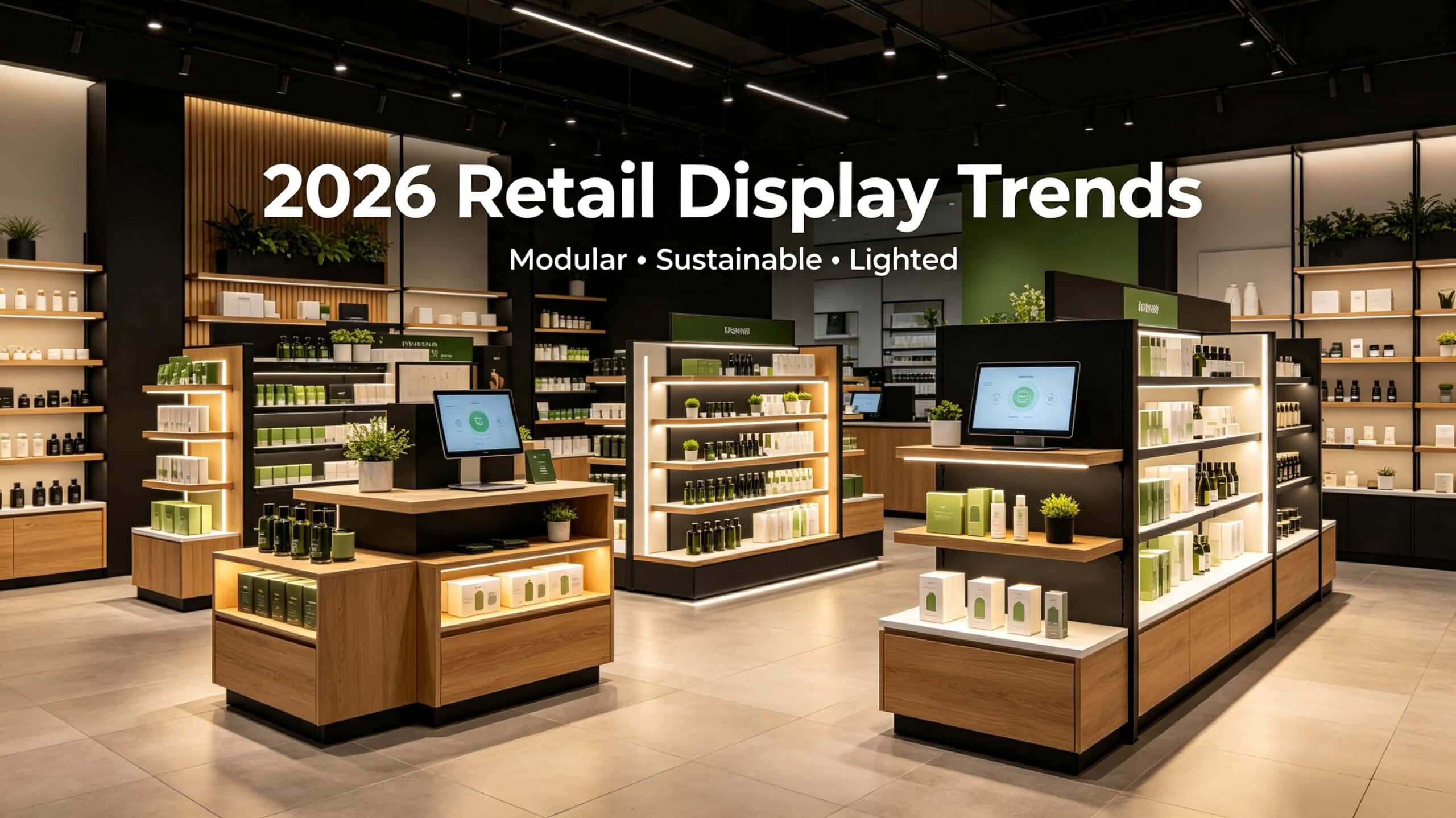
If you want to know the retail display trends for 2026, here is the short answer: modular fixtures, lightweight sustainable materials, and LED-lit or digital-screen displays will dominate U.S. store upgrades. If you are still using rows of fixed shelving, customers will walk in, look around, and leave. Below are practical directions you can actually use—no fluff.
What Are the Top Retail Display Trends for 2026? Remember 3 Words
The big shift in 2026 is not about cramming more product onto shelves. It is about making customers want to stop.
Modular
Shelving is no longer welded to one wall. Movable, reconfigurable gondolas and end caps with adjustable shelves will win. You can change a seasonal display with two people in half a day.
Lightweight Sustainability
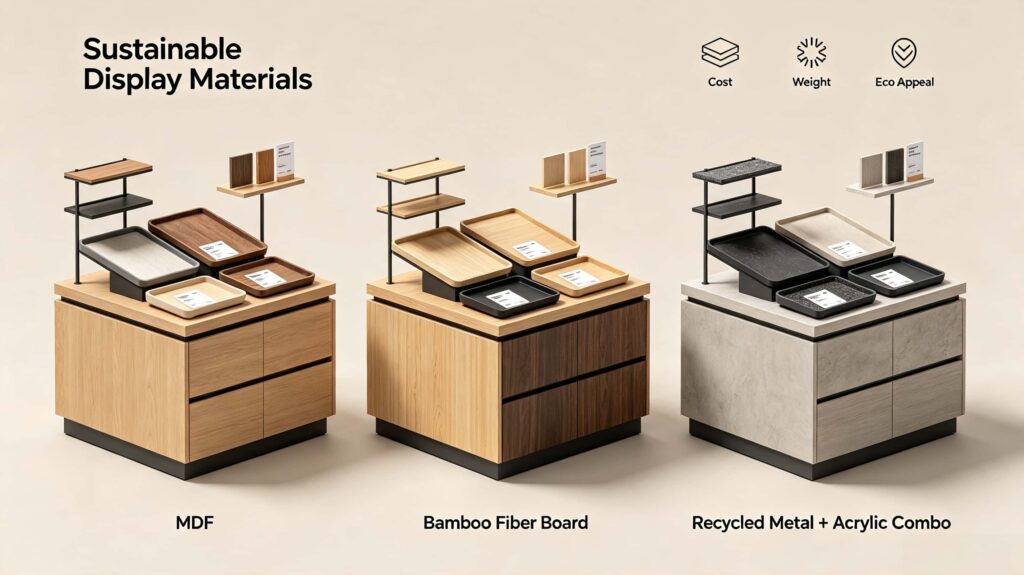
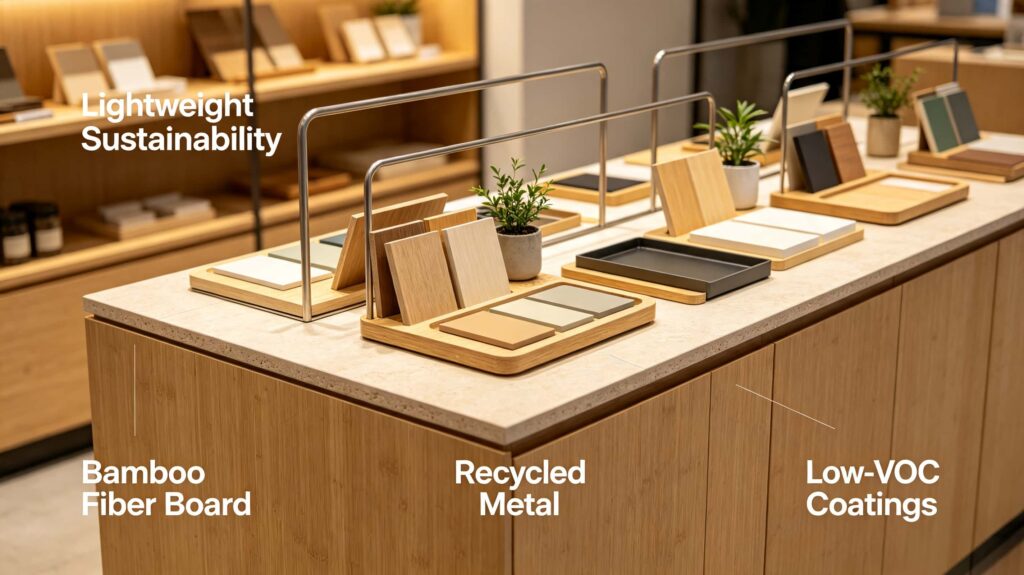
U.S. consumers respond strongly to eco-friendly cues. Bamboo fiber boards, recycled metal, and low-VOC coatings on display racks are not just nice to look at—they become a selling point for your store.
Lighting + Digital Screens
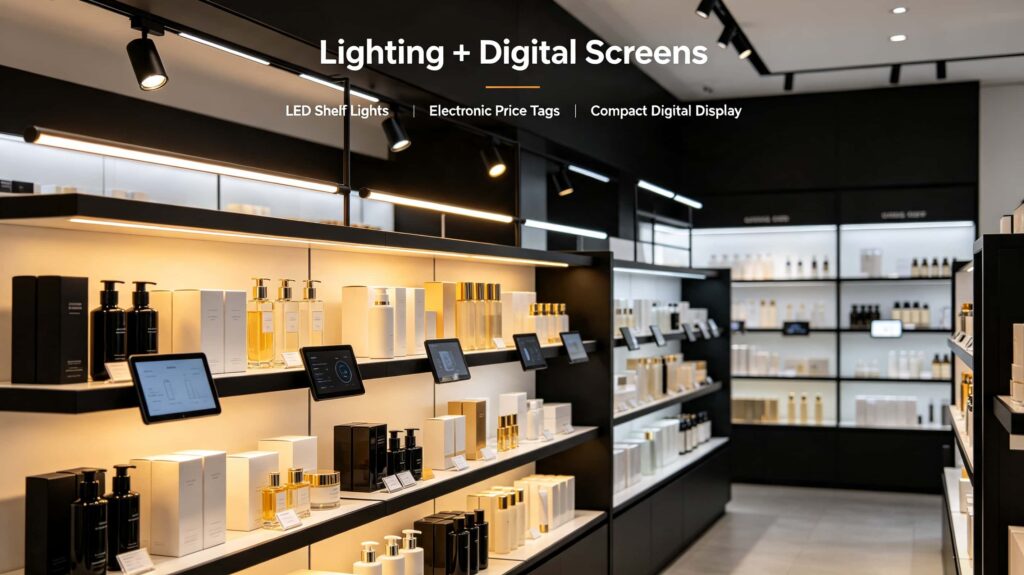
Shelf lights, accent lighting, small electronic shelf labels, or compact digital screens make an ordinary display look expensive. The cost is lower than most store owners think.
Why Are U.S. Store Owners Ditching Traditional Fixed Shelving?
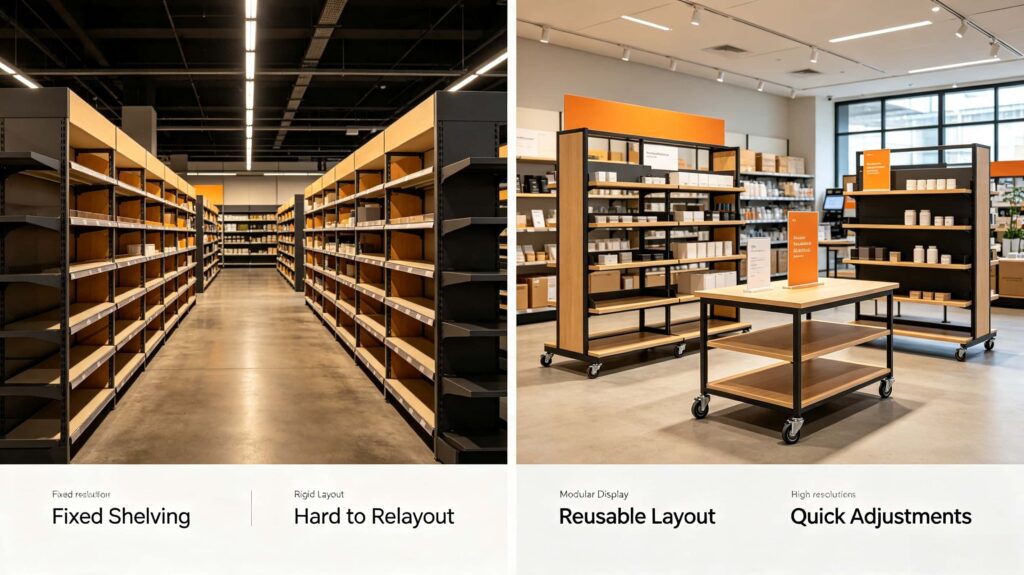
The biggest problem with fixed shelving is that it is too rigid.
Retail rent in the U.S. is high. Every square foot has to produce. Once fixed shelving is installed, it is hard to move. Seasonal changes, promotions, and pop-up events all become difficult. Visually, fixed shelves age fast. Customers can tell when a store has not been updated in years.
Another pain point is labor. American labor is expensive. Tearing down and reinstalling fixed shelving can cost hundreds of dollars, not counting lost sales during downtime. Modular displays can be adjusted by your own staff. The savings are real.
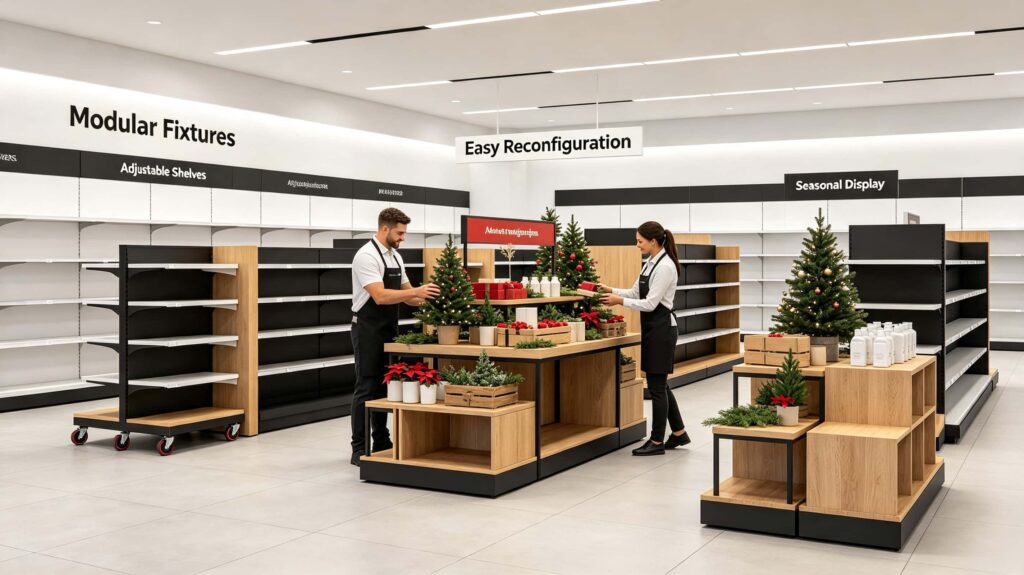
Modular Displays vs. Fixed Shelving: How to Choose in 2026
If you can only upgrade one area first, start with the entrance and the checkout zone.
Use wheeled modular display tables at the entrance. Push them out for holidays, pull them back on regular days. At checkout, use small display racks with hooks and electronic price tags to boost impulse purchases.
Fixed shelving still works for basic wall storage. But your main display surfaces and promotion zones should use adjustable modular combinations.
Quick comparison:
- Fixed shelving: cheaper upfront, expensive to adjust later, visually stale over time.
- Modular display racks: slightly higher upfront cost, but reusable in multiple layouts, ideal for frequent new arrivals and promotions.
- Semi-fixed setup: wall-mounted fixed shelves plus modular center displays. Best starting point for small shops.
Do Sustainable Display Materials Actually Boost Sales?
Yes, but only if you tell the customer about it.
U.S. shoppers are very sensitive to the word “sustainable.” A bamboo fiber display table with a small card that says “Made with recycled materials” will stop more people than a plain wood fixture.
If your budget is tight, start small. Swap out countertop trays, risers, and price tag holders first. You do not need to replace the whole store with eco-friendly materials at once.
Here is the difference between common materials:
- MDF: cheap, but heavy, absorbs moisture, weak eco-friendly story.
- Bamboo fiber board: lightweight, natural color, strong sustainability angle. Great for beauty, food, and home goods.
- Recycled metal + acrylic combo: better for industrial style, vape shops, and streetwear stores.
Are Lighting and Digital Screens Too Expensive? How Small Shops Can Start
You do not need to install full-store smart lighting on day one.
Start local. Add one LED shelf light strip to the entrance display. Put a 10-inch digital screen at the checkout to loop promotions. You can start for one to two hundred dollars.
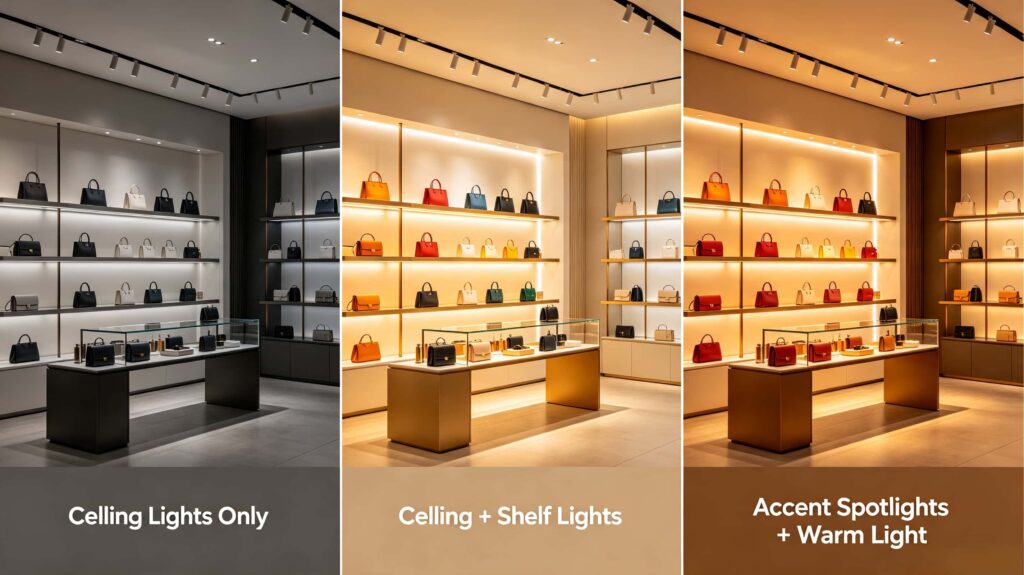
The difference lighting makes:
- Ceiling lights only: products look flat, no focal point.
- Ceiling + shelf lights: product shape and color stand out, customers linger longer.
- Ceiling + accent spotlights + warm light: ideal for clothing, jewelry, and gift shops. The whole atmosphere jumps a level.
You also do not need a huge digital screen. Small electronic shelf labels can update prices in bulk. They look cleaner than paper tags and reduce manual work.
What Mistakes Should You Avoid Before Upgrading Displays in 2026?
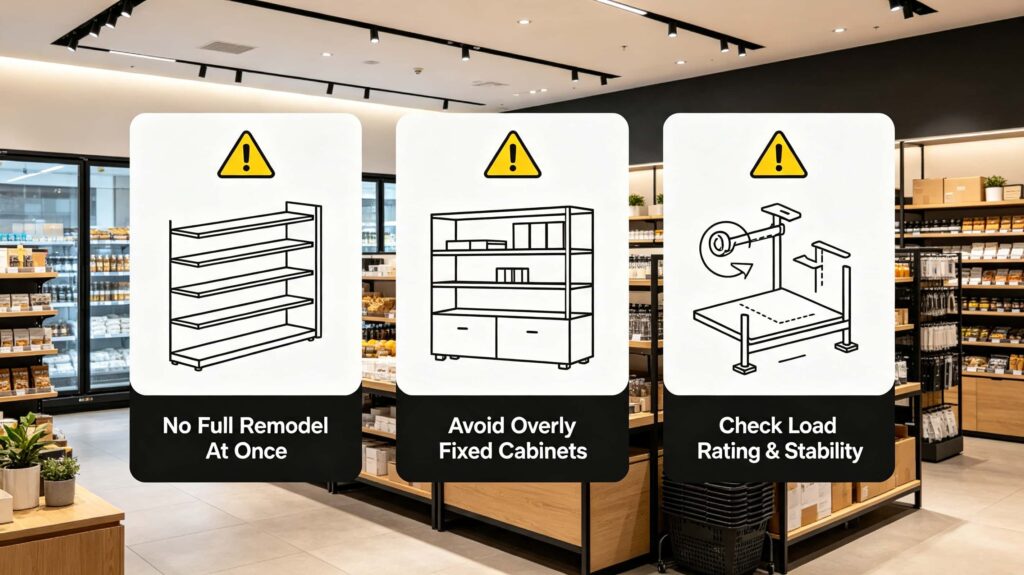
Mistake #1: Do You Really Need a Full Store Remodel?
No.
I have seen too many store owners try to redo the entire store at once. The budget blows up, and the result is not always better. Start with the entrance, the checkout counter, and the highest-profit category area. Run that for a month or two. Then decide if you want to continue.
Mistake #2: Why Do Custom Cabinets Cost More in the Long Run?
Custom cabinets look unique, but they are hard to modify later. Changing shelf height or repositioning them becomes a headache. U.S. stores also relocate frequently. Fixed custom units usually cannot be moved.
Choose adjustable shelves and knock-down modular designs first. Use custom work only for the storefront sign or a small visual focal wall.
Mistake #3: Why Can’t You Skip Weight Capacity and Stability?
U.S. stores get heavy foot traffic. Kids, pets, and shopping carts can hit your fixtures. An unstable display rack is a liability.
Always check the load rating before buying. If the floor is uneven, use adjustable leveling feet. For tall displays, add anti-tip hardware. Do not cut corners here. This is a safety issue.
How to Start Your 2026 Store Display Upgrade
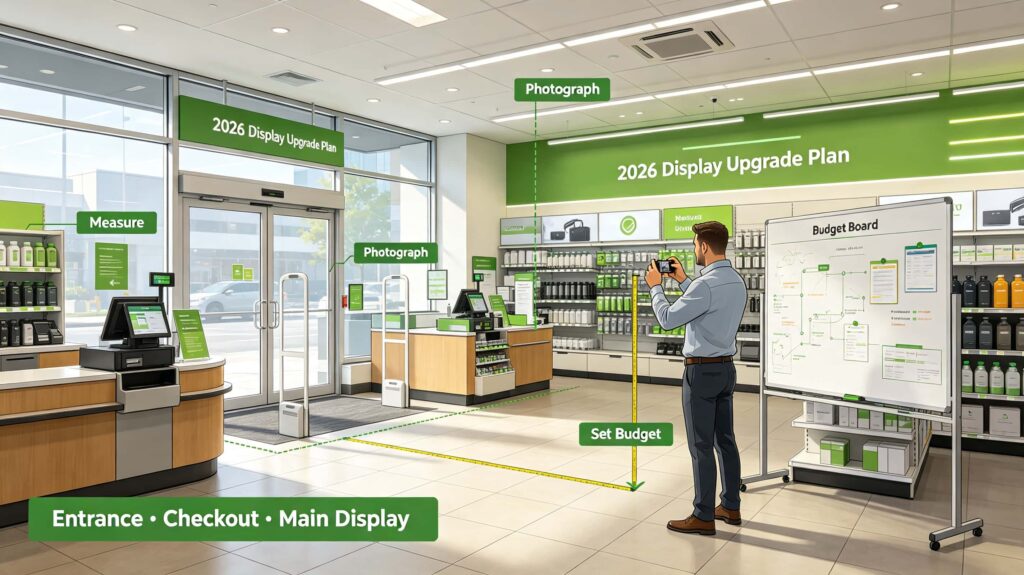
Do these three things first:
- Measure your entrance, checkout area, and main display zone.
- Take photos of the current setup and mark the spots you most want to change.
- Decide your budget range. Will you upgrade in phases or all at once?
If you are looking for display racks with U.S. local stock or custom sampling options, send us your store dimensions and photos. We will put together a 2026 display plan and quote based on your store type. No pressure—only if it fits.
The stores that upgrade their displays early in 2026 will capture the visual advantage first. Do not wait until every shop around you has already changed.
2026 Retail Display Trends
Q: What is the biggest retail display trend for 2026?
The biggest trend is modular display systems. Store owners want fixtures they can reconfigure quickly without hiring a contractor. This saves labor costs and keeps the store looking fresh.
Q: How much does it cost to upgrade retail displays in 2026?
A small shop can start with $200 to $500 for lighting upgrades or a few modular table displays. A full entrance and checkout refresh usually costs more, but you can phase the work over several months.
Q: Are sustainable retail display stands more expensive?
Not always. Bamboo fiber boards and recycled metal displays are competitively priced compared to high-end MDF or custom wood. The marketing value often offsets the small price difference.
Q: Do digital price tags help small retail stores?
Yes. Electronic shelf labels save labor time and make price changes instant. Customers also perceive the store as more modern and trustworthy.
Q: Can I install modular retail display stands myself?
Most modular systems are designed for tool-free assembly or basic hand tools. Two staff members can usually set up a standard gondola or table display in under an hour.