
Custom Shop Bar Counter: The B2B Guide to Wood, Thickness & Cost

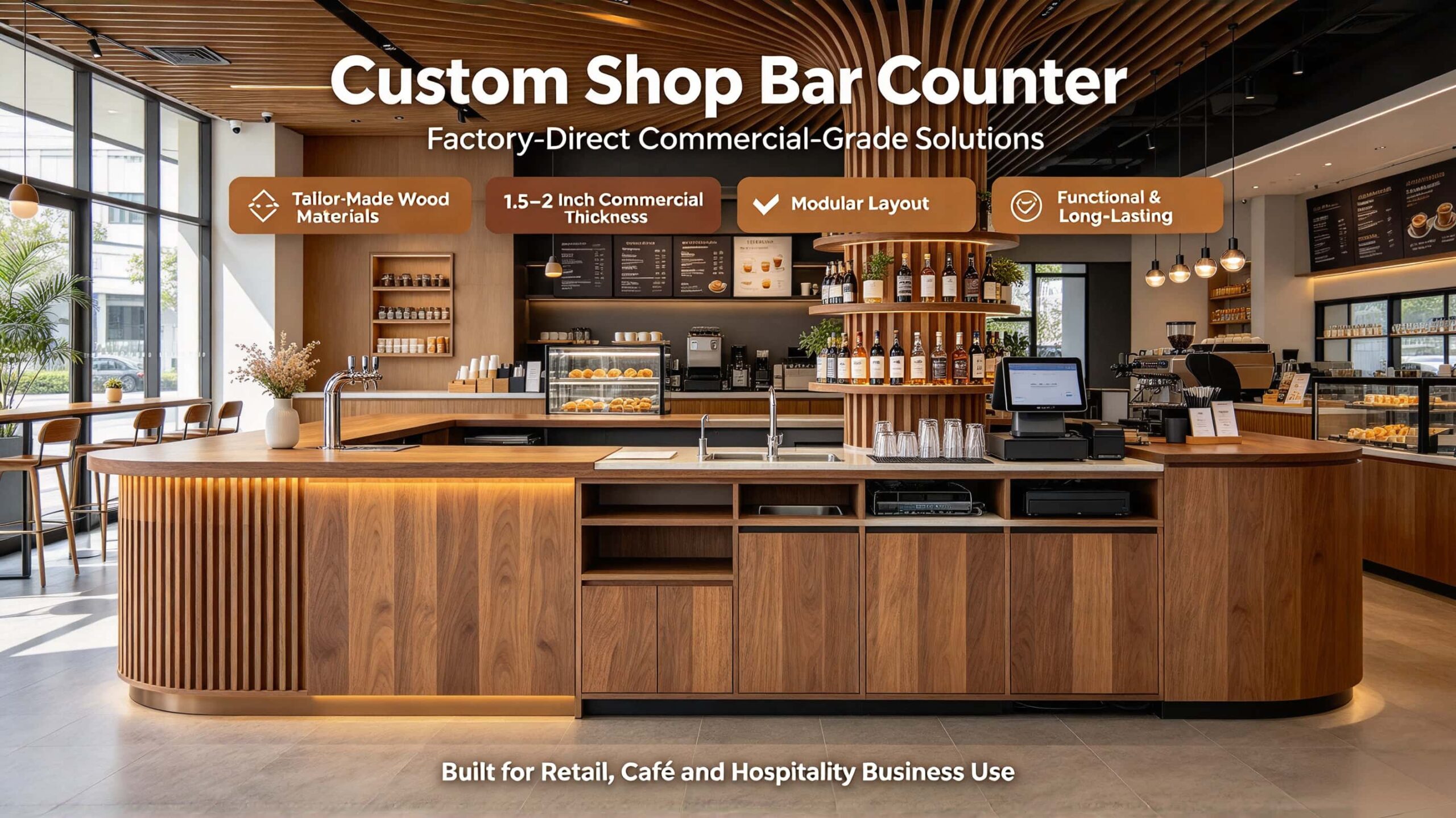
This B2B guide breaks down custom shop bar counter wood choices, commercial thickness standards, real factory costs, and profitability tips to help business owners avoid DIY mistakes and order durable, budget-friendly commercial bar solutions directly from manufacturers.
Definition: A custom shop bar counter is a tailor-made commercial-grade service fixture fabricated by professional bar top manufacturers, with customizable wood materials, standard commercial thicknesses, modular layouts, and functional designs built for long-term retail, café, and hospitality business use.
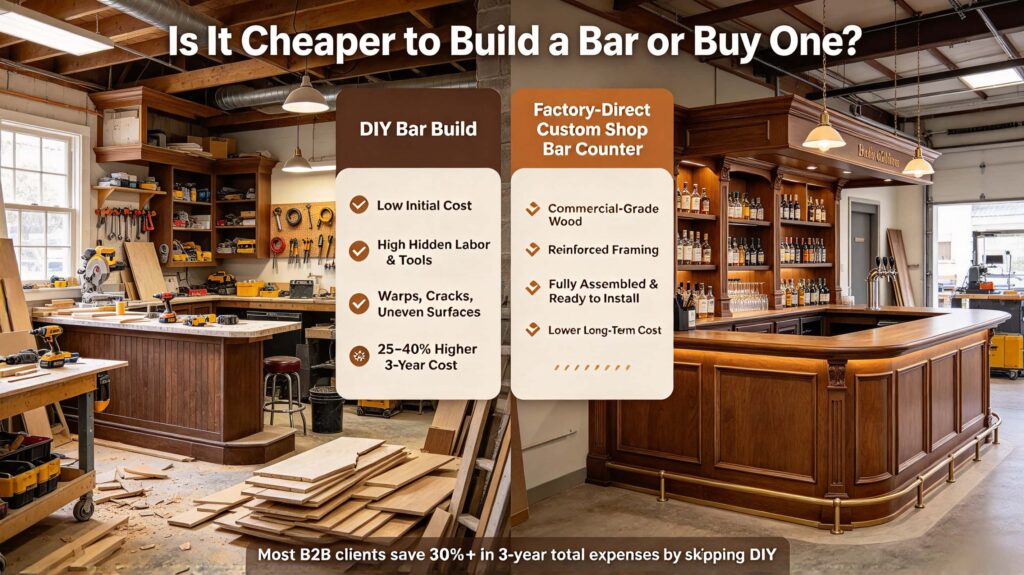
Is it cheaper to build a bar or buy one? (Emphasize long-term factory-direct vs DIY failures)
Factory-direct custom shop bar counter orders deliver lower long-term costs and higher durability than DIY builds, which often suffer from structural flaws, material waste, and frequent replacement costs for commercial business scenarios.
Core Cost & Durability Comparison Points
- Upfront Cost: DIY bar builds seem cheaper initially but require extra tools, hardware, and trial-and-error material purchases that inflate hidden expenses.
- Long-Term Durability: Commercial bar counter manufacturer products use kiln-dried wood and reinforced framing, resisting daily commercial wear, spills, and heavy customer traffic.
- Labor & Time Cost: DIY projects take days or weeks of uncompensated labor, while factory finished custom shop bar counters arrive fully assembled and ready for installation.
- Failure Risk: DIY bar tops often warp, crack, or have uneven surfaces within 6–12 months, leading to full replacement and repeated investment.
Cost Breakdown Chart: DIY vs Factory-Direct Custom Bar Counter
| Cost Factor | DIY Bar Build | Factory-Direct Custom Shop Bar Counter |
|---|---|---|
| Initial Material Cost | Low (unstandardized, retail-grade materials) | Moderate (commercial-grade, bulk factory pricing) |
| Hidden Labor/Tool Cost | High (tool rental, personal labor, rework) | Zero (full factory fabrication & finishing) |
| Annual Maintenance Cost | High (repairs, refinishing, part replacements) | Low (wear-resistant, factory-sealed finish) |
| 3-Year Total Cost | 25–40% higher due to premature failure | Lower with consistent structural performance |
Factory Insider Tip: Most B2B clients save 30%+ in 3-year total expenses by skipping DIY builds and partnering with a custom shop bar counter factory, as commercial-grade craftsmanship eliminates premature replacement risks.
What kind of wood is best for a commercial bar? (Mention white oak, walnut, and MDF with veneer)
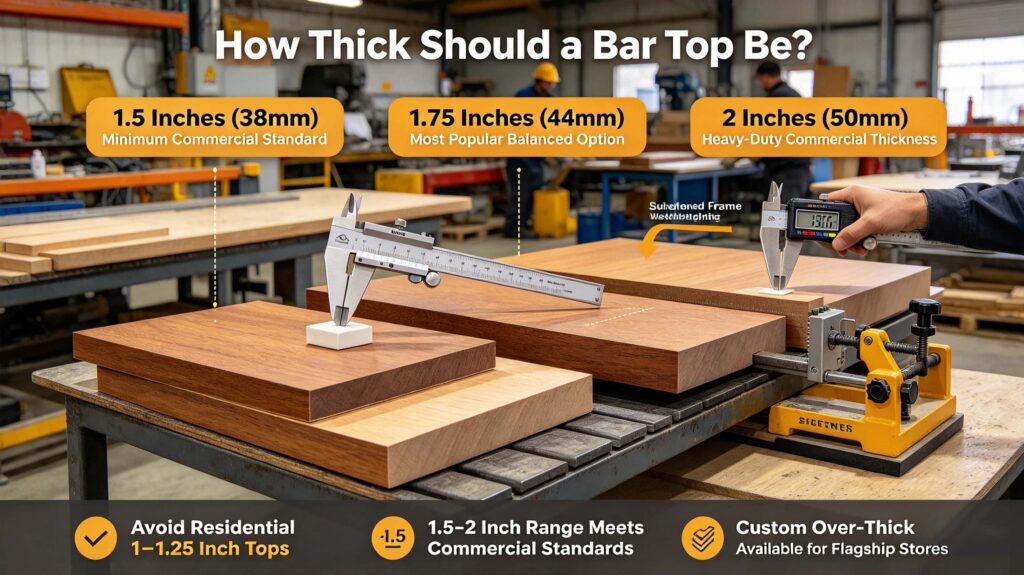
The best wood for commercial bar tops balances commercial durability, stain resistance, aesthetic value, and B2B budget needs, with white oak, walnut, and veneered MDF standing as the top three industry-standard options for custom shop bar counter projects.
Top Commercial Bar Top Wood Options & Use Cases
- White Oak (Premium Commercial Grade): Extremely durable, water-resistant, and scratch-proof, ideal for high-traffic bars, cafes, and retail shops. It features a tight grain structure that resists warping under daily commercial use and supports long-term heavy-duty service.
- Walnut (High-End Aesthetic Grade): Offers a luxurious dark tone and smooth texture for upscale lounges, boutique shops, and premium hospitality spaces. It delivers superior brand appeal while maintaining solid structural stability for commercial operations.
- MDF with Wood Veneer (Budget Commercial Grade): A cost-effective commercial solution with a real wood surface finish. It provides uniform flatness, avoids natural wood warping, and is perfect for mid-budget retail and F&B shop renovations.
Wood Material Selection Comparison Chart
| Wood Type | Commercial Durability | Aesthetic Grade | B2B Cost Level | Best Business Use Case |
|---|---|---|---|---|
| White Oak | Excellent (high traffic resistant) | Classic, versatile | Mid-High | Cafés, pubs, busy retail shops |
| Walnut | Very Good | Luxury, premium | High | Boutiques, upscale bars, lounges |
| MDF with Veneer | Good (stable structure) | Uniform wood finish | Low-Mid | Budget shop renovations, chain stores |
How thick should a bar top be? (Mention 1.5 to 2 inches for commercial use)
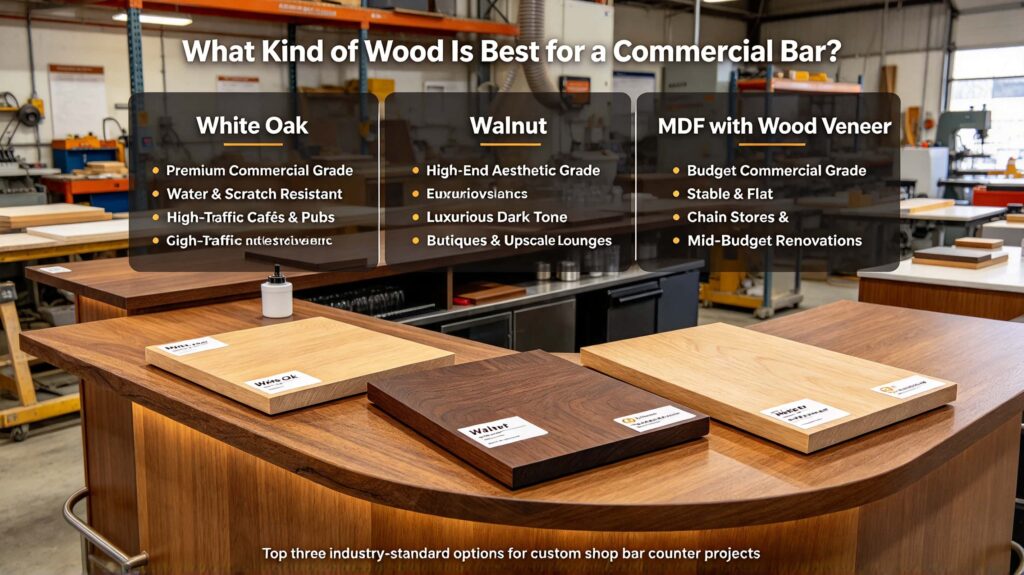
Standard bar top thickness for commercial use ranges from 1.5 to 2 inches, a factory-verified specification that delivers optimal load-bearing capacity, surface stability, and premium commercial visual texture for custom shop bar counter builds.
Commercial Bar Top Thickness Standard Breakdown
- 1.5 Inches (38mm): The minimum commercial standard thickness, suitable for standard retail shops, small cafes, and low-to-medium traffic service counters with stable daily usage.
- 1.75 Inches (44mm): The most popular balanced option for B2B orders, offering sturdy support, elegant thickness proportion, and cost efficiency for most commercial bar scenarios.
- 2 Inches (50mm): Heavy-duty commercial thickness for high-traffic pubs, busy beverage shops, and luxury hospitality spaces, supporting heavy equipment placement and long-term intensive use.
Thickness Application Guide for Business Owners
- Avoid residential thicknesses (1–1.25 inches) for commercial use, as they easily bend, sag, or crack under daily business pressure.
- All commercial bar counter manufacturer standard products adopt 1.5–2 inch thickness to meet commercial building and safety standards.
- Custom over-thick designs are available for brand flagship stores to enhance high-end spatial texture and visual impact.
What type of bar is most profitable? (Emphasize modular and multi-functional)
Modular, multi-functional custom shop bar counters deliver the highest long-term profitability for commercial shops, as they maximize service space, support diverse business scenarios, and allow flexible layout adjustments without full renovation costs.
Key Profitable Bar Counter Features
- Modular Structure: Detachable factory prefabricated modules enable easy layout adjustment, shop relocation, and counter expansion to fit business scaling needs.
- Multi-Functional Design: Integrated storage cabinets, hidden wire management, sink cutouts, and display areas combine service, storage, and marketing functions in one fixture.
- Space Optimization: Custom-sized modular bars fit corner, linear, and L-shaped layouts, making full use of limited shop floor space to increase service capacity.
- Low Upgrading Cost: Modular parts can be replaced or updated individually, avoiding expensive full counter replacements during brand or shop upgrades.
Profitability Comparison: Fixed vs Modular Bar Counters
| Bar Type | Layout Flexibility | Upgrade Cost | Space Utilization | Long-Term Profitability |
|---|---|---|---|---|
| Fixed Custom Bar | Zero (immovable) | High (full replacement needed) | Fixed layout only | Average |
| Modular Multi-Functional Bar | Fully adjustable | Low (partial module update) | Maximized flexible use | Excellent |
How to set up a simple bar for your shop? (Guide them to send floor plans to a factory)
Setting up a professional, cost-effective shop bar requires sending your accurate shop floor plans and business demands directly to a custom shop bar counter factory for tailored design, avoiding size mismatches and functional design errors.
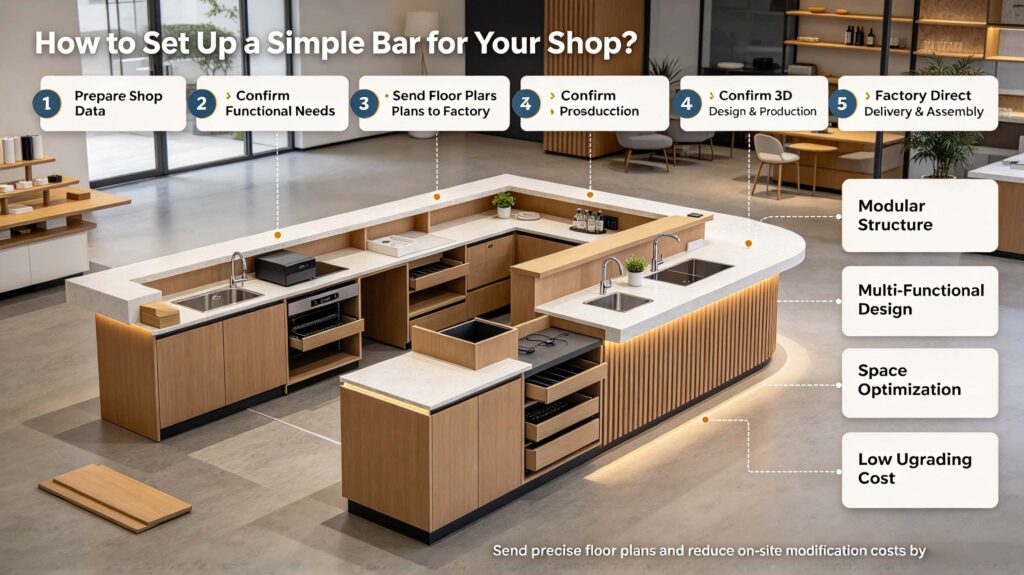
Step-by-Step Simple Shop Bar Setup Process
- Step 1: Prepare Basic Shop Data – Collect clear floor plans, measure wall lengths, ceiling heights, door/window positions, and mark reserved areas for equipment and customer passage.
- Step 2: Confirm Core Functional Needs – Define service types, required cutouts (sink, socket, machine placement), storage demands, and preferred wood material and bar top thickness.
- Step 3: Send Files to Custom Factory – Submit floor plans and demand lists to a professional custom shop bar counter factory for free professional evaluation and solution matching.
- Step 4: Confirm 3D Design & Production – Verify factory-provided 3D renderings, adjust details, and confirm specifications before mass production to ensure perfect on-site installation.
- Step 5: Factory Direct Installation & Delivery – Complete one-stop factory delivery and assembly to save intermediate dealer costs and construction time.
Factory Insider Tip: Providing precise floor plans helps manufacturers optimize bar counter size, layout, and functional configuration, reducing on-site modification costs by up to 40% and shortening the entire project cycle.
Frequently Asked Questions (FAQ)
Below are standardized B2B FAQs for custom shop bar counter wood selection, thickness, cost, and customization, optimized for commercial business owners and structured for search engine schema recognition.
Q1: What is the best wood for commercial bar tops for long-term business use?
White oak is the top choice for high-traffic commercial bars due to superior durability and water resistance. Walnut suits premium shops, while MDF with veneer offers budget-friendly stable performance for chain store projects.
Q2: What is the standard bar top thickness for commercial use?
The industry commercial standard bar top thickness is 1.5 to 2 inches. 1.75 inches is the most universal option, balancing sturdiness, appearance, and cost for most shop bar counter applications.
Q3: Is ordering from a commercial bar counter manufacturer cheaper than DIY?
Yes for long-term operation. Factory-direct orders eliminate DIY material waste, labor costs, and premature failure replacement fees, delivering far lower total ownership costs for commercial businesses.
Q4: What type of custom shop bar counter brings the highest profit?
Modular, multi-functional custom bar counters are most profitable. They support flexible layout adjustments, integrate multiple service functions, and reduce long-term renovation and upgrade expenses for shop owners.
Q5: Can I get a custom bar design without precise measurement experience?
Absolutely. Simply send your shop floor plans to a professional custom shop bar counter factory, and the manufacturer will provide 3D design, size optimization, and functional customization services.
Strong Call to Action: Get Your Custom 3D Bar Counter Design Today
Stop wasting budget on unqualified DIY bar builds or overpriced retail bar counters. As a professional commercial bar counter manufacturer and direct custom shop bar counter factory, we provide one-stop B2B customization services covering wood selection, commercial standard thickness customization, modular functional design, and factory-direct pricing.
Send your shop floor plans right now to get a tailored 3D render, precise factory quotation, and professional commercial bar design solution matching your shop style and business needs. Our factory team will optimize every detail including bar top thickness, wood material matching, storage layout, and traffic line design to ensure your custom bar counter is durable, profitable, and perfectly fitted for your commercial space.
Factory Insider Tip: All clients who submit floor plans will receive exclusive factory-direct pricing with no middleman markup, plus free post-installation maintenance guidance for commercial-grade bar counters.