Hexagon Glass Showcase: A B2B Guide to Materials, Glass Thickness & Design

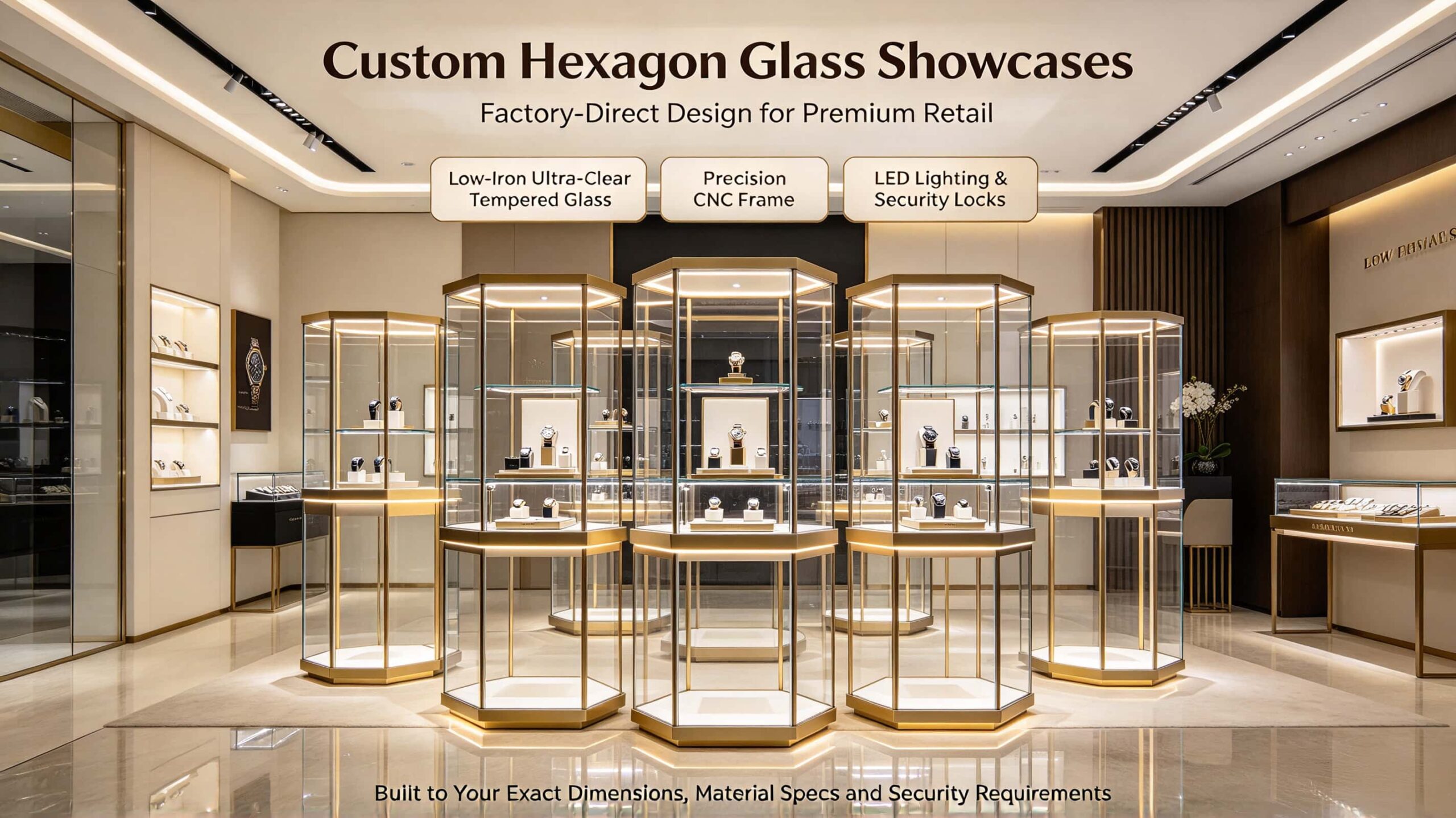
A custom hexagon glass showcase is a six-sided retail display unit engineered from tempered low-iron glass or premium acrylic, designed to maximize 360-degree product visibility while fitting precisely into a store’s floor plan. Buyers specify dimensions, glass thickness (typically 8mm–10mm), locking systems, and interior lighting to match brand and security needs.
What kind of glass is used for display cases?
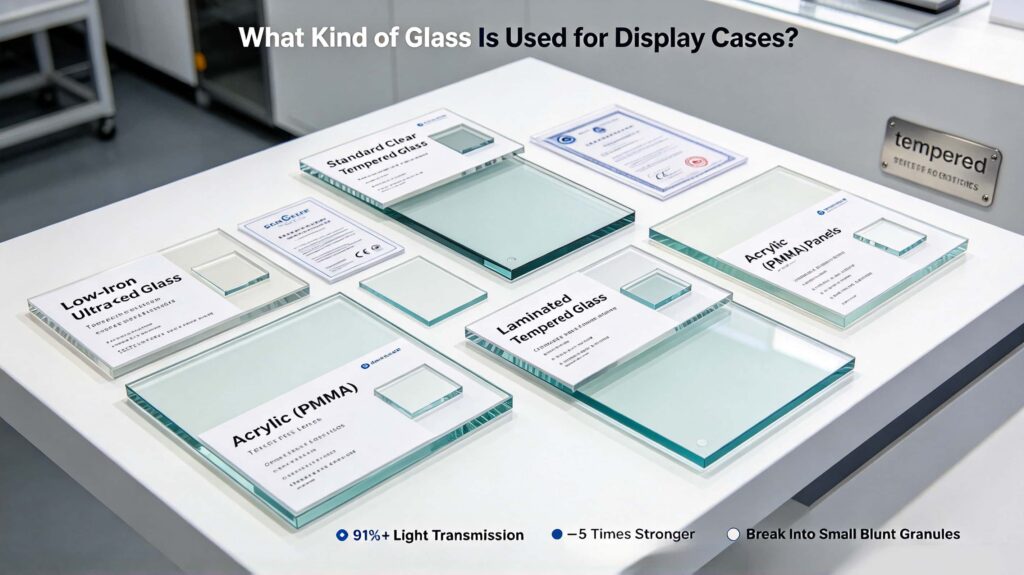
Most commercial display cases use low-iron ultra-clear tempered glass because it removes the green tint found in standard float glass, delivering true-color product presentation. Tempered processing makes the glass 4–5 times stronger than annealed glass and forces it to break into small blunt granules instead of jagged shards.
Key glass types used in retail showcases:
- Low-iron ultra-clear tempered glass – 91%+ light transmission, ideal for jewelry, watches, and luxury goods
- Standard clear tempered glass – lower cost, slight green edge tint, acceptable for budget retail fixtures
- Laminated tempered glass – two glass layers with a PVB interlayer, used when extra security or UV filtering is required
- Acrylic (PMMA) panels – not glass, but frequently specified for lightweight or high-impact applications
For a hexagonal unit, each of the six panels must be cut and polished to identical tolerances. A 0.5mm deviation across six joints creates visible gaps, so low-iron glass is usually paired with CNC-machined aluminum or brass frames to hold tight seams.
Factory Insider Tip: Many suppliers advertise “tempered glass” but actually deliver heat-strengthened glass, which breaks into large sharp pieces. Always request the tempering furnace certificate and look for the tiny “tempered” logo etched in a corner.
Which is better for a display case, acrylic or glass?
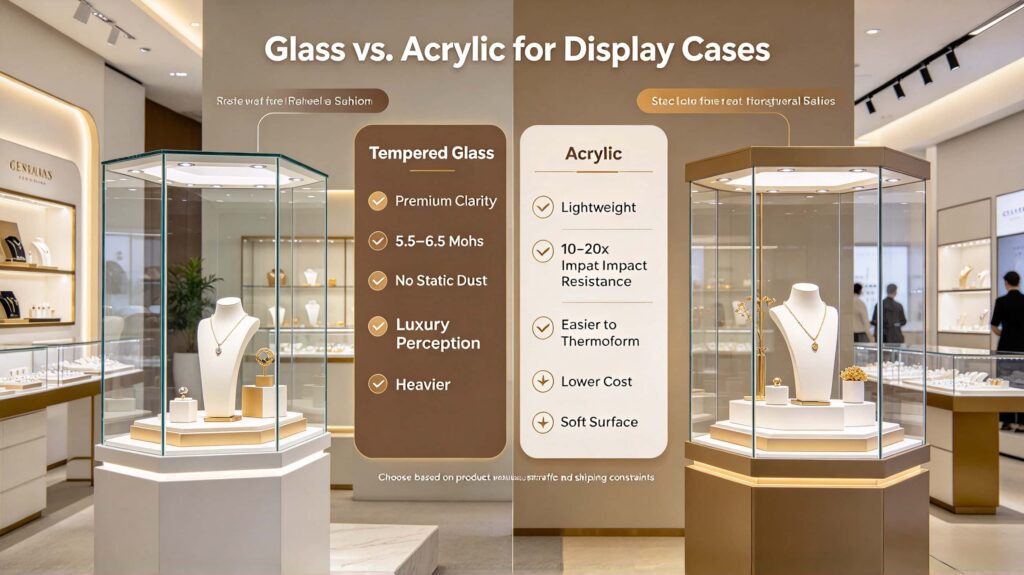
Neither material wins universally — glass delivers a premium feel and scratch resistance, while acrylic delivers shatter resistance and lighter weight. The right choice depends on your product value, store traffic, and shipping constraints.
Glass: premium feel and clarity
- Surface hardness of 5.5–6.5 Mohs, resists daily wiping and minor abrasion
- Zero static charge, so dust and lint do not cling to the surface
- Perceived as luxury by customers, especially in jewelry and watch retail
- Heavier (2.5 g/cm³) and more expensive to ship
- Can shatter under extreme impact, though tempered glass breaks safely
Acrylic: shatter resistance and light weight
- Impact resistance roughly 10–20 times that of glass
- Weighs about half as much as glass of the same thickness
- Easier to drill, cut, and thermoform into curved hexagonal shapes
- Softer surface (2–3 Mohs) that scratches with careless cleaning
- Builds static charge that attracts dust
Quick comparison table
| Factor | Tempered Glass | Acrylic |
|---|---|---|
| Clarity | Excellent (low-iron) | Very good |
| Scratch resistance | High | Low |
| Impact resistance | Moderate | Very high |
| Weight | Heavy | Light |
| Static dust attraction | None | High |
| Relative cost | Higher | Lower |
| Premium perception | High | Moderate |
Factory Insider Tip: For hexagonal cases above 600mm per side, acrylic panels often bow slightly over time under their own weight. Ask your factory to increase thickness or add a hidden steel sub-frame.
How thick should display case glass be?
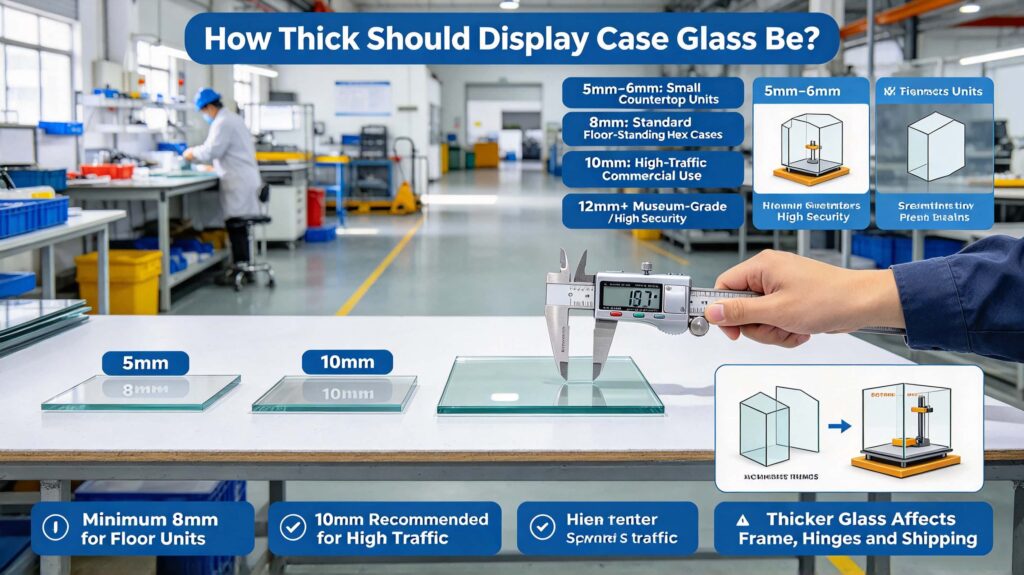
For commercial retail use, 8mm to 10mm tempered glass is the industry standard for side and front panels. Thinner glass (5mm–6mm) is acceptable only for small countertop units with no customer contact.
Recommended thickness by application:
- 5mm–6mm – small countertop jewelry boxes, low-traffic areas
- 8mm – standard floor-standing hexagonal showcases up to 1.2m tall
- 10mm – large commercial hexagon display cases, high-traffic stores, or units with shelving loads
- 12mm+ – museum-grade or high-security applications, often laminated
Glass thickness affects more than strength. Thicker glass changes the visual weight of the frame, the door hinge specification, and the shipping crate design. A 10mm hexagonal case can weigh 40–60kg before packaging, which impacts freight class and installation labor.
Factory Insider Tip:: If a supplier quotes 6mm glass for a full-height hexagonal floor case, walk away. That unit will flex when customers lean on it, and the door alignment will fail within months.
Why use acrylic instead of glass?
Buyers choose acrylic over glass primarily for weight reduction and impact resistance. A hexagonal acrylic case can weigh 50% less than its glass equivalent, cutting freight costs and making in-store repositioning a one-person job.
Main reasons to specify acrylic:
- Shipping and handling – lower weight reduces damage in transit and lowers freight cost
- Child-safe environments – acrylic will not shatter into sharp fragments
- Complex shapes – acrylic can be heated and bent into curved or seamless hexagonal forms
- Budget projects – acrylic typically costs 20–40% less than low-iron tempered glass
- Outdoor or pop-up use – acrylic tolerates minor impacts better in temporary retail setups
Acrylic also allows for edge-lit designs where LED light is injected into the panel itself, creating a glowing hexagon outline that glass cannot easily replicate.
Factory Insider Tip: Acrylic edges can be flame-polished to look almost like glass, but this finish scratches easily during shipping. Insist on PE film wrapping on both sides, not just one.
What are the disadvantages of acrylic glass?
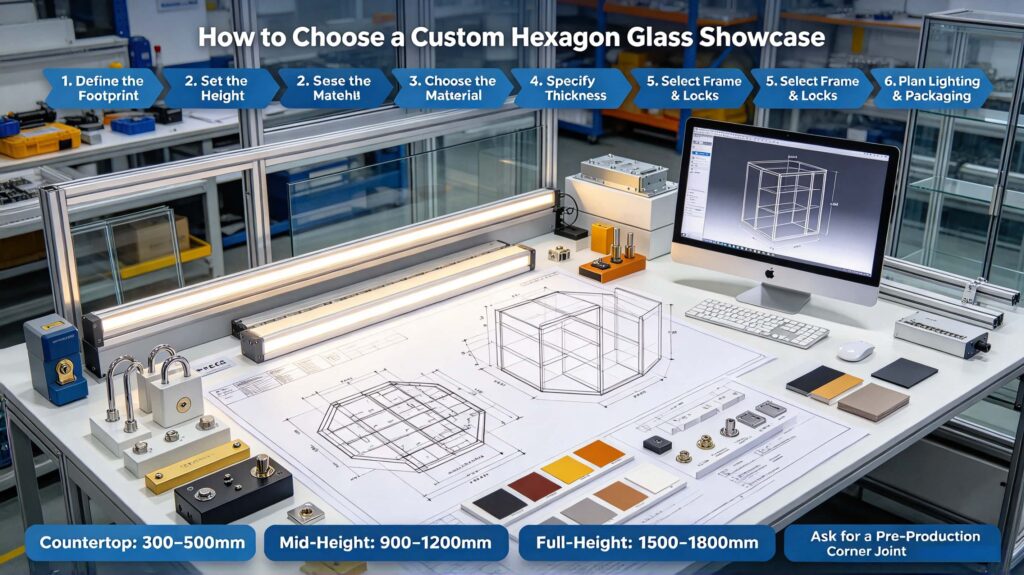
Acrylic’s main weaknesses are surface scratching and static dust attraction. Unlike glass, acrylic is soft enough that a dry paper towel or dusty cloth can leave permanent micro-scratches within weeks of daily cleaning.
Other disadvantages to weigh:
- Scratches easily – 2–3 Mohs hardness means keys, rings, and even cardboard can mar the surface
- Attracts dust – static charge pulls lint and particles to the panel, requiring anti-static spray
- Yellowing over time – lower-grade acrylic can yellow under UV exposure within 2–3 years
- Chemical sensitivity – ammonia-based cleaners and alcohol can cloud the surface
- Less premium feel – customers accustomed to luxury retail often notice the difference by touch and sound
- Flex and bowing – large unsupported panels can warp in warm environments
For high-end jewelry, watches, or collectibles, these drawbacks usually push buyers back toward low-iron tempered glass despite the higher cost and weight.
Factory Insider Tip: Never clean acrylic with a dry cloth. Use a microfiber towel and a dedicated acrylic cleaner, wiping in one direction only. This single habit doubles the panel’s usable life.
How to choose a custom hexagon glass showcase for your store?
Choosing the right custom hexagon glass showcase means matching material, thickness, dimensions, and locking hardware to your product value and store layout. Factory-direct customization gives you control over every panel, joint, and finish — something standard catalog units cannot offer.
Follow this selection process:
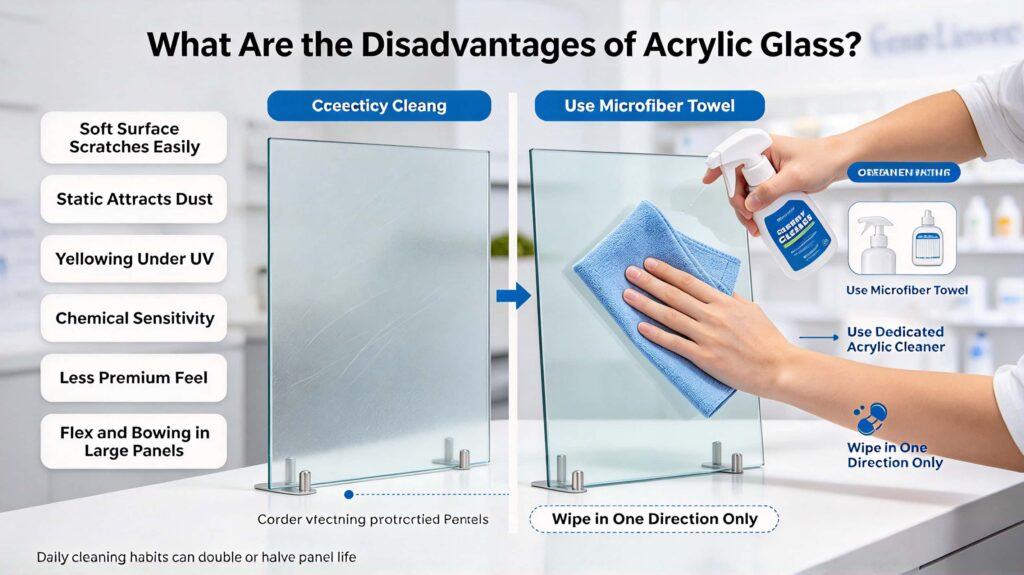
- Define the footprint – measure the exact floor or counter space, including door swing clearance
- Set the height – countertop (300–500mm), mid-height (900–1200mm), or full-height (1500–1800mm)
- Choose the material – low-iron tempered glass for luxury, acrylic for lightweight or budget builds
- Specify glass thickness – 8mm minimum for floor units, 10mm for high-traffic commercial use
- Select the frame – aluminum (durable, modern), brass (luxury), or frameless with UV-glued joints
- Add security – cam locks, central locking bars, or magnetic key systems
- Plan lighting – LED strips on top rails, shelf edges, or base plinths
- Confirm packaging – wooden crate with foam inserts for glass, reinforced carton for acrylic
Why factory-direct matters
Working directly with a manufacturer removes middleman markups and, more importantly, gives you engineering access. You can request:
- Custom hexagon side lengths (e.g., 450mm × 6 sides)
- Mixed materials, such as glass panels with an acrylic base
- Branded hardware, laser-etched logos, or powder-coated frame colors
- Small-batch prototyping before full production
Factory Insider Tip: Always ask for a pre-production sample of one corner joint before the full run. A single bad miter angle multiplied by six panels turns a beautiful hexagon into a wobbly, gap-ridden unit that no showroom will accept.
FAQ: Custom Hexagon Glass Showcase
Q: What is the best material for a retail showcase?
A: Low-iron ultra-clear tempered glass is the best material for premium retail showcases because it offers high clarity, scratch resistance, and a luxury feel. Acrylic is better for lightweight, high-impact, or budget-sensitive projects.
Q: How thick should display case glass be for commercial use?
A: Commercial display cases should use 8mm to 10mm tempered glass. Countertop units can use 5mm–6mm, while large floor-standing hexagonal cases in high-traffic stores should use 10mm or thicker.
Q: Is acrylic better than glass for a display case?
A: Acrylic is better when weight, impact resistance, and cost matter most. Glass is better when clarity, scratch resistance, and premium customer perception matter most. The right choice depends on your product and store environment.
Q: Can I customize the size of a hexagon glass showcase?
A: Yes. Factory-direct suppliers can customize side length, height, glass thickness, frame material, locking system, and lighting. Providing a floor plan or sketch speeds up the quotation and 3D design process.
Q: How much does a custom hexagon glass showcase cost?
A: Pricing depends on size, glass type, thickness, frame material, and quantity. A small acrylic countertop hexagon may start low, while a full-height low-iron tempered glass unit with lighting and locks costs significantly more. Request a quote with your specifications for accurate pricing.
Q: How do I clean a hexagon glass showcase?
A: Use a microfiber cloth and a non-ammonia glass cleaner for tempered glass. For acrylic, use a dedicated acrylic cleaner and wipe in one direction only. Never use dry paper towels on acrylic.
Ready to Build Your Custom Hexagon Glass Showcase?
Stop settling for generic rectangular display cases that waste floor space and dilute your brand. A custom hexagon glass showcase built to your exact dimensions, material spec, and security requirements transforms how customers experience your products.
Here is what you get when you work with us:
- 3D design based on your floor plan or sketch
- Factory-direct pricing with no middleman markup
- Material guidance — we tell you honestly whether glass or acrylic fits your project
- Thickness recommendations based on real retail traffic data
- Pre-production sample of corner joints before full manufacturing
- Export-grade packaging designed for glass and acrylic
Send us your floor plan today and receive a 3D rendering of your custom hexagon showcase within 48 hours. Whether you need a single statement piece for a boutique or 50 units for a retail chain, our factory team will engineer the right specification for your budget.
Email your layout now — let’s turn your six-sided idea into a showroom-ready reality.