Custom Kiosks: Complete Guide to Design, 7 Types, Cost & Solutions for Retail Business

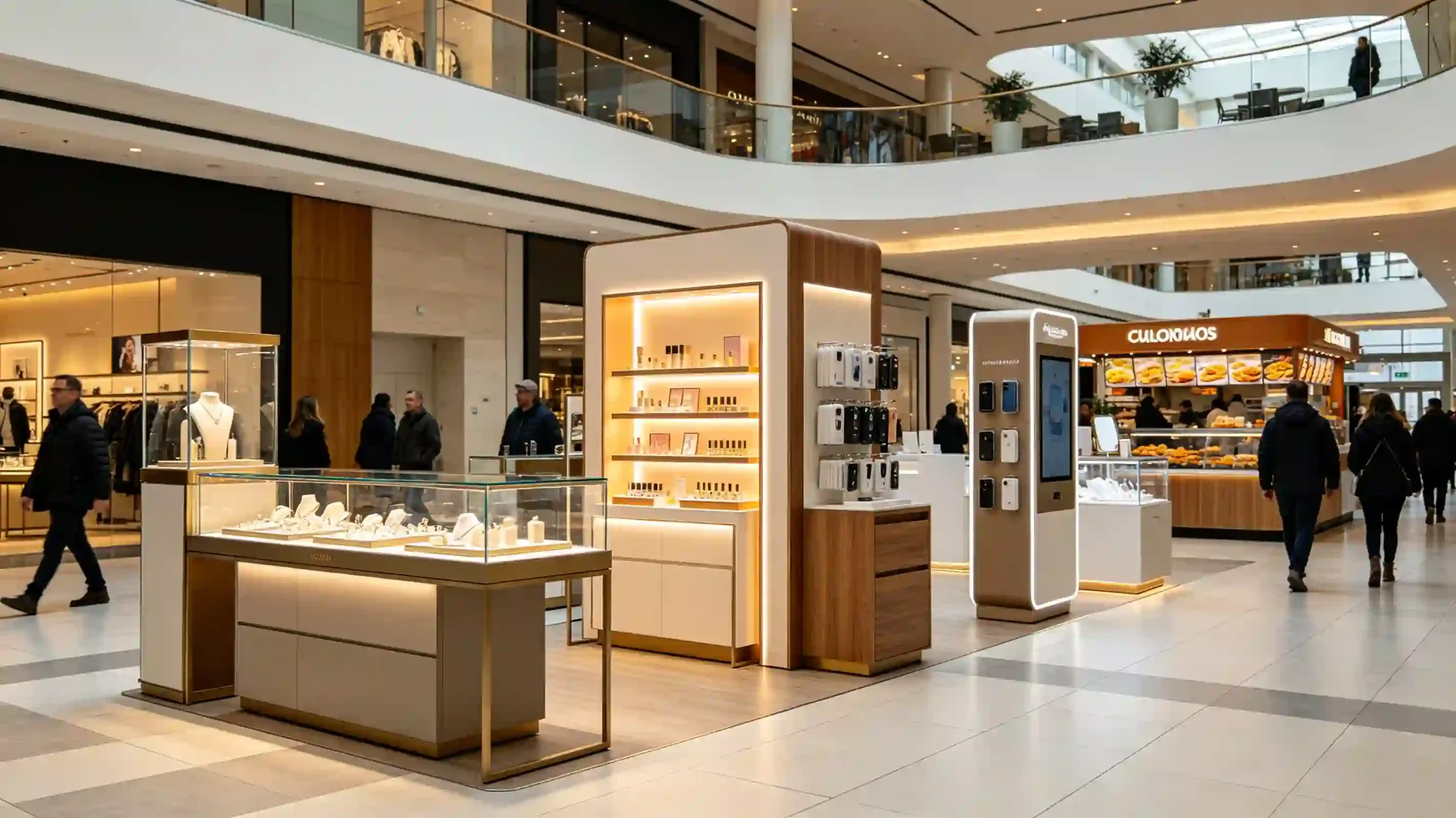
If you are running a retail business in the United States, Australia, the United Kingdom, Canada, or France and want to enter shopping malls or business districts at a low cost to attract foot traffic, custom kiosks are the most cost-effective option. Whether you need a single custom kiosk or a batch of customized kiosks, find the right kiosk builder to obtain the appropriate custom kiosk solutions. With a custom-built kiosk, a light-asset store can be set up in as fast as 30 days. This article is all about practical experience, covering types, designs, costs, and complete implementation plans. It is suitable for retail brand owners and franchisees to refer to.
Which retail businesses are suitable for setting up custom kiosks?
Not all product categories are suitable for kiosks. Choosing the right business model can double the speed of returning a profit.
- New brands test the waters in the offline market: No need to rent an entire store, the rent is only 1/3 of that of traditional stores. The cost of trial and error is extremely low. Once the model is proven, it’s not too late to expand the store.
- Mature brands expand their locations: Gold traffic spots such as mall atriums, passageways, airports, and outlet centers, most of which only accept kiosk入驻. These are the best choices to complete offline touchpoints.
- Seasonal categories: Such as Christmas gifts and summer cold drinks. They are removed after being displayed for 2-3 months during the peak season. They have high flexibility and do not have to bear the long-term rent pressure.
- Experiential categories: Categories that require sample tasting, try-on, and usage. The conversion rate brought by offline experience is more than 30% higher than that of pure online. Kiosk is the lowest-cost experience touchpoint.
What are the different types of mainstream custom kiosks?(7 types)
The design logic for different types of kiosks is completely different. Don’t force the use of a universal template.
Type 1: Toy kiosk
Suitable for placement in the children’s section of shopping malls, amusement parks, and around family-oriented business districts. The design focuses on visual appeal, using a lot of cartoon shapes and shiny materials. The height of the display stands should be appropriate for the children’s line of sight. The island is designed for open display, while the bottom layer is for closed storage. Corners must be rounded to prevent bumps, and it must comply with the safety standards for children’s products in the United States.
Type 2: Food kiosk
The food kiosk is divided into three categories: beverages, baked goods, and light snacks. It is one of the most popular product categories in the shopping mall, with the highest conversion rate. The design priority is compliance: the operation area must be made of food-grade stainless steel, with reserved spaces for water supply, exhaust ventilation, and garbage storage, and it must comply with local health permit requirements. The front desk is designed to leave sufficient aisle for taking orders to avoid congestion during peak hours, and the price list is placed at a position where customers can see it at eye level when standing.
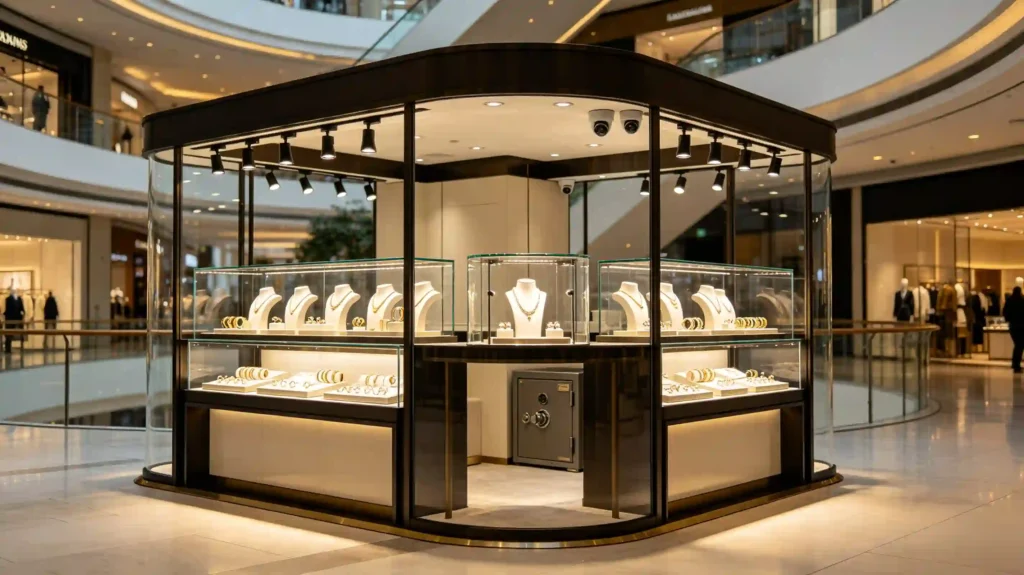
Type 3: Jewelry kiosk
The jewelry kiosk focuses on providing a high-end and exquisite experience. It typically uses ultra-clear glass and metal frames, and employs focused spot lighting to highlight the product’s texture. Security is a core necessity, and it is necessary to reserve space for a safe deposit box, monitoring points, and an anti-theft alarm system. Generally, the location is chosen to be the core area of the mall, without requiring a large size. The SKU follows a high-end boutique approach, with a high average transaction value and a higher floor space efficiency ratio compared to the entire store.
Type 4: Cell phone kiosk
Mobile kiosks are usually placed at the entrances of shopping malls, around operator stores, and in the business districts of university towns. The SKU density is high, so multi-layer hooks + display stands are required, along with designated positions for demonstrating mobile phone charging. The design takes into account both transparency and security, with tempered glass and anti-theft locks being standard features. There is sufficient storage space at the bottom to facilitate quick replenishment and replacement of goods.
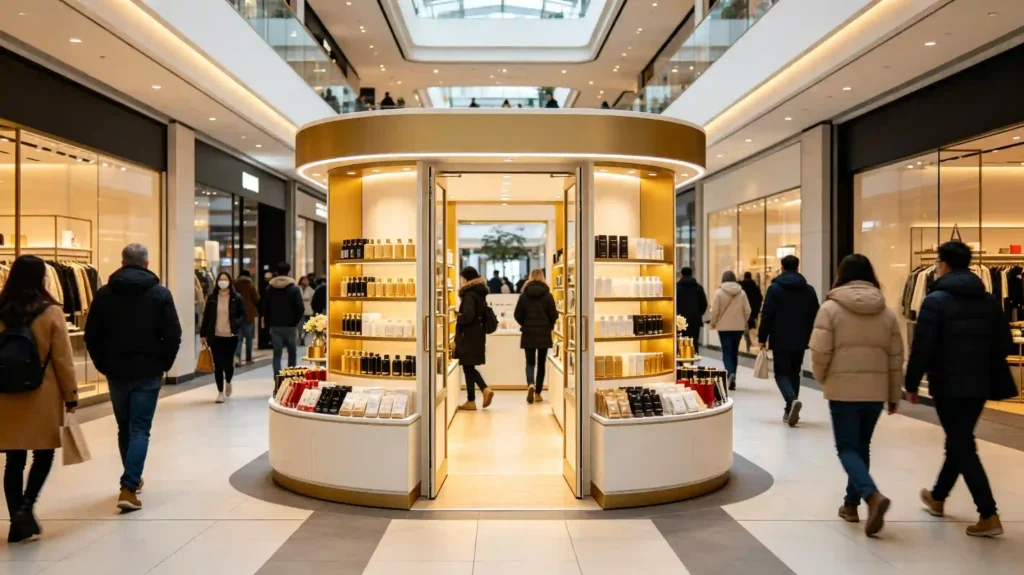
Type 5: Perfume kiosk
The core of the perfume kiosk is the experience. It must have a separate fragrance testing table and a place for fragrance sample placement. Different fragrance types should be placed in separate areas to avoid cross-contamination. Glass and acrylic materials are used extensively to create a sense of sophistication. Warm light atmosphere lamps are used to enhance the texture. Layered display stands are used to display formal perfumes. The front desk only has sample bottles, and the unopened inventory is placed in a closed cabinet at the bottom.
Type 6: Cosmetic kiosk
Cosmetics kiosks have two different concepts: open shelves and dedicated counters. The open-shelf models focus on having a large number of SKUs and being convenient to access, making them suitable for budget-friendly mass-market brands; the counter models include a trial station and a beauty consultant workstation, which are suitable for mid-to-high-end brands. It is necessary to reserve a color-matching trial area, a makeup wipe and a cleaning product placement area. The lighting should be close to natural light to avoid color differences during the color-matching process.
Type 7: Eyewear kiosk
The eyewear kiosk should serve both display and basic optometry functions. Half of the area should be used for displaying eyewear frames, and the other half should have a small optometry area and a floor-standing mirror. The lighting must use high color rendering index lights to accurately reproduce the true colors of the lenses and frames. The display stands should be suitable for different sizes of eyewear frames, and there should be spaces reserved for the placement of cleaning equipment and power sockets.
What are the key details that need to be considered when designing custom kiosks?
For many people, when they are doing it for the first time, they tend to choose the most attractive styles at the beginning. However, they get stuck in the approval process at the mall and end up making numerous changes, spending several thousand more dollars and delaying the opening time.
1.Focus on compliance requirements
The regulations in different states and different shopping malls in the United States vary greatly. Matters such as fire safety standards, electricity consumption capacity, floor area, aisle reserved width, and even the environmental protection standards of materials all require written approval from the mall before any design can be carried out. Don’t rely on experience; each mall has different requirements.
2.Calculate the cost-effectiveness of the traffic flow
Don’t call it a closed display cabinet. At least leave two openings to accommodate passengers coming from different directions. The flow lines for the trial area and the cashier counter should be smooth, and don’t make customers walk around in circles. Place high-profit SKUs on the golden layer at eye level to attract customers, and put the best-selling items at the outermost position to increase the store entry rate.
3.Brand Launch
The core of customization lies in differentiation. Chain brands need to unify VI elements, lighting, and material standards to ensure visual consistency at different locations; individual store owners should highlight the characteristics of their product categories. For example, food kiosks use warm light to stimulate appetite, jewelry kiosks use cold light to enhance the texture, and at first glance, customers will know what you are selling.
4.Don’t overlook the ease of maintenance
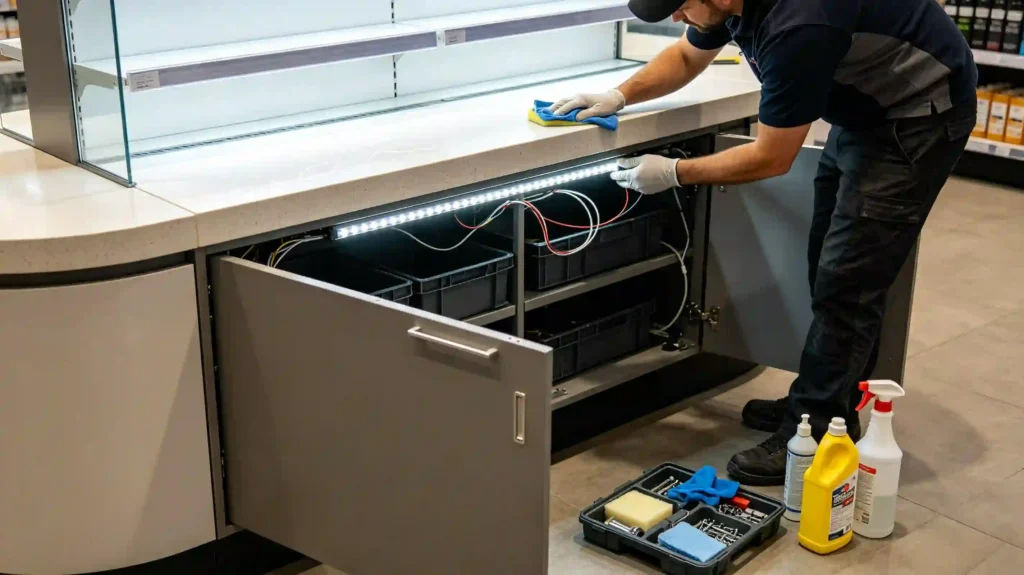
Many designs only focus on the appearance of the front stage, neglecting the later replenishment and cleaning processes. The warehouse cabinet doors should be large enough so that replenishment does not require dismantling the display shelves; the countertop should be made of materials that are scratch-resistant and easy to clean, and it can be wiped clean once a day after closing; all wires and interfaces should be hidden well, which is both aesthetically pleasing and avoids potential safety hazards.
What is the approximate cost of a custom-made kiosk?
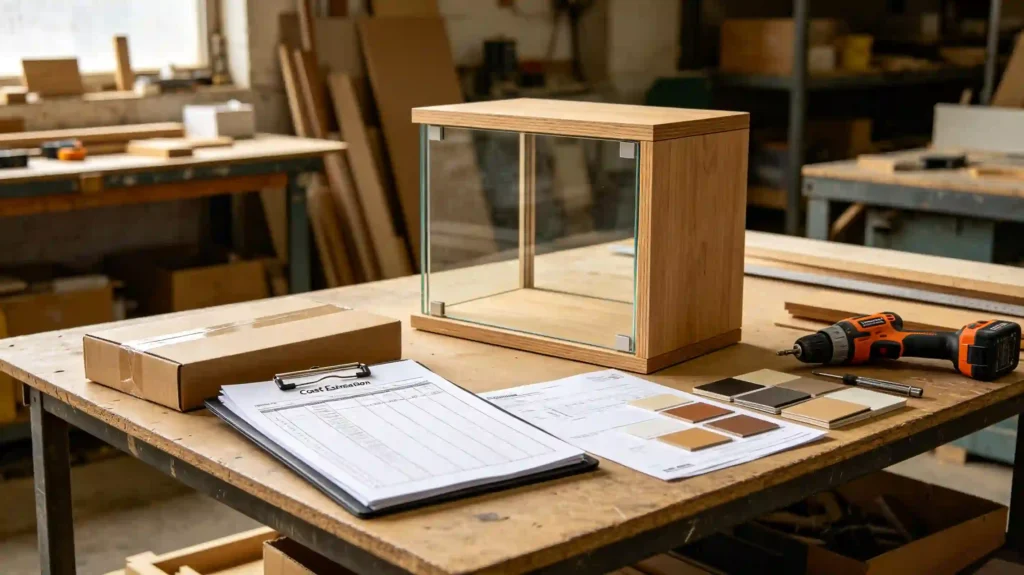
A custom-built kiosk has been installed. The price ranges from several thousand to tens of thousands of US dollars. The key factors are size, material, and functionality. Don’t just compare the factory price. Many beginners fall into traps here. Those with lower quotations often have a lot of additional charges later, and in the end, they may end up paying more.
| Kiosk Tier | Ex-factory Price Range | Typical Size & Scope | Materials & Core Features | Recommended Use Cases |
|---|---|---|---|---|
| Entry-level Basic Model | $3,000 – $8,000 USD | Around 2m × 2m compact booth | Made of panel and acrylic, fitted with basic lighting and locks. No complex functional modules. | Small business owners testing offline retail; works well for phone accessories, small trinkets and other light-SKU categories |
| Mid-range Standard Model | $8,000 – $20,000 USD | Ranges from 3m × 2m to 4m × 3m, accounting for 80% of retail kiosks on the market | Wood veneer + metal + glass composite structure, with complete functions including built-in storage, lighting system and basic anti-theft configuration. | Food, cosmetics, eyewear and most mainstream retail categories |
| High-end Custom Model | $20,000+ USD (no upper limit) | Fully customized to fit venue and brand requirements | Premium materials such as stainless steel, ultra-clear glass and imported panels; equipped with smart security system, digital displays and embedded devices. High design value and full customization. | Jewelry, high-end fragrance, luxury brands; ideal for prime spots in premium shopping malls |
Many people tend to overlook these costs.
- Cross-border shipping fees + inland transportation fees within the United States
- Local worker installation costs (charged by the day, complex models require 3-5 days of installation)
- Related fees for mall entry approval and fire safety inspection
- Post-sale costs for maintenance and replacement of accessories
How to choose a reliable custom kiosk solution service provider?
When choosing a custom kiosk solutions provider, don’t just focus on how attractive the case diagrams are. The key is to see if they can help you successfully implement the solution.
1.Have local experience in the United States
Understanding the shopping mall rules, fire safety standards, and material compliance requirements will help you get your design approved in one go, without you having to check the regulations and go through the procedures yourself. Many factories without experience often produce products that fail to pass the review when shipped to the United States, resulting in not only losses of the goods but also the loss of the right to enter the mall.
2.Provide full-chain services
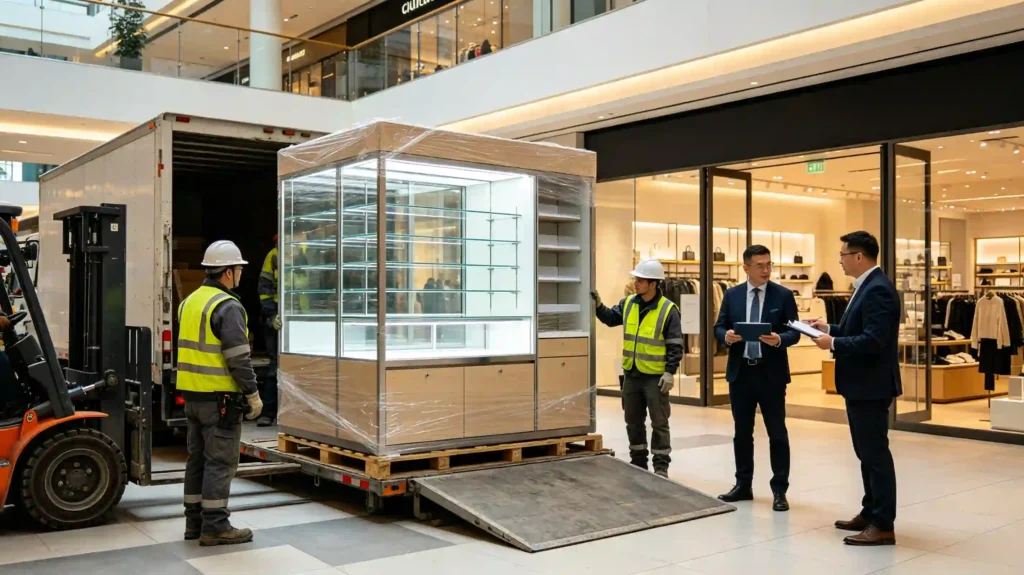
From design, production, transportation to installation and after-sales, one company will handle everything. You won’t have to look for design, factory, logistics, and installation teams simultaneously, and there won’t be any blaming of each other when problems arise, saving you time costs that are more valuable than money.
3.The delivery period should be included in the contract
Mall entry has a clear deadline. Delaying for one day will result in a penalty of one day’s rent, and in serious cases, the qualification will be revoked. Make sure to clarify the production cycle, transportation cycle, installation cycle, and include the delivery time and penalty clauses in the contract. Don’t believe in verbal promises.
4.After-sales response speed must be fast
Over time, sales kiosks are bound to have minor problems, such as broken lights or faulty locks. Can you quickly send out spare parts? Do you have local repair channels? If it takes half a month for the spare parts to arrive, the business losses during this period will be much higher than the cost of the spare parts.
What are some key points to avoid when customizing a kiosk?
We have served many clients for custom kiosks. Based on their feedback, these are all the pitfalls encountered in the industry. Avoiding them in advance can save a considerable amount of money and time.
- First, obtain the formal approval documents from the mall for the design. Don’t make the design based on intuition. Changing the design once will add at least 10% to the cost and also delay the process.
- The materials should be selected to comply with the American ASTM fire safety standards, especially for food-related areas and high-traffic locations. If it fails the review, there’s no way to enter the venue.
- Before signing the contract, clarify all the items included in the quotation. The design fee, transportation fee, installation fee, and warranty period should all be clearly stated to avoid adding extra costs later.
- Reserve about 10% of the budget space. In retail, there will inevitably be temporary adjustment needs, so don’t be too rigid.
Looking for a hassle-free, customized kiosk installation? Contact us directly!
We have already discussed so many details about selection, design, and avoiding pitfalls. If you really want to successfully implement a custom kiosk project from scratch, you will need to invest a lot of effort in coordinating with design, factories, logistics, and installation. If you are not careful, you may also fall into the traps set by the mall’s approval process.
We are a kiosk builder deeply involved in the US retail market, specializing in highly practical custom kiosk solutions. Whether you are testing the waters by building a single custom kiosk for offline operations, or laying out a batch of customized kiosks to expand business locations, from aligning with the mall’s approval standards during the design phase, to controlling material compliance during production, and then through shipping, local installation in the US, and after-sales services, we handle everything in one seamless connection. You don’t have to coordinate among multiple suppliers separately and deal with conflicts. Even for completely personalized custom-built kiosks, we can provide a feasible and implementable customized solution based on your product category, budget, and site dimensions.
If you already have a preferred venue in mind, or are still in the product evaluation stage, you can contact us directly.