
Display Cabinet Wholesale: The Ultimate Buyer’s Guide to Cost, Materials & Types

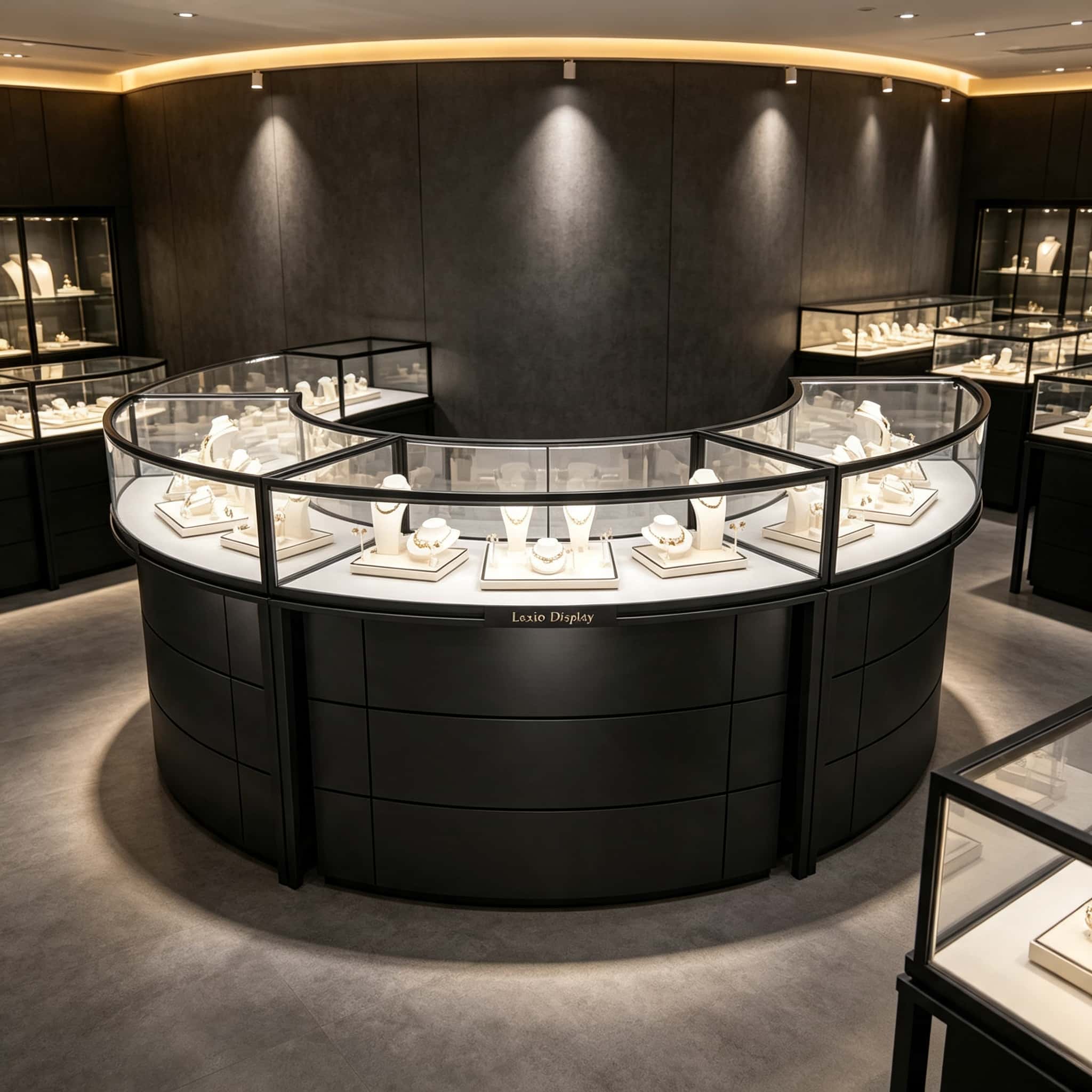
If you are sourcing retail fixtures for a boutique, jewelry store, or shopping mall kiosk, buying Display cabinet wholesale is the smartest way to control costs while getting exactly what your space needs. As a factory-direct manufacturer, I’ve seen too many retailers overpay local distributors for standard units that don’t fit their brand. This guide gives you the straight facts on sourcing, materials, sizing, and pricing—no fluff, no hidden agendas.
Where Can I Buy Custom-Made Display Cabinets?
The best place to buy custom-made commercial display cabinets is directly from a specialized B2B display manufacturer. You provide your store dimensions and desired design features, and the factory will create a tailored 3D layout, manufacture the cabinets, and ship them wholesale directly to your business.
This is the most common question I hear from independent retailers. The answer depends on whether you want standard or custom display cabinets wholesale. If you need standard sizes, you can find suppliers online, but the quality varies wildly. Most importers are simply trading companies that never touch the product. If you need something tailored—a specific glass thickness, a particular finish, or a curved front—you must work with wholesale display case manufacturers who have in-house production capabilities. At our factory, the process is simple: you send us your store floor plan, the product types you sell, and any reference images. We produce a 3D rendering so you can see exactly how the cabinets will sit in your space. Only after you approve the design do we begin cutting metal and glass. This direct communication eliminates the costly misunderstandings that happen when you buy through a middleman.
What Are Display Cabinets Called?
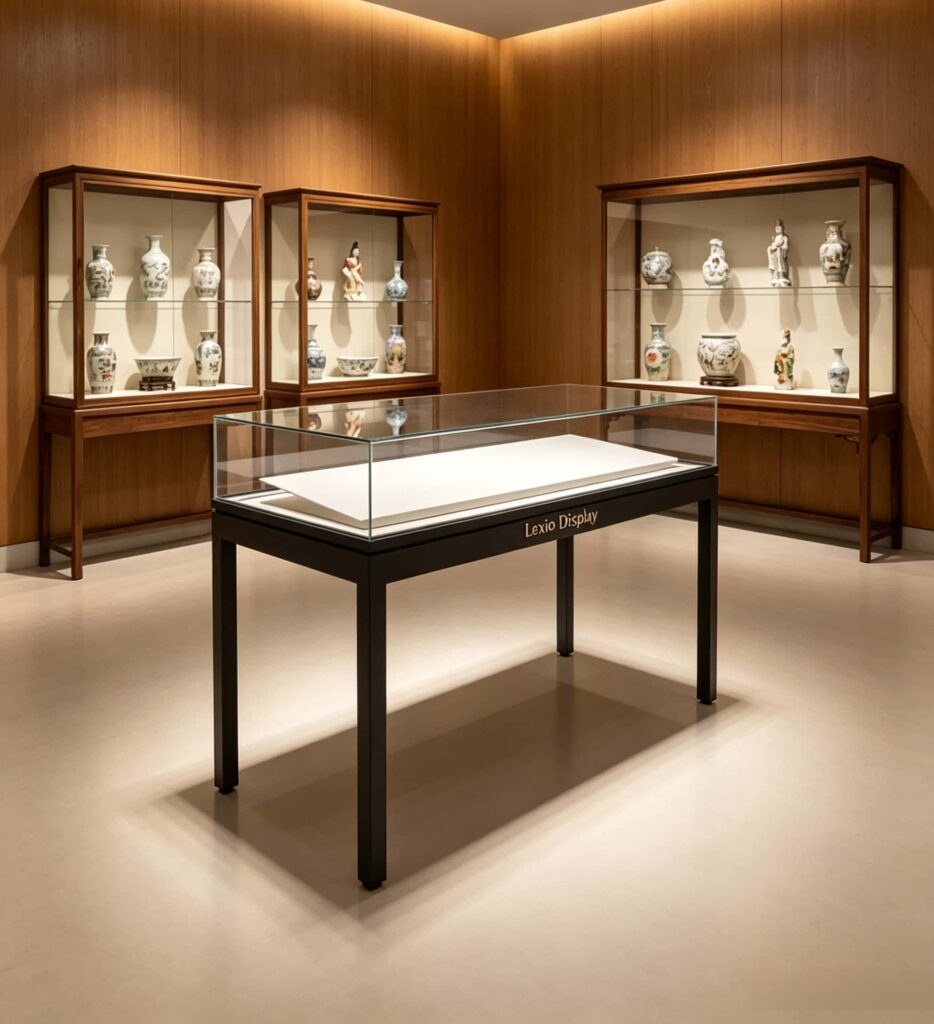
In the commercial and retail industry, display cabinets are often called “Showcases,” “Vitrines,” or “Merchandisers.” In high-end boutiques, “Vitrine” is preferred, while “Merchandisers” is commonly used for standard retail supply chain items.
Knowing the correct terminology helps you source effectively. When you search for commercial glass display cabinets, you will get professional suppliers who understand lockable doors, tempered glass, and integrated lighting. Search for “curio cabinet” and you will be flooded with home furniture results. From a manufacturer’s perspective, the term “vitrine” signals a higher-end product—usually a full glass enclosure with a polished metal or timber base. “Showcase” is broader and can include countertop units and wall-mounted displays. “Merchandiser” often refers to open-front shelving used in grocery or pharmacy settings. When you contact a factory, using the right terminology helps us understand your security, lighting, and finish requirements immediately. It also signals that you are a serious buyer who understands the buy retail display fixtures market.
What Is the Best Material for Display Cabinets?
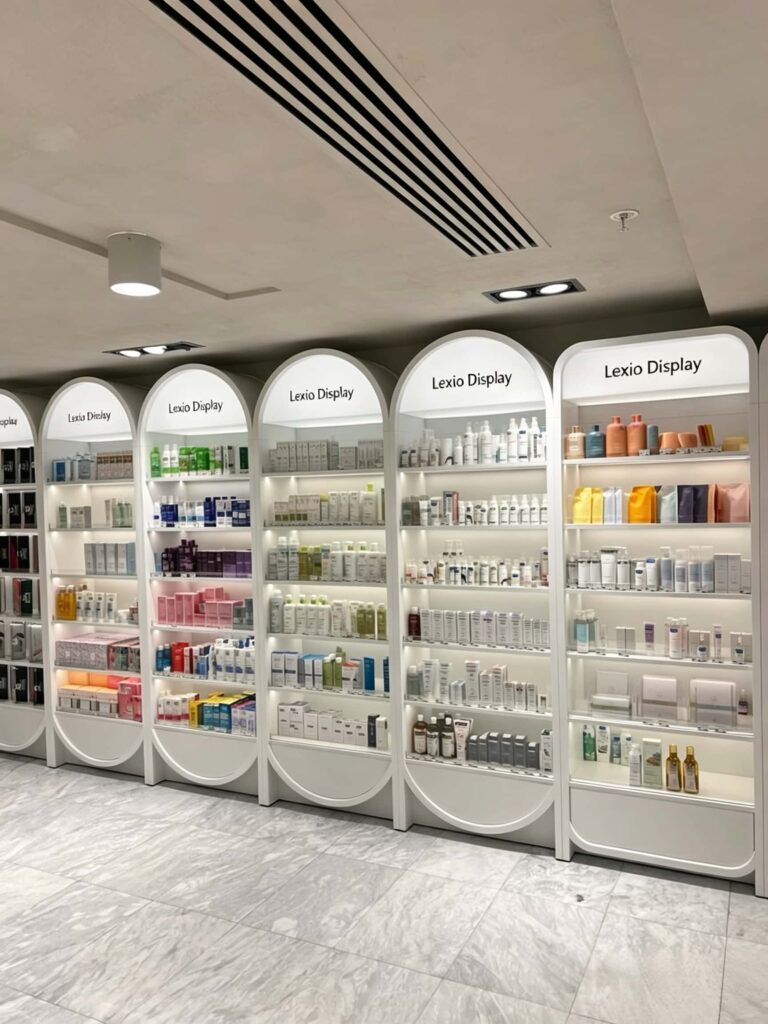
For commercial use, the best material is a combination of powder-coated steel or aluminum frames for durability, paired with tempered glass for safety. The interior is usually premium MDF or solid wood, layered with high-end finishes and anti-scratch laminates.
Let me be direct: avoid cheap particle board. It warps in humid environments and the edges chip after a few months of daily use. In our factory, we build the structural skeleton from steel tubing that has been laser-cut and powder-coated. This gives the cabinet rigidity and a clean, architectural look. The glass panels are tempered, meaning if they do break, they shatter into small, relatively harmless pieces rather than dangerous shards—a critical safety feature for retail environments. The interior surfaces are covered in a high-pressure laminate or a painted MDF panel. For jewelry or cosmetics displays, we often use a suede or velvet lining to reduce reflections and make products pop. The combination of metal, glass, and premium board means a commercial glass display cabinet will last 15 years or more in a busy retail setting. It also allows for customisation: you can specify a matte black frame, a brushed brass finish, or a white gloss interior without compromising durability.
What Are the Standard Sizes for Display Cabinets?
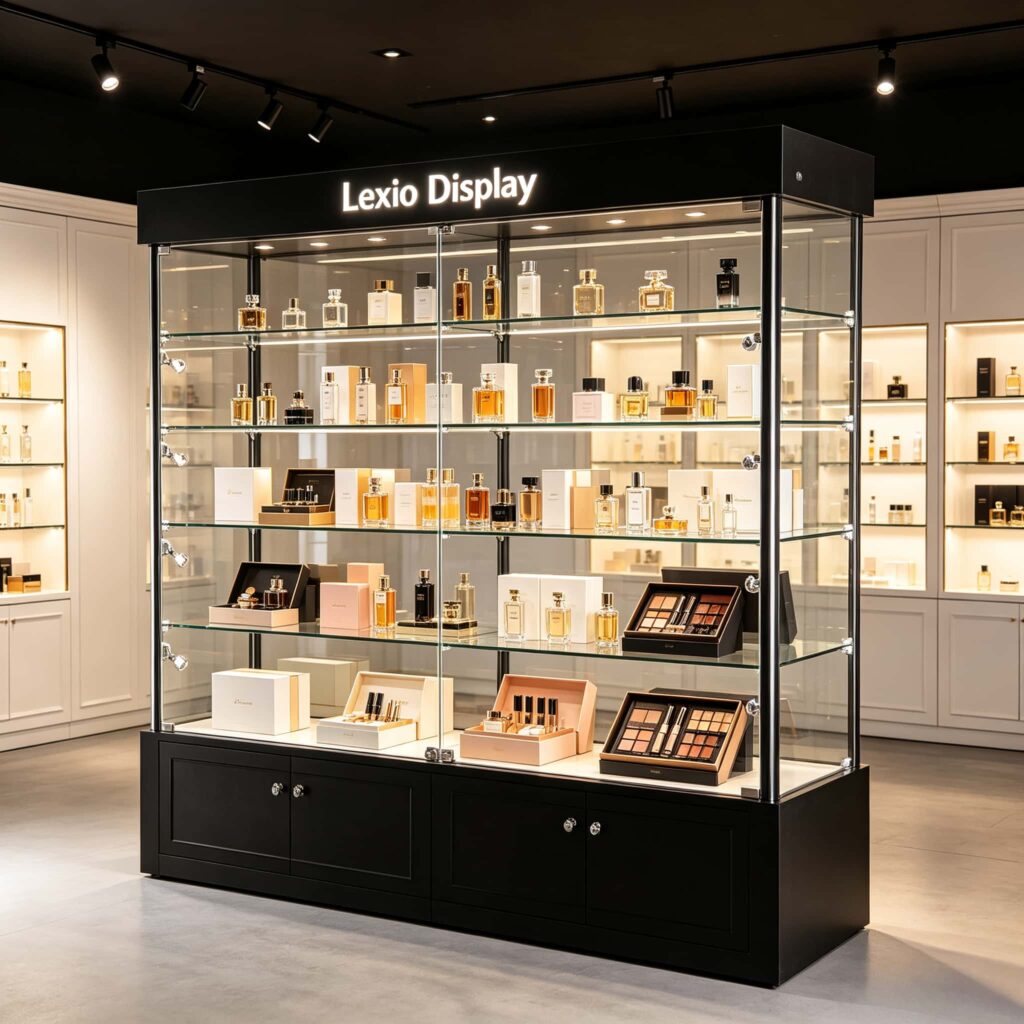
There is no universal standard for commercial display cabinets. However, a common guideline is a width of 36 to 48 inches and a height of 72 to 76 inches. For customized mall kiosks and boutique shops, the dimensions are almost always bespoke to fit the specific floor plan.
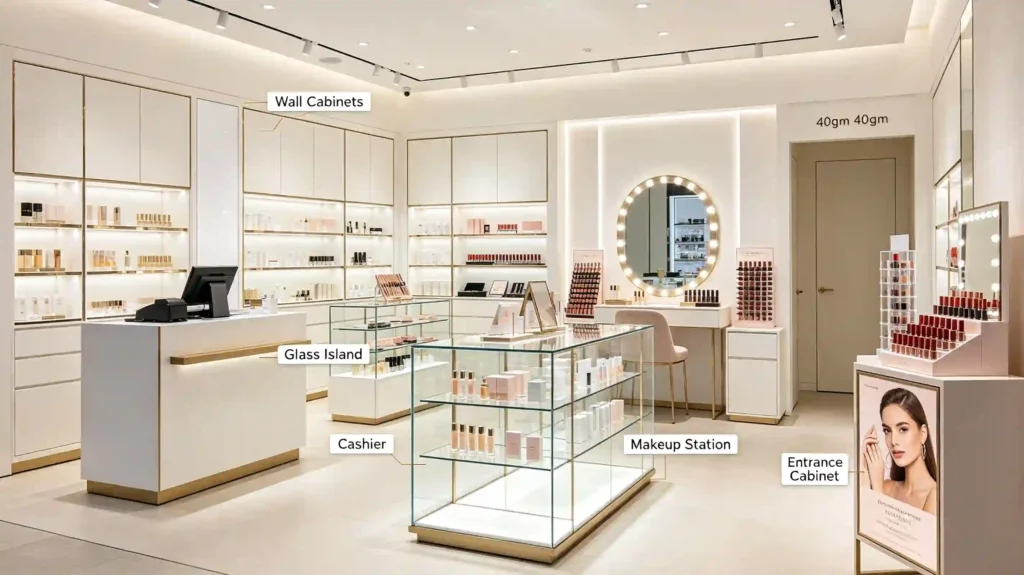
Retail spaces are not cookie-cutter, so your display cabinets should not be either. A standard 48-inch-wide unit might work in a large department store, but a compact boutique with narrow aisles may need a 30-inch-wide cabinet to avoid blocking traffic. When we quote custom display cabinets wholesale, we always ask for the exact wall lengths and aisle widths. From there, we determine the optimal module size. In a shopping mall kiosk, for example, the footprint is often limited to 10 square metres or less, so we design cabinets with a smaller footprint but maximum vertical storage. Height is another consideration: a 76-inch-tall cabinet offers generous display space, but if your ceiling is low or you have sprinkler systems, you may need to go shorter. The key is modularity. We build units that can be joined together or separated, giving you flexibility for future layout changes. This is especially useful if you plan to test different profitable mall booth ideas and need to reconfigure your display quickly.
How Much Do Display Cabinets Cost?
Wholesale prices for display cabinets vary widely based on size and complexity. A simple glass display unit might start around $600 wholesale, while a high-end, custom-built jewelry cabinet with premium LED lighting and security locks can easily range from $1,500 to $5,000+ per unit.
The price gap exists because materials and labour scale dramatically with specification. A basic single-door cabinet with plain glass and a painted MDF body will cost far less than a curved glass vitrine with a brass-finished steel frame, dimmable LED strips, and an electronic locking system. When you buy Display cabinet wholesale, the unit price drops as quantity increases. Ordering ten identical cabinets may reduce the per-unit cost by 15-25% compared to ordering one or two, because the factory can batch the cutting, welding, and painting processes. Shipping also plays a role: a full container of cabinets costs far less per unit to transport than a single pallet. If you are opening a new store, I recommend ordering all your display fixtures at once rather than piecemeal. Not only do you save on manufacturing, but you also avoid the logistical nightmare of receiving multiple shipments.
Are LED Lights Better for Display Cabinets?
Absolutely. In modern commercial retail, high-CRI (Color Rendering Index) LED lights are the industry standard. They consume less energy, produce less heat (protecting merchandise), and accurately showcase the true colors of jewelry, cosmetics, and luxury items.
This is non-negotiable for any serious retailer. Halogen lights, which were common twenty years ago, generate excessive heat that can damage delicate products and fade packaging. LED technology has advanced to the point where high-CRI LEDs (90+) render colours almost as accurately as natural daylight. This is critical for a jewellery display—a diamond’s brilliance depends on the light source. The same applies to cosmetics, where a customer needs to see the exact shade of a lipstick or foundation. When we integrate LED lighting into a commercial glass display cabinet, we place the strips in a dedicated channel to prevent glare and ensure even illumination. We also use dimmable drivers so you can adjust the brightness based on the time of day or the ambience you want to create. The upfront cost of quality LEDs is slightly higher than cheap strips, but the energy savings and reduced maintenance make them the only sensible choice for a busy retail environment.
What Is the Difference Between a Curio Cabinet and a Display Cabinet?
A curio cabinet is designed for home use, intended for storing personal collectibles. A commercial display cabinet is engineered for high-traffic retail, featuring lockable glass doors, scratch-resistant surfaces, and reinforced LED lighting to withstand continuous daily use by customers.
I see this confusion often, especially from first-time retail buyers who want to save money by purchasing home furniture for their store. The problem is that a curio cabinet’s hinges, glass thickness, and surface finish are not built for hundreds of daily openings. Within months, the doors sag, the glass scratches, and the lock fails. A commercial glass display cabinet is built with commercial-grade hinges rated for tens of thousands of cycles, tempered safety glass, and anti-scratch laminates that can be wiped down with cleaning products repeatedly. The security features are also different: a retail display cabinet typically includes a high-quality lock, sometimes with an alarm contact or an electronic keypad. If you are sourcing from wholesale display case manufacturers, always specify that you need commercial-grade construction. The small savings from buying a domestic cabinet will be wiped out by replacement costs and lost sales when the unit starts to look shabby.
Ready to source Display cabinet wholesale directly from the factory floor? Send us your store floor plan, the available wall or island dimensions, and a brief description of the products you sell. Our in-house design team will create a 3D rendering and a transparent factory quote for your custom display cabinets wholesale project. You deal directly with the manufacturing team that cuts the metal and installs the glass—no agents, no distributor fees, no hidden markups. Contact us today and get your production drawings within five business days.