Island vs wall-mounted displays: which is better?

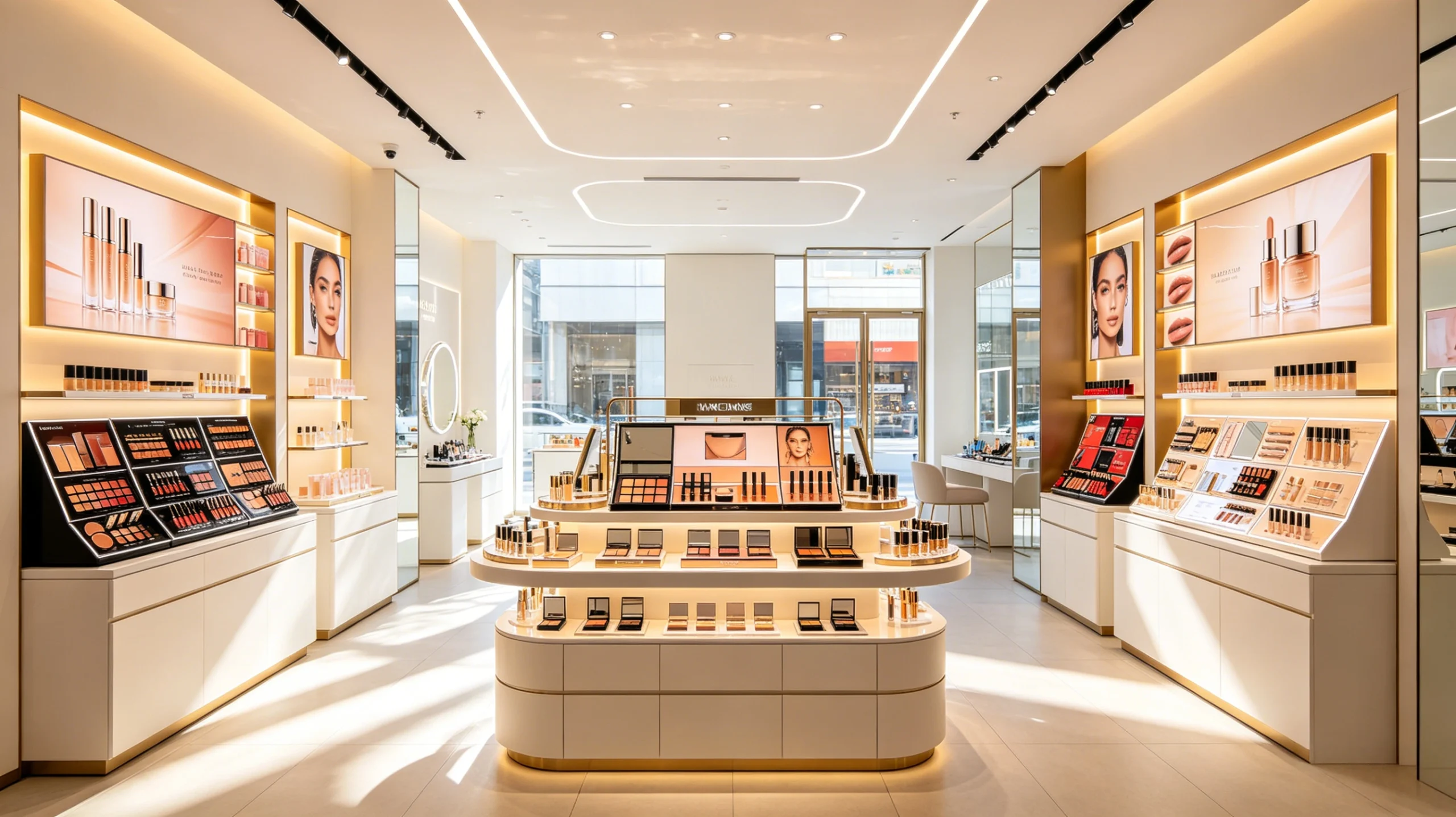
To attract customers and achieve interaction conversion, the island-style is the best choice; to save floor space and achieve large-scale deployment at low cost, the wall-mounted style offers better cost-effectiveness. Lexio Display specializes in customizing commercial display cabinets. After serving overseas offline stores (in the United States, Canada, Australia, France, the United Kingdom, etc.), they discovered that your store type and customer flow patterns have already made the choice for you.
What actual benefits can be derived from island-style displays?
1.Customers spend more time in the store, leading to increased impulse purchases.
The island-style display stands right in the middle of the road.Customers come from three directions and their gazes cannot avoid it.A retail environment survey conducted in the United States shows that the gaze rate of the island-style digital display is at least 47% higher than that of the wall display. Why? Because people walk with their eyes looking straight ahead, very few people tilt their necks to look at the side walls.
When the display directly blocks the movement path, curiosity is instantly activated.
We collected data from the island-style self-service ordering displays in 5 fast food restaurants in California – the average customer stay time was extended by 18 seconds.Don’t underestimate these 18 seconds. The purchase rate of beverages and desserts increased by 22%.
2.Double-sided or even four-sided display, with no blind spots.
The island-style displays can be made with two sides, three sides or even four sides.One island-style stand can serve both incoming and outgoing passenger flows at the same time.The island displays in large American supermarkets like Kroger display today’s special offers on one side and brand advertisements on the other.
In the same location, the number of people who can access the information doubles.However, the wall-mounted type can only serve one side of the view, and the other side is completely out of sight.

3.No more wiring hassles, move whenever you want.
Most of the island-style displays are equipped with heavy-duty bases and have built-in wiring channels.
There is no need to cut holes in the wall, and there is no worry about restrictions from the building property management.
This is a lifesaver for pop-up stores, holiday promotions, and mall atrium rentals.After the event is over on the weekend, it can be dismantled in half an hour, and the floor will be clean on Monday.
Best for
Medium-to-large boutiques (indoor area over 30㎡)
Stores focusing on customer experience, such as cosmetics, fragrances, and apparel
Stores needing to prominently display new products, best-selling items, and promotional products
Open-plan, spacious brick-and-mortar stores
Are wall-mounted displays really outdated?
1.Extreme space saving – not a single square foot is wasted
The rent for shops in American cities is astonishingly high.In the center of San Francisco, the monthly rent per square foot can exceed $8.The wall-mounted displays are directly attached to the wall, leaving the floor space for people and shelves.
If your aisle width is less than 5 feet (about 1.5 meters), placing an island-style displays will make the passage crowded and may even violate the ADA accessibility regulations.In this case, wall-mounted is the only compliant option.
2.A top-down view is naturally suitable for menu boards and information guidance.
The height at which wall-mounted displays are installed is usually above the line of sight.
Guests can easily see the menu, flight information or call-out prompts by looking up from a distance.
Displays like those in the kitchen of Shake Shack or the boarding gates at airports are almost all mounted on the wall.
Because no one wants to keep looking down to search for the displays while waiting anxiously for their meal.The sense of order brought by the downward viewing angle is something island-style displays cannot offer.
3.Significant advantages in installation and maintenance costs.
A wall-mounted frame can be purchased for industrial-grade models at prices ranging from 30 to 80 dollars.However, a stable and anti-tip-over island-style base can cost anywhere from 400 to 1,200 dollars.
If it is to be rolled out in 200 stores across the United States simultaneously, the price difference will be considerable.
Moreover, when installing the wall-mounted displays with wall wiring, the cables can be hidden in the decorative grooves, and later maintenance can be simply achieved by removing the displays .
Best for:
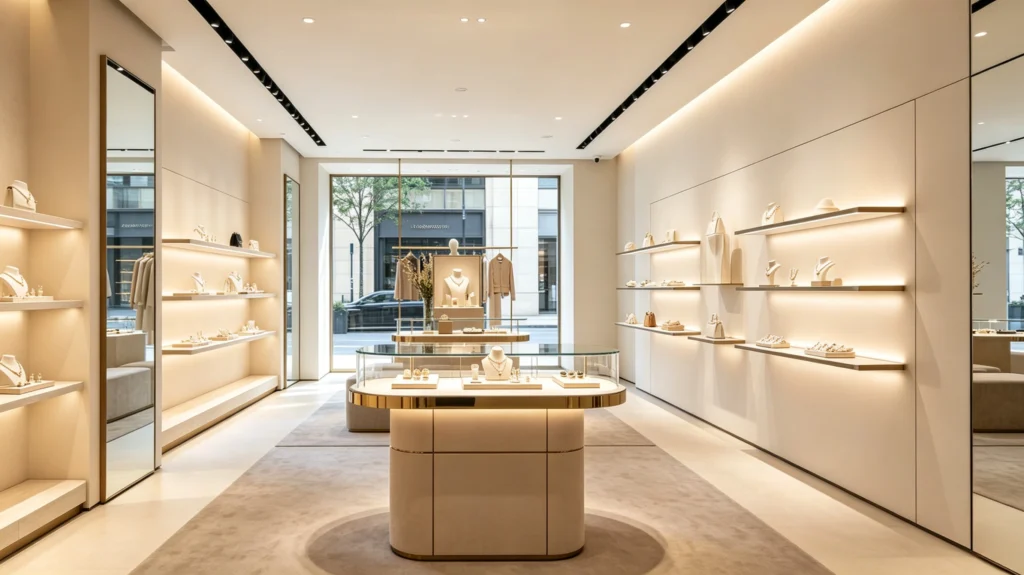
Small street-front shops, mini boutiques
Jewelry, accessories, and high-end luxury skincare and beauty stores
Shops with narrow aisles and limited floor space
Startup retail stores with limited budgets
Which type is more suitable for your store? A traffic flow diagram will tell you.
Restaurant Scenario: Island-style self-service ordering displays vs. wall-mounted menu displays
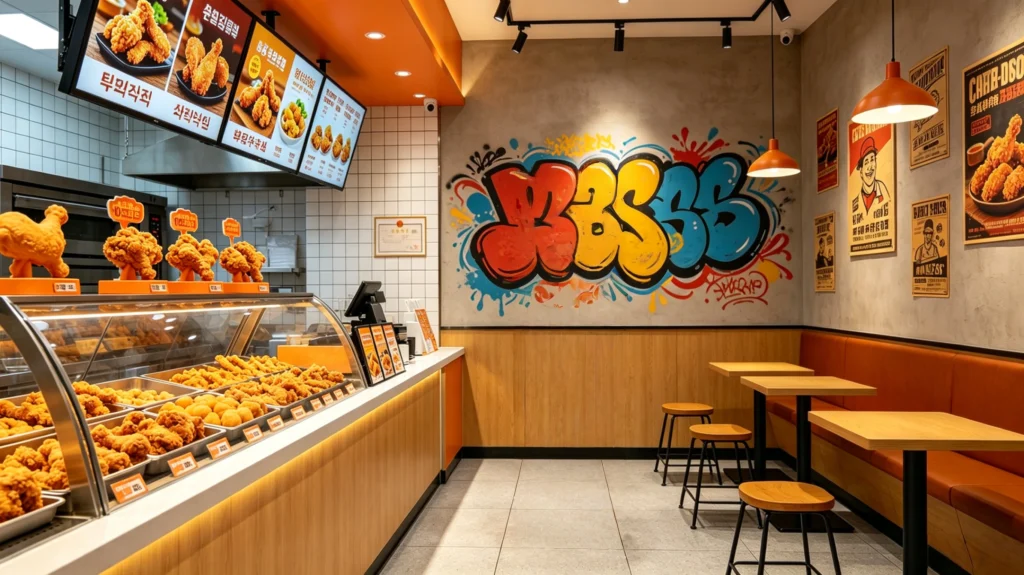
Nowadays, almost all QSR (fast food service) restaurants in the US are adopting the island-style self-service ordering system.Panera Bread and McDonald’s place the ordering island in front of the entrance, allowing customers to directly upon entering.The back-end data shows that the single order amount for the island-style self-service ordering is 15% higher than that for the counter ordering.
However, you still need to keep the wall-mounted call number displays in the pickup area.
Because the call number displays must be visible to everyone at the same time – the wall-mounted design without any obstruction is the best choice.In summary: Use the island for ordering, and use the wall-mounted displays for calling the number.
Retail Scenarios: Island Display displays vs. Window Wall-Mounted displays
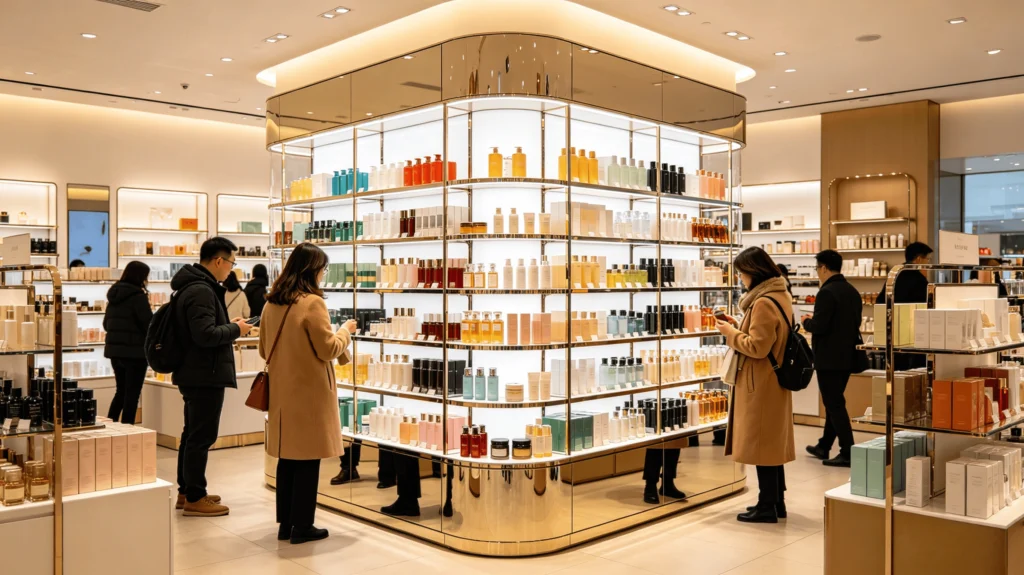
The island displays in the cosmetics store or e-cigarette store located in the shopping center serves as the driving force for attracting customers.Place it 3 feet from the entrance and continuously play the video of new products. The average store visit rate increases by 35%.
For the window display positions along the street, you can only use wall-mounted displays .The window glass cannot be fixed, so the wall-mounted displays faces outward and “shouts” to passersby 24 hours a day.
Transportation hub: island signage vs wall-mounted flight displays
Airports and subway stations also follow the principle that “the flow line determines the form”.
In the central area where people gather, island-style information displays are used to guide and divert the flow.In the narrow corridors and boarding gates, flight displays are hung in a row on the walls, allowing passengers to read them by simply looking up.
We have carried out the renovation of digital signage in the New York subway. On the platform level, all displays are hung on the walls, and in the transfer hall, all displays are in island style. As a result, the passenger inquiry volume has decreased by 40%.
Final Choices: 5 Questions to Help You Make a Decision
- Is the aisle width greater than 5 feet? No → Wall-mounted.
- Does the displays need to be visible to people on both sides simultaneously? Yes → Island.
- Does the displays need to be moved frequently? Yes → Island.
- Is the main information a menu or timetable? Yes → Prioritize wall-mounted (easier to read from above).
- Is the annual sales per square foot high? High → Island maximizes floor space.
The core logic behind choosing display cabinets always lies in matching the store’s size, product categories, and operational goals. Large stores that prioritize experience opt for island-style display units, while small stores that aim for space efficiency choose wall-mounted racks. Regular boutiques achieve the best results by combining these options.
If you are planning to renovate your store or replace the display fixtures, please feel free to contact Lexio Display. We can provide you with a free customized design plan and accurate quotations. Based on your actual needs, we will create commercial display cabinets that combine both appearance quality and practicality, helping your store enhance its display effect and sales volume.