
Retail Display Trends for US Boutiques in 2026

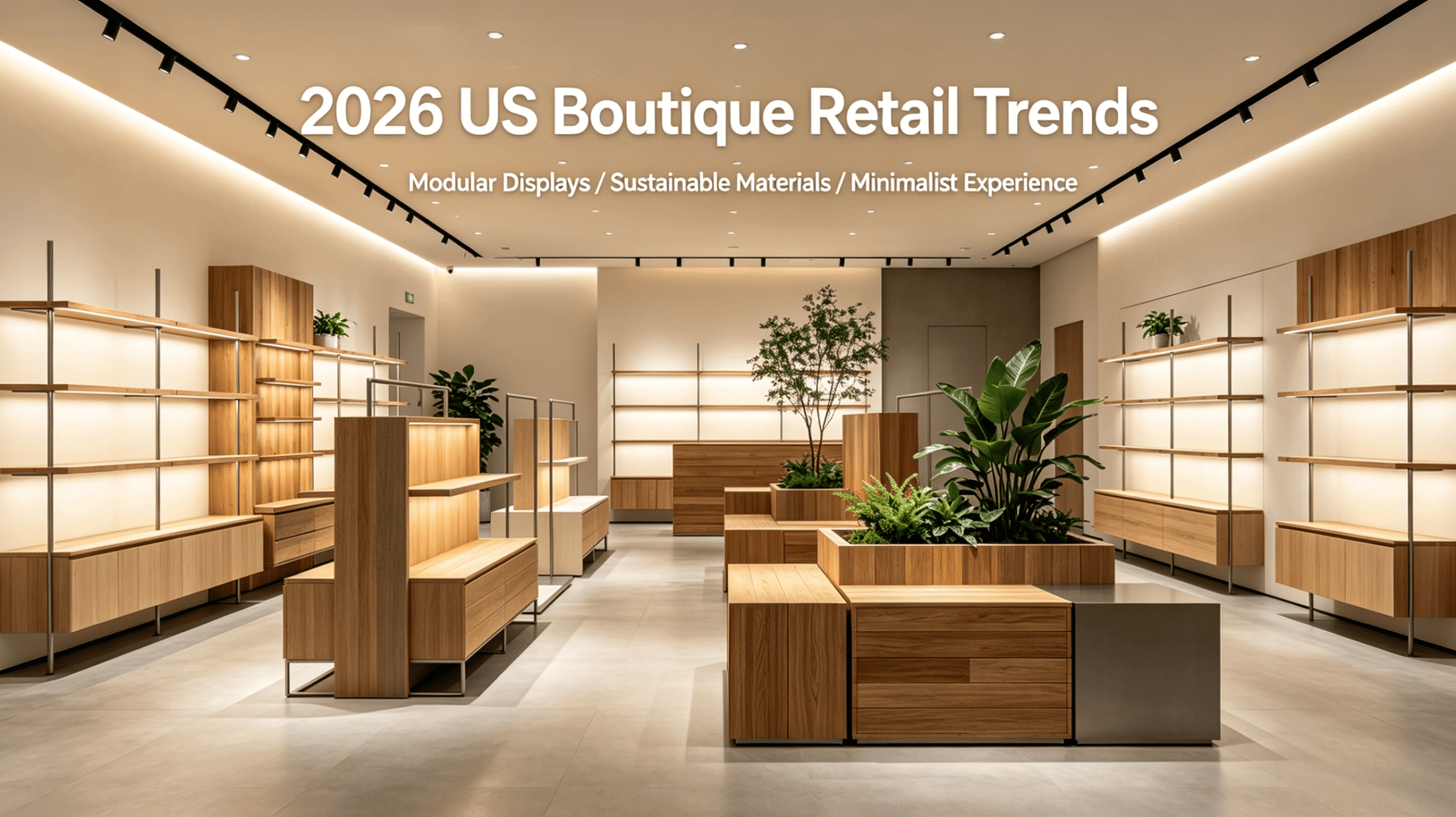
In 2026, the core of showcasing in American boutiques will no longer be about blindly pursuing ornate decorations. Instead, it will focus on practical, warm, and story-telling displays to address the core pain points of difficult customer acquisition, retention, and high season replacement costs. The advantage of boutiques lies in their differentiation and experience. Failing to keep up with the display trends will easily leave them squeezed out by online giants and chain brands. Starting from the actual pain points, we will break down the four most worthy trends for implementation this year, helping small boutiques upgrade at a low cost and increase conversion rates.
1.Modular flexible display fixtures, eliminating the rigid drawbacks of fixed layouts
The biggest problem for many boutiques is that they spend a lot of money on fixed display cabinets. During seasonal changes, new product launches, and holiday promotions, there is no way to adjust them. Either the space is wasted or the flow of customers becomes congested. The old approach was “one cabinet for life”, which looked good but was not practical. In 2026, the mainstream is modular, detachable, and reconfigurable display systems.
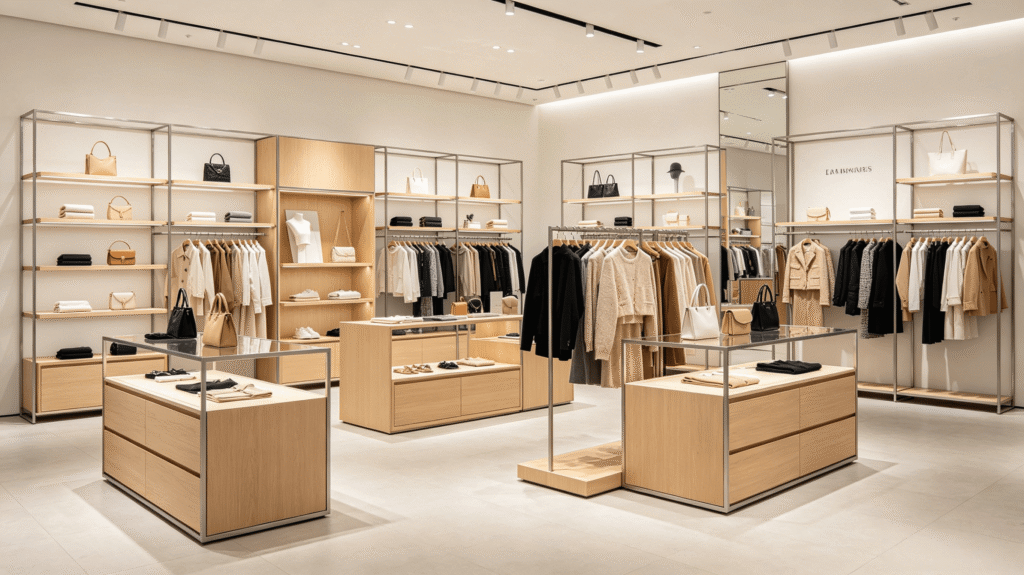
The modular display fixtures do not require major renovations or hard installation. Shelves, island displays, and side cabinets can all be freely combined. Today you can display accessories, and tomorrow you can change to clothing items. This allows for easy adaptation to new products and seasonal themes. In comparison, fixed display cabinets have a high initial investment and almost no flexibility in the later stage; while modular ones require initial adaptation design, they can be repeatedly used in the long term and reduce the need for repeated purchases, thus being more cost-effective. It is recommended to choose lightweight and easy-to-assemble models. Even small stores can quickly adjust the layout to maintain freshness.
2.Sustainable materials are standard configuration, balancing reputation and texture.
Nowadays, American consumers are increasingly attaching importance to environmental protection concepts. 66% of customers are willing to pay more for sustainable products. If a boutique still uses cheap plastic and pungent synthetic materials, it will easily lose the customer base that values quality. Traditional display materials are either not environmentally friendly or have poor texture, making it difficult to match the style of a boutique.
In 2026, recycling wood, recycled metals, eco-friendly fiberglass, and low-VOC paints will be the mainstream choices. The natural texture and matte finish give a sense of sophistication and also convey the brand’s responsible attitude. In contrast, one-time synthetic materials are cheap but prone to wear and are not environmentally friendly; sustainable materials are durable, can be refurbished, and can be recycled, resulting in lower long-term usage costs and better aligning with the niche positioning of boutique stores. There is no need to pursue a complete store renovation; starting with the core display cabinets and the island counter can significantly enhance the store’s quality.
3.Lightweight virtual-real integration (Phygital), reducing costs while enhancing interaction
Purely static displays often cause customers to “visit and then leave”. When the staff are busy, they can’t provide individual explanations, and the product stories can’t be conveyed. This is a hidden pain point for many boutique stores. In the past, either they relied entirely on manual explanations or they blindly installed large screens, but this was costly and not practical.
The trend in 2026 will not be about cramming in high-tech elements, but rather a combination of lightweight digital tools and physical displays. For instance, placing simple QR code cards beside the exhibits, and scanning them allows customers to learn about the material story,穿搭 suggestions, and user reviews. Without the need for complex equipment, this approach can achieve a seamless connection between online and offline experiences at a low cost, enabling customers to independently understand the products, reducing the workload on store staff, and increasing the duration of their stay. It is recommended to start with small-scale pilot projects, initially placing them in the sections of best-selling and high-margin products, to avoid the overuse of technological elements that might dilute the warmth of the boutique.
4.Minimalist white space combined with scene narration, highlighting the core value of the product
Many small stores often fall into the trap of believing that “more goods mean more excitement”. Their shelves are stuffed to the brim, which instead makes them look messy and cheap, and customers have difficulty finding what they are looking for, resulting in a poor shopping experience. In the 2026 boutique store display, the core principle is “less is more”. Instead of overloading the shelves, using blank spaces to replace overcrowding, the products should take the center stage.
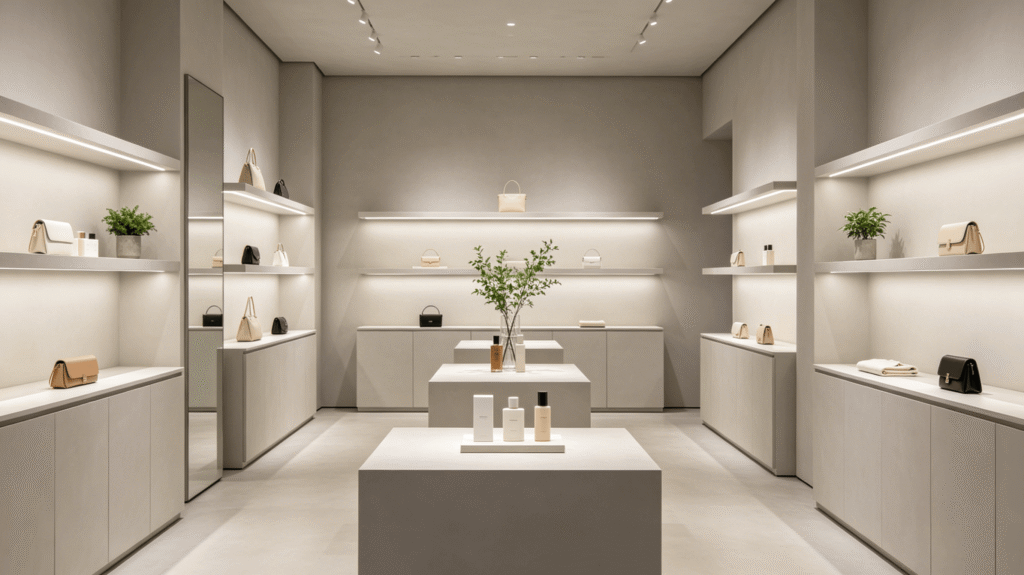
The old practice was “displaying a lot to show richness”, which led to distraction and a lack of quality. The new approach is to focus on individual items and create small scenes, such as pairing with green plants and soft warm lighting to create a comfortable atmosphere, making customers willing to take their time to select. Compared with this, chaotic displays will lower the brand’s image and reduce the conversion rate; a simple and narrative display can strengthen brand recognition and is more in line with the refined positioning of a boutique. It is recommended to control the display density, placing only core items in each area, and using lighting and material texture to enhance the sense of sophistication.
Act now!
The display logic of the boutique stores in the United States in 2026 is essentially about flexibility, sustainability, warmth, and emphasis on experience. It does not pursue large-scale investment but rather uses the right thinking, selects the right display equipment, and leverages the unique advantages of small stores. By avoiding the pitfalls of fixed and rigid structures, excessive accumulation, and blind reliance on technology, starting with small adjustments can make the stores more attractive and retain the target customer base.
If you need to customize display cabinets, island tables or window props that suit the size and style of your store, we can help you design and produce them. We support small-batch customization and can meet the flexible adjustment needs of boutique stores. Please contact us to obtain exclusive quotations and solutions.