
Metal vs. Wood: Does Metal Last Longer in Commercial Spaces?

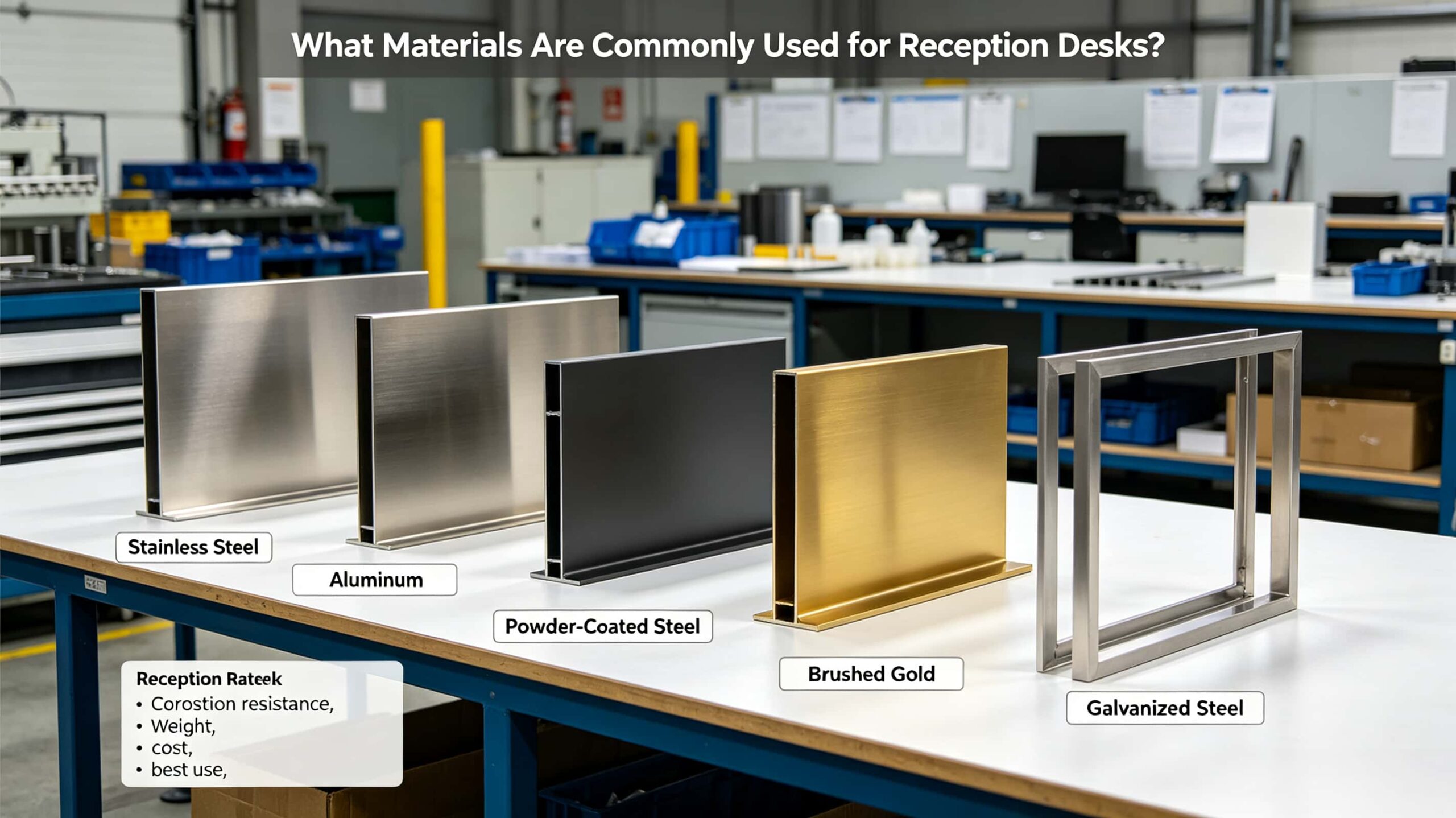
In high-traffic commercial environments, high-quality metal furniture typically outlasts wood, delivering 10–20 years without warping. However, wood can also endure when properly maintained. The deciding factors are material grade, manufacturing process, and the specific use case.
When specifying fixtures for commercial interiors—whether a retail counter, hotel reception desk, or hospital check-in station—the choice between metal and wood is not merely aesthetic. It is a strategic decision that impacts maintenance budgets, replacement cycles, and brand perception. This article dissects the durability, cost, and real-world performance of both materials, drawing on factory-floor insights to help you specify the right material for your next project.
Which Material Lasts Longer?
In commercial high-traffic settings, high-quality metal furniture generally outperforms wood, lasting 10–20 years without deformation. Yet wood, when properly maintained, can also stand the test of time. The key lies in material grade, manufacturing quality, and the specific usage scenario.
- Metal: 10–20 years in heavy-use areas; resistant to moisture, impact, and pests.
- Wood: 5–15 years depending on species, finish, and maintenance; vulnerable to humidity and heavy loads.
- Critical variable: A cheap metal cabinet may rust in months, while a well-built wooden fixture can last decades. Manufacturing quality trumps material category.
The Truth About Metal Durability in High-Traffic Areas
Metal’s reputation for toughness is well-earned, but it is not indestructible. Understanding its strengths and weaknesses is essential for specifying fixtures that truly last.
Advantages
- Impact resistance: Cold-rolled steel and stainless steel withstand knocks, kicks, and trolley collisions without denting easily.
- Moisture immunity: Unlike wood, metal does not swell, warp, or develop mold when exposed to spills or humid air.
- Fire resistance: Metal is non-combustible, a critical safety feature in public spaces.
- Dimensional stability: Metal frames do not sag under constant load, making them ideal for reception desks and retail counters.
- Pest-proof: Termites and borers cannot damage metal.
Weaknesses
- Rust risk: If the protective coating is scratched or compromised, rust can take hold, especially in coastal or humid environments.
- Scratch susceptibility: While tough, metal surfaces can be gouged by hard objects, and deep scratches may expose bare steel.
- Aesthetic limitations: Metal feels cold and hard, which may not suit warm, hospitality-focused interiors.
- Noise: Metal fixtures can amplify sound, requiring acoustic dampening in quiet spaces.
🏭 Factory Insider Tip: Commercial metal furniture must never be judged by appearance alone. Cheap sheet-metal cabinets rust within months. In our factory, when building metal reception desks, we use cold-rolled steel plates and internal steel tube frames, apply strict anti-rust treatments, and finish with automotive-grade baking paint. This ensures ten years without rust or paint peeling under high-traffic conditions.
The Truth About Wood Durability in Retail & Hospitality
Wood brings warmth, prestige, and a tactile quality that metal cannot replicate. But its longevity in commercial settings depends entirely on the substrate and construction.
Advantages
- Warm aesthetics: Wood creates an inviting atmosphere, ideal for hotels, restaurants, and high-end retail.
- Repairability: Minor scratches and dents can be sanded and refinished locally, extending the fixture’s life.
- Design flexibility: Wood can be carved, curved, and finished in countless ways to match brand identity.
- Natural acoustic properties: Wood absorbs sound, contributing to a quieter environment.
Weaknesses
- Moisture sensitivity: Wood expands and contracts with humidity, leading to warping, cracking, and mold.
- Load limitations: Long, unsupported wooden spans can sag under sustained weight.
- Pest vulnerability: Termites and wood-boring beetles can compromise structural integrity.
- Maintenance demands: Regular waxing, sealing, and refinishing are often required.
🏭 Factory Insider Tip: A wood fixture’s lifespan is determined by its core. Cheap particleboard has no place in commercial applications. In our factory, we build wooden display cabinets using moisture-resistant marine plywood or high-density MDF, seal all edges with waterproof bonding, and install internal steel reinforcements in load-bearing areas to prevent countertops from sagging.
3 Critical Factors That Determine Your Fixture’s Lifespan
Not all metal is equal, and not all wood is doomed to fail. Three variables dictate whether your investment lasts two years or twenty.
Factor 1: Environment
- Humidity & temperature swings: Wood’s number-one enemy. In coastal or tropical climates, wood swells and contracts; metal remains dimensionally stable.
- Dry vs. wet: Metal thrives in dry, temperature-controlled spaces; wood requires stable humidity (45–55%) to perform well.
- UV exposure: Both materials can fade, but wood’s finish degrades faster under direct sunlight.
Factor 2: Daily Wear & Tear
- High-touch surfaces: A retail counter touched 1,000 times daily demands metal’s hardness or a hardwood with a catalyzed finish.
- Employee-only use: Back-of-house wooden shelving may last decades with minimal care.
- Impact frequency: Areas prone to trolley bumps or heavy foot traffic favor metal’s resilience.
Factor 3: Initial Manufacturing Quality
- Metal gauge: 1mm thin sheet vs. 3mm cold-rolled steel—the latter resists dents and lasts years longer.
- Wood substrate: Particleboard vs. marine plywood vs. solid hardwood—the core determines everything.
- Joinery & finishes: Welded steel frames and automotive paints vs. spot-welded joints and cheap powder coats.
- Reinforcement: Internal steel bars in wooden counters prevent sagging; without them, failure is inevitable.
Cost-Effectiveness: The Long-Term Investment Math
Smart commercial specifiers look beyond the invoice price. The true cost of a fixture is calculated over its entire service life.
Upfront Costs
- Wood: Often cheaper, especially panel-based furniture using MDF or particleboard.
- Metal: Higher initial investment due to raw material and fabrication costs.
- Hybrid: Metal frame + wood veneer sits in the middle but offers the best of both.
Long-Term Costs
- Metal: Minimal maintenance. No repainting, no waxing, no pest control. Occasional cleaning is sufficient.
- Wood: Requires periodic waxing, scratch repair, and refinishing. In humid areas, climate control adds operational cost.
- Replacement cycles: Cheap wood may need replacement every 3–5 years in high-traffic zones; quality metal can last 15+ years.
Annual Cost Comparison (Illustrative)
| Material | Upfront Cost | Lifespan | Annual Cost | Maintenance |
|---|---|---|---|---|
| Cheap Wood (Particleboard) | $1,000 | 3 years | $333/year | High |
| Quality Wood (Marine Ply) | $2,500 | 10 years | $250/year | Medium |
| Quality Metal (Cold-Rolled Steel) | $3,500 | 15 years | $233/year | Low |
| Metal Frame + Wood Veneer | $4,000 | 15+ years | $267/year | Low |
Conclusion: In high-traffic commercial zones, metal’s annual cost is typically lower than wood’s, even with a higher upfront price. The math favors metal when downtime and maintenance labor are factored in.
Which Material Should You Choose for Your Commercial Space?
There is no universal “best” material—only the best fit for your specific environment, brand, and budget.
Choose Metal If:
- Your space is a hospital, airport, or high-end retail front desk.
- You prioritize modern, minimalist aesthetics.
- You want maintenance-free performance with minimal downtime.
- Your environment experiences high humidity or temperature fluctuations.
Choose Wood If:
- Your space is a luxury hotel lobby, high-end club, or fine-dining restaurant.
- You seek warmth, tradition, and a tactile experience.
- Your climate is controlled and stable.
- You value repairability and local refinishing over absolute resilience.
Best Solution: Metal Frame + Wood Veneer
- Combines metal’s structural integrity with wood’s inviting warmth.
- Internal steel skeleton prevents sagging; wood veneer provides the aesthetic.
- Currently the mainstream choice for premium commercial spaces worldwide.
- Factory-direct customization ensures the right balance of durability and design.
Conclusion & Action Plan
There is no absolute “best” material—only the solution that best fits your commercial scenario. Metal excels in high-traffic, humid, and impact-prone environments. Wood shines in climate-controlled, hospitality-focused spaces where warmth and repairability matter. The smartest specification often combines both.
Don’t struggle with the decision alone. Send us your floor plan and brand style. Our factory team will provide a 3D design, along with material combination recommendations that balance durability and aesthetics. Click the button below to get a factory-direct quote!
FAQ
Does metal furniture rust in commercial use?
Not if properly manufactured. High-quality commercial metal furniture uses cold-rolled steel, anti-rust treatments, and automotive-grade baking paint. This prevents rust for 10+ years even in humid environments. Cheap, thin sheet metal without proper coating will rust within months. Always specify material grade and coating process.
Can wood furniture last as long as metal in retail spaces?
Yes, but only with the right substrate and maintenance. Marine plywood or high-density MDF with waterproof sealing and internal steel reinforcement can last 10–15 years. Solid hardwood with a catalyzed finish also performs well. However, particleboard and untreated wood fail quickly in high-traffic retail settings.
Which material is more cost-effective for a hotel reception desk?
Metal frame + wood veneer offers the best long-term value. The metal skeleton provides structural stability for 15+ years, while the wood veneer delivers the warm aesthetic hotels require. This hybrid approach reduces replacement cycles and maintenance costs compared to all-wood or all-metal alternatives.
How do I know if a metal fixture is high quality?
Look for these indicators: cold-rolled steel thickness (2mm+), welded joints (not spot-welded), internal steel tube reinforcement, automotive-grade paint, and anti-rust primer. Ask the factory for material specifications. A quality metal fixture will feel heavy and solid; cheap ones feel light and hollow.
What is the lifespan of wood vs. metal in high-traffic areas?
In high-traffic commercial areas: quality metal lasts 10–20 years; quality wood lasts 5–15 years with proper maintenance. Cheap wood may fail in 2–3 years; cheap metal may rust in 6–12 months. Manufacturing quality is the single most important factor—not the material category itself.
Ready to specify fixtures that last?
Stop guessing and start building with confidence.
Send us your store floor plan and brand style guide today. Our factory team will deliver a 3D design and a custom material combination proposal that maximizes durability without sacrificing aesthetics.
Click the button below to get your factory-direct quote and 3D design now!
🏭 Factory Insider Tip: Always ask for material samples and production process documentation before placing a bulk order. A reputable factory will gladly share steel thickness, wood substrate grades, and coating specifications. That transparency is your best guarantee of long-term performance.