The Ultimate Guide to Choosing the Perfect Perfume Kiosk for Your Retail Space

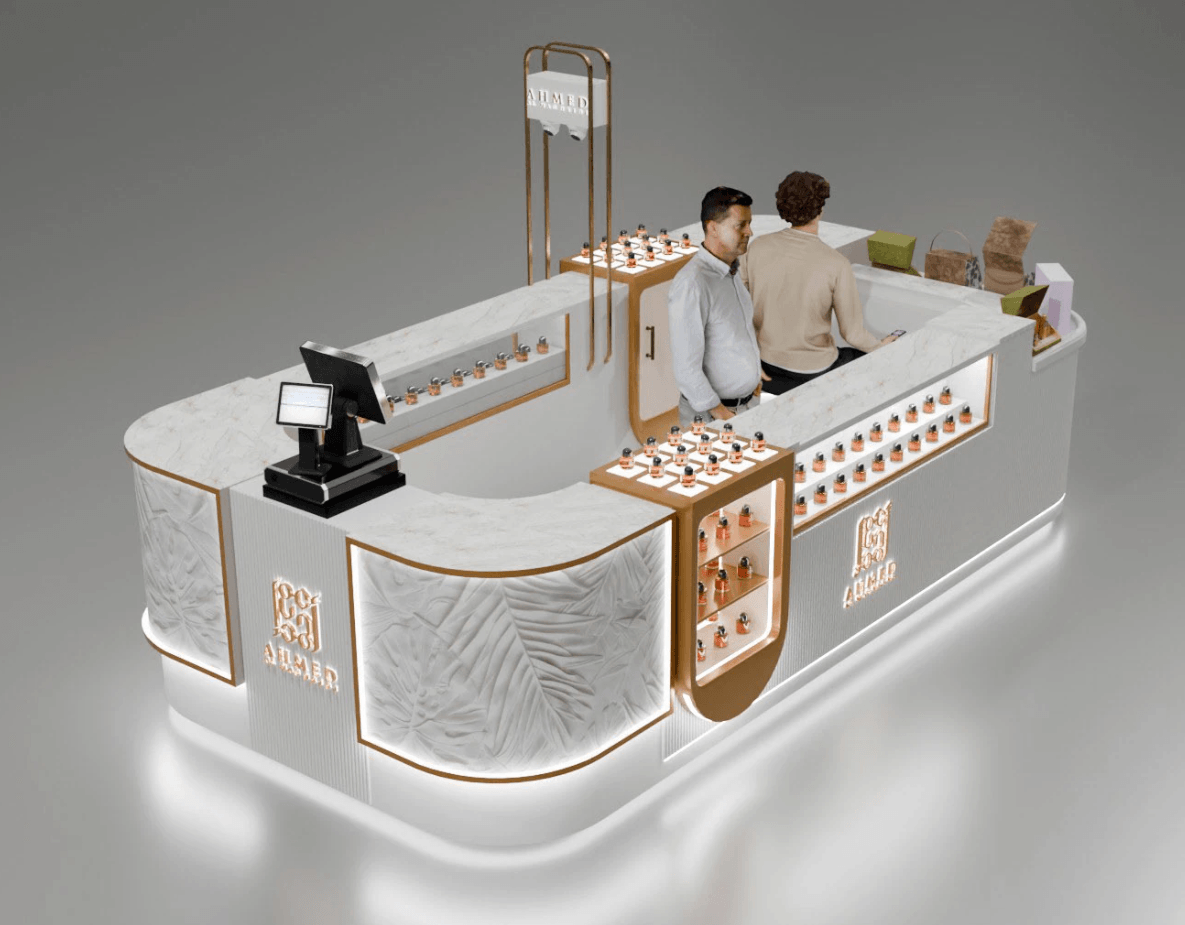
Picking the right perfume kiosk for your retail space directly impacts how much foot traffic you pull in, how customers perceive your brand, and how smoothly your daily operations run. A well-built mall perfume kiosk does more than just display fragrance bottles — it highlights your products, makes sampling easy for shoppers, meets local mall compliance rules, and leaves enough storage and workspace for your staff.
In this guide, we draw on 8 years of experience building custom retail display kiosks for malls across the US and worldwide. We break down every detail you need to know, from sizing and materials to lighting design, mall compliance, and common pitfalls to avoid.
Step 1: First, figure out where your perfume kiosk will go
A lot of people jump straight to picking a pretty design before they think about their location. That’s a mistake. The right style, size, and layout all depend on where you’re setting up. Here are the most common scenarios:
Open mall atrium kiosks
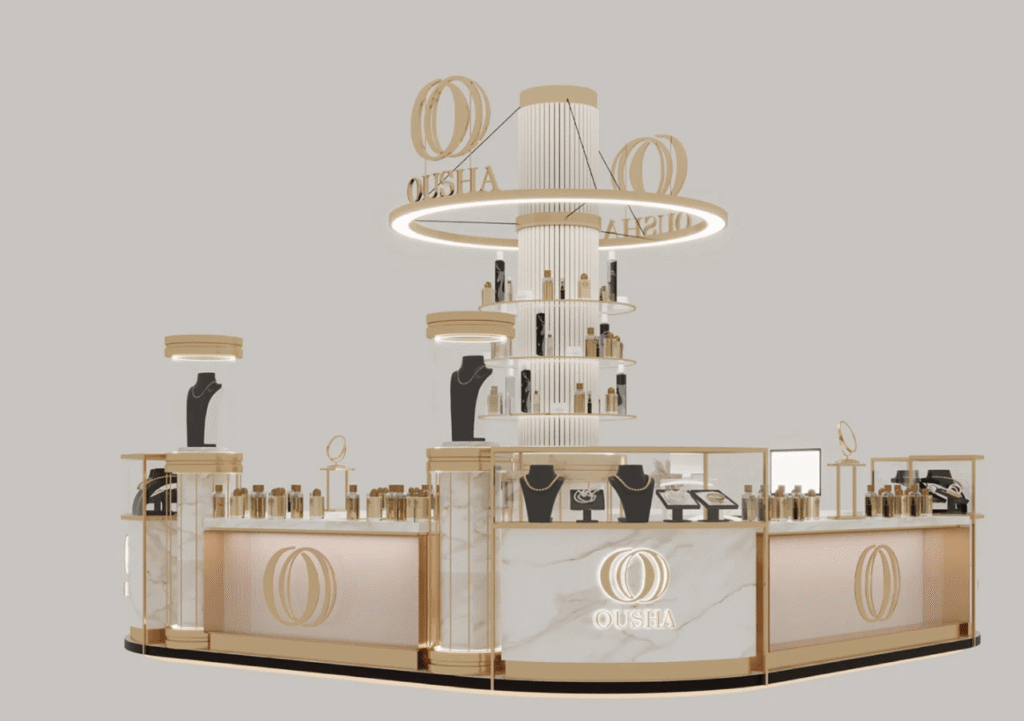
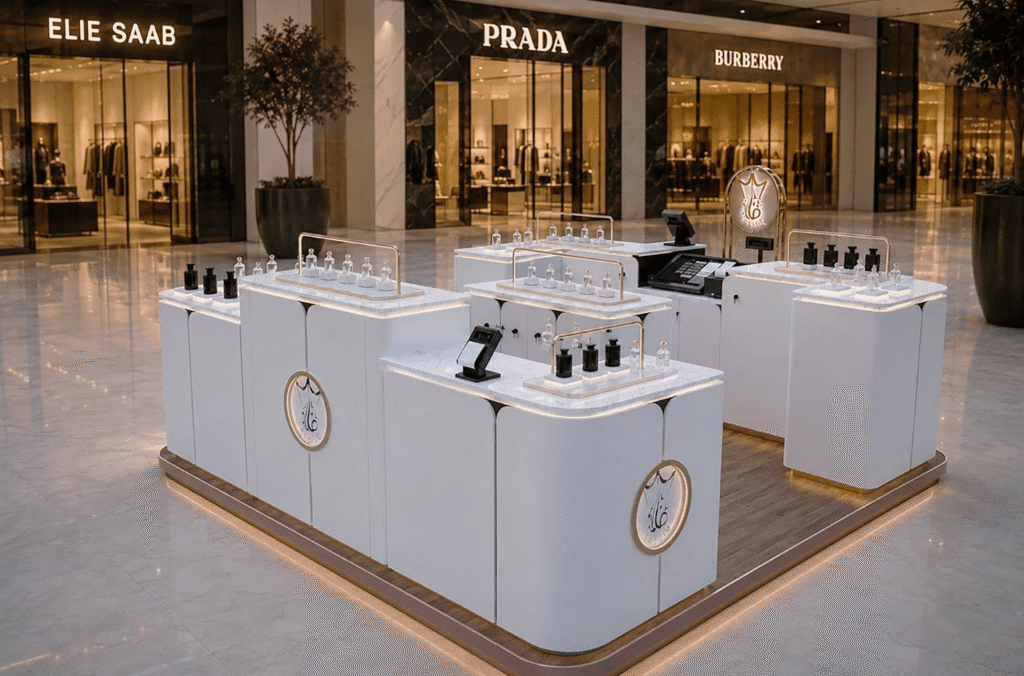
These sit in the middle of foot traffic, visible from all four sides. They need to look polished from every angle, usually with open display on all sides and a small service area in the center. They work best for established fragrance brands that want maximum exposure.
Wall-mounted corridor perfume kiosks
For narrow mall hallways or side walkways, you’ll usually only have one side open to customers. These are more compact, with storage and back-of-house space against the wall. They cost less and fit smaller budget points.
In-store beauty island counters
If you’re setting up inside a beauty boutique or department store, you’ll want a low-profile island kiosk. These are shorter (usually around 180cm tall) so they don’t block sight lines across the store, and they’re designed to match the store’s overall aesthetic.
Airport & transport hub kiosks
These need extra durability and higher storage capacity, since airport locations run longer hours and move more inventory. They also have stricter security and fire safety requirements.
Pop-up & short-term kiosks
For 1-3 month pop-up events, go with a lightweight, easy-to-assemble setup. You don’t need heavy custom build quality here — portability and fast setup matter more.
How to Pick the Right Perfume Kiosk Size (With Standard Reference Chart)
Don’t guess your size. If you order a kiosk that’s too big, it won’t fit your spot or block walkways. Too small, and you waste valuable display space.
First, measure your assigned spot properly. Write down the exact length, width, and height limit. And remember: you have to leave clear walking space around the kiosk, not just fit the cabinet itself. For most US malls, you need at least 80cm (32 inches) of clear aisle space on all customer-facing sides.
Here are the standard sizes we see most often for different locations:
表格
| Location Type | Standard Size (L × W × H) | SKU Capacity | Staff Capacity | Best For |
|---|---|---|---|---|
| Mall corridor wall unit | 200cm × 100cm × 240cm | 30–50 SKUs | 1–2 staff | Narrow hallway spots |
| Standard mall atrium kiosk | 300cm × 200cm × 220cm | 80–120 SKUs | 2–3 staff | Mid-size atrium locations |
| In-store beauty island | 240cm × 120cm × 180cm | 60–80 SKUs | 2 staff | Inside beauty boutiques |
| Airport large kiosk | 400cm × 200cm × 240cm | 150+ SKUs | 3–4 staff | Duty-free & high-traffic hubs |
Quick note on height: Most US malls have a 2.4–2.6m height limit for inline kiosks. Always confirm this with mall management before you finalize your design. Going over the limit will get your installation rejected.
Material Selection: How to Balance Premium Look and Long Durability
A pretty kiosk that falls apart after 6 months is a bad investment. The materials you pick determine both how nice it looks and how long it lasts with daily use.
Cabinet base materials
- MDF with piano lacquer finish: This is the most popular choice for mall kiosks. It’s budget-friendly, has a super smooth, high-end finish, and you can pick any custom color to match your brand. It works well for most indoor mall locations.
- Multi-layer solid wood with wood veneer: This is the upgrade option for luxury brands. It has a warmer, more natural feel and better moisture resistance. It costs more, but it holds up better long-term.
- Avoid pure solid wood for humid locations like Florida or Southeast Asia — it will warp and crack as humidity changes.
Glass panels
Always go for 8mm+ tempered glass. It’s safety-rated, so if it breaks it shatters into small dull pieces instead of sharp shards. For high-end brands, upgrade to ultra-clear low-iron glass — it has no green tint, so your perfume bottles show their true color.
Countertop surface
Your countertop gets touched every day, has perfume spilled on it, and holds test strips and sample bottles. We always recommend quartz stone for perfume kiosks. It’s scratch-resistant, non-porous, and alcohol won’t stain it. Natural marble looks nice, but it has tiny pores that soak up spilled perfume and leave permanent marks.
Hardware
Hinges, locks, and handles get opened dozens of times a day. Spend a little extra for stainless steel hardware. Cheap chrome-plated iron parts will rust and break within 6 months, and they make the whole kiosk look cheap.
Lighting Design: Bad Lighting Ruins Both Your Look and Your Products
This is the detail most cheap kiosk suppliers skip, and it makes a huge difference. Bad lighting makes expensive perfume look cheap, and lights with UV rays will actually damage your fragrance inventory over time.
First rule: Pick high CRI lighting
You need LED lights with a CRI (RA) of 90 or higher. This means the light shows true, accurate colors. With low-CRI lights, your perfume liquids will look dull and off-color, and customers won’t be drawn in.
Color temperature
For most fragrance brands, 3000K–3500K warm white is the sweet spot. It feels warm, luxurious, and makes the whole kiosk feel inviting. If you have a young, modern brand, you can go up to 4000K neutral white for a cleaner look.
Critical: Use UV-free LEDs
Perfume oils and colorants break down when exposed to UV light. Over a few months, bottles in the front row will fade and change scent. That’s wasted inventory cost, and most people never realize the lighting is the cause. Always confirm your supplier uses UV-free LED strips and spotlights.
Use three layers of light
Don’t just stick one strip of lights across the top. Layered lighting is what makes a kiosk look high-end:
- Ambient light: Soft overall light to brighten the whole kiosk
- Spotlights: Small focused lights aimed at each display shelf, to highlight individual bottles
- Accent strip lighting: Hidden LED strips along shelf edges or the base of the kiosk, for that premium glowing effect
Pro tip: Make sure the LED drivers are placed in an accessible spot, not sealed inside the wall. When a driver burns out, you don’t want to tear apart the whole kiosk to replace it.
Internal Layout & Storage: Don’t Wait Until Opening Day to Notice Flaws
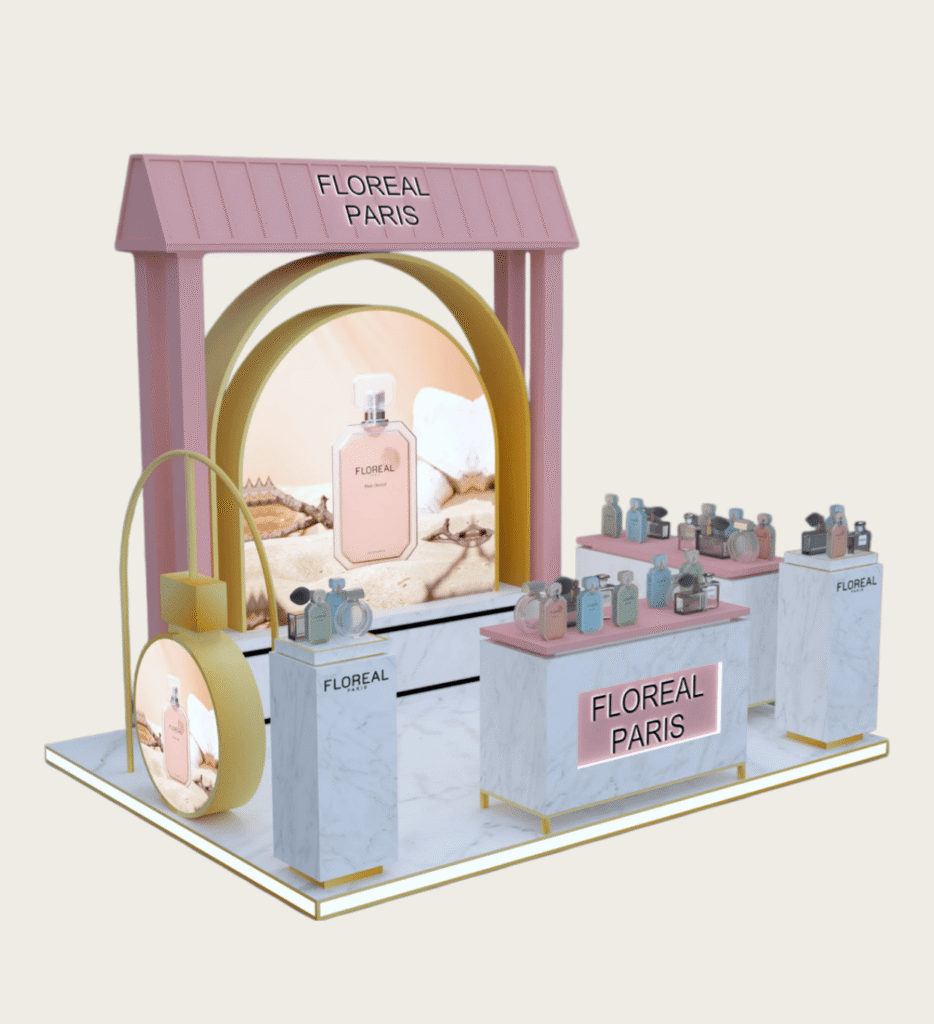
A lot of buyers only care about how the kiosk looks from the outside. But your staff will use it every day, and bad internal layout makes service slower and creates messy clutter.
Cashier & workstation placement
Put your POS station on one side of the kiosk, not dead center. If the cash register is right in the middle, it blocks the first thing customers see when they walk by, and you lose valuable display space.
Storage space
Reserve at least 30% of the internal space for storage. You need room for backstock, test strips, shopping bags, and cleaning supplies. Put frequently used items at waist height so staff don’t have to bend down or reach up during busy hours.
Sampling station
Set aside a dedicated small counter area for test strips, coffee bean scent reset jars, and tester bottles. Don’t cram testers in with the full-size display bottles — customers will knock things over when they test fragrances.
Workflow for staff
For a double-sided island kiosk, make sure there’s enough room inside for staff to walk past each other without squeezing. When you’re busy with 3+ customers at once, a cramped interior will slow everything down.
Mall Compliance Rules: A Beautiful Kiosk Is Useless If You Can’t Install It
This is the #1 pitfall for first-time kiosk buyers. You can have the nicest design in the world, but if it doesn’t meet mall rules, you won’t be allowed to set it up — and reworking it will cost you thousands.
Fire safety requirements
Nearly all US malls require kiosk materials to meet B1 fire resistance rating. All electrical wiring must run through fire-resistant conduit, and you need a clearly marked emergency power shutoff switch.
Always ask your supplier for a fire retardant test report before you place your order. If they can’t provide one, walk away — you’ll get rejected at mall inspection.
Electrical rules
Confirm your mall’s power limit for your spot. Most standard kiosk spots give you 10–15 amps. Don’t overload your kiosk with too many lights, or you’ll trip breakers every day. All wiring must be hidden — no visible cords running along the floor or walls.
Size & signage limits
Malls mark exact boundary lines for your kiosk spot. You can’t go over those lines, even by a few inches. Also, confirm rules for signage size, placement, and lighting. Some malls have very strict rules about what you can hang on the outside of your kiosk.
Low-VOC & odor rules
High-end malls often require E0-grade low-emission boards, so your kiosk doesn’t give off strong chemical smells when it’s first installed. A stinky kiosk will get you sent back for rework.
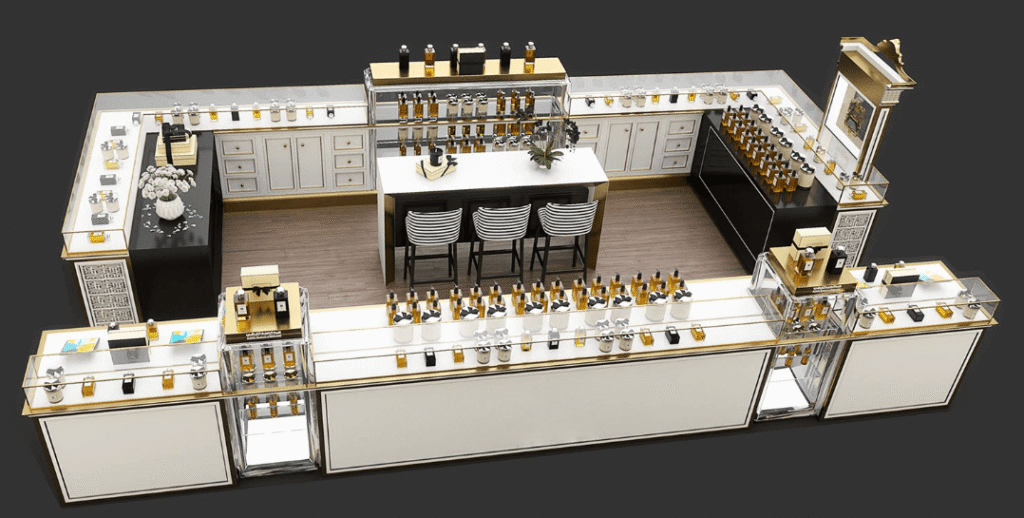
Ready-Made vs. Custom Perfume Kiosks: Which Is Actually Better Value?
A lot of people ask which one is cheaper. The answer depends on how long you’ll use it and what you need it to do.
表格
| Factor | Ready-Made Standard Kiosk | Custom Built Perfume Kiosk |
|---|---|---|
| Upfront cost | Lower, fixed transparent pricing | Higher, priced to your specs |
| Production time | 7–15 days, fast | 25–40 days, includes design phase |
| Size fit | Only comes in set sizes | Built exactly to your spot dimensions |
| Branding | Can only add a logo sticker | Full brand match: custom colors, shapes, details |
| Best for | Short pop-ups, tight budget small spots | Permanent mall locations, brand-focused stores |
| Lifespan | 1–2 years with regular use | 3–5+ years with basic care |
Our take: If you’re doing a 1–3 month pop-up, a ready-made kiosk makes total sense. It’s cheap and fast, and you can resell it when you’re done.
If you’re signing a 1+ year lease for a mall spot, always go custom. It fits your space perfectly, looks way more professional, and the yearly cost actually works out lower when you spread it over the full lease.
8 Common Mistakes People Make When Buying a Perfume Kiosk
We’ve seen hundreds of kiosk projects, and these are the mistakes that come up over and over. Avoid them and you’ll save yourself time, money, and headaches.
- Only comparing total price, not what’s included. Many suppliers quote only the cabinet price, then add extra fees for shipping, installation, and taxes. Always ask for an all-in quote, and confirm there are no hidden charges.
- Judging only by photos, not material quality. Two kiosks can look identical in renderings, but be made with completely different materials. Always ask for material samples before you pay.
- Forgetting to plan for power outlets. POS systems, card readers, and scent diffusers all need plugs. If you don’t build outlets into the design, you’ll end up with messy visible cords.
- Skipping UV-free lighting. We mentioned this earlier, but it’s worth repeating. UV light ruins perfume inventory. The cost of wasted bottles will quickly add up to more than you saved on cheap lights.
- Measuring your spot wrong. A lot of people measure just the open floor space and forget about pillars, door frames, or wall trim. When the kiosk arrives, it won’t fit. If you can, have the supplier do a site survey. At the very least, send photos and mark all obstacles.
- Ignoring after-sales support. Things break. Lights burn out, hinges come loose. A good supplier will send replacement parts and walk you through fixes. A bad one will ghost you once they get your payment.
- Skipping mall compliance checks. Never assume a supplier knows your local mall’s rules. Confirm fire, electrical, and size rules with mall management yourself, then pass them to your supplier.
- Going overboard with fancy shapes. Complex curved designs look cool, but they cost more, are harder to clean, and collect dust in all the little crevices. Keep it practical, with small premium details.
How to Tell If a Perfume Kiosk Supplier Is Reliable
There are a lot of factories out there selling kiosks, and they’re not all the same. Here’s what to look for:
- They offer custom 3D renderings before you order. A good supplier will design the kiosk around your space and needs, not just push you a pre-made template.
- They have real case studies for US and international mall projects. Suppliers that have worked with overseas malls already understand compliance and shipping logistics.
- They provide material samples and test reports (fire rating, eco-certificates) on request.
- They share production updates with photos and videos during the build process. You shouldn’t have to beg for updates.
- They offer clear warranty terms and after-sales support.
Final Thought: The Real Rule for Picking a Perfume Kiosk
At the end of the day, the best perfume kiosk isn’t the prettiest one. It’s the one that fits your location, supports your daily operations, and presents your brand the way you want — all while staying within your budget and meeting all local rules.
Start with your location and size, then pick materials and lighting that fit your product. Don’t make price or aesthetics your very first decision.
If you’re not sure what size or layout works best for your space, or you want a custom design quote, reach out to our team. We’ll send you a free size recommendation and initial design plan within 24 hours.