
Top 10 Ice Cream Shop Counter Design Ideas Trending in 2026

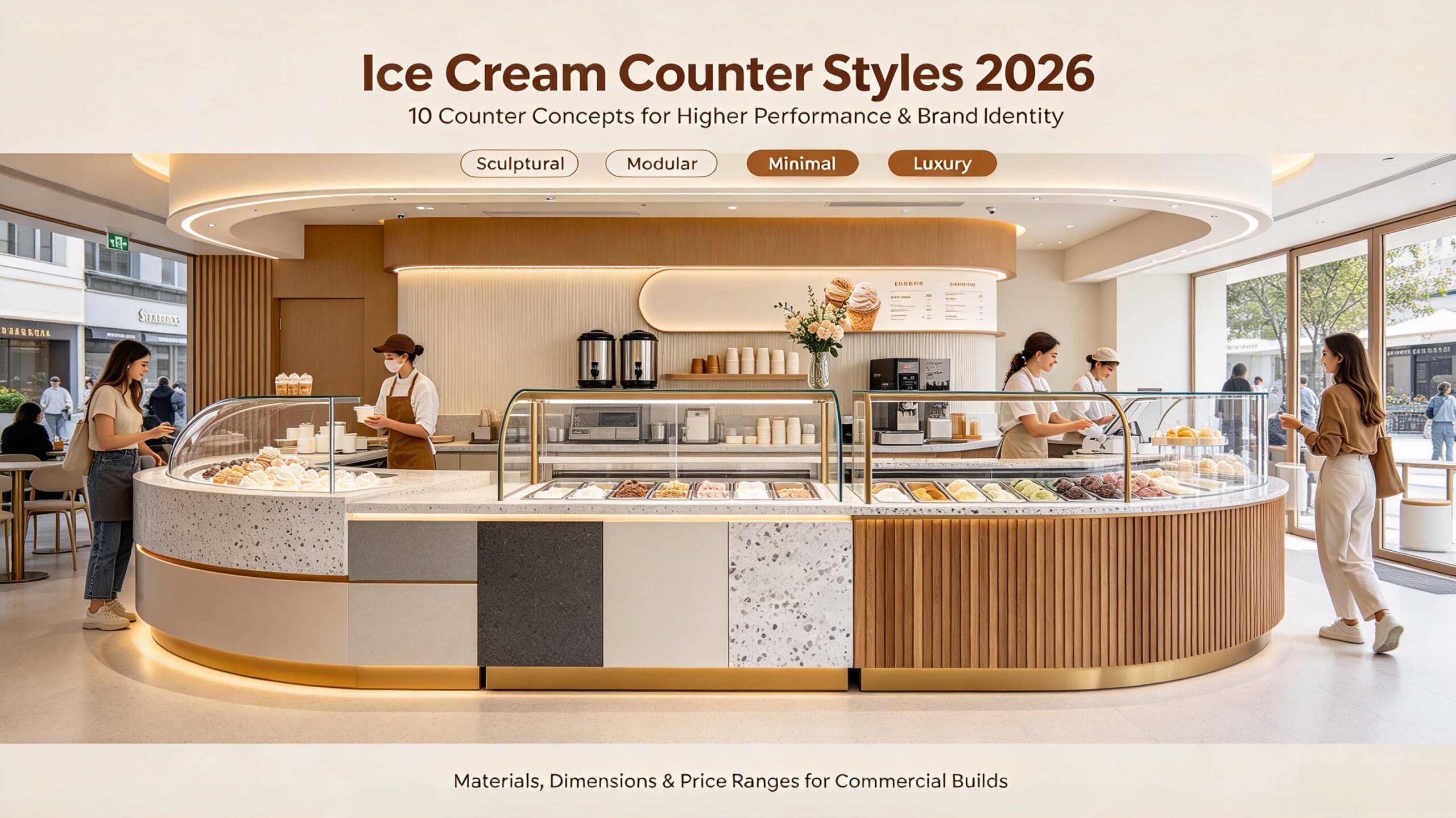
An ice cream shop counter is the primary service, display, and brand storytelling zone where customers order, pay, watch scoops being served, and form their first physical impression. In 2026, the best counters combine ergonomic workflow, durable food-safe surfaces, flexible storage, and a visual hook that makes people stop, smile, and share.
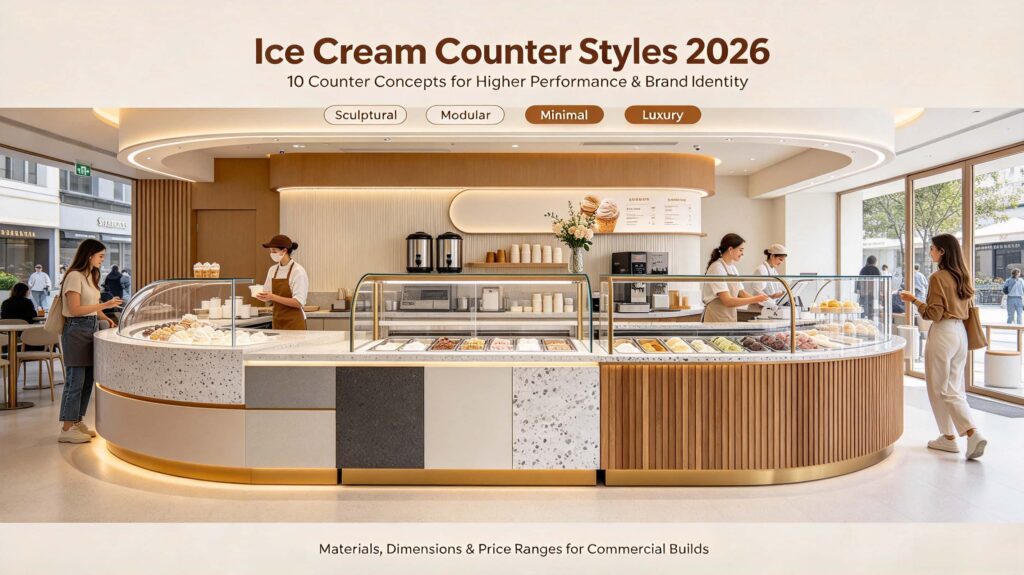
2026 Ice Cream Counter Trend Snapshot
The biggest shift in 2026 is that counters are no longer just display boxes. Owners want faster service, lower maintenance, stronger branding, and a layout that works for delivery pickups, mobile orders, and long queues without turning the shop into a maze.
| Trend Signal | Why It Matters in 2026 | Best For | Budget Signal |
|---|---|---|---|
| Curved sculptural fronts | Creates a landmark photo moment | High-traffic urban shops | $$$ |
| Modular pods | Allows seasonal changes and small leases | Pop-ups and new stores | $$ |
| Warm wood + ribbed glass | Feels premium but hides mess | Gelato and artisan scoop shops | $$ |
| LED underglow | Extends brand visibility at night | Late-night dessert spots | $ |
| Digital flavor bars | Reduces staff questions and speeds orders | Shops with many toppings | $$$ |
| Biophilic accents | Makes small interiors feel calmer | Cafés and neighborhood shops | $$ |
| Two-level service | Separates order, pickup, and scooping | Busy multi-channel stores | $$$ |
| Marble + brass | Justifies higher price per scoop | Hotels and luxury districts | $$$$ |
How We Evaluated These 10 Counter Ideas
Each counter idea below was judged on four practical points: how well it serves ice cream, how easy it is to clean, how much floor space it eats, and how strongly it supports a brand’s visual identity. The goal is not just a pretty counter. It is a counter that works during a Saturday rush.
- Service speed: Can staff scoop, weigh, top, and hand off without crossing paths?
- Cleaning: Are seams, grout lines, and textures easy to wipe down?
- Footprint: Does it fit narrow shops, kiosks, or leased spaces?
- Brand impact: Will customers remember it and photograph it?
- Future flexibility: Can you add pickup shelves, a second display, or new equipment later?
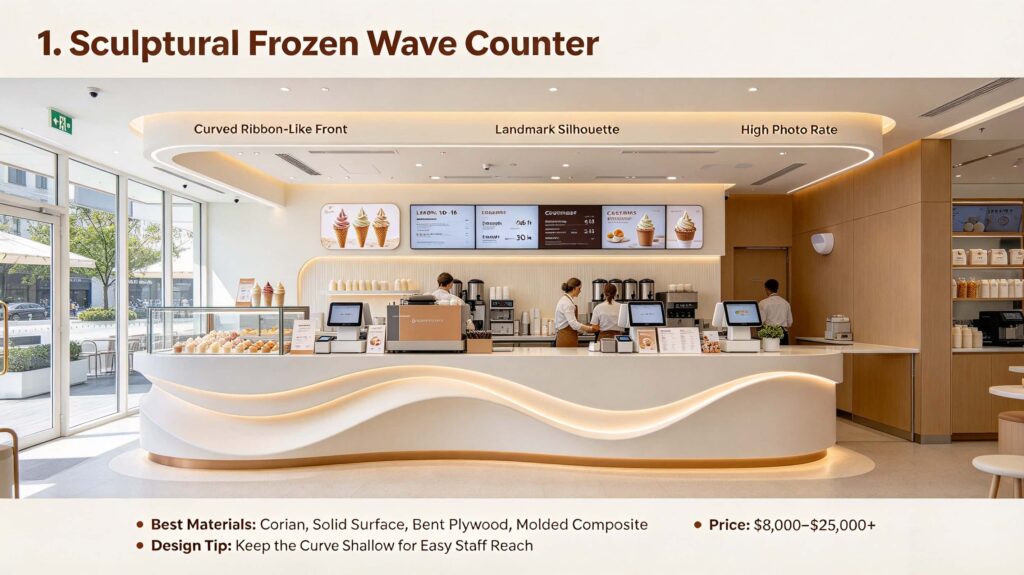
1. Sculptural Frozen Wave Counter
A sculptural frozen wave counter uses a curved, ribbon-like front to mimic melting ice cream or ocean swells. It turns a standard service station into a landmark, but the curve must still hide plumbing, wiring, and POS cables while keeping staff movement smooth.
This is the hero counter for brands that want a strong silhouette and a high photo rate.
- Best materials: Corian, solid surface, bent plywood with veneer, molded composite
- Standard dimensions: 10–16 ft long, 24–30 in deep, 36 in customer height
- Price range: $8,000–$25,000+ depending on curve complexity
- Why it trends: Strong visual identity and excellent social sharing
- Design tip: Keep the curve shallow enough that staff can reach across without leaning
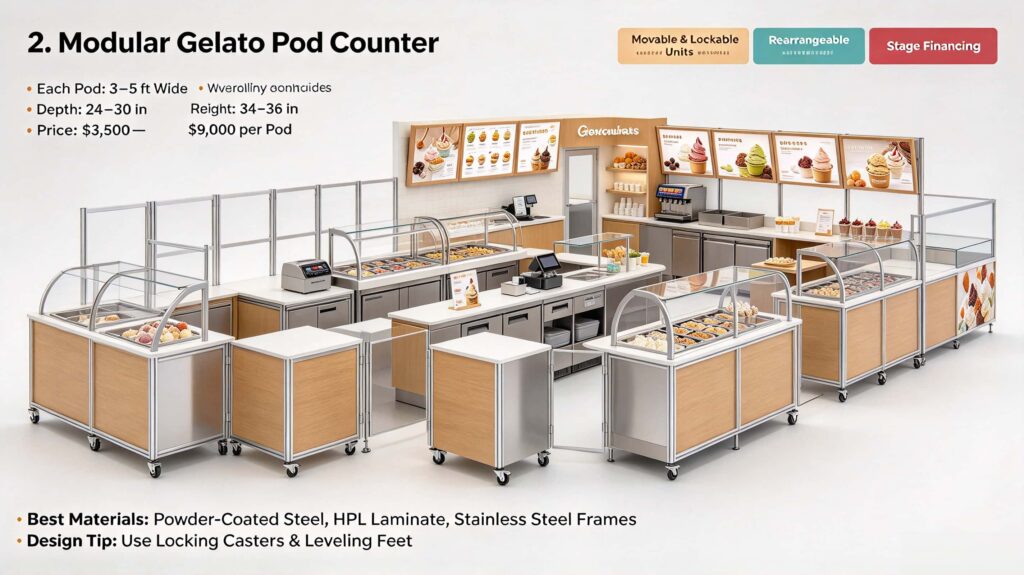
2. Modular Gelato Pod Counter
A modular gelato pod counter is built from movable, lockable units that can be rearranged for seasonal menus, pop-ups, or narrow lease spaces. In 2026, operators love it because they can start small, add a dipping cabinet later, and swap damaged panels without closing the shop.
This is the smartest choice for new owners who expect their menu or location to change.
- Best materials: Powder-coated steel, HPL laminate, stainless steel frames
- Standard dimensions: Each pod 3–5 ft wide, 24–30 in deep, 34–36 in high
- Price range: $3,500–$9,000 per pod
- Why it trends: Flexible, replaceable, and easier to finance in stages
- Design tip: Use locking casters and leveling feet so pods stay stable during service
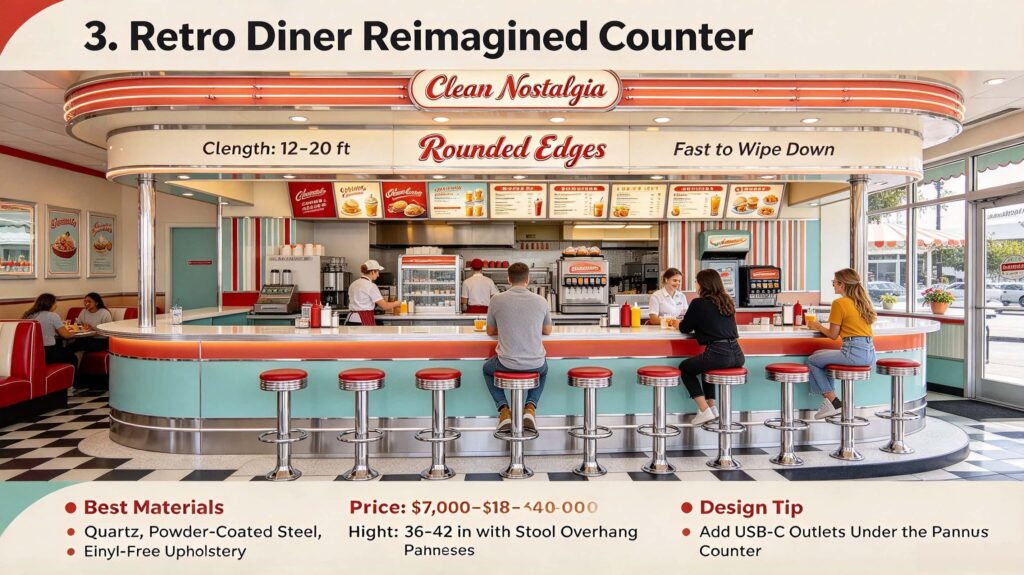
3. Retro Diner Reimagined Counter
The retro diner counter is back, but 2026 versions skip cheap chrome and sticky vinyl. Instead, you get powder-coated steel, quartz tops, rounded edges, and nostalgic color blocking that feels clean, modern, and fast to wipe down during a rush.
This style works when you want nostalgia without sacrificing hygiene or durability.
- Best materials: Quartz, powder-coated steel, enameled panels, vinyl-free upholstery
- Standard dimensions: 12–20 ft long, 24–30 in deep, 36–42 in with stool overhang
- Price range: $7,000–$18,000
- Why it trends: Familiar, playful, and highly recognizable
- Design tip: Add USB-C outlets under the counter for customers who linger
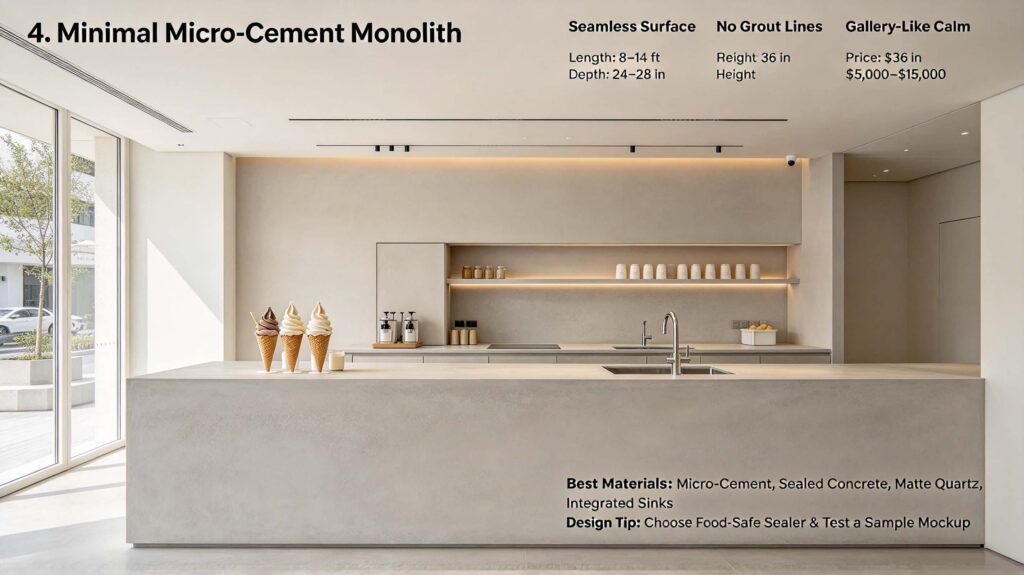
4. Minimal Micro-Cement Monolith
A minimal micro-cement monolith counter makes the ice cream itself the star. The seamless surface has no grout lines, so it looks sharp in small shops and resists drips when sealed correctly. It is ideal for brands with a quiet, premium, almost gallery-like aesthetic.
This is the go-to look for compact shops that want maximum visual calm.
- Best materials: Micro-cement, sealed concrete, matte quartz, integrated sinks
- Standard dimensions: 8–14 ft long, 24–28 in deep, 36 in high
- Price range: $5,000–$15,000
- Why it trends: Seamless, minimal, and easy to integrate with hidden storage
- Design tip: Choose a food-safe sealer and insist on a sample mockup before full installation
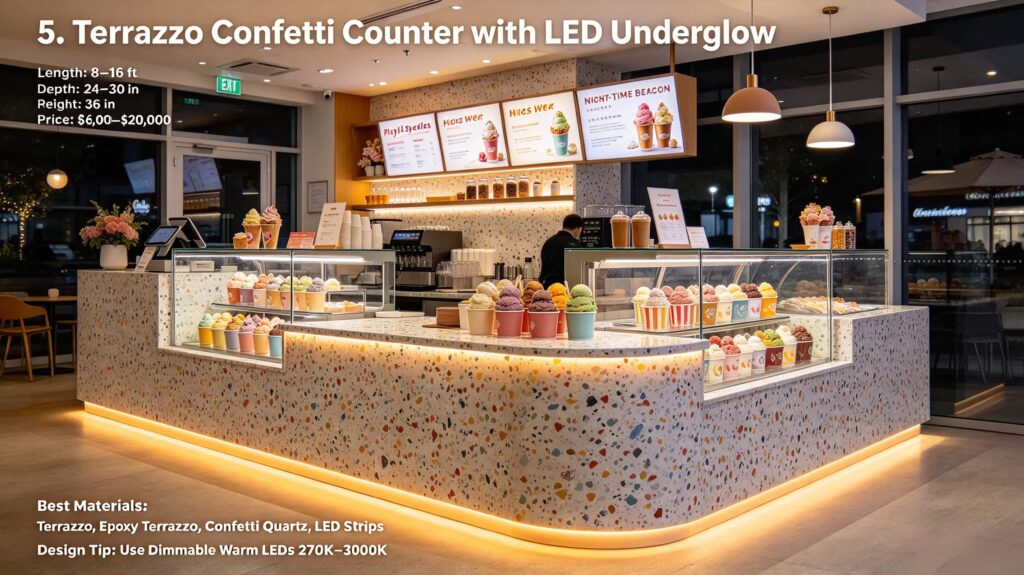
5. Terrazzo Confetti Counter with LED Underglow
Terrazzo confetti counters bring playful speckles that hide crumbs, scratches, and everyday wear. Add LED underglow and the counter becomes a night-time beacon. In 2026, the smartest versions use warm, dimmable LEDs rather than harsh neon, so the scoops still look appetizing after sunset.
This is a high-impact, lower-maintenance option for busy dessert districts.
- Best materials: Terrazzo, epoxy terrazzo, quartz with confetti pattern, LED strips
- Standard dimensions: 8–16 ft long, 24–30 in deep, 36 in high
- Price range: $6,000–$20,000
- Why it trends: Hides wear, adds color, and creates night-time curb appeal
- Design tip: Use dimmable warm LEDs around 2700K–3000K to keep food looking natural
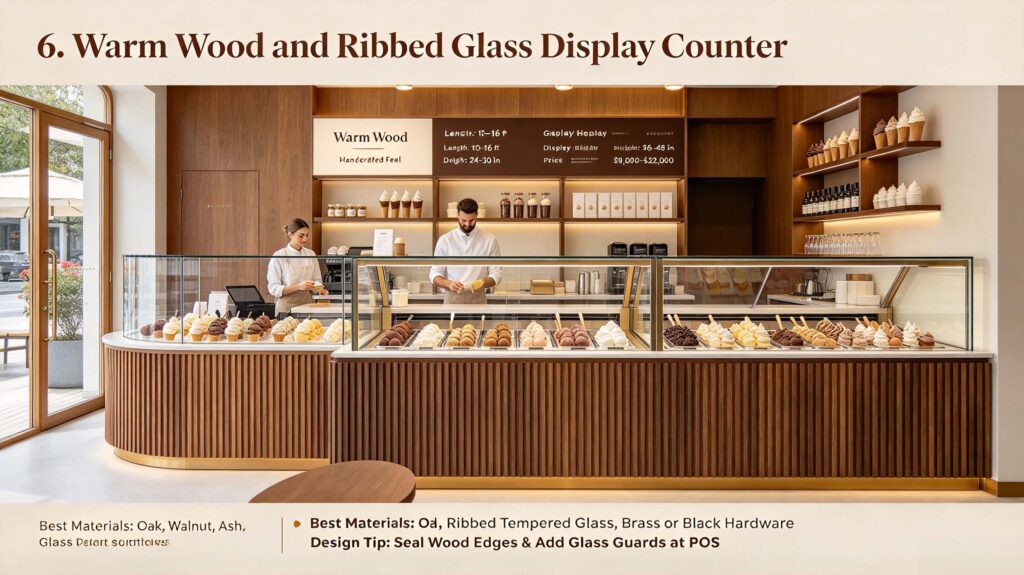
6. Warm Wood and Ribbed Glass Display Counter
Warm wood and ribbed glass display counters soften the hard, clinical look that many ice cream shops accidentally create. The wood adds warmth, while ribbed glass hides slight mess and creates a premium, tactile texture. This combination works especially well for gelato, artisan scoops, and dessert cafés.
This is the best balance of cozy, premium, and practical for everyday service.
- Best materials: Oak, walnut, ash, ribbed tempered glass, brass or black hardware
- Standard dimensions: 10–16 ft long, 24–30 in deep, 36–48 in with display case
- Price range: $9,000–$22,000
- Why it trends: Warmth, texture, and a handcrafted feel
- Design tip: Seal wood edges near washing zones and use glass guards at the POS
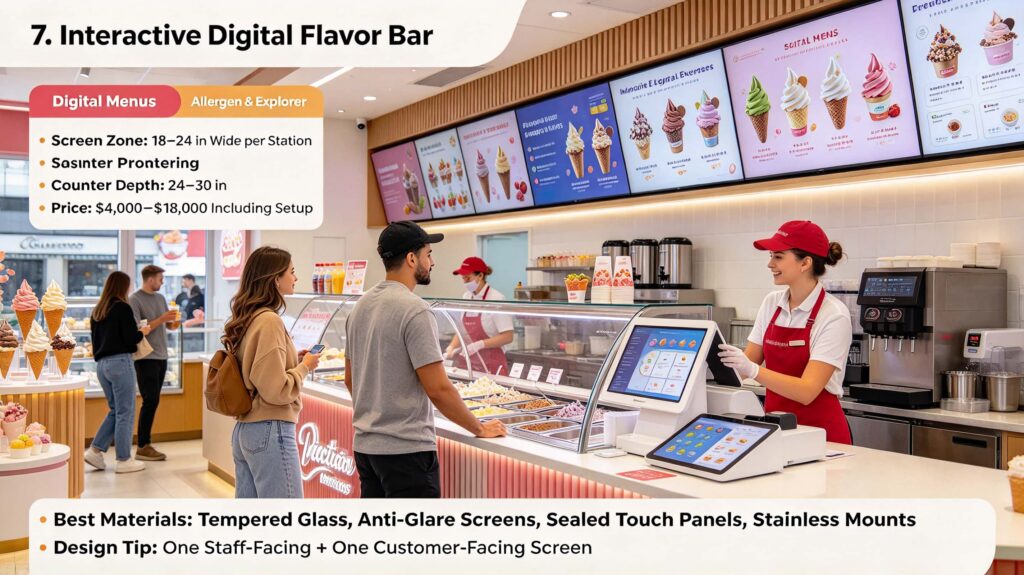
7. Interactive Digital Flavor Bar
An interactive digital flavor bar uses tablets, digital menus, or projection to let customers explore allergens, toppings, and combos before they reach the register. It speeds up ordering and reduces questions, but it must be wipeable, glare-resistant, and placed where it does not block the scooping zone.
This is a strong fit for shops with long menus, many toppings, or high delivery volume.
- Best materials: Tempered glass, anti-glare screens, sealed touch panels, stainless mounts
- Standard dimensions: Screen zone 18–24 in wide per station, counter depth 24–30 in
- Price range: $4,000–$18,000 including hardware and software setup
- Why it trends: Faster ordering, fewer mistakes, and better upsell prompts
- Design tip: Keep one staff-facing screen and one customer-facing screen for order confirmation
8. Biophilic Garden Counter with Living Moss Wall
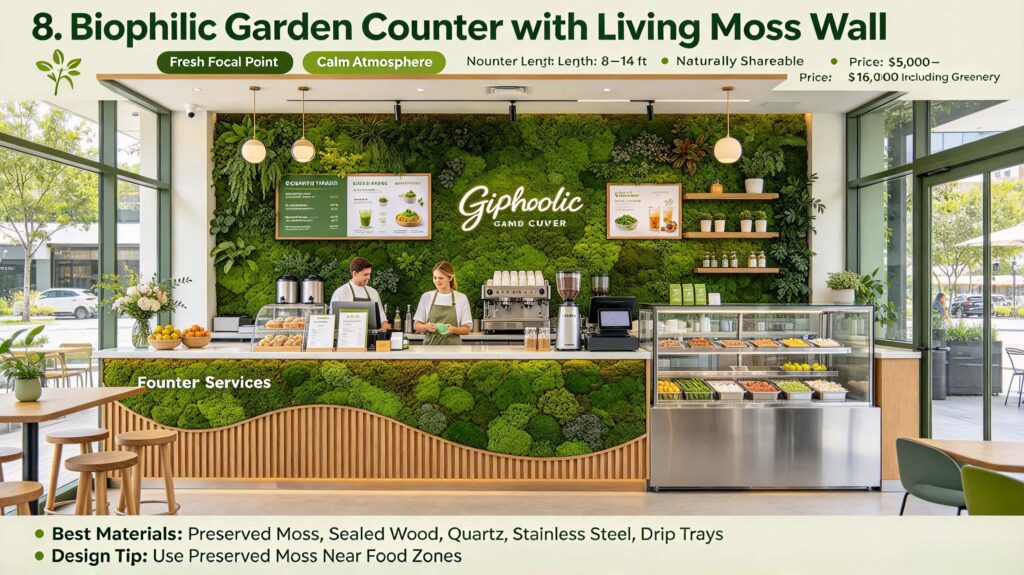
A biophilic garden counter pairs food-safe service surfaces with plants, moss, or preserved greenery. The goal is not to turn your shop into a jungle. It is to use one living focal point that makes the counter feel fresh, calm, and naturally shareable without creating pest or cleaning nightmares.
This is ideal for neighborhood shops that want a fresh, wellness-driven identity.
- Best materials: Preserved moss, sealed wood, quartz, stainless steel, drip trays
- Standard dimensions: Counter 8–14 ft long, green wall 4–8 ft wide
- Price range: $5,000–$16,000 including irrigation-free greenery
- Why it trends: Calming atmosphere and strong visual contrast
- Design tip: Use preserved moss instead of live plants near food zones to reduce maintenance
9. Two-Level Speed-Serve Counter
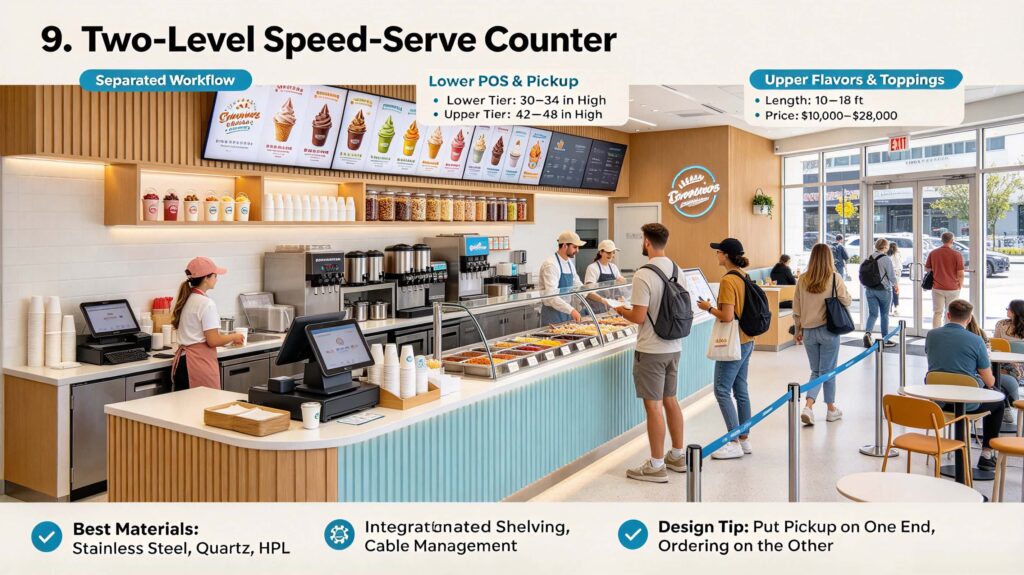
A two-level speed-serve counter separates customer-facing display from staff workflow. The lower tier handles POS, cups, and pickup, while the upper tier shows flavors and toppings. In busy shops, this reduces reaching, crossing, and bottlenecks, especially when mobile orders and walk-ins arrive at the same time.
This is the most operational design on the list, and it often pays for itself in speed.
- Best materials: Stainless steel, quartz, HPL, integrated shelving, cable management
- Standard dimensions: Lower tier 30–34 in high, upper tier 42–48 in high, 10–18 ft long
- Price range: $10,000–$28,000
- Why it trends: Better workflow and clearer customer journey
- Design tip: Put pickup on one end and ordering on the other to avoid crowding
10. Luxury Marble and Brass Jewel Box Counter
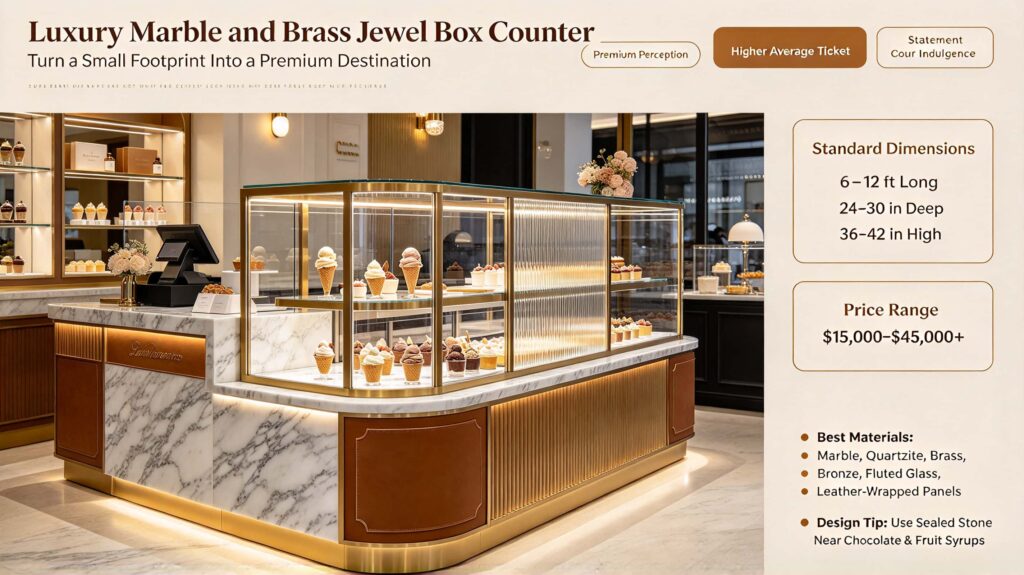
A luxury marble and brass jewel box counter turns a small footprint into a premium destination. It uses rich stone, warm metal, and focused lighting to make every scoop feel like a gift. This style suits high-end neighborhoods, hotels, and brands that charge more per serving and need the space to justify it.
This is the statement counter for brands selling indulgence, not just dessert.
- Best materials: Marble, quartzite, brass, bronze, fluted glass, leather-wrapped panels
- Standard dimensions: 6–12 ft long, 24–30 in deep, 36–42 in high
- Price range: $15,000–$45,000+
- Why it trends: Premium perception and higher average ticket
- Design tip: Use sealed stone and avoid unsealed marble near chocolate or fruit syrups
Quick Comparison Chart: 10 Trending Counters for 2026
Use this comparison chart as a fast filter. It groups each 2026 counter idea by footprint, visual impact, service speed, and budget level. Match it to your shop size, lease terms, and menu complexity before you request a custom layout.
| Counter Idea | Footprint | Visual Impact | Service Speed | Budget Level |
|---|---|---|---|---|
| Sculptural Frozen Wave | Medium–Large | Very High | Medium | $$$ |
| Modular Gelato Pod | Small–Medium | Medium | High | $$ |
| Retro Diner Reimagined | Medium–Large | High | Medium | $$ |
| Minimal Micro-Cement | Small–Medium | Medium | High | $$ |
| Terrazzo Confetti + LED | Medium | High | High | $$ |
| Warm Wood + Ribbed Glass | Medium | High | Medium | $$ |
| Interactive Digital Flavor Bar | Medium | High | Very High | $$$ |
| Biophilic Garden Counter | Small–Medium | High | Medium | $$ |
| Two-Level Speed-Serve | Large | Medium | Very High | $$$ |
| Marble + Brass Jewel Box | Small–Medium | Very High | Medium | $$$$ |
What Materials, Dimensions, and Prices Should You Expect in 2026?
Most 2026 ice cream counters land between 8 and 16 feet long, 24 to 30 inches deep, and 36 inches high for the customer side. Staff-side counters often sit at 34 to 36 inches, while display glass can rise to 48 inches or more depending on sightlines.
| Element | Common 2026 Spec | Notes |
|---|---|---|
| Counter length | 8–16 ft | Longer if you need pickup and ordering zones |
| Counter depth | 24–30 in | Deeper if you add sinks or topping rails |
| Customer height | 36 in | Standard for standing service |
| Staff height | 34–36 in | Lower for comfortable scooping |
| Display glass | 42–48 in | Higher glass can block small staff sightlines |
| Food-safe top | Quartz, stainless, solid surface | Avoid porous stone near wet zones |
| Storage | 12–24 in deep base cabinets | Plan for cups, cones, toppings, and cleaning supplies |
| Power | 4–8 outlets | Add USB-C and GFCI near wet areas |
| Budget range | $5,000–$45,000+ | Custom curves, stone, and tech push the top end |
Design Rules That Make Any 2026 Ice Cream Counter Work Harder
The best-looking counter fails if staff cannot scoop, weigh, wipe, and restock without stepping over each other. Before you choose a finish, map the workflow from freezer to display to POS to pickup. Then design the visual layer around that movement.
- Keep a 36–42 in staff aisle behind the counter.
- Put the POS where customers can pay without blocking the pickup zone.
- Use rounded edges near high-traffic corners.
- Add concealed waste and towel storage.
- Choose matte or textured surfaces that hide fingerprints.
- Light the display from above and below, but avoid glare on glass.
- Leave room for a second dipping cabinet or delivery shelf.
- Seal every seam near water, syrup, and cleaning chemicals.
FAQ: Ice Cream Shop Counter Design in 2026
These are the questions owners ask most often when planning a new ice cream counter. The answers below focus on real-world dimensions, materials, costs, and layout decisions, so you can brief your designer, contractor, or internal team with fewer surprises.
What is the best counter height for an ice cream shop?
The customer side is usually 36 inches high. The staff side often works best at 34–36 inches, depending on scooping depth and employee height.
What counter material is easiest to clean?
Non-porous quartz, stainless steel, solid surface, and sealed micro-cement are the easiest. Avoid unsealed marble and rough wood near wet or sticky zones.
How long should an ice cream shop counter be?
Most shops need 8–16 feet. Add length if you have mobile pickup, delivery drivers, or more than four toppings.
How much does a custom ice cream counter cost?
Basic modular counters can start around $3,500–$9,000. Custom sculptural, stone, or tech-integrated counters can run $15,000–$45,000+.
Do I need a display case built into the counter?
Not always. Dipping cabinets, gelato pans, and glass display cases can be integrated or added later. The key is planning power, drainage, and airflow now.
Can I use LED underglow near food?
Yes, if you use sealed, low-heat, food-safe LED strips. Warm dimmable LEDs around 2700K–3000K keep ice cream looking natural.
Ready to Turn Your Floor Plan into a 3D Ice Cream Counter?
You have the trend list. Now you need a counter that fits your actual lease, menu, staff count, and budget. A custom 3D design shows you the counter before you cut a single panel, so you can fix mistakes on screen instead of on site.