
2026 Retail & Wholesale Trends: What to Sell and How to Display It

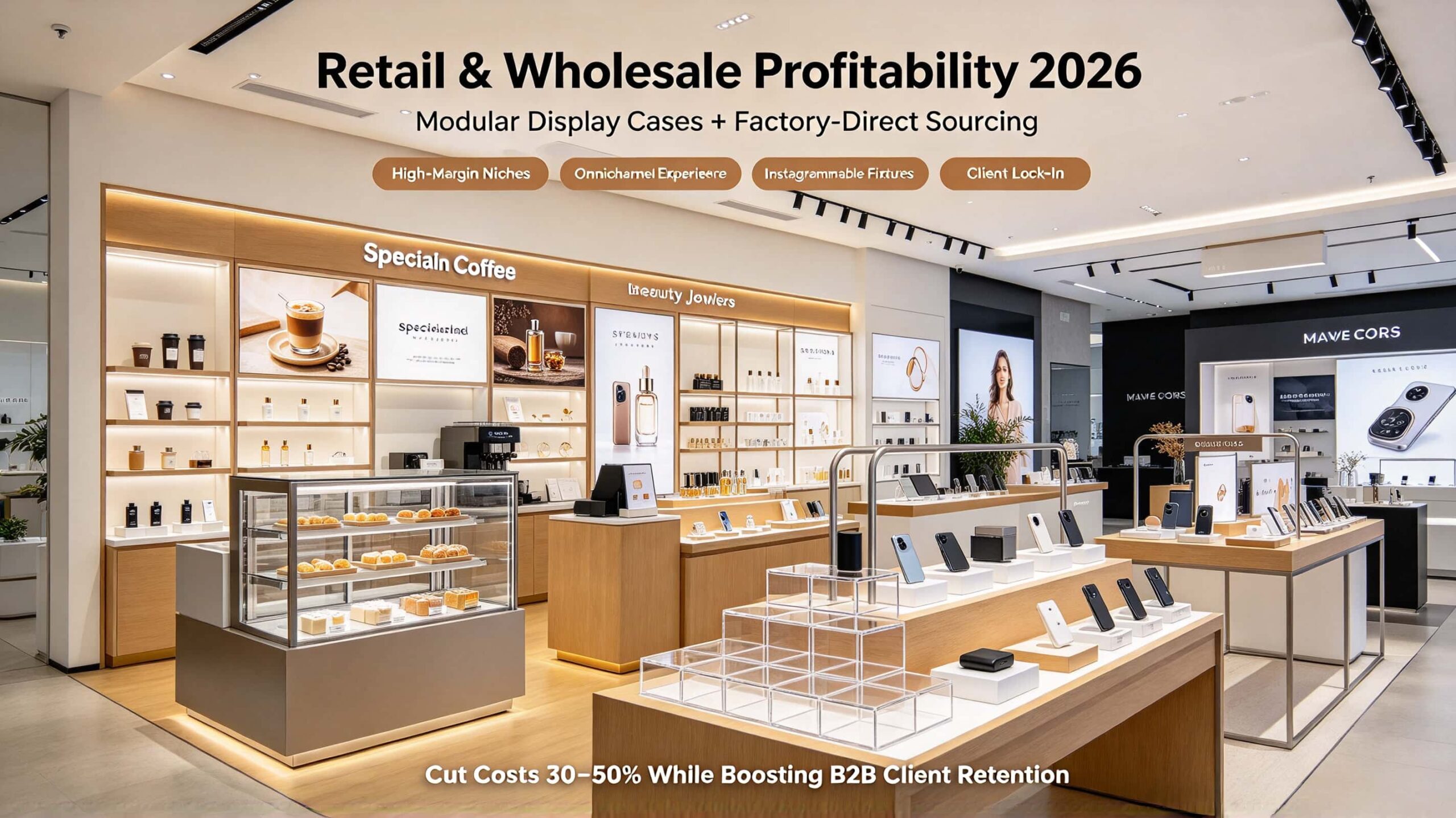
2026 retail success hinges on personalized omnichannel experiences, high-margin niches like specialty coffee and beauty, and factory-direct modular display cases that cut costs 30–50% while boosting B2B client retention.
In 2026, retail and wholesale profitability depends on three levers: selling high-margin, experience-driven products; displaying them in modular, Instagrammable fixtures; and sourcing those fixtures factory-direct to protect margins. Businesses that combine a hybrid retail-wholesale model with custom display cases consistently outperform competitors on both revenue and client lock-in.
What are the key trends for small businesses in 2026?
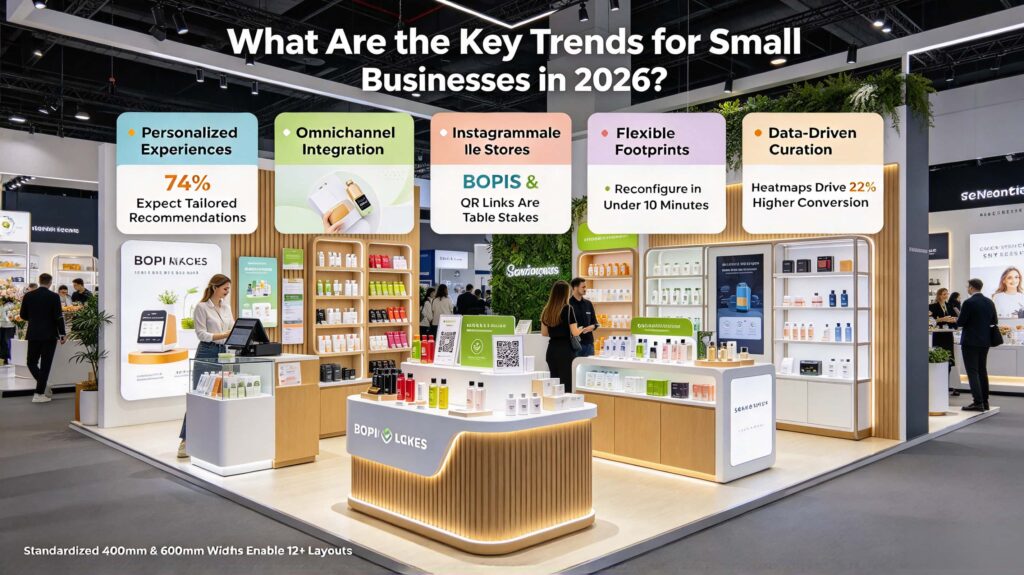
Small businesses in 2026 win by selling personalized experiences, operating omnichannel, and designing Instagrammable stores with modular display cases that convert foot traffic and social media attention into repeat sales.
- Personalized experiences: 74% of shoppers expect tailored recommendations; generic displays lose to interactive, story-driven fixtures.
- Omnichannel integration: Buy online, pick up in-store (BOPIS) and QR-linked product info are table stakes by mid-2026.
- Instagrammable stores: Modular display cases with LED lighting and interchangeable backdrops drive user-generated content.
- Flexible footprints: Pop-up and hybrid layouts demand fixtures that reconfigure in under 10 minutes.
- Data-driven curation: Small retailers using foot-traffic heatmaps see 22% higher conversion on featured endcaps.
Factory Insider Tip: Order modular display cases with standardized 400mm and 600mm widths—they ship faster, cost less, and rearrange into 12+ layouts without new tooling.
What is the most profitable wholesale business in 2026?
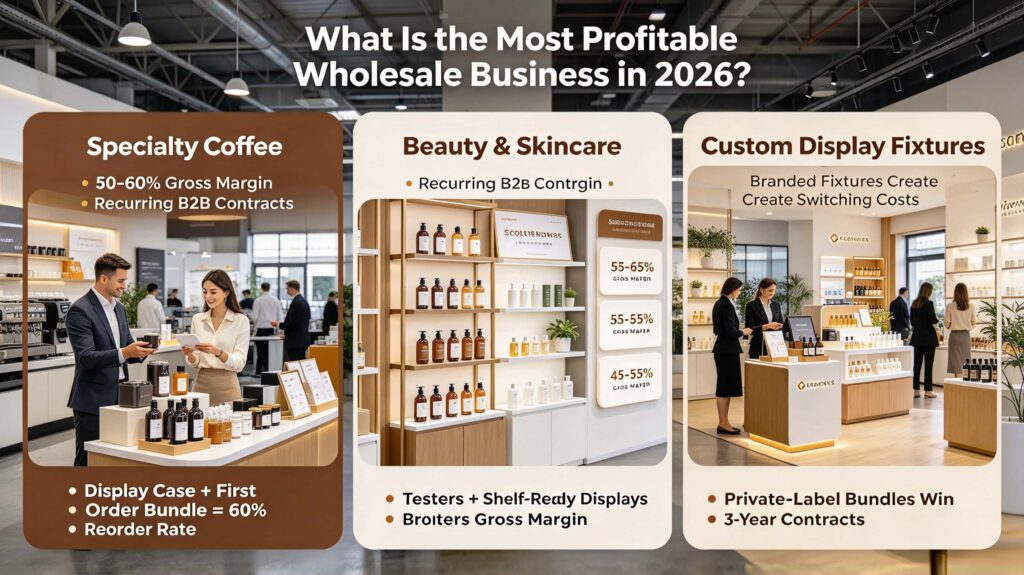
Specialty coffee and beauty are the most profitable wholesale niches in 2026, with gross margins of 45–65%; custom display fixtures lock in B2B clients by making their retail floors dependent on your branded merchandising system.
- Specialty coffee: Roasters supplying cafés and offices see recurring B2B contracts with 50%+ margins on beans and equipment bundles.
- Beauty and skincare: Indie brands wholesale to salons and boutiques at 2.5–3x cost, with testers and shelf-ready displays included.
- Custom display fixtures: Branded acrylic and wood cases create switching costs—clients reorder because your fixtures fit their floor plan.
- Subscription-style restocking: Auto-replenishment of display-ready units boosts wholesale retention by 35%.
- Private-label bundling: Wholesalers who supply product + display + signage win 3-year contracts over product-only competitors.
Chart: 2026 Wholesale Margin Comparison
| Niche | Avg. Gross Margin | Display Fixture Dependency | Client Lock-in Potential |
|---|---|---|---|
| Specialty Coffee | 50–60% | High | High |
| Beauty & Skincare | 55–65% | Very High | Very High |
| Pet Supplements | 40–50% | Medium | Medium |
| Eco Home Goods | 35–45% | Medium | Low–Medium |
| Custom Display Fixtures | 45–55% | N/A (core product) | Extremely High |
Factory Insider Tip: Offer your wholesale clients a “display case + first order” bundle. Factories that co-brand the fixture with the client’s logo see 60% reorder rates versus 25% for product-only accounts.
Which business is more profitable, retail or wholesale?
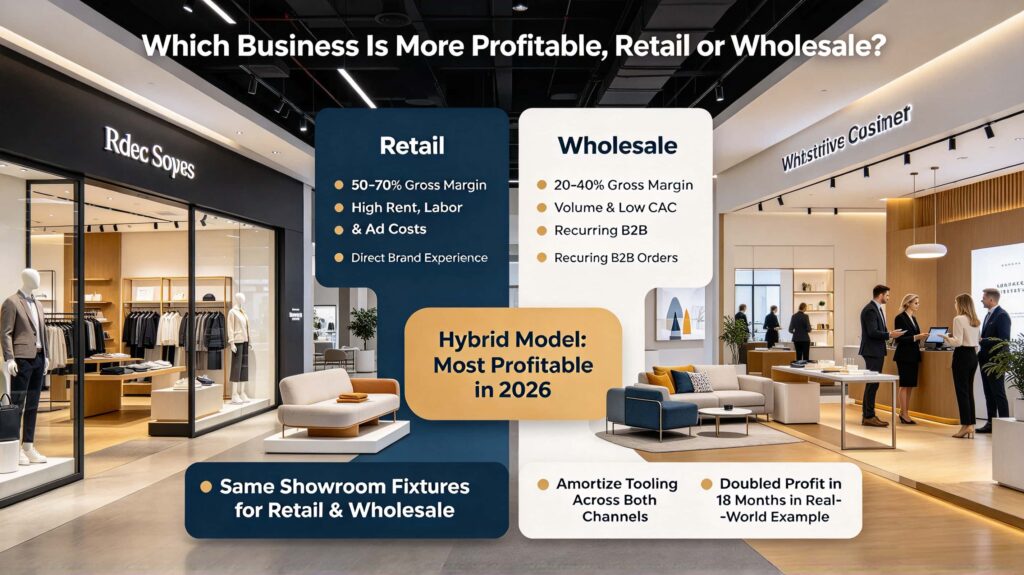
Wholesale typically delivers higher total profit at scale (lower per-unit marketing cost, recurring orders), but retail yields higher gross margin per transaction; the hybrid model—manufacturers running both—is the most profitable in 2026.
- Retail: 50–70% gross margin, but high rent, labor, and ad costs eat 30–40% of revenue.
- Wholesale: 20–40% gross margin, but volume and low customer acquisition cost drive higher net profit at scale.
- Hybrid model: Manufacturers open a flagship retail store to showcase products, then wholesale to other retailers using the same display fixtures.
- Why hybrid wins: You capture retail margins on direct sales and wholesale volume on B2B, all while amortizing fixture tooling across both channels.
- Real-world example: A furniture maker using custom modular display cases in its own showroom and selling the same cases to dealers doubled profit in 18 months.
Factory Insider Tip: If you’re a manufacturer, design your retail display cases first—then sell identical or slightly modified versions to your wholesale clients. You spread tooling costs and create a unified brand look across every sales channel.
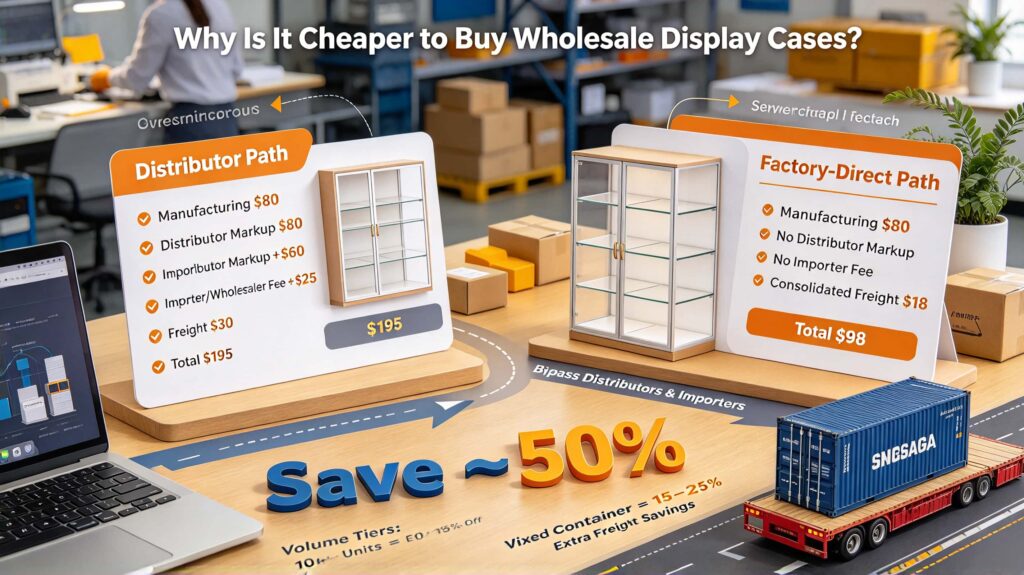
Why is it cheaper to buy wholesale display cases?
Buying wholesale display cases is cheaper because you bypass distributors and importers, sourcing factory-direct to save 30–50% on identical fixtures—same materials, same finish, no middleman markup.
- Distributor markup: Traditional supply chains add 40–60% before the case reaches your store.
- Factory-direct pricing: You pay for materials, labor, and shipping only—no showroom or reseller margin.
- Volume tiers: Ordering 10+ units unlocks additional 10–15% discounts.
- Customization at source: Factories can modify dimensions, colors, and branding at cost, while distributors charge change fees.
- Shipping consolidation: Factory-direct orders ship in bulk, cutting per-unit freight by 20–30% versus mixed distributor shipments.
Chart: Display Case Cost Breakdown (Per Unit)
| Cost Component | Distributor Path | Factory-Direct Path |
|---|---|---|
| Manufacturing | $80 | $80 |
| Distributor Markup | +$60 | $0 |
| Importer/Wholesaler Fee | +$25 | $0 |
| Freight (consolidated) | $30 | $18 |
| Total | $195 | $98 |
| Savings | — | ~50% |
Factory Insider Tip: Ask for a “mixed container” quote—factories will combine your display cases with other clients’ orders to fill a container, passing 15–25% freight savings back to you.
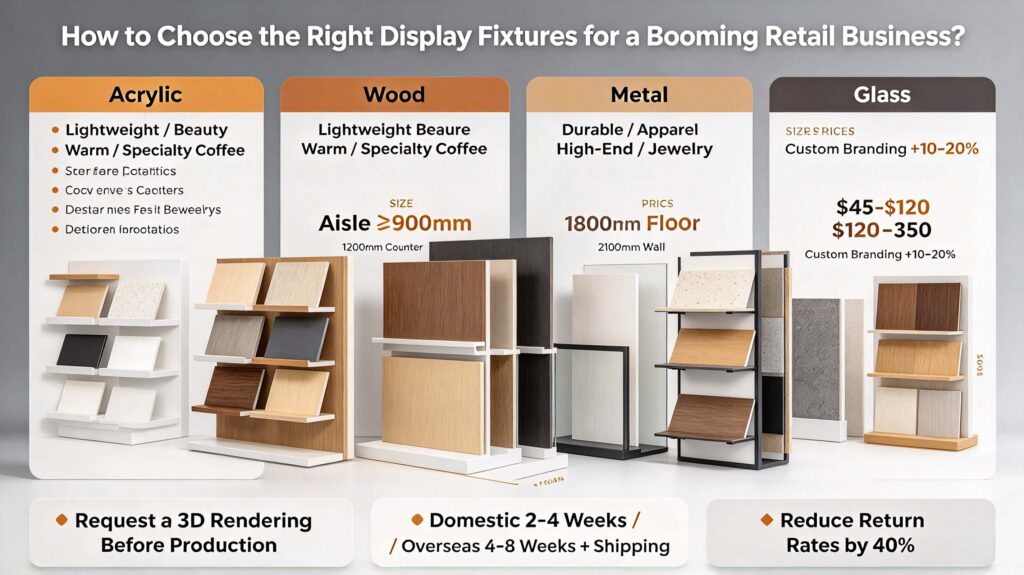
How to choose the right display fixtures for a booming retail business?
Choose display fixtures by matching material to product weight and brand vibe, sizing to your floor plan, and modularity to future layout changes—then verify factory-direct pricing and lead times before ordering.
- Material:
- Acrylic: lightweight, modern, ideal for beauty and small electronics.
- Wood: warm, premium, best for specialty coffee and artisan goods.
- Metal: industrial, durable, suits apparel and hard goods.
- Glass: high-end, fragile, use for jewelry and luxury items.
- Size:
- Measure aisle widths (minimum 900mm for wheelchairs).
- Standard heights: 1200mm (counter), 1800mm (floor), 2100mm (wall).
- Modular widths: 400mm, 600mm, 800mm for flexible reconfiguration.
- Price:
- Factory-direct acrylic cases: $45–$120 per unit.
- Wood and metal hybrids: $120–$350 per unit.
- Custom branding adds 10–20%, but boosts perceived value 30%+.
- Modularity:
- Choose interlocking systems, not welded frames.
- Confirm spare parts availability (shelves, brackets, LED strips).
- Lead time:
- Domestic factory: 2–4 weeks.
- Overseas factory: 4–8 weeks plus shipping.
- Rush orders: expect 15–25% surcharge.
Factory Insider Tip: Always request a 3D rendering before production. Factories that offer 3D design (like ours) catch layout mistakes early and reduce return rates by 40%.
Ready to Dominate 2026 Retail & Wholesale?
Stop guessing. Start designing.
Send us your floor plan today and receive a 3D display case design tailored to your products, brand, and budget. Our factory-direct team will show you exactly how modular fixtures can cut your costs by 30–50% while making your store impossible to ignore.
Click here to upload your floor plan and get your 3D design in 48 hours.
No distributor. No middleman. Just factory-direct display cases that sell.
Contact us now—your competitors are already redesigning.