Mall Kiosk: The Ultimate B2B Guide to Costs, Design, and Profitability

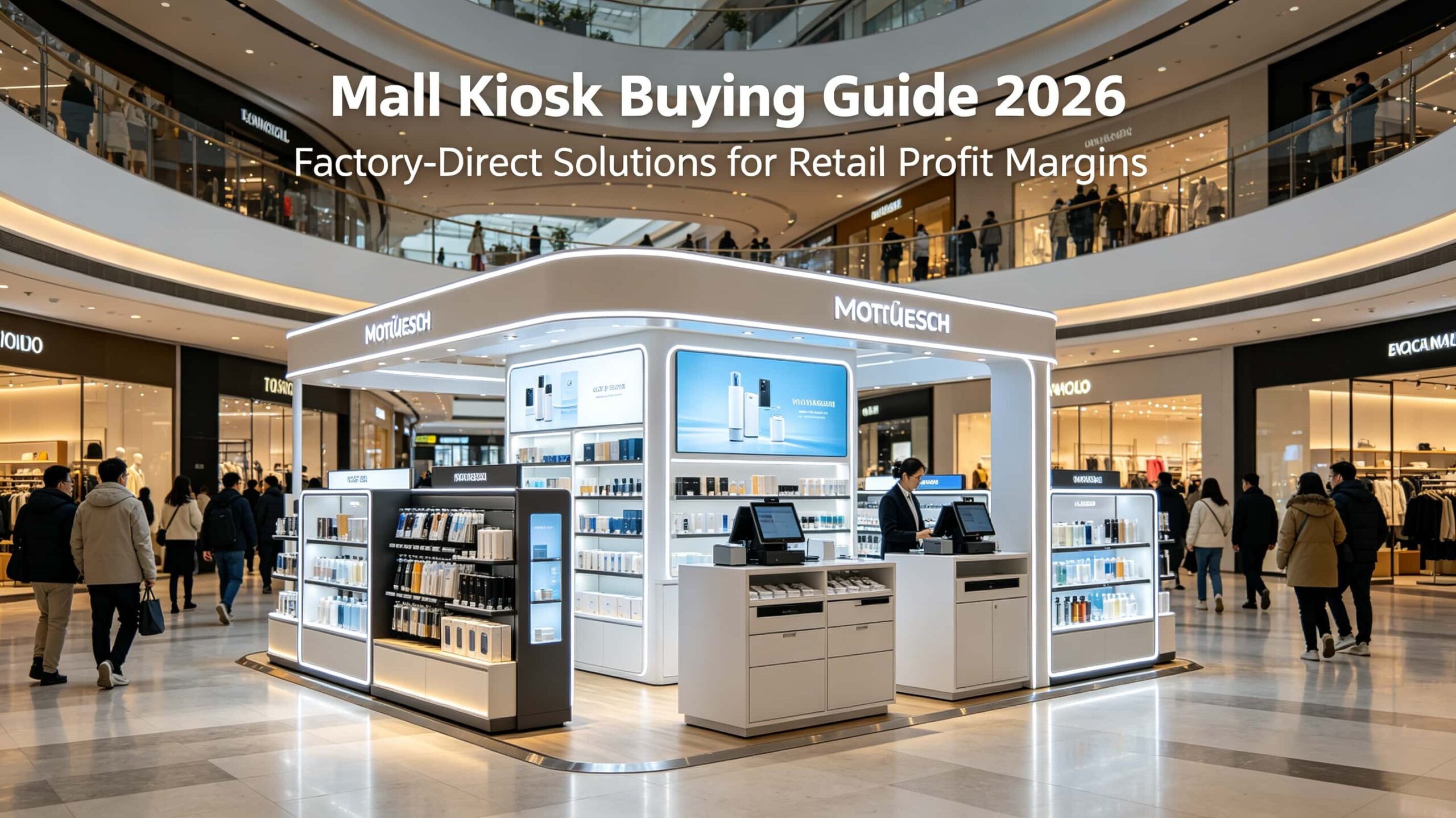
This B2B guide breaks down mall kiosk definitions, popular types, 2026 design trends, rental vs purchase costs, product-matching selection tips, and factory direct buying to boost your retail profit margins.
For mall operators, retail entrepreneurs, and bulk B2B buyers, mall kiosks remain one of the most low-risk, high-reward retail investments in 2026. Unlike full-size storefronts that demand massive upfront capital, long-term leases, and complex renovations, modern mall kiosks deliver flexible placement, customizable branding, and fast ROI for diverse product categories. Whether you plan to rent a temporary booth, purchase stock kiosks, or order fully customized units, this comprehensive guide covers every critical detail to help you make cost-effective, profit-driven decisions for your mall retail business.
What is a Mall Kiosk?
A mall kiosk is a compact, standalone retail display unit designed for high-traffic mall common areas, serving as a flexible pop-up or permanent retail solution for B2B and B2C transactions. Tailored for small-footprint sales, brand promotion, and on-site customer interaction, these structures bridge the gap between expensive inline stores and temporary pop-up stalls, offering balanced affordability and visibility for retail businesses of all scales.
Key B2B-focused attributes of professional mall kiosks include:
Space Efficiency: Most kiosks occupy just 2 to 8 square meters, making them ideal for unused mall lobby spaces, corridor edges, and atriums without disrupting pedestrian flow.
Fast Deployment: Custom and stock kiosks can be installed and fully operational within days, far faster than traditional store renovations that take weeks or months.
Full Customizability: B2B buyers can tailor sizes, materials, lighting, storage, and branding elements to match product lines and mall brand standards.
Scalability: Kiosk units work for single-location trials, multi-location mall expansions, and bulk franchise rollouts for retail brands.
Low Operational Overhead: Minimal staffing, utility, and maintenance costs reduce long-term business risks for new and established retailers.
Common Types of Mall Kiosks
Mall kiosks are highly adaptable, with specialized designs engineered for specific product categories. For B2B buyers, selecting a category-matched kiosk is critical to maximizing display appeal, operational efficiency, and sales conversion. Below are the most popular and profitable kiosk types for mall retail in 2026:
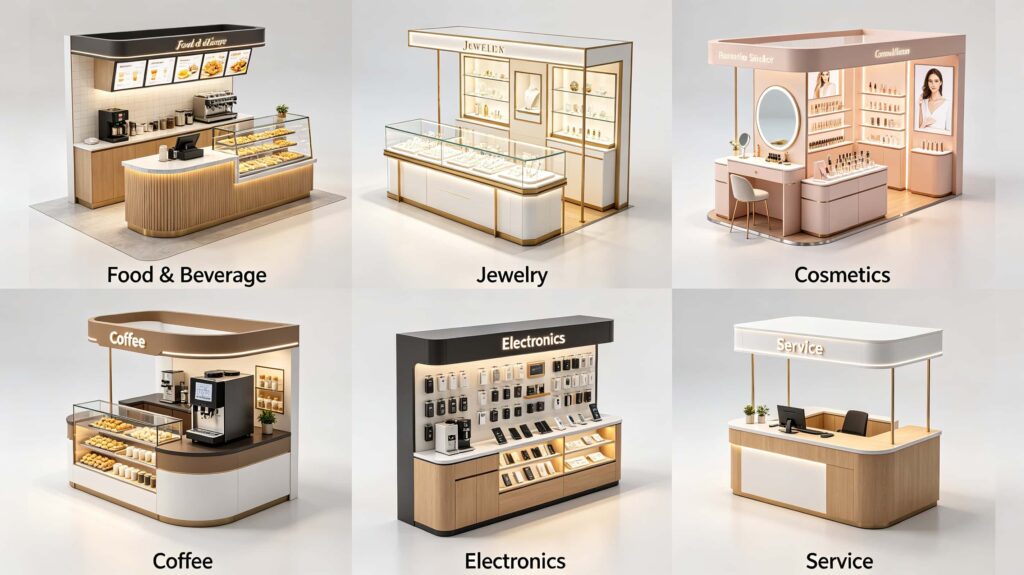
Food & Beverage Kiosks: Built with food-safe materials, waterproof surfaces, and dedicated counter space for quick-service snacks, frozen treats, and grab-and-go meals. Most models include hidden storage for packaging, easy-clean countertops, and ventilation compatibility. Ideal for bubble tea, ice cream, snacks, and light fast food, these kiosks prioritize hygiene and fast customer turnover.
Jewelry Kiosks: Designed with tempered glass display cases, lockable security storage, dimmable LED accent lighting, and anti-scratch surfaces. These premium kiosks focus on high-end presentation to highlight small, valuable items like necklaces, rings, and watches. Security features and elegant minimalism are core design priorities for jewelry retail.
Cosmetics & Skincare Kiosks: Feature open display shelves, mirrored panels, bright even lighting, and dedicated trial areas for makeup, skincare, and beauty tools. Modern cosmetic kiosks integrate branded light boxes and categorized storage to organize product lines, creating a luxurious, approachable shopping experience for beauty consumers.
Coffee & Drink Kiosks: Equipped with counter space for coffee machines, sink compatibility, waterproof frameworks, and overhead storage for cups and ingredients. Optimized for compact beverage service, these kiosks support fast order fulfillment and fit perfectly in high-foot-traffic mall zones near entrances or elevator lobbies.
Electronic & Accessory Kiosks: Sturdy, anti-slip structures with durable display shelves and protective railings for phone cases, headphones, smart watches, and small gadgets. Many models integrate digital screen mounts for product demos and promotional content.
Service Kiosks: Customized for non-product retail services including phone repair, nail art, beauty consultations, and gift wrapping. These kiosks prioritize functional workspace, customer seating compatibility, and private operational zones for service providers.
Mall Kiosk Design Trends 2026
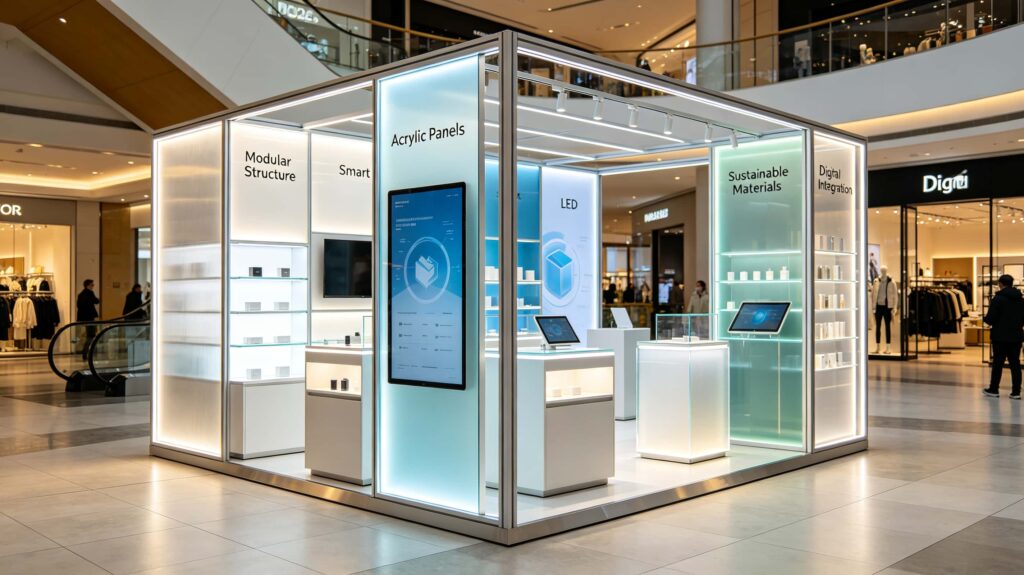
2026 mall kiosk design focuses on modular flexibility, tech integration, sustainable materials, and visual minimalism, aligning with mall upgrading standards and modern consumer aesthetic preferences. B2B buyers who adopt these trends gain competitive advantages in mall approval processes and customer attraction. The top trending design elements are listed below:
Modular Assembly Structures: The dominant 2026 design trend for B2B kiosks. Modular kiosks use standardized, interchangeable panels, shelves, and frames that require no on-site welding or complex construction. They support flexible layout adjustments for seasonal product updates, easy disassembly, and repeated reuse across different mall locations. This structure drastically cuts logistics and renovation costs for bulk buyers.
Integrated LED Smart Lighting: Full-spectrum adjustable LED strip lights and backlit logo panels have become standard for premium kiosks. 2026 trends favor color-temperature adjustable LEDs that adapt to mall ambient lighting, highlighting product textures without glare. Energy-efficient LED systems also reduce long-term electricity costs for retail operators.
High-Gloss Acrylic Panels: Recyclable high-gloss acrylic materials replace traditional wooden veneers for a sleek, modern, high-end look. Acrylic panels are scratch-resistant, easy to clean, lightweight, and customizable in any color or transparency. They are widely used in cosmetic, jewelry, and premium snack kiosks to enhance brand grade.
Eco-Friendly Sustainable Materials: More mall management teams require low-carbon, environmentally friendly retail structures in 2026. Top choices include FSC-certified solid wood, recycled aluminum frames, and low-VOC baking paint. Sustainable kiosk designs not only pass mall audits easily but also appeal to eco-conscious consumer groups.
Minimalist Multi-Functional Layouts: 2026 designs abandon redundant decorations, focusing on integrated functions of display, storage, and branding. Hidden lockable storage cabinets, embedded POS system positions, and compact customer interaction zones maximize space utilization, perfectly fitting small mall kiosk footprints.
Digital Interactive Integration: Reserved mounting positions for touch screens, QR code display zones, and digital promotional screens enable real-time product display, discount updates, and customer data collection, improving retail interactivity and conversion rates.
Mall Kiosk Rental Costs vs. Purchase Costs
Cost budgeting is the core concern for B2B mall kiosk buyers. Rental and purchase models suit different business cycles, investment budgets, and operational scales. Below are accurate 2026 market price ranges for mainstream mall kiosks, helping you calculate ROI precisely:
Mall Kiosk Rental Cost Ranges (Monthly)
Community & Local Mall Kiosks: $300 – $800 per month. Suitable for small-scale trial operations, daily necessities, and snack retail with low profit margins. Lease terms are flexible, usually 3–6 months.
Mid-Tier Regional Mall Kiosks: $800 – $2,000 per month. Located in core pedestrian zones with stable foot traffic, ideal for cosmetics, accessories, and light beverage retail. Most mall management teams require 6–12 month lease commitments.
High-End Luxury Mall Kiosks: $2,000 – $5,000+ per month. Prime positions near entrances, atriums, and elevator areas with ultra-high foot traffic. Exclusive for jewelry, luxury cosmetics, and high-end electronic accessories, with strict brand qualification audits.
Additional Rental Fees: Most malls charge monthly property management fees ($50–$200), utility surcharges, and seasonal activity booth fees, which need to be included in total cost budgeting.
Mall Kiosk Purchase Cost Ranges (One-Time Investment)
Standard Stock Kiosks: $800 – $2,500. Fixed-size, ready-made designs with basic display and storage functions. Suitable for businesses with simple display needs and short-term usage, with no customized branding or structural adjustments.
Semi-Custom Kiosks: $2,500 – $6,000. Based on standard structures, with customized colors, logo lighting, and partial shelf layouts. Balances cost and brand personalization, the most cost-effective choice for most B2B retailers.
Full-Custom Premium Kiosks: $6,000 – $15,000+. Fully tailored sizes, materials, functional layouts, and intelligent configurations for high-end brand positioning. Suitable for long-term fixed mall operations and brand image building.
B2B Cost Analysis Tip: For operations exceeding 12 months, purchasing a kiosk is far more profitable than renting. Long-term rental costs will quickly exceed the one-time purchase cost, while purchased kiosks are reusable, transferable, and resalable, maximizing asset utilization.
How to Choose the Right Kiosk for Your Products?
Many B2B buyers face low sales conversion due to mismatched kiosk design and product attributes. Selecting a targeted kiosk solution is the key to improving display efficiency and profit margins. Follow these core judgment standards:
Match Kiosk Function to Product Attributes: Small high-value products (jewelry, cosmetics) require lockable glass displays and accent lighting. Food and beverage products need waterproof, easy-clean materials and ventilation space. Service-based businesses prioritize operational workspace and customer comfort.
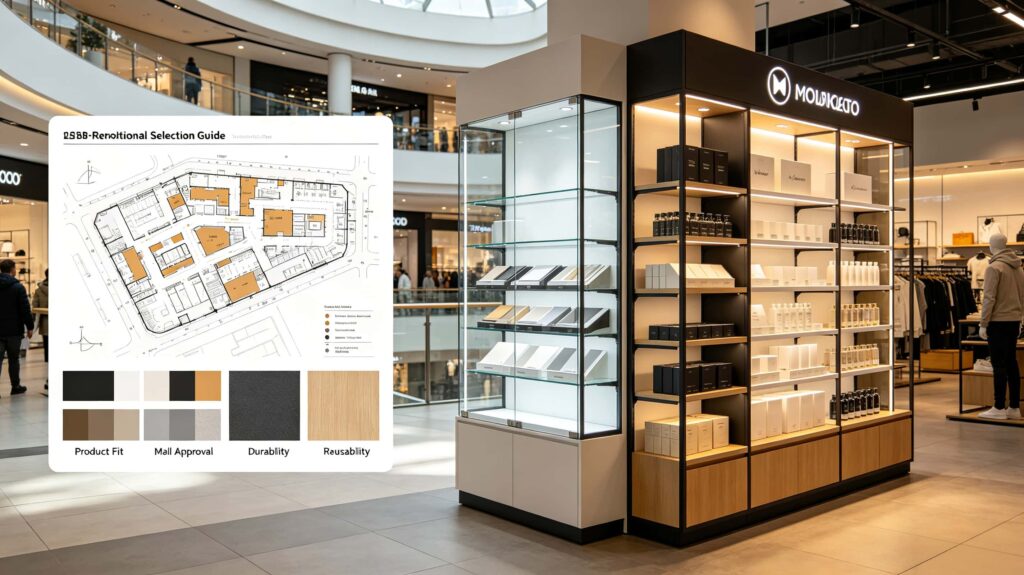
Confirm Mall Size and Position Restrictions: Different malls have strict requirements for kiosk size, height, appearance, and fire safety. Before customization, confirm mall management’s design specifications to avoid rework and approval failures. Modular kiosks are more adaptable to diverse mall rules.
Balance Branding and Practicality: High-end brands can choose acrylic and LED lighting designs to enhance premium texture. Mass-market consumer products prioritize large-capacity storage and high-density display to boost sales volume. Avoid over-design that increases costs without improving conversion.
Consider Long-Term Reusability: For multi-location expansion, choose modular spliced structures that support disassembly and secondary assembly. This avoids repeated customized investment and reduces overall retail operation costs.
Evaluate Maintenance and Durability: High-traffic mall environments require wear-resistant, scratch-proof, and easy-to-maintain materials. Prioritize MDF baking paint, tempered glass, and high-quality acrylic to reduce later maintenance costs and replacement frequency.
How to Buy Custom Kiosks Directly from a Factory?
Buying mall kiosks directly from manufacturers is the best B2B purchasing strategy in 2026, helping buyers skip middleman markups, obtain customizable solutions, and control product quality and delivery cycles. The standardized factory direct purchasing process is as follows:
Step 1: Submit Mall Site Information and Demand Details: Provide factory teams with mall floor plans, kiosk placement size limits, product sales categories, branding requirements, and budget ranges. Clear demand positioning avoids repeated communication delays.
Step 2: Obtain Professional 3D Design Renderings: Formal manufacturers provide free 3D visualization designs according to your site and needs, allowing you to preview the final effect, adjust layouts, lighting, and branding details before production.
Step 3: Confirm Design Scheme and Production Drawings: After you confirm the 3D design, the factory will output precise engineering drawings for structural production. Buyers can verify material specifications, sizes, and functional configurations to ensure compliance with mall standards.
Step 4: Mass Production and Quality Inspection: Professional factories conduct raw material inspection, semi-finished product supervision, and finished product quality testing to ensure the kiosk meets fire safety, durability, and mall access standards.
Step 5: Modular Pre-Assembly and Packaging: The core advantage of factory direct sales is pre-assembly of modular structures in the factory. All parts are numbered and packaged flat for convenient ocean shipping and on-site quick assembly.
Step 6: Global Shipping and On-Site Guidance: The factory provides integrated shipping solutions and detailed assembly manuals, with remote guidance support to help teams complete installation efficiently.
Factory Insider Tip (Exclusive for B2B Buyers): Our factory adopts exclusive modular assembly structure for all custom mall kiosks. Unlike traditional integral welded kiosks that occupy huge container space, our flat-pack modular design compresses shipping volume effectively, helping global B2B clients save at least 40% of ocean freight costs per order. This is a core hidden profit point that most middleman suppliers cannot provide, greatly improving your overall project profit margins.
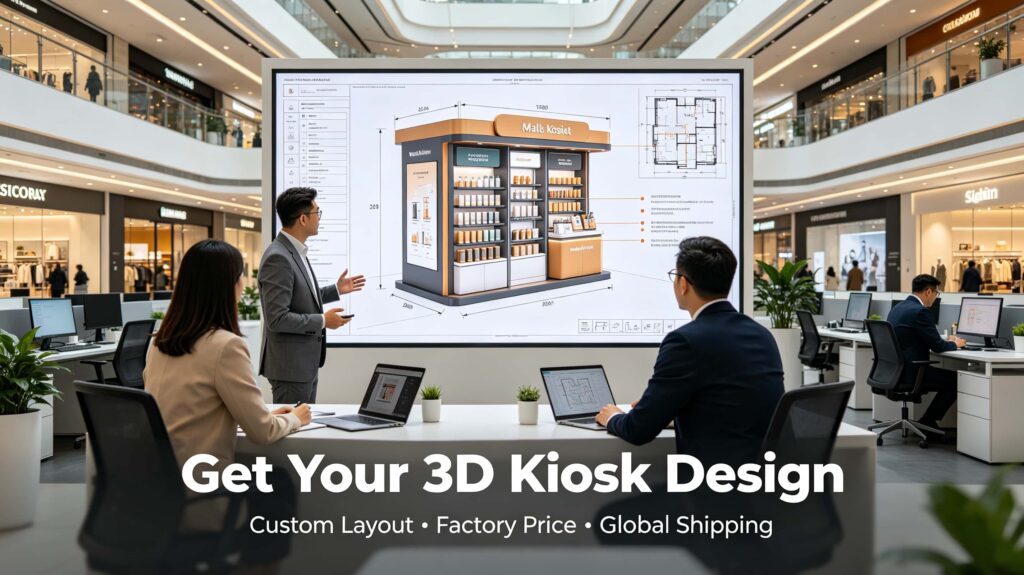
Get Your 3D Kiosk Design Now
Stop wasting money on overpriced middleman kiosk products and expensive long-term mall rentals. As a professional mall kiosk manufacturer focusing on B2B custom solutions, we provide one-stop services including free design, factory direct pricing, modular cost-saving structures, and global shipping support for mall purchasers and retail store owners worldwide.
Whether you need a single customized kiosk for trial operation or bulk orders for multi-location mall expansion, we can tailor the most cost-effective and mall-compliant solution for your product line. Our 2026 trending modular, LED, and acrylic design solutions balance aesthetics, practicality, and profitability perfectly.
Take action immediately: Send your mall floor plan, size requirements, and product category details to our team right now. We will provide you with a customized 3D kiosk design rendering and a detailed factory direct quotation within 24 hours. Grab the modular freight cost-saving advantage to maximize your mall retail profits in 2026!