
Is a Column Display Cabinet Right for Your Shop? Find Out

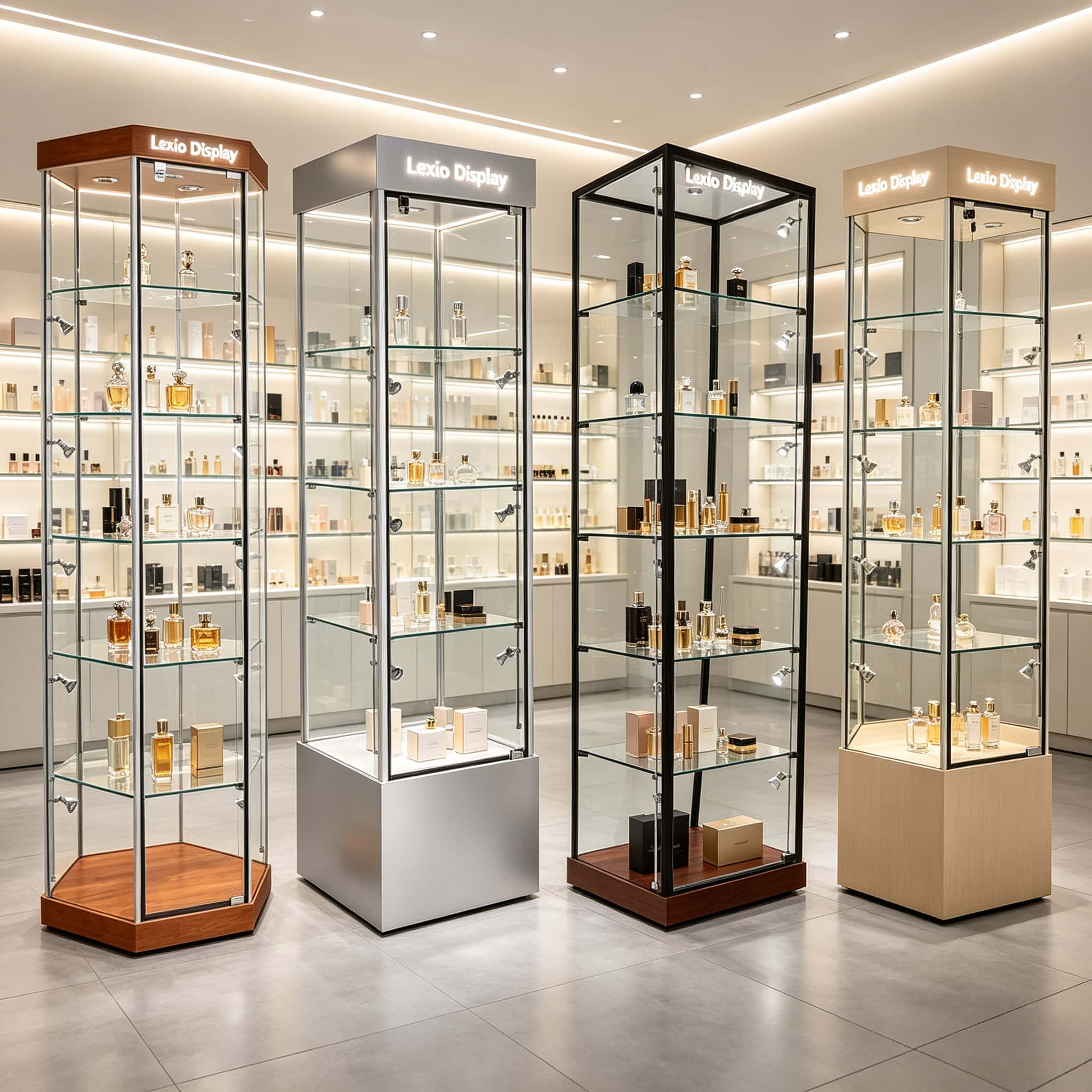
You’ve been scrolling through display cabinet pictures for hours, staring at that standalone, glass-all-around unit, still not sure. Stop overthinking. Here’s the straight answer — if your shop is missing that one thing that actually stops a customer in their tracks, or if your products need to be inspected from every single angle, then a column display cabinet probably won’t be a waste of money. On the flip side, if all you want is something shoved against the wall to pile random stuff on, it’ll just end up driving you nuts.
This thing isn’t some magic fix-everything tool, but put in the right spot, it can seriously boost the money you make per square foot. Let’s break it down — no fluff.
The display problem most shop owners never really figure out
Any old-timer in retail knows that brutal truth: a customer walks in, glances around, and walks right back out in ten seconds. Why? Because nothing in the store grabs them. Wall units, no matter how packed, just don’t work when people glide through the middle of the shop. They won’t stop.
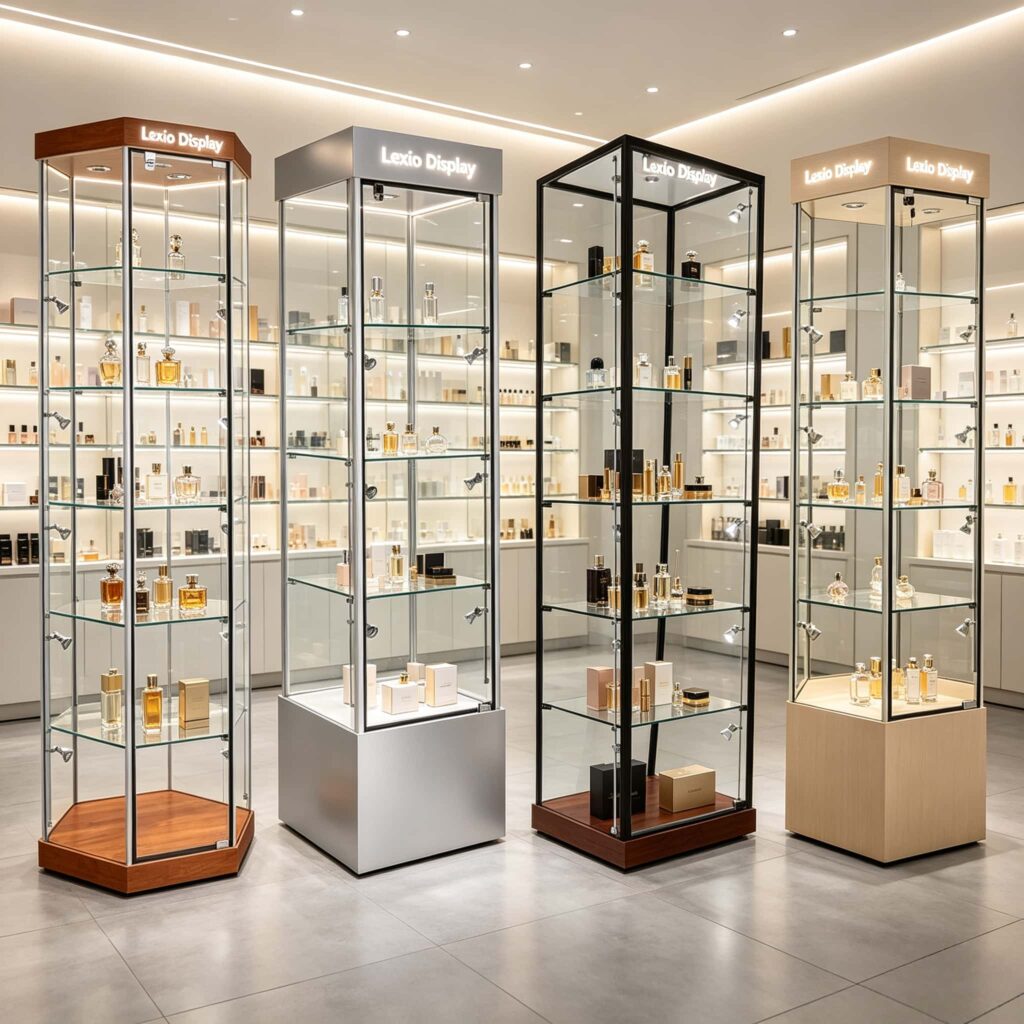
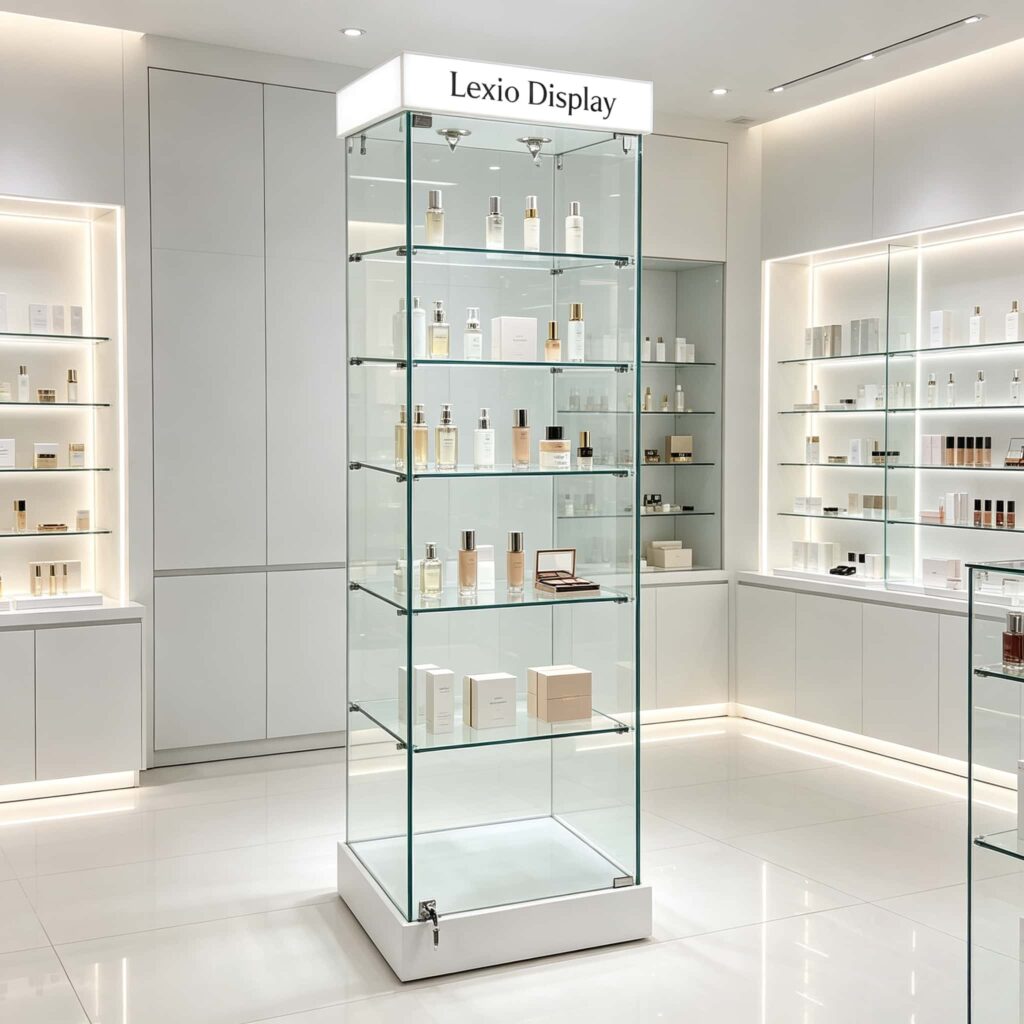
A column display cabinet is literally built to crack that problem. No back panel, glass on all four sides. Stick it right in the middle of the traffic flow, and no matter which direction a customer comes from, their eyes get pulled straight in. Totally different logic from a wall cabinet that only works if you approach it head-on. Once someone stops and walks around it, the chance of them picking up the product jumps. Jewellery, watches, designer toys, limited-edition liquor — these are goods that need close-up scrutiny. A wall cabinet can’t do them justice; a column cabinet makes the quality pop.
Column display vs. wall cabinet — run the numbers
Don’t get carried away thinking any shop will look good with one of these. Crunch it real quick:
- Double the display surface. All four sides can work. A customer walks a full circle and sees everything. Same floor space, way more exposure than a single-sided wall unit.
- Better use of space. That prime real estate in the middle finally stops being empty dead air.
- It instantly makes your product feel more valuable. Independent placement, proper lighting — customers just assume the stuff is more expensive without being told.
The headaches you’ll have to deal with:
- Hiding the wires is a pain. No back panel to cover them. For the light strips, either go for rechargeable built-in LEDs or make sure you’ve got a floor power point planned early. Retrofitting later is a nightmare.
- Fingerprints and dust show like crazy. Four sides of glass. Skip cleaning for a day, and it looks grimy. High-touch areas need constant wiping.
- Takes up a premium spot, and your walkway gets tighter. If your aisles are already narrow, cramming in a column display cabinet forces people to squeeze sideways, and they won’t stick around as long.
So it’s not complicated: grab a tape measure. Make sure you’ve got at least 80 centimetres of clear walkway left. Then talk about which model to pick.
Shops that almost never regret buying one
- Jewellery stores: Rings, bracelets, necklaces. A column cabinet with 4000K spotlights makes the cut and sparkle look insane.
- Designer toy / figurine shops: Layered display, maybe add a rotating base. People walk around, take their time looking, way longer dwell time.
- Phone accessories / 3C shops: New earphone cases, power banks, watch straps. Hanging them on hooks inside a free standing glass column showcase instead of a pegboard — the premium feel is on a completely different level.
- Liquor stores: Limited-edition whiskey, all sides locked up. Feels secure and classy. People also tend to take photos and share them, which is free marketing.
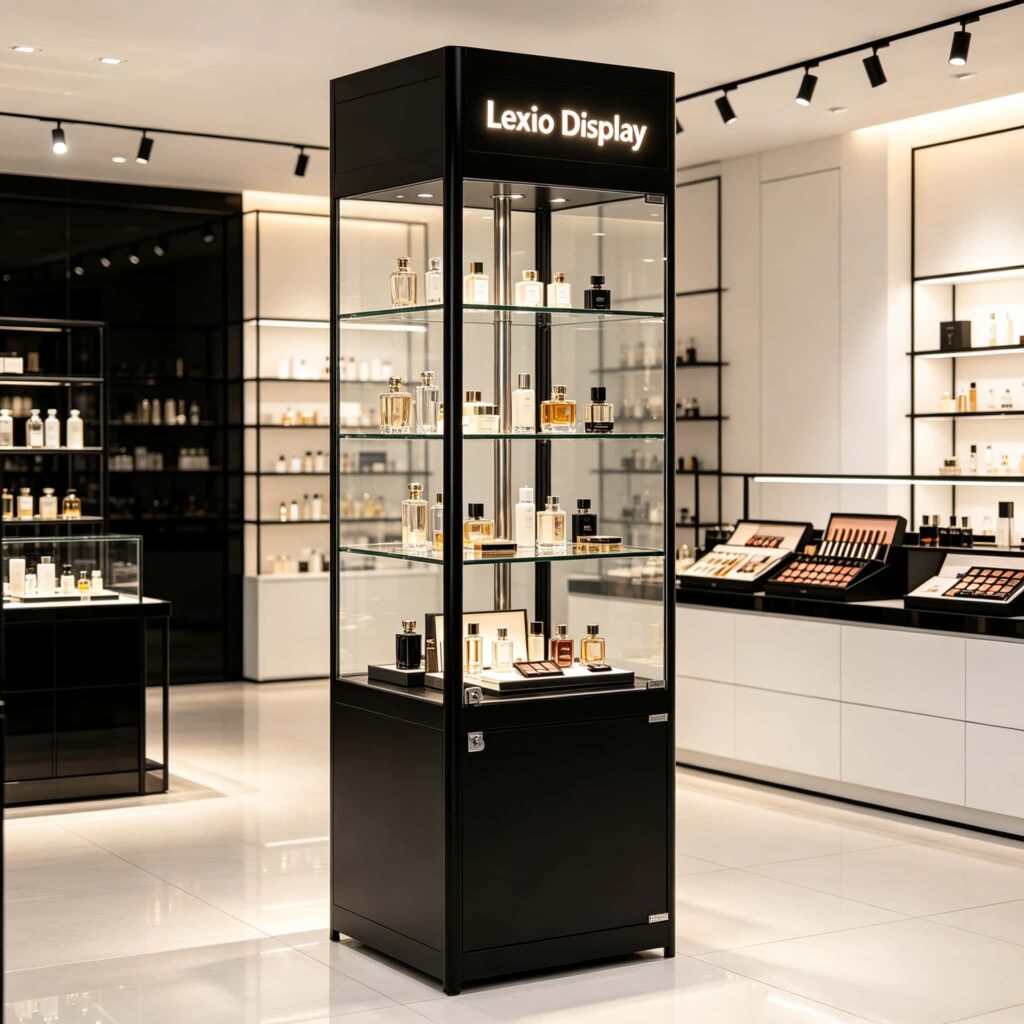
- Beauty / cosmetic shops: Lipstick gift sets, perfume collections. Place them in the middle, let customers circle around and explore. Experience goes up, closing the sale takes way less convincing.
But furniture stores, hardware shops, or clothing stores that need to hang everything on rails — don’t force it. The product either doesn’t fit, or you can’t see any upside. It just eats up space.
4 traps to dodge before you order
Don’t wait until the unit arrives overseas to realize it’s a fail. These details can make or break your money.
Glass isn’t “the thicker the better”
Jumping straight to 10mm tempered glass? Only if you’re selling heavy bronze sculptures. For a normal shop, 5-6mm ultra-clear tempered glass is plenty. The key is light transmittance — standard glass has a green tinge on the edges, ultra-clear is properly transparent. Also, ask about polished, bevelled edges. Sharp edges slice fingers. In some markets overseas, the claims will ruin you.
Light strip colour temperature decides if it looks premium or cheap
Too many cabinets get ruined by bad lighting. Don’t guess the colour temperature: for jewellery and watches, use 4000K natural white to get the most accurate colour. Designer toys, cosmetics, craft spirits — go 3000K-3500K, a bit of warmth makes it feel high-end straight away. One rule for positioning: never let the LED chips face directly out. That’s harsh and looks cheap. Tuck them under the front edge of the shelf so the light is soft. And pick LED strips you can replace individually. One strip dies, the whole shelf goes dark. Waiting for spare parts when you’re overseas will drive you up the wall.
Shelf weight capacity — don’t guess
Bottles of liquor, trophies, heavy glass awards — they add up. Before you place an order, drill down on one question: what’s the actual load per shelf in kilos, and are the support clips plastic or metal? Plastic clips will fail in a couple of months, the shelf tilts, and the whole unit looks like a flea market display. For B2B sourcing, you must confirm metal brackets and solid glass shelf supports.
Wobbly base? What if your floor isn’t level?
Lots of old shops overseas have floors that aren’t flat. You put the cabinet down, it wobbles, and customers won’t even get close. Two fixes: get adjustable metal feet, or make sure the base is a heavy enough metal plate. Don’t ignore the base colour either — matte black, brushed stainless steel, rose gold. Whether it fits your overall store design either lifts the whole vibe or drags it down hard.

When you contact suppliers, don’t lead with just the price
The second you open with “your best price for wholesale column display cabinet”, you’re already stepping into a trap. Specs vary wildly. I’ve had clients show me what they got from a low-ball supplier — particle board joints inside, sticker-type mirror on the back. Started bubbling in three months. They ended up ripping it out and buying again, and the freight cost more than the cabinet itself.
Nail these things down when you talk to them:
- Material and structure: Aluminium profile or stainless steel? If your area’s humid, avoid solid wood bases — they’ll warp. Ask how things are joined, whether the welds are ground smooth.
- Lighting and certifications: Do the lights carry CE, UL? Whatever country you sell into, make sure voltage and plug are done to spec. Don’t get stuck at customs.
- Packaging damage: For LCL or FCL shipments, strongly recommend exporting in wooden crates. The extra cost is nothing compared to receiving a box of broken glass. Almost every repeat client I’ve dealt with has learned this the hard way.
- MOQ and mixed orders: Don’t want to hold stock while testing? Ask if you can share a container, just grab one sample to try. Plenty of shops start with a single column display cabinet for retail store, see how it performs, and only then commit to a full container.
Don’t rush to fill the whole shop — start with one unit
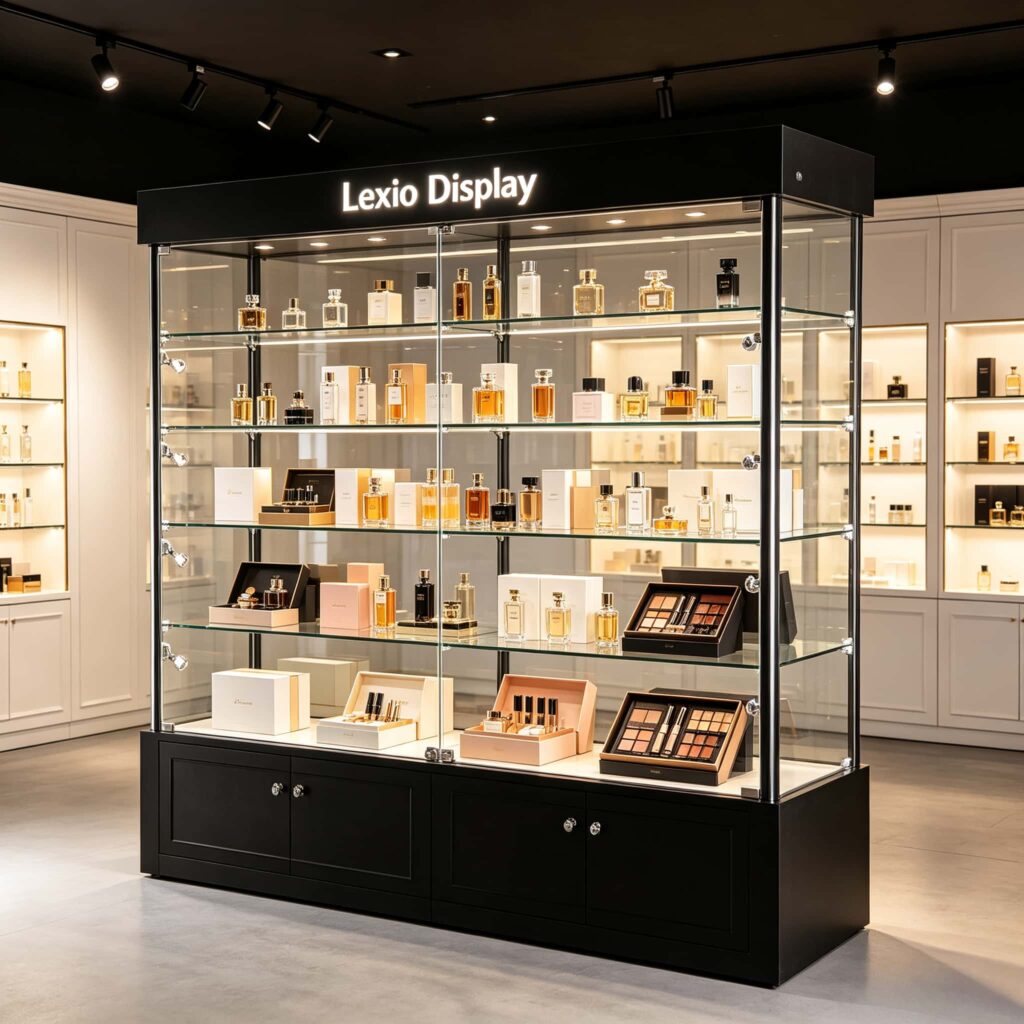
If your shop’s never had an independent display unit before, my advice is simple: get one first. Put it right where your star product sits. Watch it for a month. See if customers pause longer, if staff can still move around it smoothly, whether sales of that particular product actually tick up. Get the data, then decide if you want to roll out more. I’ve seen too many cases of impulsive bulk orders — the sizing’s off, the result is flat, and they end up collecting dust in storage.
How to get the ball rolling
A column display cabinet isn’t a huge investment, but a bad one sticks out like a sore thumb and wastes the best spot in your shop. Send over a photo of the product you want to display, the rough size you’ve got in mind, and a bit about the style you’re after. We don’t push. We’ll just tell you, based on your market and product type: what glass spec won’t cause problems, which lighting setup makes more sense locally, and how to pack the crate properly for safe shipping. We can sort the sea freight plan at the same time so you’re not banging your head against the wall.
Dodging one mistake is worth more than anything. Hit us up if you want to talk.