
How to Start a Mall Kiosk: 5 Tips to Avoid Costly Beginner Mistakes

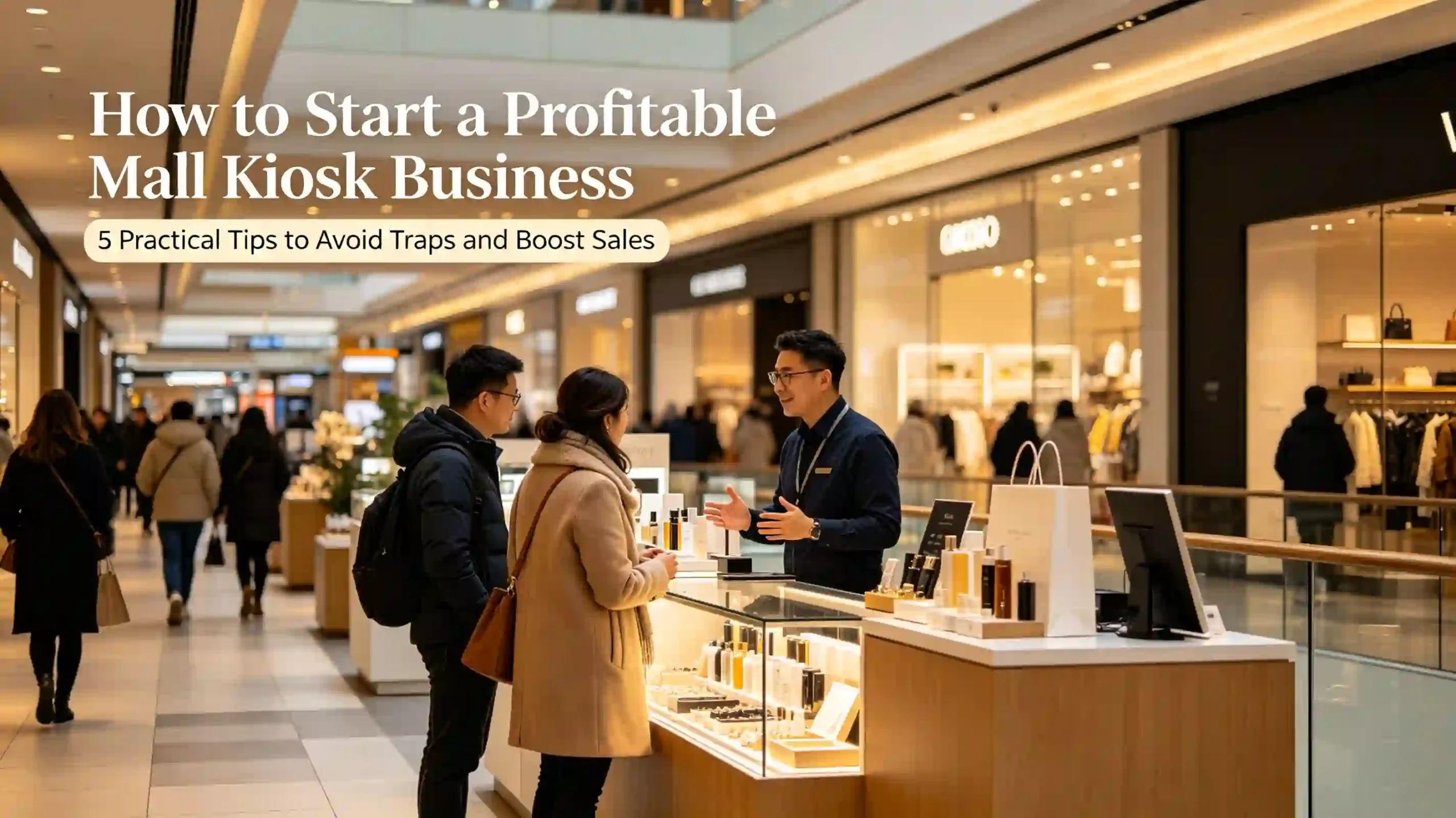
So you want to start a mall kiosk but have no clue where to begin?
Trust me, it’s not as simple as “rent a spot and put out your stuff.” I’ve watched too many people dive in headfirst and shut down within three months. I’ve also seen someone turn a tiny cart into a business doing over $500,000 a year. The difference? A few critical decisions you make right at the start.
These 5 tips are pure street-smart lessons — stuff you learn only by doing it, not by reading some textbook. No fluff. We’re talking location, lease traps, product selection, avoiding fines, and how to actually make people stop and buy.
Tip 1: Chase the traffic, not the cheap rent — don’t get tricked by a “good deal”
The leasing manager will push all kinds of spots on you. But get one thing straight: foot traffic is not customer traffic. Walking past does not mean noticing you.
The biggest mistake in the kiosk business is picking a spot that looks busy but where nobody actually stops. Do the hard work upfront. Grab a clicker counter, spend a full weekday and a full weekend day at the mall. Don’t just count people walking by. Watch:
- How many slow down or glance at kiosks selling something similar to your idea
- How far away can someone actually spot your kiosk — your “visibility range”
- Are there any anchor points nearby? Think Apple Store, ZARA, food court entrance, cinema escalators
I’ve seen a real example in one mall: two phone case kiosks. One sat right opposite the main atrium escalator. The other was tucked in a corner at the end of a hallway. The rent difference was about 30%, but the one near the escalator sold 4 times as much. Why? Because people coming up the escalator have about 3 seconds to decide which direction to walk. You want to be the first thing they see.
Don’t fall in love with “cheap rent.” Cheap rent usually means low visibility, or that spot has already been killed by the previous tenant. Ask the leasing manager straight up: “Who was here before? How long did they last? Why did they leave?” Their face will tell you plenty.
Quick comparison of three typical locations:
| Location Type | Monthly Rent (US mid-tier malls, approx.) | Traffic Characteristic | Good for | Watch Out For |
|---|---|---|---|---|
| Center court / main atrium | $5,000 – $12,000+ | Multi-directional flow, people willing to pause | Impulse buys, gifts, seasonal items | Fierce competition, tough to negotiate |
| Near anchor store entrance / escalator landing | $3,500 – $8,000 | Directional traffic, high interception rate | Phone accessories, fashion jewelry, aromatherapy | Can be blocked by columns or temporary events |
| Side corridors / secondary hallways | $1,800 – $4,000 | Passing traffic mostly on a mission | Services (watch repair, engraving), specialty foods | Needs strong visuals or shouting, or becomes invisible |
(Rents are rough estimates based on B-class or higher malls in the Midwest and Southeast over the last two years. Actual numbers depend on the region and season.)
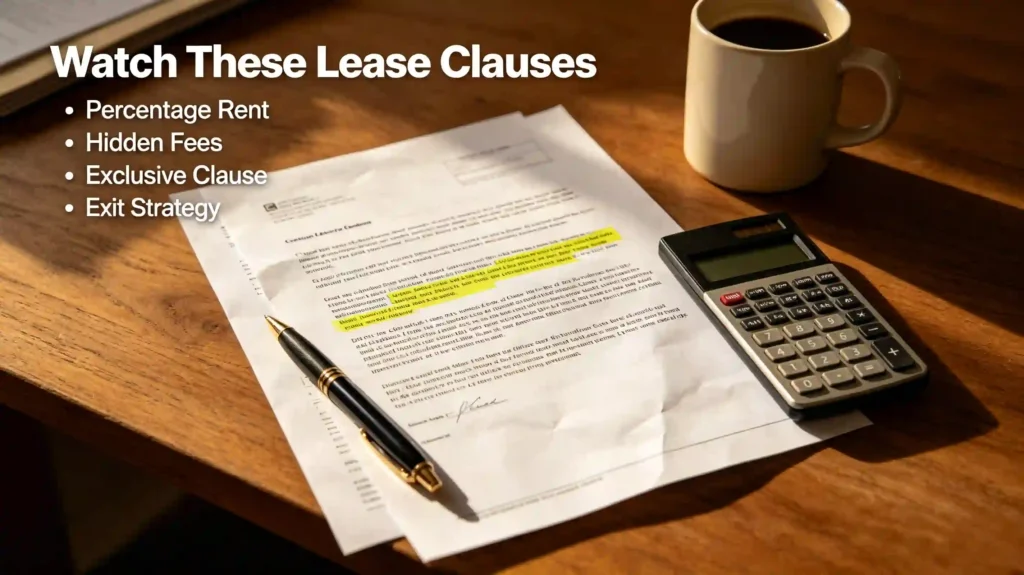
Tip 2: The devil in the lease — don’t just stare at the base rent
Newbies get hung up on “how much per month,” but the stuff that really eats your profit is buried in those extra clauses. Here’s what you need to fight over:
Percentage Rent
Most malls charge a cut of your gross sales on top of the base rent, usually 8%–15%, and it’s almost always “whichever is higher.” So if your base is $4,000 and the percentage is 10%, and you do $50,000 in a month, you owe $5,000. The mall takes the higher number. When negotiating, either push that percentage down or, better yet, raise the “breakpoint” where they start taking their cut. For example, agree that they only take a share on sales above $35,000 a month.
Hidden fees (CAM, Marketing, Trash)
Common Area Maintenance fees, marketing funds, trash removal — some malls stuff these into “additional rent” and hide them in a 30-page contract. Demand a complete list of every fixed monthly charge. Only then calculate your real break-even point based on the total cost.
Exclusive clause
Say you’re selling phone accessories. You need it in writing: no other kiosk or pop-up in this mall can sell the same category. Without this, three months later you could have a competitor right next door selling the exact same thing for a dollar less. I once knew a guy doing custom T-shirts. He didn’t lock in the clause, and during the holidays the mall let in a temporary stall selling similar heat-press shirts. His sales tanked by half overnight.
Lease term and exit strategy
If you’re a beginner, start short — six months with an option to renew. If the mall pushes for a year or longer, you absolutely must negotiate an early termination right. Something like: if monthly sales fall below a certain number for two months in a row, you can walk away without penalty. Don’t believe verbal promises like “this spot is going to be a gold mine.”
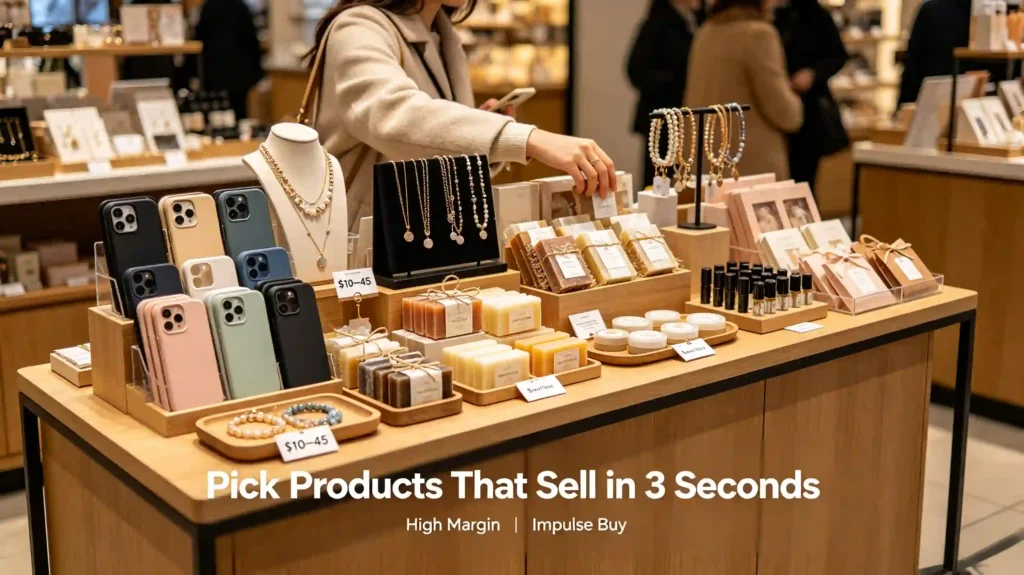
Tip 3: Product selection isn’t about “more choice” — it’s about making someone impulse-buy in 3 seconds
A mall kiosk runs on impulse purchases. Customers aren’t coming specially to find you. They’re walking by, and you have to make them think, “Oh, that’s cool!” almost instantly.
Pick products that pass these hard filters:
- Price between $10 and $45 converts best. Too cheap, you can’t cover costs. Too expensive, people need to think, and a kiosk gives zero thinking time.
- No explanation needed. A glance should tell them what it is. Don’t sell something that needs a demonstration manual.
- Visual punch or interaction. Spinning displays, lights, scents (candles, soaps), live demos — anything that makes feet pause.
- Small size, high margin. Your storage is the cabinet under the counter. Keep SKUs lean and profitable.
Here’s a cheat sheet to filter your ideas:
| Category | Avg. Gross Margin | Impulse Buy Potential | Repeat Purchase | Seasonal Risk | Notes |
|---|---|---|---|---|---|
| Phone cases / accessories | 70–80% | High | Medium | Low | Super competitive, need unique designs |
| Fashion jewelry (non-precious) | 75–85% | Very high | Medium-High | Low | Fast turnover, light inventory |
| Aromatherapy / handmade soaps / bath bombs | 65–80% | High | Medium | Low | Scents pull people in naturally |
| Seasonal gifts (Christmas, Valentine’s) | 60–75% | Very high (pre-holiday) | Low | Very high | All about timing and inventory control |
| Customized items (on-site engraving, printing) | 70–85% | Medium-High | Low | Medium | Needs equipment, higher labor cost, but strong experience factor |
| Imported snacks / specialty foods | 50–65% | High | High | Medium | Watch expiry dates and food permits |
The biggest kiosk killer? Dead stock. Order small for your first batch. Test which SKU converts best, then reorder fast. A lot of suppliers can ship by air in 7–10 days. No need to cram six months of inventory under your counter.
Tip 4: Licenses, insurance, compliance — don’t wait for a fine to fix it
This part is dull as dishwater, but rookies skip it and end up with fines or a shutdown right after opening.
Business license and tax ID
Whether you’re an LLC or sole proprietor, you must have state and local business licenses. The mall will ask for these before you sign the lease. Many cities also require a “temporary vendor permit” or “peddler’s license” specifically for kiosks. Go to City Hall and ask the right questions. Don’t wait for the mall operations manager to check and find you clueless.
Insurance: don’t cheap out
Malls will demand General Liability Insurance, typically $1–2 million in coverage, and they’ll want to be listed as an “additional insured.” If your product has any potential safety risk (electronics, food, toys), you also need product liability coverage. It might cost $500–$1,500 a year. Just pay it.
Special heads-up for food
If anything goes into a customer’s mouth, you can’t dodge the Health Department permit. Some malls require you to use their specific drainage systems or ban on-site cooking. Before you sign the lease, take your product list to the local health department. Find out exactly what permits you need and whether your kiosk can be modified for water lines.
A neat trick: ask the leasing manager for the “tenant criteria manual.” It spells out all the mall’s requirements for kiosk design, electrical, fire safety, and insurance. Use it as your checklist — way faster than chasing info from a dozen different people.
Tip 5: Daily operations determine if you survive year one
You’ve picked the spot, nailed the product, dodged lease traps, got your permits. Now comes the day-in, day-out grind. A mall kiosk isn’t like a regular store — you have no door, no walls. Customers can see you from all 360 degrees, including every bored face you make.
You are the best display
Standing around scrolling on your phone is basically telling people to leave. You need to engage, but not in an aggressive, loud way. The best method? “Open-ended question plus product interaction.” For a candle kiosk, hold up a tester and say, “Here, smell this one — I just opened it, feels like walking on the beach.” They don’t have to buy, but you’ve made them stop.
Theft prevention isn’t about cameras, it’s about eye contact
A kiosk is open on all sides. Small, high-value items are too easy to swipe. Keep those close to you but a bit of a reach for the customer. Arrange your display so people have to face you to grab the product. If you have two staff, one person should always be scanning the scene.
Keep a little notebook, not just your brain
Spend 10 minutes after closing and write three things: when the traffic peaked, which three items people asked about the most, and why you lost sales today (price? missing color? nobody greeted them?). After a month, you’ll start seeing your kiosk’s conversion pattern. This data is also solid gold when you negotiate a renewal or ask for a better location.
Cash flow must survive the slow season
For most malls, November and December are the feast months, while January through March can drop to a third of that peak or less. When you plan your finances, don’t multiply December’s sales by twelve. The safer way: take the average sales of your three slowest months and see if it covers your fixed costs (rent, labor, insurance). If it doesn’t, you either cut fixed costs or add other revenue streams, like online or wholesale.

If you’re about to sign your first kiosk lease, follow this order
- Shortlist 3–5 target malls and physically camp out there for at least two full days
- Get the full fee breakdown and a draft lease from each mall
- Use the product selection table above to filter down to 1–2 categories, then get samples from suppliers
- Register your business, lock in the licenses and insurance
- Start with a 6-month short lease or a holiday pop-up to test your system before committing long-term
At its core, the mall kiosk business is just three things: traffic interception + impulse conversion + cost control. Master these three words, and you’ll already be ahead of 90% of people who read all the theories but never take action.
Got a kiosk idea but stuck on the next step? Reach out directly — I help new owners with sourcing, lease negotiation, and kiosk design. Just drop a comment below or email me at sales@lexiodisplay.com and I’ll get back to you personally.Welcome to contact us now!